UNICEF delivers emergency medical supplies as hospitals in Lebanon struggle to cope with rising casualties

- English
- العربية
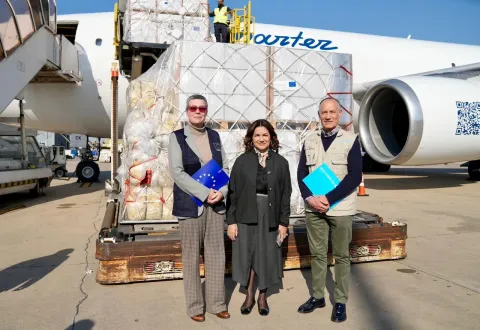
Beirut, 18 March 2026 – As hostilities continue to escalate across Lebanon, UNICEF has delivered a new shipment of 32,5 metric tons of emergency medical supplies to support hospitals and frontline health services overwhelmed by the rising number of casualties, including children.
According to the Ministry of Public Health, at least 116 children have been killed and more than 356 injured since the beginning of the escalation, with overall casualties continuing to rise. Hospitals and emergency health services are under immense strain as they work to treat the growing number of wounded patients while maintaining essential care.
The latest shipment, transported through a UNICEF charter, includes critical medical supplies to support hospitals, primary healthcare centres and mobile Primary Healthcare Satellite Units (PSUs) providing frontline care to affected populations. These supplies are essential to sustain lifesaving services, including trauma care, maternal and newborn services, and the treatment of acute and infectious conditions.
“Hospitals are overwhelmed, and without urgent support, the ability to provide lifesaving care to children will be at serious risk. These supplies are critical to ensure that every injured child has a chance to receive the care they need”, said Ted Chaiban, UNICEF Deputy Executive Director for Emergencies and Supply Operations.
UNICEF is working closely with the Ministry of Public Health and partners to support Lebanon’s health system at a time of rapidly increasing needs. This includes the delivery of essential medicines and medical supplies, support to hospitals and intensive care units, and the expansion of mobile Primary Healthcare Satellite Units to reach displaced populations in shelters and hard-to-reach areas.
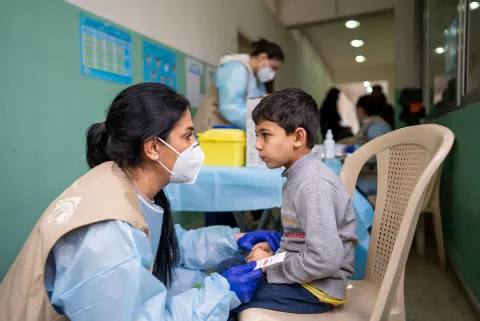
To date, UNICEF has supported the activation of dozens of mobile health teams and primary healthcare centres, providing essential services including consultations, vaccination, nutrition screening, and emergency care for children and families affected by the crisis. UNICEF is also supporting neonatal and pediatric intensive care services in public hospitals to ensure that the most vulnerable children receive specialized treatment.
Beyond medical supplies, UNICEF has delivered 800 metric tons of emergency relief items across Lebanon since 2 March, reaching around 150,000 people. This includes internally displaced people in approximately 250 shelters, as well as those in hard-to-reach areas and others on the move across the country. Essential relief items include about 600,000 liters of water, 2,000 blankets, mattresses and sleeping bags, 11,000 winter kits, 40,000 family hygiene and baby kits and 11,000 personal hygiene kits for women and adolescent girls. Medical, mental health and psychosocial support services are also being rolled out at shelters.
UNICEF reiterates its call for the protection of civilians, especially children, and for safe and sustained humanitarian access to deliver lifesaving assistance. Immediate support from the international community is critical to sustain health services and ensure that children in Lebanon receive the care and protection they urgently need.
About UNICEF
UNICEF works in some of the world’s toughest places, to reach the world’s most disadvantaged children. Across 190 countries and territories, we work for every child, everywhere, to build a better world for everyone. For more information about UNICEF and its work for children visit www.unicef.org/lebanon/.
Follow UNICEF Lebanon on Facebook, Twitter, Instagram, LinkedIn, YouTube and TikTok.