Republic of Korea and UNICEF Support Strengthening Primary Health Care Services in Beirut

- English
- العربية
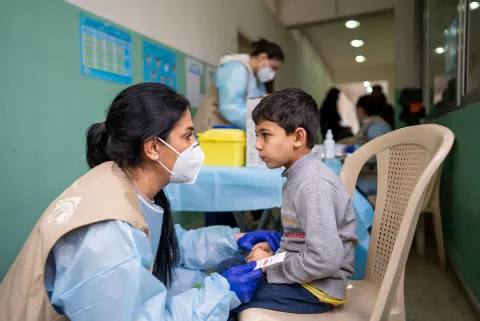
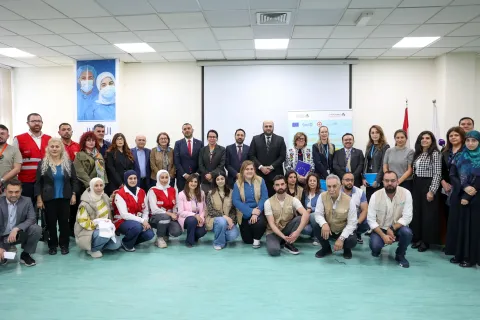
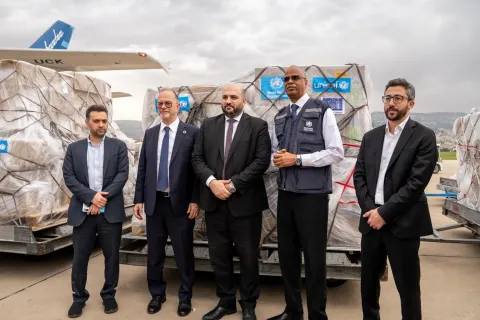
23 February 2026– H.E. Gyusuk Geon, Ambassador of the Republic of Korea, together with UNICEF, accompanied the Ministry of Public Health on a field visit to two primary health care centres (PHCs) in Beirut, highlighting ongoing efforts to strengthen essential health services for children and families.
With support from the Republic of Korea, UNICEF is implementing an integrated health and water, sanitation and hygiene (WASH) programme that addresses both urgent needs and longer-term system gaps. The programme responds to critical challenges such as declining immunization coverage and unsafe water and sanitation conditions in health facilities.
Minister of Public Health, Dr. Rakan Nasserddine said: “the Ministry of Public Health is advancing efforts to strengthen primary health care centres, recognizing their essential role in disease diagnosis, early detection, and timely treatment, which in turn helps reduce the high hospitalization costs for the Lebanese state.”
Ambassador Geon said: “The Republic of Korea remains dedicated to supporting Lebanon in enhancing its primary health care systems to protect the well-being of children and families. We value our strong partnership with the Ministry of Public Health and UNICEF in providing sustainable health and WASH services to the most vulnerable communities.”
Through this partnership, nearly 300 community health workers have been trained and deployed to conduct thousands of household visits, raising awareness, identifying risks early, and referring families to essential services. At the facility level, around 300 PHCs have been equipped with chlorine tablets and water testing kits, and staff have been trained on water quality monitoring and infection prevention and control protocols.
In addition, comprehensive WASH assessments were conducted across a network of PHCs to identify critical infrastructure gaps. Based on these findings, 12 primary health care centres were upgraded, including improvements to water supply and treatment systems, sanitation facilities, hygiene infrastructure, and healthcare waste management.
“We are grateful to the Republic of Korea for its continued partnership at a critical time for children and families in Lebanon.” Said Marcoluigi Corsi, UNICEF Representative in Lebanon. “By strengthening primary health care at community and facility levels, this programme helps protect children from preventable diseases and ensures families can access safe, quality services close to home. These investments strengthen trust in public systems today while building more resilient health services that can continue to deliver for every child.”
These combined interventions are helping ensure safer service delivery, strengthen outbreak preparedness, and improve access to quality health care for more than 180,000 people, particularly children and the most vulnerable families.
The programme is implemented in close partnership with the Ministry of Public Health, ensuring national ownership, alignment with government priorities, and the potential for sustainable impact and scale-up.
About UNICEF
UNICEF works in some of the world’s toughest places, to reach the world’s most disadvantaged children. Across 190 countries and territories, we work for every child, everywhere, to build a better world for everyone. For more information about UNICEF and its work for children visit www.unicef.org/lebanon/.
Follow UNICEF Lebanon on Facebook, Twitter, Instagram, LinkedIn, YouTube and TikTok.