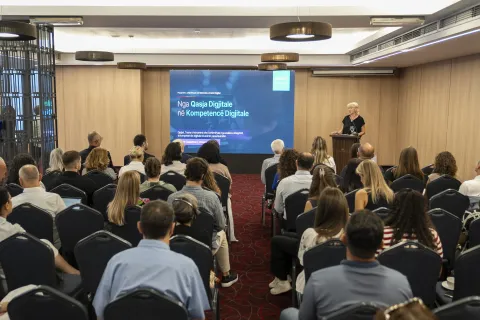
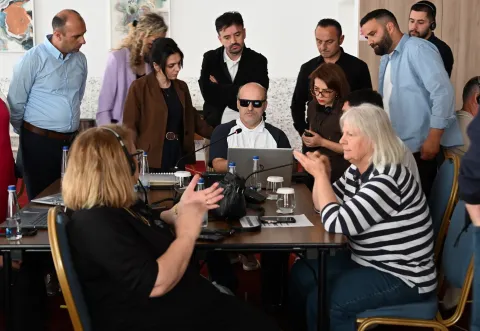
Beyond Digital as Usual, Artificial Intelligence for Accessible Learning
Young innovators, teachers and technology mentors in Kosovo are using artificial intelligence to build practical tools for more inclusive classrooms.

“I like the game I made. It helps me learn math. It is fun to play."CHILD PARTICIPANT
Behind this simple reflection is a larger change in how children and young people experience technology. They are no longer only using digital tools designed by others. They are becoming creators, developing solutions that respond to the challenges they encounter in learning.
Technology can transform education, but only when every learner can access and benefit from it. UNICEF Global Learning Innovation Hub’s Accessible Digital Textbooks initiative, implemented across 17 countries and territories globally, including Kosovo, helps governments ensure accessible digital learning materials for all children, especially children and young people with disabilities. ADT Initiative actively brings teachers, students and education partners as co-creators of solutions later adopted in classrooms, designed to improve access and quality of learning. Inclusive hackathons are one mechanism for nurturing the culture of co-creation – creating solutions together with those who benefit from it, with the support of technology, in a safe and sustainable manner.
STARTING WITH REAL CLASSROOM CHALLENGES
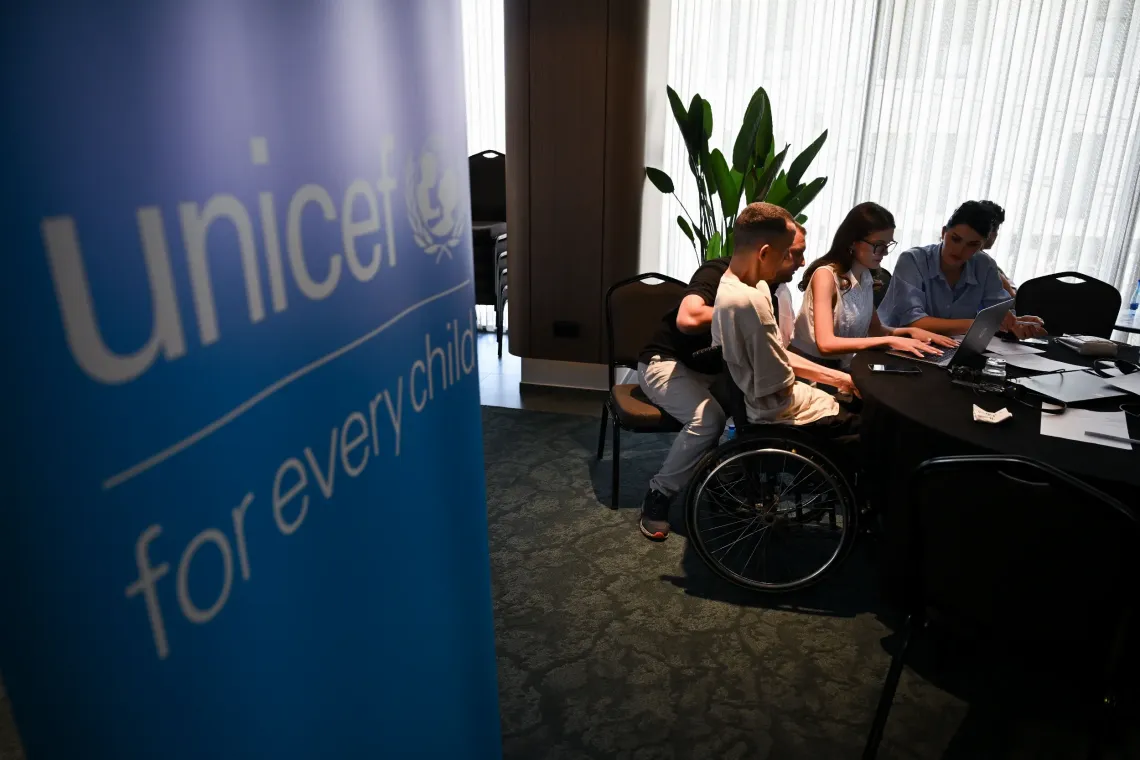
The three-day inclusive hackathon in Ferizaj/Kosovo brought together around 35 participants. Four teams of University of Pristina students worked alongside teachers, teacher assistants, children with disability, technical mentors, judges and organizers.
Their work began with one question: How can artificial intelligence support teachers and teacher assistants in inclusive classrooms?
The challenges were not imagined by technology experts. They came directly from teachers: inaccessible learning materials, limited knowledge of assistive technologies, difficulties assessing the progress of students with disabilities, stigma, large classes and insufficient opportunities for training.
The standard for every idea was practical: would a teacher actually use this solution in the classroom?
LEARNING BY CREATING
|
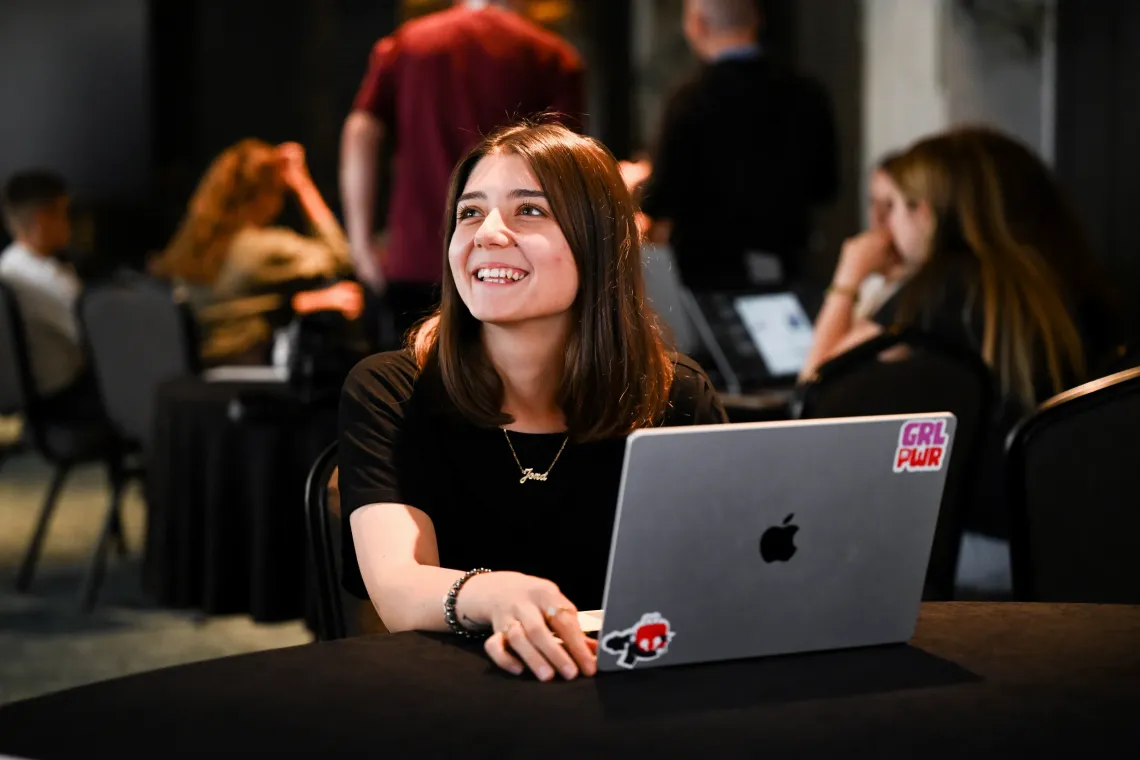
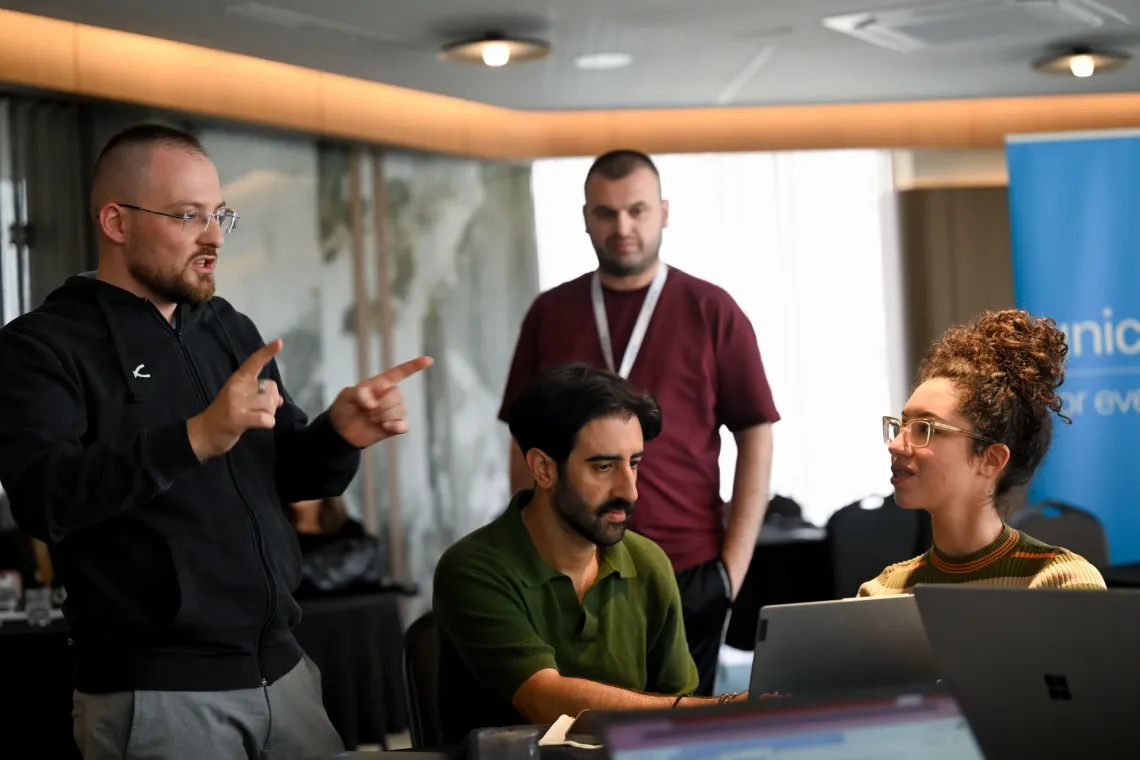
Throughout the programme, students moved between listening, designing, testing and revising. Their technical knowledge mattered, but so did their ability to understand the experiences of teachers and learners.
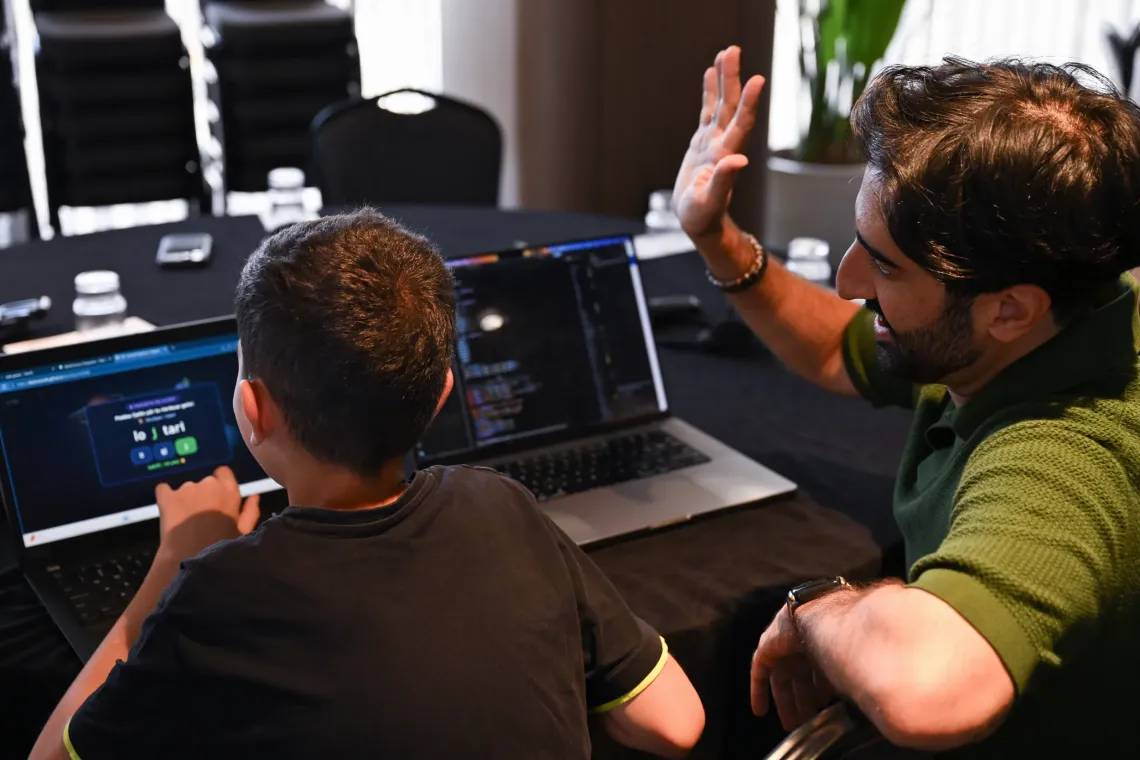
Mentors first strengthened participants’ knowledge of artificial intelligence, accessibility and inclusive design, and introduced them to the development tools used in professional software teams. During the hackathon, the teams then applied those skills to practical education challenges, using OpenAI’s Codex, made available through OpenAI’s support to the ADT initiative, to turn early ideas into working prototypes within three days.
“The private sector has an important role to play in supporting young innovators. Through this hackathon, we had the opportunity to share our knowledge while learning from the creativity and perspectives of children and young people.”
FLAMUR BEQIRAJ, AXIANS
INCLUSION BUILT INTO THE PROCESS
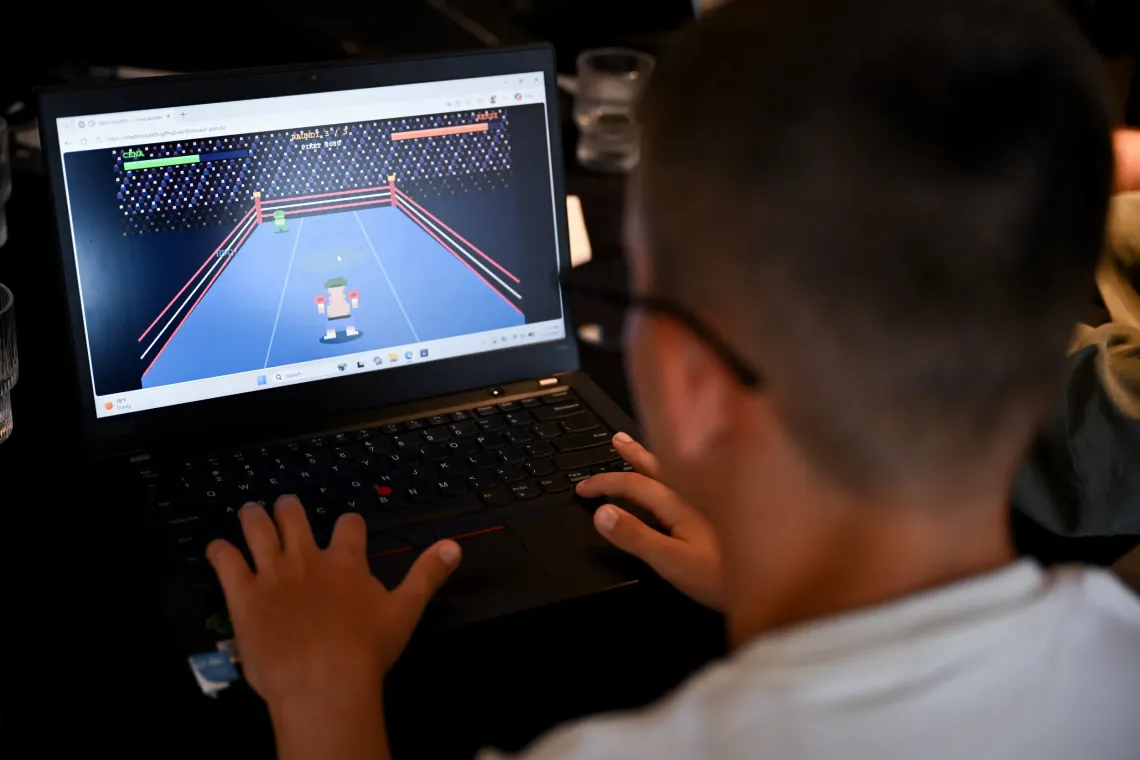
Every team included a teacher and teacher assistants who brought direct classroom experience into the design process. Technical mentors helped participants turn ideas into working digital tools.
Accessibility was also considered in the organisation of the event. Quiet spaces, an accessible restroom, interpretation, mediation and specialist support were provided according to participants’ needs. Accommodation in the same venue gave participants an additional private space to rest and recharge.
This reflected a central principle of the programme: inclusion cannot be added at the end. It must shape both the solution and the process used to create it.
MAKING DIFFICULT TEXTS EASIER TO LEARN
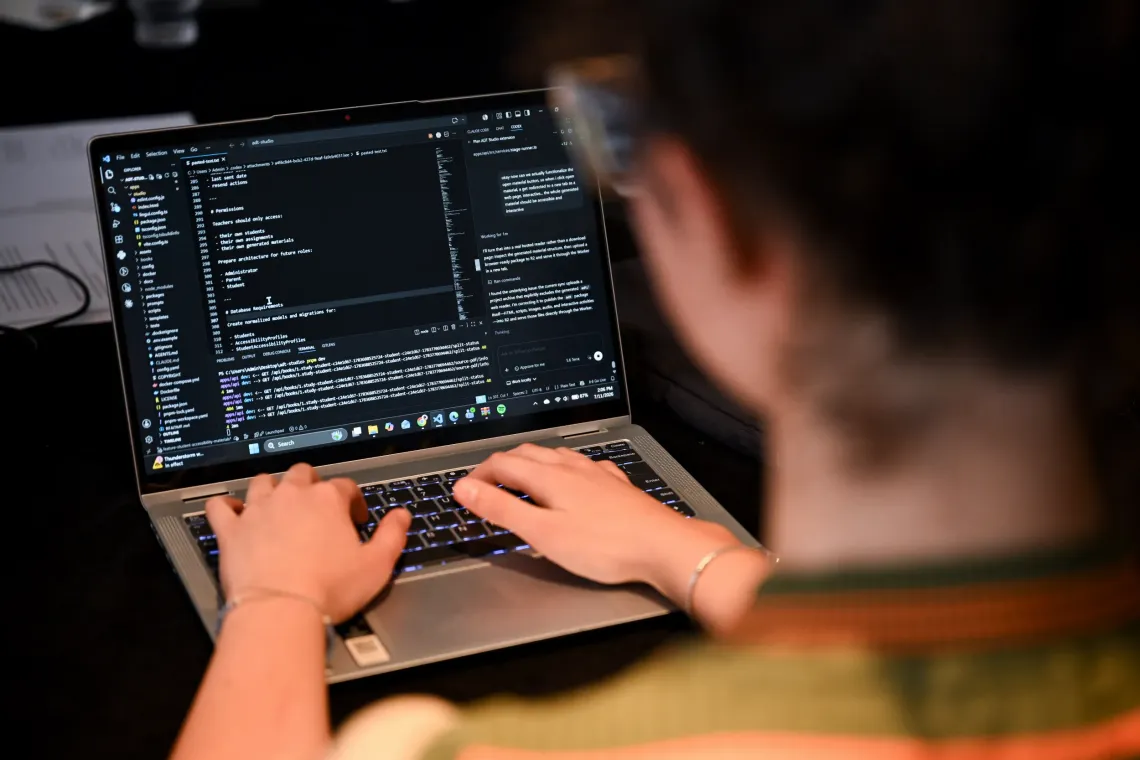
The winning solution, MësoLehtë AI, “Learn Easily” AI allows a teacher to upload a difficult text and adapt it for different learning needs.
The tool can simplify content at different levels, explain vocabulary, prepare quizzes and provide text-to-speech functions in Albanian and English. The teacher remains in control by reviewing, editing and approving the material before it is shared.
The principle behind the solution is clear: artificial intelligence proposes; the teacher validates and decides.
FOUR TEAMS, FOUR PRACTICAL SOLUTIONS
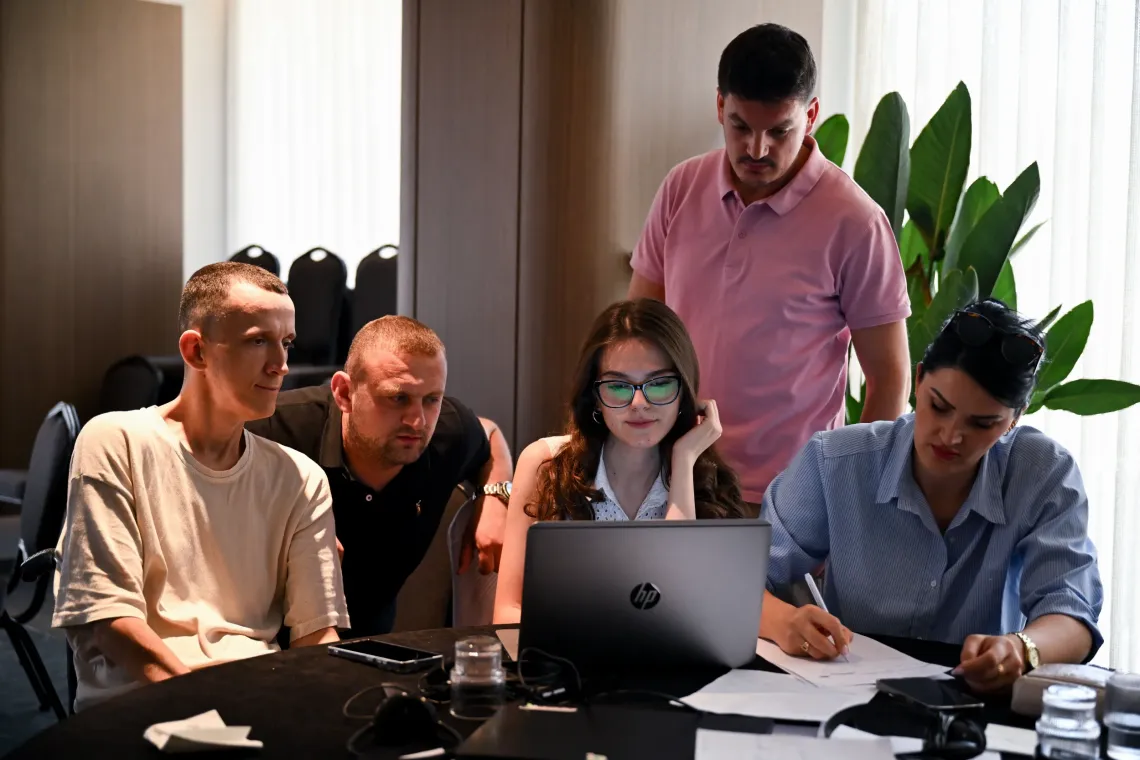
Every team finished the hackathon with a working solution.
Alongside MësoLehtë AI, “Learn Easily “AI participants developed AtlasPlan, a privacy-focused workspace for individual education planning and parent reports; Teacher Workspace, a tool that transforms materials into Easy Read, audio and symbol-supported formats; and Mësim i Qartë, “Learning Made Clear” a mobile platform that helps teachers follow pupils’ progress against learning outcomes.
The results demonstrated what can happen when technical creativity is combined with direct classroom knowledge. Rather than producing abstract concepts, participants created tools that could be tested, improved and potentially used by teachers and learners.
STUDENTS BECOME CREATORS
|
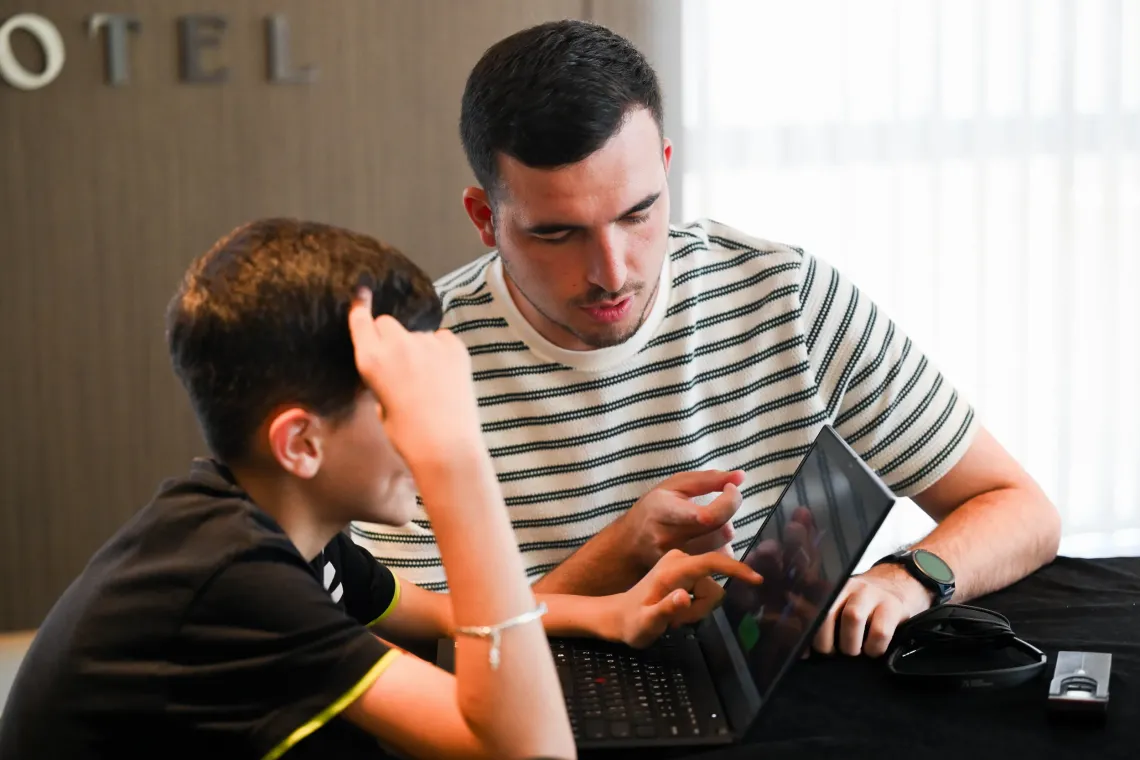
The participation of teachers throughout the process helped teams move beyond assumptions. Students could ask questions, test their ideas and understand whether a proposed tool would genuinely make a difference in the classroom.
For UNICEF, placing young people at the centre of the design process is as important as the technology itself. The programme strengthens digital and artificial-intelligence skills while showing participants how those skills can be used to remove barriers and promote inclusive education for all.
FROM PROTOTYPE TO CLASSROOM

The final presentations marked the end of the hackathon, but not the end of the programme.
Participating schools will continue receiving technical and mentorship support to refine, finalise and deploy promising solutions. This continued support is intended to help young people’s ideas become practical tools that improve access to digital learning.
For the young participants, the experience showed that innovation does not always begin with sophisticated technology. It can begin with a difficult lesson, a teacher searching for the right material or a child who wants learning to be easier and more enjoyable.
It begins by listening — and then creating together.
The hackathon was delivered with the generous support of OpenAI, whose Codex tools were made available to all participating teams