

Digital Learning Assistants in Education: Akelius Through the Eyes of Students and Teachers
Students from a school in Shymkent share their experience with the Akelius language learning programme.
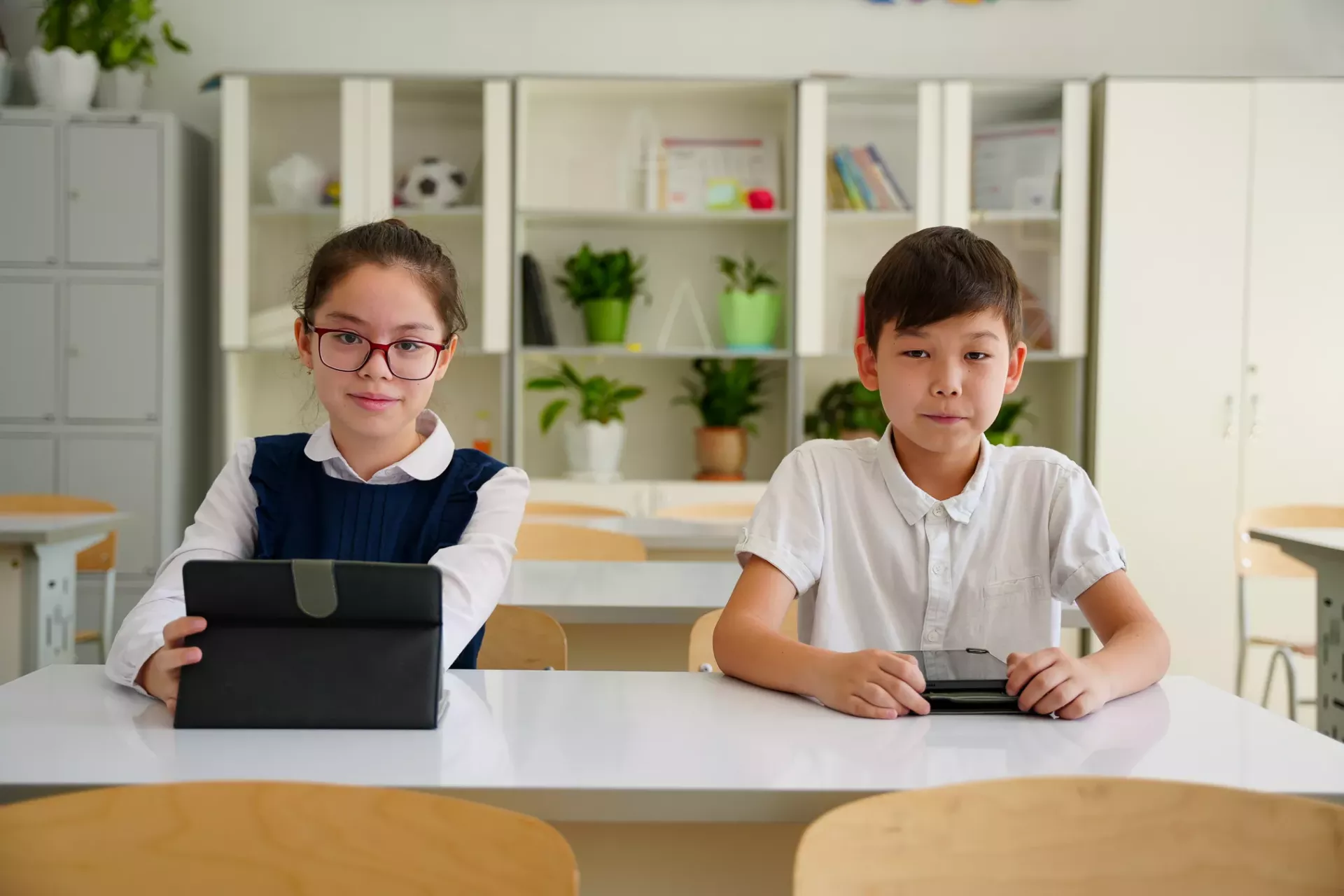
Twelve-year-old Adilet Abdulla is a sixth-grade student at IT School-Lyceum No. 80 in Shymkent. At his school, a specially designed course delivered via the Akelius digital learning platform is enhancing literacy education with the support of the United Nations Children’s Fund (UNICEF).
Like many boys his age, Adilet is passionate about football (soccer). But his interests go beyond sports. He also enjoys learning English and mathematics in his free time. After building a foundation in English through optional school classes, Adilet found it easy to deepen his knowledge with the help of digital technology. He started using the Akelius platform several months ago and has already shown notable progress.

“I really liked the listening exercises,” Adilet shares. “I listened to how the words were pronounced and repeated them several times after the speaker in the app. That helped me improve my English pronunciation.”
The Akelius platform offers effective opportunities for developing listening and pronunciation skills. Audio content, interactive exercises, and the ability to repeat lessons multiple times allow learners to actively work on improving their reading, writing, speaking, and listening skills. This approach supports deeper learning and builds students' confidence in using a new language.
Thanks to the Akelius programme, Adilet now responds confidently in English class and is proud of how much his vocabulary has expanded. His knowledge even proved useful in real life when he was able to give directions to a foreign visitor. He also finds it easier to understand English-language films and communicate with peers
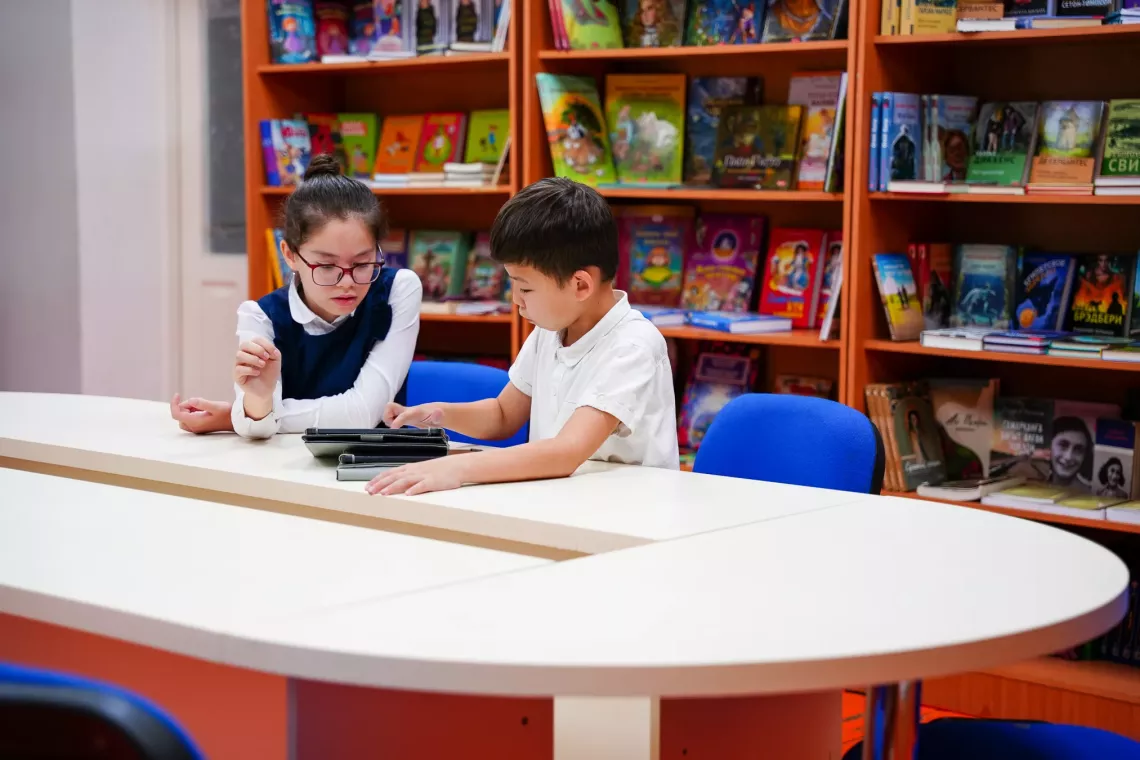
Adilet has big dreams for his future education. He believes that digital technology can help other children develop a love for language learning too.
“Some kids don’t want to study English at school. But when it feels like a game with colourful pictures, any child would find it interesting,” he says.
The Akelius platform incorporates gamified learning to make education more engaging for children. Its game-like format, vivid visuals, and interactive tasks boost motivation and participation – especially among students who may struggle with traditional teaching methods. The platform turns learning into an exciting journey.

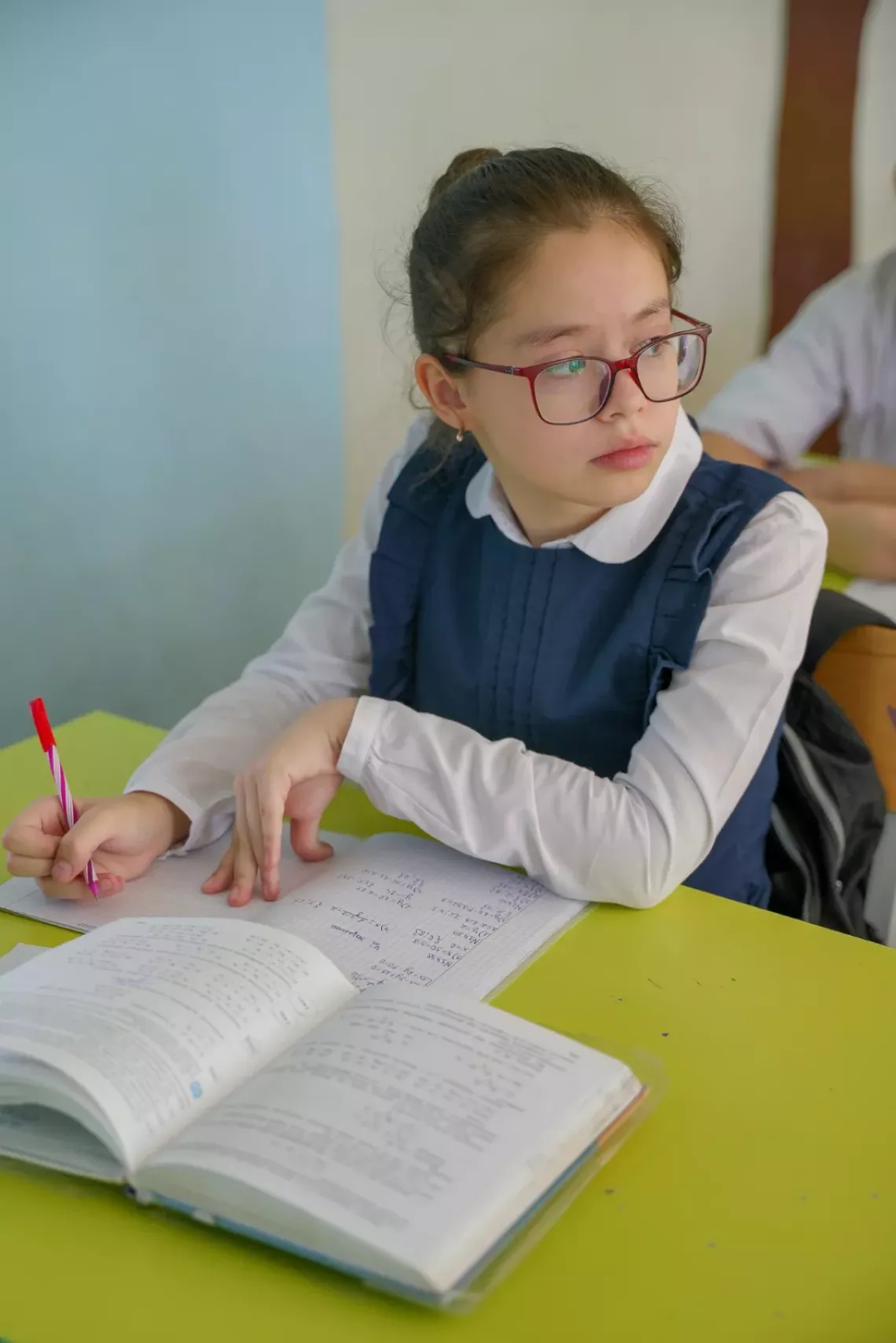
Adilet's classmate Aikorkem Orakbayeva also shared her experience with digital learning. Aikorkem moved to Shymkent from Atyrau in 2024. She is the middle child in a family of three and enjoys drawing, studying, spending time with her family, and playing sports. For her, Akelius was a discovery because such a platform was not available at her previous school. She clearly remembers her first interaction with the app.
“When the teacher handed me the tablet for the first time, I was immediately drawn to the colourful pictures of letters and fruit. It sparked my interest in learning,” Aikorkem recalls.
She notes considerable progress in learning English, Russian, and Turkish. She particularly enjoys the platform’s game-based learning.
“I used to get confused about singular and plural forms and about noun genders. But Akelius helped me understand those rules. I like that the platform is useful for both children and adults. It’s like playing a game where you’re also learning,” she says.
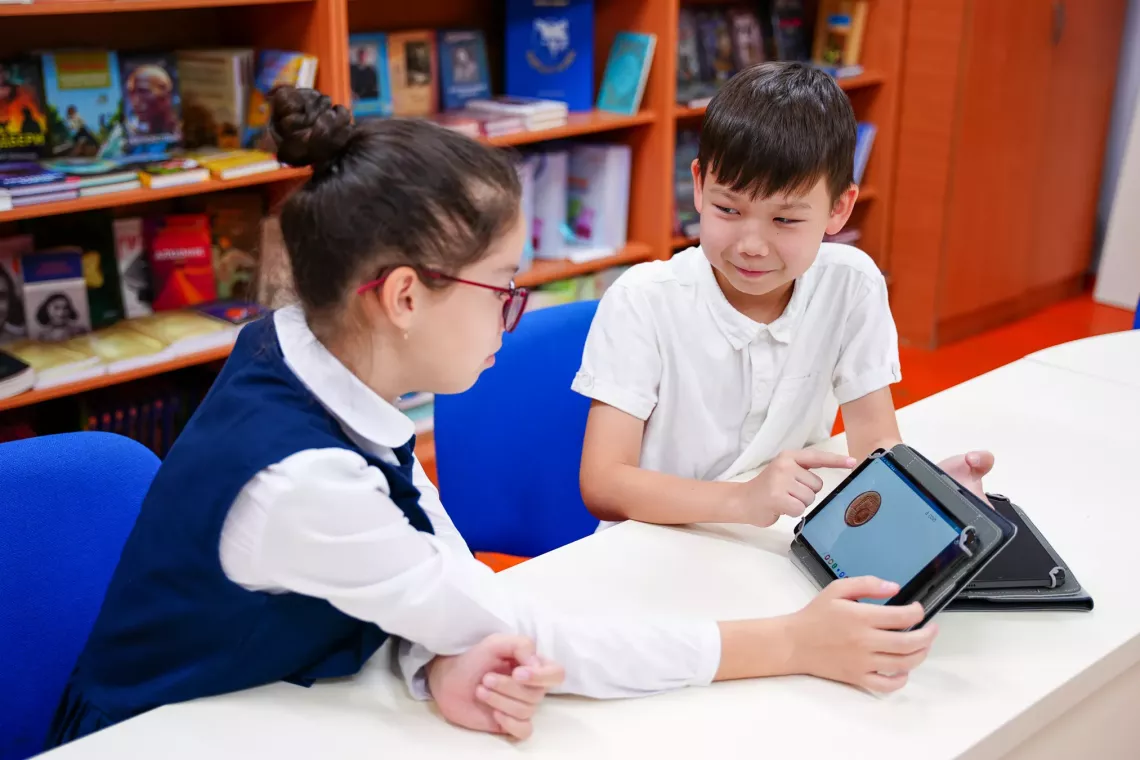
One of the key advantages of the Akelius platform is its ability to adapt to each child’s individual needs by taking into account their knowledge level, learning pace, and preferences. This creates a comfortable and effective learning environment where every child can reach his or her full potential.
Aikorkem has already used her language skills while travelling when she successfully communicated with local people in Turkish. In the future, she hopes to apply her knowledge in the IT field.
Akelius also provides teachers with effective tools for differentiated instruction. It offers educators access to a wide range of educational resources and allows teachers to track each student’s progress. This supports classroom management, enables more focused support for students who need additional assistance, and helps create personalised learning pathways for every child.
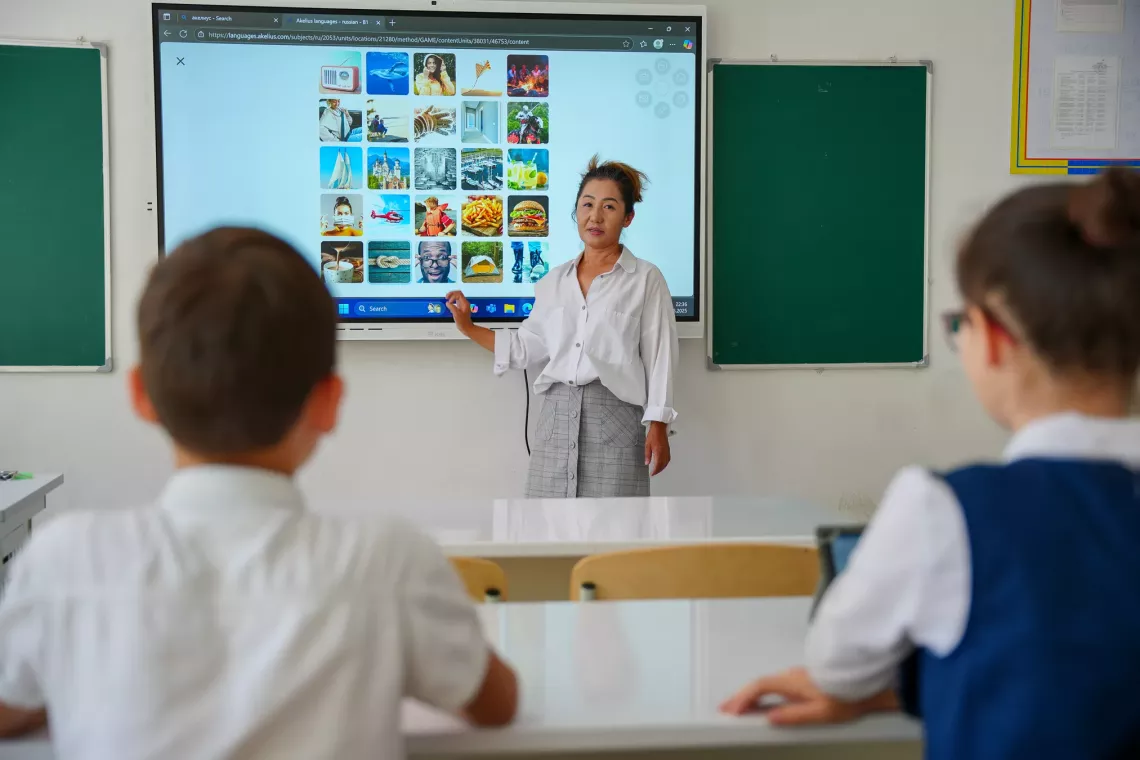
Sholpan Mutalieva, an English teacher with 25 years of experience, shared her observations on the impact of digital tools in the classroom. Since the programme’s introduction in January 2024, she has seen a noticeable improvement in student learning outcomes.
“The platform is easy to integrate into lessons and aligns well with national education standards. If students miss class or don’t understand something, they can always study independently using the tablet. Today, digital tools not only enhance academic performance but also motivate students to take an active role in their own learning,” she explains.
Both Adilet and Aikorkem agree that digital technologies are becoming an essential part of modern education, making learning more accessible, engaging, and effective.
“Kids today love using phones. Educational platforms that combine learning with gameplay really help get them excited about school,” Aikorkem adds.
Background:
The Akelius Literacy Initiative was implemented in Kazakhstan in 2021. More than 2,000 children in the cities of Astana, Almaty, and Shymkent have improved their reading, writing, and speaking skills by integrating the Akelius app into regular classroom lessons. Over 450 teachers have been trained to use the platform effectively and are now sharing their experience with colleagues in other regions. The National Centre for Teacher Development (‘Orleu’) is leading efforts to scale up the initiative across the country, helping teachers integrate the platform into everyday teaching.


