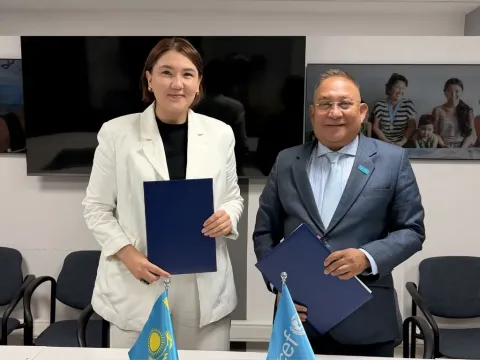
Akimat of Shymkent, UNICEF and the Bureau of National Statistics hold meeting on MICS findings

Shymkent, 5 September 2025 – The Akimat of Shymkent hosted an official meeting with representatives of the United Nations Children’s Fund (UNICEF) in Kazakhstan and the regional representative of the Bureau of National Statistics. The visit took place as part of a special UNICEF mission aimed at strengthening partnerships and advancing priorities in child rights, sustainable development, and youth policy.
UNICEF expressed its gratitude to the Akimat of Shymkent for the active support and effective coordination provided during the implementation of the Multiple Indicator Cluster Survey (MICS) in 2024. The survey generated unique and up-to-date data on the situation of women, children, and young people in the city – including access to health and education services, living conditions, nutrition, and protection.
According to the MICS findings, Shymkent has demonstrated significant progress in health and education:
- Antenatal care: The city ranks among the national leaders, with 97.6 per cent of women attending antenatal care more than four times.
- Postnatal care: Shymkent ranks first in the country, with 97 per cent of women receiving a postnatal visit from a doctor. For newborn postnatal care, the city ranks fifth nationally, with 80.4 per cent of newborns visited by a doctor within the first week after discharge.
- Early learning: Seven in ten children aged 3–5 years attend an early childhood education programme, placing the city fourth nationwide in terms of coverage.
- Learning outcomes: The quality of mathematics learning is high. Shymkent is among the top five regions in the country, with 81.1 per cent of children able to demonstrate basic numeracy skills.
At the same time, the survey highlighted areas requiring greater attention:
- Child nutrition and growth: Among children under five, one in ten experiences moderate stunting, and one in twenty suffers from severe stunting or wasting. These rates are higher than the national average.
- Immunization coverage: Only 54 per cent of children received the measles-containing vaccine, compared with 69 per cent nationally. Overall, up to 16 per cent of children in the city remain unvaccinated against all antigens.
- Early stimulation: Levels of early stimulation are lower than the national average. Only 56.3 per cent of children engage in four or more activities with adults. Paternal involvement is low, with just one in six children receiving attention and time from their fathers.
- Child development: The city shows a lower rate on the Early Childhood Development Index among children aged 2–4 years. Only six in ten children are developing appropriately for their age in the areas of health, cognitive development, and psychological well-being.
Representatives of UNICEF, the Bureau of National Statistics, and the Akimat emphasized the importance of using MICS data to design and adjust regional programmes in the interests of children and women. The results will serve as a foundation for intersectoral planning and for accelerating progress towards the Sustainable Development Goals in Shymkent.
The parties reaffirmed their commitment to continuing strategic dialogue and implementing joint initiatives to advance sustainable development in the region and to create an enabling environment for every child.
Media contacts
About UNICEF
UNICEF, the United Nations agency for children, works in over 190 countries and territories to protect the rights of every child. We are committed to ensuring the survival, development, and well-being of the most vulnerable children.
Learn more about our work at www.unicef.org.
For more information about UNICEF, visit www.unicef.org.
Follow UNICEF on Instagram, Facebook, and X(Twitter).