Children's views
What do children want to live a life that's good enough?
In researching UNICEF Innocenti's Report Card 18: Child Poverty in the Midst of Wealth, we carried out a qualitative research project with children from seven different countries to discover their views on child poverty. In each country, we asked groups of children between five and 17 years old a simple question: what do they consider a ‘good enough’ life, and what do they need to live it?
We did not stop at asking for their opinions but asked them to imagine a child similar to themselves and to identify the items deemed as necessary for that child to live a ‘good enough life’. The children also reflected upon their own communities and created maps highlighting which services and places they believe children need to live a good enough life in those communities.
Here we share the concepts and ideas the children came up with.
All the children involved live in socio-economically disadvantaged areas or belong to groups that suffer discrimination or marginalisation because of their ethnic origin or because they are migrants. We hope this project will enrich the findings of Report Card 18, as well as the way we think of, define and measure child poverty – which is so rarely based on the experiences and priorities of children themselves.
The study comes from the belief that children are experts on their own lives and fundamental subjects to be included in discussions on poverty, building on past research on children’s views of poverty.
Children's views on child poverty


So what do children believe they need to live a life that is good enough for them?
Country by country, see what items they listed and how they described them. And get a hint on the key poverty statistics of each country from Report Card 18.
Canada
In an online focus group, we spoke with four young people from Alberta, Ontario and Novia Scotia who all identified as female and were between 14 and 18 years old. They all belonged to racial or ethnic minorities.
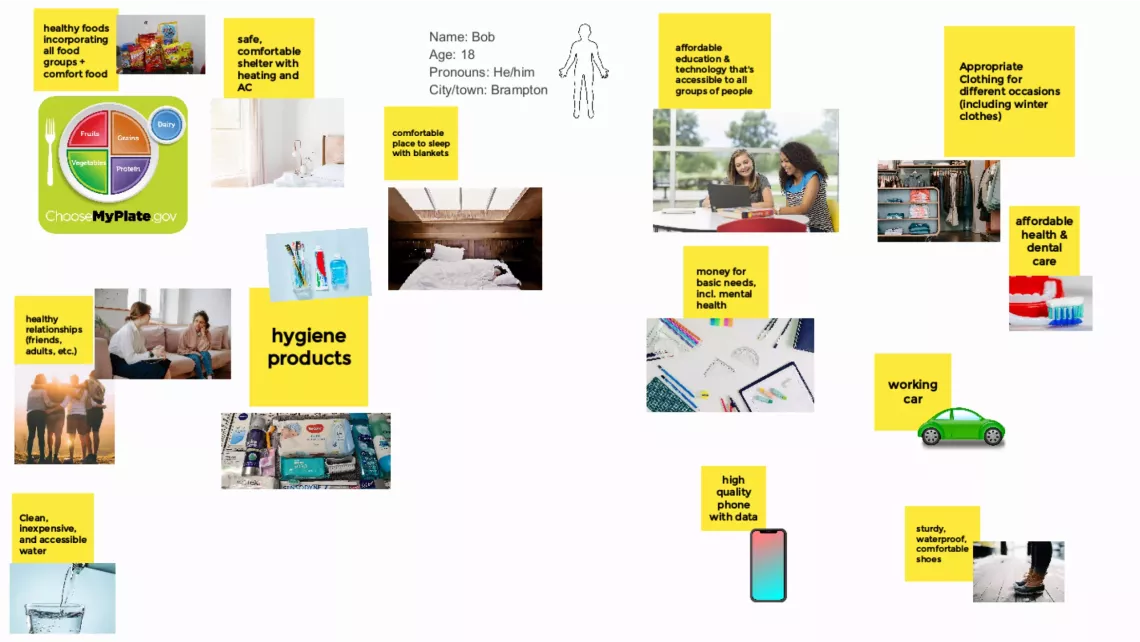
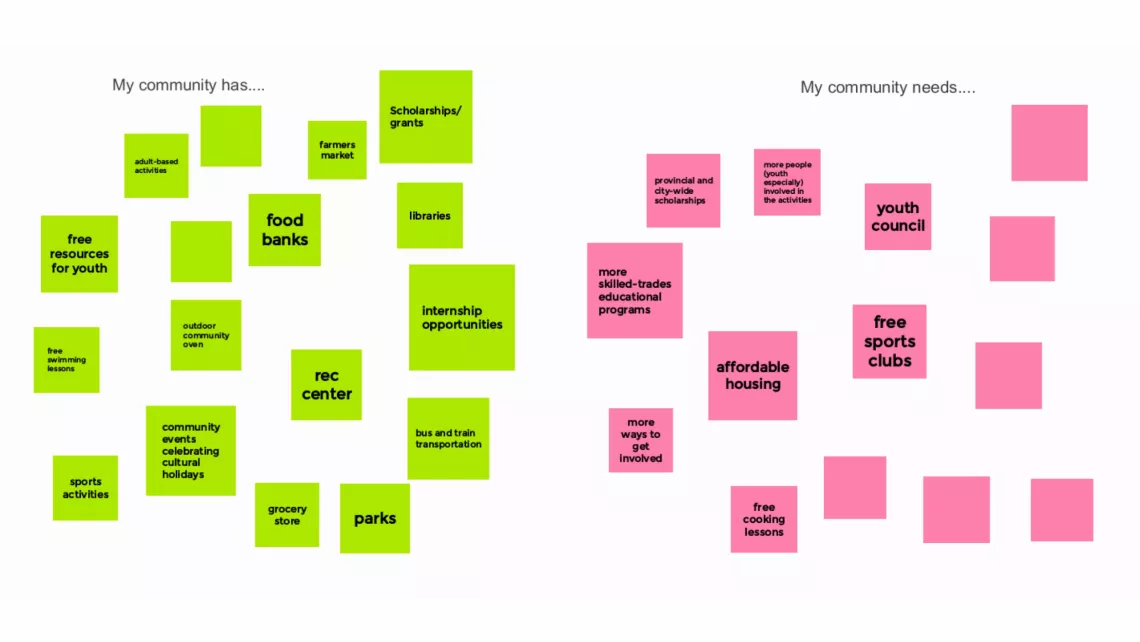
During the focus group, the girls were asked to work together to create a fictional young person who came to Canada from another planet with no belongings. They identified the key items they believe their character needs to grow up with a ‘good enough life’ without poverty.
How does Canada deal with child poverty?
The average child poverty rate between 2019 and 2021 in Canada is 17.2 per cent. This figure is around the average in this group of countries: Canada ranks 19th out of 39 high income countries included in Report Card 18.
Canada was able to reduce child poverty of approximately 22.7 per cent between 2012-2014 and 2019-2021. This figure shows a good progress in child poverty reduction, compared to other high income countries: Canada ranks 7th out of 39 countries included in Report Card 18.
Chile
UNICEF Chile organized and facilitated seven focus groups, each with between three and six children aged from five to 12 years old. In all, 34 children took part – 13 boys and 21 girls.
In their groups, the children drew seven different fictional children, and they identified and wrote the key items they believed their characters need to grow up with a 'good enough life' out of poverty.


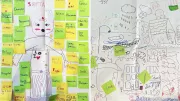
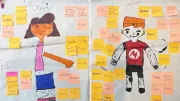
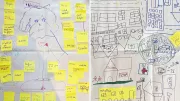
How does Chile deal with child poverty?
The average child poverty rate between 2019 and 2021 in Chile was 21.6 per cent – around one in five children was living in poverty. This figure is high compared to other high-income countries: Chile ranks 30th out of 39 countries included in Report Card 18.
Chile was able to reduce child poverty by 7.7 per cent between 2012-2014 and 2019-2021. The country ranks 19th out of 39 high-income countries included in Report Card 18. Although progress has been made and there is a foundation to build on, more efforts are needed to reduce child poverty in Chile.
Croatia
Twelve high school children aged 16 and 17 – two boys and 10 girls – joined a consultation in Zagreb organized by UNICEF Croatia.
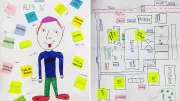
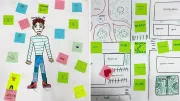
The children drew three fictional children, each without any existing possessions, and identified the key items they believed their fictional characters needed to live a ‘good enough life’.


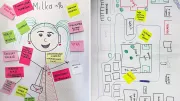
How does Croatia deal with child poverty?
Croatia had an average child poverty rate between 2019 and 2021 of 16.6 per cent. This figure puts Croatia in the middle when compared to other countries: Croatia ranks 17th out of 39 high-income countries included in Report Card 18.
Croatia was able to reduce child poverty by around 21.8 per cent between 2012-2014 and 2019-2021. This represents good progress in child poverty reduction, and Croatia ranks 10th out of 39 countries included in Report Card 18.
Ireland
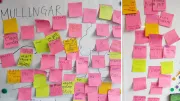
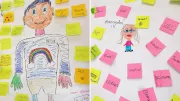
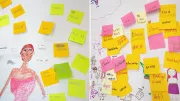
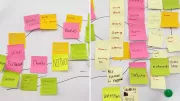
UNICEF Ireland organized two consultations with children: the first involving an entire class of nine-year-olds and the second an entire class of 12-year-olds in two different schools. The first school was a multi-denominational primary school and the second was a Catholic primary school. Both schools included children of varying levels of socioeconomic disadvantage. The classes were diverse and included many first- and second-generation migrants.
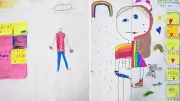
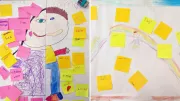
During the consultations, the participants drew different fictional children, identifying the key items these characters needed to grow up with a ‘good enough life’ and out of poverty.


How does Ireland deal with child poverty?
The average child poverty rate between 2019 and 2021 in Ireland was 14.8 per cent. This figure is lower than in other countries: Ireland ranks 10th out of 39 high income countries included in Report Card 18.
However, the country needs to make more progress. One in seven children in Ireland are still living in poverty, and more than one in 10 experience prolonged poverty.
Ireland was able to reduce child poverty by 18.5 per cent between 2012-2014 and 2019-2021. This figure shows a good progress in child poverty reduction, compared to other high-income countries: Ireland ranks 12th out of 39 countries included in Report Card 18.
Italy
UNICEF Innocenti, supported by UNICEF Italy, organized four consultations to understand children’s views on child poverty.
The first pair of consultations included two groups of children – one group aged nine and 10 and the other aged 12 and 13. These children lived in Taranto, a socioeconomically disadvantaged part of southern Italy. The second pair of consultations included two groups of Roma children living on the outskirts of Milan. One group was aged between six and 11 and the other between 12 and 15.
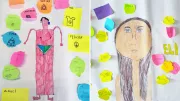
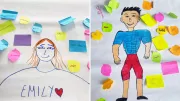
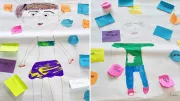
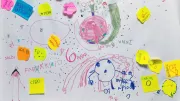
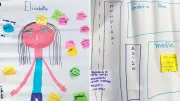
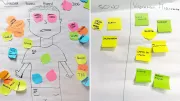
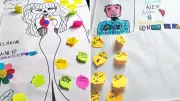
The children in Taranto drew a set of fictional characters and identified the key items they believed they needed to live a 'good enough life' out of poverty.


How does Italy deal with child poverty?
Italy had an average child poverty rate between 2019 and 2021 of 25.5 per cent – one out of every four children living in Italy is in poverty. This figure is high compared to other high-income countries: Italy ranks 33rd out of 39 countries included in Report Card 18.
In Italy, child poverty rates have only slightly decreased between 2012-2014 and 2019-2021 – by less than one per cent. It ranks 25th out of 39 countries included in Report Card 18.
The country has to put more efforts in child poverty reduction.
Although Italy needs to make substantial progress to reduce high rates of child poverty, it did manage to reduce its deprivation rates from above the EU average in 2015 to below it in 2021.
New Zealand
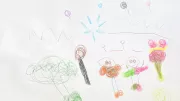
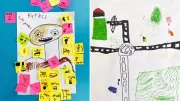
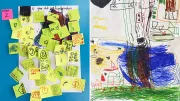
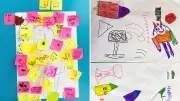
UNICEF Aotearoa organized two consultations to understand children’s views on child poverty. The first consultation included one culturally diverse class of five- and six-year-olds, while the second was an intimate focus group discussion with four young adolescents between 10 and 13 years old who were of Māori descent.
Each group drew a set of fictional characters and identified the key items they believed they needed to live a 'good enough life' out of poverty.


How does New Zealand deal with child poverty?
The average child poverty rate between 2019 and 2021 in New Zealand was 21 per cent – around one in every five children is living in poverty. This figure is high compared to other high-income countries: New Zealand ranks 29th out of 39 countries included in Report Card 18.
New Zealand was able to reduce child poverty by 11.7 per cent between 2012-2014 and 2019-2021. The country ranks 17th out of 39 high income countries included in Report Card 18.
Although progress has been made and there is a foundation to build on, more efforts are needed to reduce the high rate of child poverty in New Zealand.
Spain
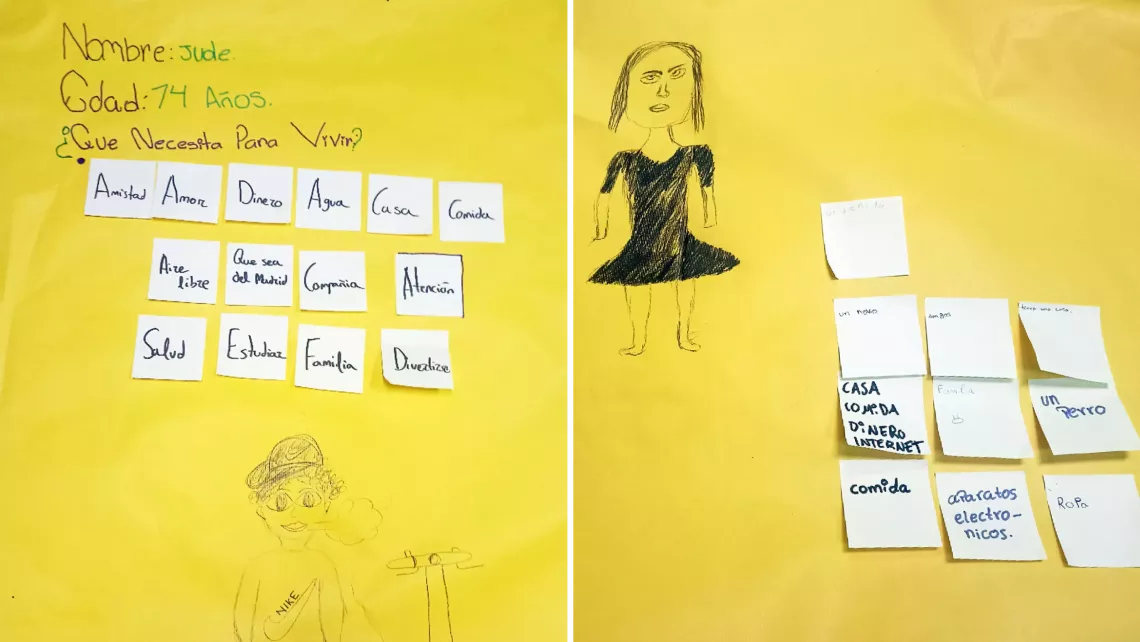
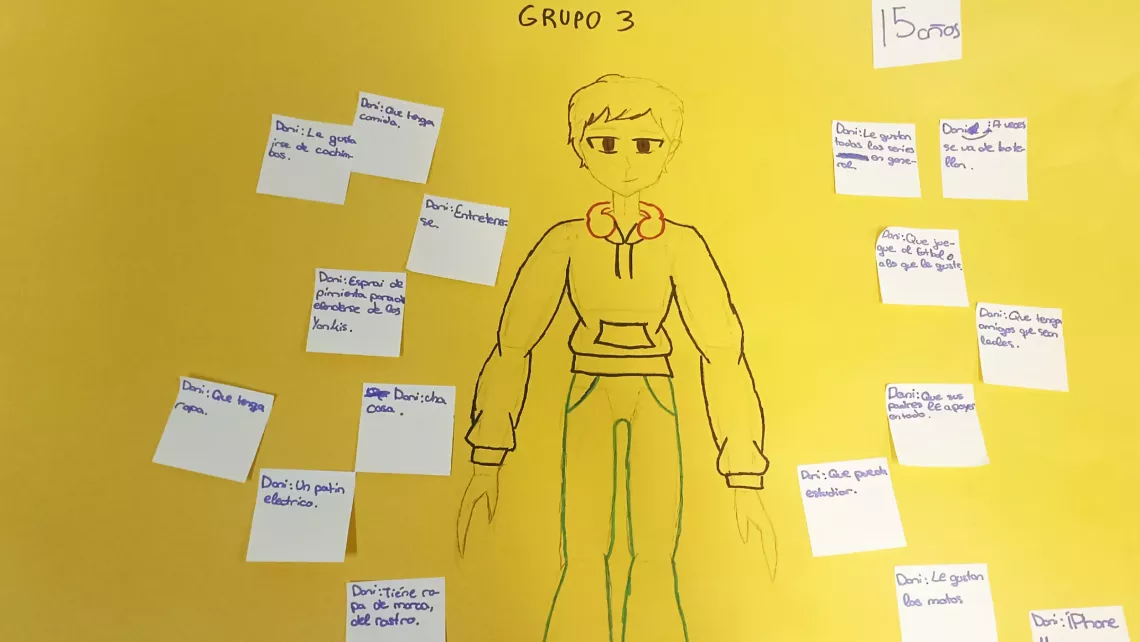
UNICEF Spain organized a consultation with 14 children aged between 12 and 14 in a neighbourhood of Madrid. It took place outside of school and among a diverse group of children.
The children drew three different fictional children and identified the key items these characters need to grow up with a ‘good enough life’ and out of poverty.
How does Spain deal with child poverty?
The average child poverty rate between 2019 and 2021 in Spain was 28 per cent – around one in four children in Spain is living in poverty. This figure is high compared to other high-income countries: Spain ranks 36th out of 39 countries included in Report Card 18.
Spain was only able to reduce child poverty by less than 5 per cent between 2012-2014 and 2019-2021. The country ranks 22nd out of 39 high income countries included in Report Card 18.
Although Spain needs to make substantial progress to reduce high rates of child poverty, it did manage to reduce its deprivation rates from above the EU average in 2015 to below it in 2021.
About this project: Approach and rationale
Report Card 18 is part of a series of reports that UNICEF Innocenti – Global Office of Research and Foresight has produced over the past two decades, comparing and contrasting child well-being in many of the richest countries in the world (countries that are members of the OECD and/or European Union). Report Card 18 focuses on child poverty and social protection.
The full report is accessible in several languages here.
Between May and November 2023, children in seven countries were consulted to understand their views about growing up with a “good enough” life, in order to enrich the Report Card topics and add children’s perspectives to the findings of the report.
Children and adolescents in Canada, Chile, Croatia, Ireland, Italy, New Zealand and Spain shared their views with the researchers thanks to the support of the UNICEF National Committees, UNICEF Country Offices and their local partners.
The research participants were consulted in small focus groups discussions or through consultations with entire school classes. The methodology used was tested in Italy and then used consistently to collected data across countries. It was based on a projective technique. The children and adolescents created a fictional character, a child living in their own community, and they listed all the items which they deemed fundamental for him/her/them to grow up experiencing “a good enough life”. The list could contain both material and immaterial items, which had to be further characterised and explained by the research participants.
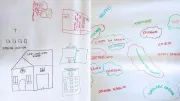
Additionally, the researchers invited the children and adolescents to reflect upon their own community, the areas they were living in, moving the conversation from the individual to the collective level. The participants drew maps of their communities highlighting those elements they thought of as fundamental to live a “good enough life”, and elaborating on their quality and characteristics. They further expressed their wishes and suggestions to ameliorate their communities to guarantee children and adolescents like them a better life.
Seeking children’s perspectives enables UNICEF to fill gaps in the broad national statistical picture created by the Report Card. Such statistics cannot allow for an in-depth understanding of issues faced by children and adolescents as a group and within their specific local contexts.
Poverty is both the product of socio-economic, historic and political relationships and of power relationships, and children and adolescents experience it according to their position in social hierarchies. They are disproportionately affected by poverty, with consequences in their present and future lives. However, they are rarely asked to contribute to the shaping of discourses around poverty and to the development of those policies that should ultimately benefit them. By being “poor” and being “children”, they are excluded twice.
Talking with children and understanding what it means to be poor is paramount to achieve a child-inclusive conceptualization and definition of poverty, as well as to enhance child participation on matters which directly impact them, as recommended by article 12 of the United Nations Convention on the Rights of the Child.
The greatest challenge in talking about poverty and social exclusion with children and adolescents is reiterating the stigma and feeling of shame that often accompanies living in socio-economic disadvantaged contexts. For this reason, the research tools used in this project paid particular attention to avoid discussing the participants’ individual and personal experiences, and they carefully avoided the words “poor” or “poverty” and their local linguistic equivalent. Words and concepts such as “having a good enough life”, “necessities”, “good/bad life” were taken into account and used.
Learn more
To learn more about this project and its methodology please contact Gwyther Rees, Social and Economic Policy Manager, at UNICEF Innocenti – Global Office of Research and Foresight.