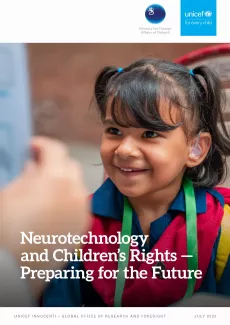
Neurotechnology and Children’s Rights
Preparing for the future
Highlights
As neurotechnology becomes increasingly prevalent in everyday life, it raises urgent questions about the implications for children’s rights. From brain-computer interfaces to cognitive enhancement tools, neurotechnology is poised to impact how children learn, interact, and develop – yet these innovations also introduce serious ethical, legal, and safety concerns.
This report by UNICEF Innocenti explores the emerging intersection of neurotechnology and children’s rights, offering a foresight-driven examination of both the risks and opportunities ahead. It identifies critical challenges, including threats to privacy and autonomy, potential bias and discrimination, and the widening of digital and neurological divides. At the same time, it highlights how well-governed neurotechnologies could support children, especially ones with disabilities, enhance learning, and promote mental well-being.
The report calls for a proactive and rights-based approach to neurotechnology development. Key recommendations include embedding children’s rights into regulatory frameworks, supporting child-centered research and innovation, and ensuring inclusive global dialogue that involves children themselves.
With technology evolving faster than regulation, this report is a timely resource for policymakers, researchers, and innovators. It urges action now – before neurotechnology becomes deeply integrated into children’s lives – to ensure a future where children’s rights are not only protected but advanced.
For more, visit UNICEF Innocenti's page on neurotechnology and children.