Leading Minds 2024: Climate action
Breaking the barriers and challenging the status quo
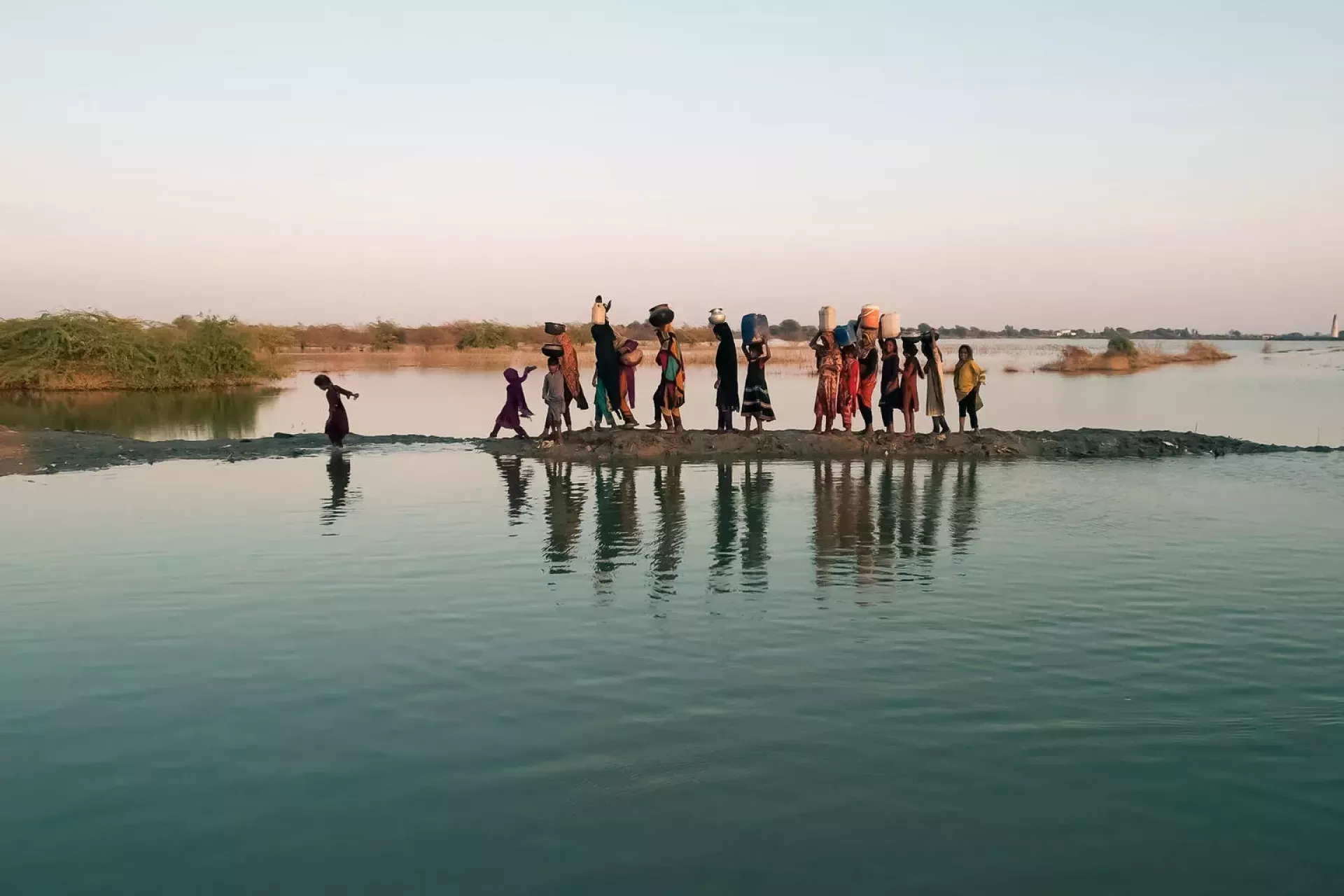
Despite international commitments, the burden of climate change is bringing loss of life, biodiversity and infrastructure. It presents a grave threat to children’s rights and prospects. A global mind shift is needed to bring about systemic change to protect our planet and prepare children and young people for the future. To get there, we need to assume responsibility and accelerate the transition.
So, from May 28-31, 2024, some of the world’s top thinkers – innovators, influencers, researchers, governments and others – came together to pose bold questions and identify even bolder answers to one of the most pressing challenges for children.
Co-created by young people, Climate Action: Breaking the Barriers and Challenging the Status Quo asked questions and examined priority breakthroughs on climate action, focusing on six key areas: loss and damage; eco-literacy, climate education and green skilling; equity in energy transition; climate justice; climate finance; and governance.
How is climate change creating new barriers to inclusion? What are the systemic barriers to accelerating climate action?
Loss and damage caused by climate change is no longer just theoretical. The loss of land, livelihoods, cultural heritage or even lives is already happening. And despite being the least responsible for causing the climate crisis, the children of today and tomorrow will face its impacts, including loss and damage, more acutely than any other generation to date. It is one of the greatest intergenerational injustices that children face today.
Yet children and young people and their rights are still largely absent from policy discussions and climate finance allocations. And where children and young people are considered, they are often treated only as vulnerable victims rather than as active agents of change.
What are the barriers to accelerating and scaling climate education strategies and approaches that will move the needle in accelerating climate action? Or is another paradigm shift needed to address the challenges that we face today?
If children and young people are going to be prepared for climate shocks, contribute to building a world that is net zero, take action to protect their communities and advocate for action by their governments, then they need the right knowledge, skills and opportunities.
Yet education on climate change education is still not a priority in many countries, while budgetary commitments remain low, teacher readiness is poor and the capacities of education systems to mainstream climate education is weak.
But a significant milestone was reached in 2023, when 39 countries signed the Declaration on Education and Climate Change, a critical step in improving climate change education. And exciting new developments are occurring across many different countries in testing and scaling innovative learning paths, supporting youth as learners and changemakers in both formal and non-formal education settings.
As the green economy grows there will be more and more opportunities for young people to build livelihoods and make meaningful contributions through green skills acquisition in a wide range of areas, from renewable energy technologies to sustainable agriculture to green construction.
What are the barriers hindering investment of the private sector in a people-centered, fair, equitable and just transition and how can these be overcome?
In the past decade, remarkable progress has been made in transitioning to renewable energy. But that transition is more often driven by short-term gains and corporate interests than it is the welfare of people and societies – and that has often hit the most vulnerable.
And while there has been a growing recognition of the critical role the private sector can play in building the resilience of vulnerable communities to the impacts of climate change, investment there remains poor.
To add to the challenge, there is limited knowledge and data on the cost benefits of investing in building resilience. To fill this gap, UNICEF has commissioned Economist Impact to develop a cost-benefit model that can be used and replicated in any country to understand and quantify potential impacts of private sector investment. The report will be launched during the conference.
What are some of the systemic barriers that do not allow children and young people to demand climate justice? What paradigm shift is needed in order for transformative change to happen in the climate justice space?
Children are uniquely vulnerable to the impacts of climate change. That’s one of the reasons that climate change is one of the greatest intergenerational injustices that children face today.
The Convention on the Rights of the Child calls for equitable and inclusive responses to climate change that prioritize their needs and rights, particularly those from disadvantaged and marginalized backgrounds. And it reaffirms their right to live in a safe, clean, healthy, and sustainable environment.
Already dozens of cases have been brought to tribunals and courts around the world on behalf of children and youth. As the urgency to accelerate climate action grows over coming years, so too will demands for climate justice.
What are the key systemic barriers in investing in climate action for children and how can they be overcome?
According to the United Nations Environment Programme, the adaptation finance needs of developing countries are 10-18 times as big as international public finance flows – that’s over 50 per cent higher than the previous estimate.
And around three-quarters of climate finance is raised and spent in advanced economies.
That’s already a problem. But compounding that problem is that so little of climate funding commitments support children. Just 2.4 per cent of climate finance from key multilateral funds supports projects that are child responsive. Even when children are considered, they are considered victims and not agents of change – with just 1 per cent of those climate funds involving children in their design or monitoring.
Clearly, climate finance is – not yet – working for children and young people.
In what ways can the integration of youth perspectives enhance the responsiveness and effectiveness of governance models in addressing climate change and what are barriers that hindering this integration?
Young minds bring fresh perspectives, unbridled enthusiasm and a deep stake in the future, making their input crucial in crafting solutions that are both forward-thinking and grounded in the realities of our environmental and social challenges.
At a community level, the amplified voice of youth in making decisions can act as a catalyst, driving change from the ground up.
Yet, the traditional model of top-down governance in sectors like energy, agriculture, urban planning, hinders the effective design and implementation of policies that address both the realities of climate change and the needs of communities.
And these days, it is also vital to consider shrinking civic spaces and backsliding democracies. These political shifts could profoundly affect the ability of young people to engage in policy and decision-making, further eroding their trust in institutions.

We are grateful to the City of Florence for their hospitality.
Highlights
Leading Minds harnesses the insight, foresight, and energy of youth, combining it with the wisdom and experience of world leaders to reimagine global leadership. The Leading Minds Fellowship on Climate provides a unique platform for young leaders to shape the agenda of the Leading Minds Conference 2024, focused on Climate Breakthroughs.
Leading Minds Fellowship on Climate is an intensive, six-month fellowship programme designed to foster and harness the talents of young climate leaders aged 15-25.
Participants are actively involved in identifying cutting-edge breakthroughs and solutions to drive impactful change in climate action and advocacy.
By empowering these young leaders, we cultivate community-driven strategies to drive policy development, prioritize social equity within financial structures, advance renewable energy initiatives, advocate for environmental education as a catalyst for systemic change and chart the way for democratic governance to prepare and engage youth in building a sustainable future today. During the two months prior to the Leading Minds Conference, UNICEF’s Leading Minds Fellows on Climate Action worked to identify solutions, drive commitment, and inspire action within UNICEF and beyond.
The following publications have been prepared with Fellows as pre-conference materials that have helped shape the agenda and center the discussion around child rights and the role of young people in the climate space:
Discover youth insights on climate change and breakthrough solutions, and dive deeper through the following publications:
- 2024 Leading Minds Conference on Climate Action: The conference outcomes report
- Emerging Horizons: Youth Insights on Climate Change and Breakthrough Solutions: A synthesis report of the participatory workshop which informed the conference's key thematic areas.
- Twelve Thought Pieces on Climate Activism: A collection of 12 personal narratives from Leading Minds Fellows on Climate about how the climate crisis affects them and what they are doing in their communities and at global level to drive change on the climate agenda.
- Collapse, Compromise or Collective Action: Youth Stories on the Future of Climate Action: A collection of future-inspired stories informed by a Horizon scanning exercise aimed fostering innovation, enhancing preparedness, and staying ahead in the rapidly evolving landscape of climate change.