On the way to healthier communities with WASH FIT
Healthcare facilities across Indonesia upgraded with climate resilient and inclusive water, sanitation and hygiene facilities

- English
- Bahasa Indonesia
It used to be impossible for 18-year-old Nur Annisa to find a clean, fully equipped and functioning toilet at Puskesmas Mancobalang, the closest healthcare facility to her home in Gowa, South Sulawesi. Distressed by this lack of dignity, especially during her menstrual cycle, Nur would skip healthcare visits.
This is a common challenge for children in Nur’s community, and in many parts of Indonesia. Despite progress in access to improved water and sanitation services, one out of four primary health facilities still lack access to basic sanitation and one-fifth lack basic water services, which contributes to disease outbreaks. Only one third of all schools have access to basic water, sanitation and hygiene services.
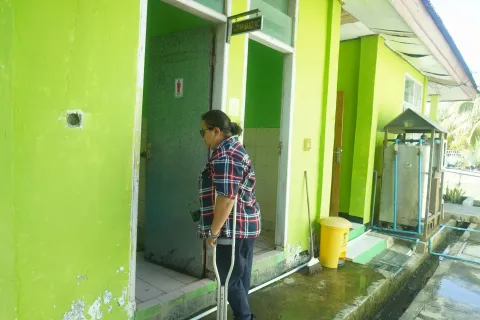
Puskesmas Mancobalang took a significant turn for the better when local health authorities and the community teamed up under the UNICEF-supported WASH FIT initiative to upgrade the sanitation and hygiene facilities. The renovation introduced clean, secure, disability-friendly and gender-separated toilets along with menstrual hygiene kits and mirrors.
WASH FIT is an innovative assessment methodology that identifies and remedies healthcare facilities' critical needs in water, sanitation and hygiene. By establishing new standards for the delivery of quality water and sanitation services, the tool ensures that interventions are both sustainable and inclusive.
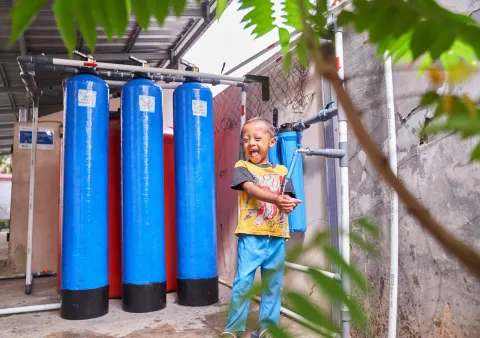
The new introduction of climate-resilient water towers and solar panels at Puskesmas Mancobalang has ensured a continuous water supply, which is crucial for maintaining hygiene and preventing infections.
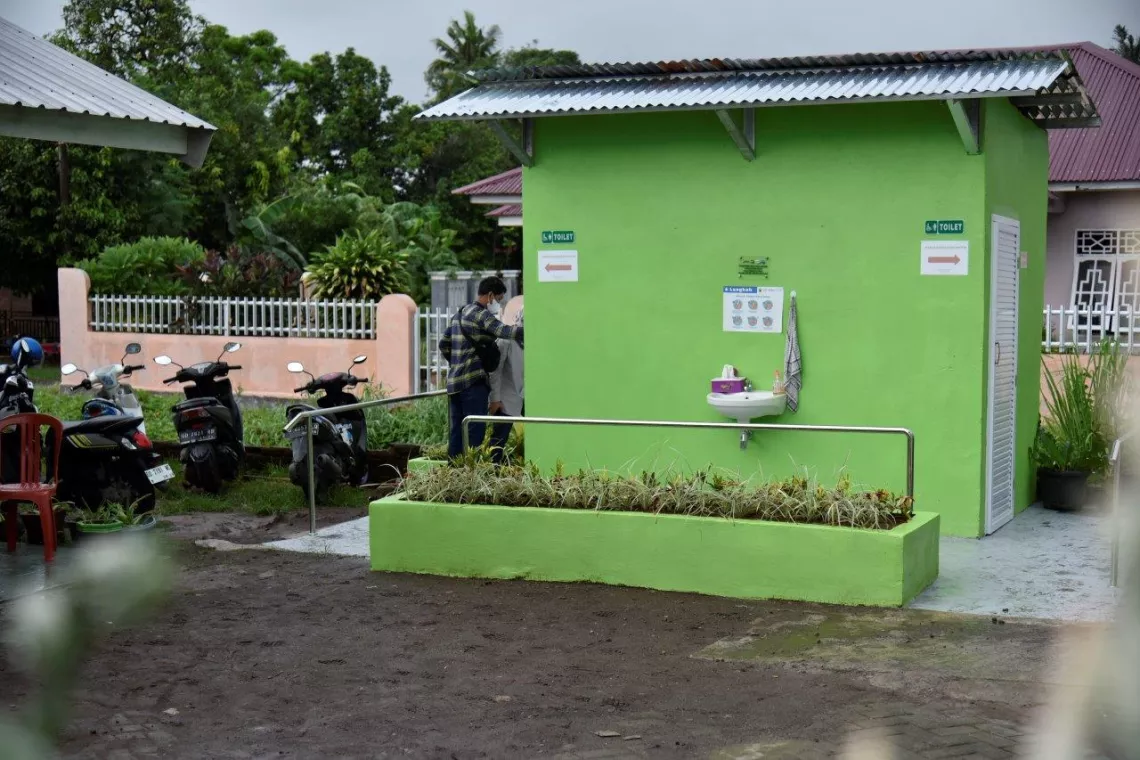
Before the transformation, limited funding and infrastructural constraints had long hindered improvements, leaving both patients and staff in a dire situation, especially during droughts and power outages.
"We recently went through a prolonged drought, making it challenging to access water from our well because of frequent power outages,” says Abdul Latif, the head of Puskesmas Mancobalang. “Thankfully, the recent upgrades have resolved both these issues. The lack of accessible toilets for disabled individuals, especially those in wheelchairs, was also a significant worry. I'm relieved to say that the new facilities have successfully addressed this concern too.”
With the support of National Health Insurance funding, Abdul is optimistic about maintaining these new standards. "I hope that all patients and their families can use the new toilet facilities wisely and we can be trusted to maintain them," he says.
“Adequate toilet facilities are not just a matter of convenience. They are foundational to hygiene, health and dignity,” says Nurlia Anas, a Posyandu cadre who works in Nur’s community. “The renovated toilets at Puskesmas Mancobalang serve as a model for the community, showing how essential services like sanitation can impact public health, particularly for vulnerable populations such as pregnant women, mothers, and children. The growth and development of children starts from their health, and their health starts from maintaining cleanliness, which starts from good toilets," he says.

Through WASH FIT, similar improvements have been done at 144 primary healthcare facilities across seven provinces in Indonesia. Benefits include reduced infection rates and improved community satisfaction.
Now, Nur wants to see the standards improve elsewhere in her community. "I want to have toilets with similar facilities at home and especially at school. The toilets in my school smell bad, there are no mirrors, water is rarely available, and there are no menstrual pads. Although there are separate facilities for male and female students, they are not accessible to those with disabilities," she says.
“With a modest investment of around $4,000 (USD), this project will potentially benefit over 40,000 users at just one puskesmas, showing how small, targeted investments in clean water and sanitation can go a long way,” says Henky Widjaja, Chief of UNICEF’s field office in Makassar. “This presents a strong argument for replicating this approach, demonstrating that significant improvements in public health can be made without relying on external assistance.”
UNICEF Indonesia is grateful for the support received from key partners, including the United States Government through the U.S. Agency for International Development (USAID).