Advocacy in Action: Yomi Uses Her Voice for Persons with Disabilities
Disability rights advocate pushes for more inclusive WASH facilities in health centres in Kupang
- English
- Bahasa Indonesia
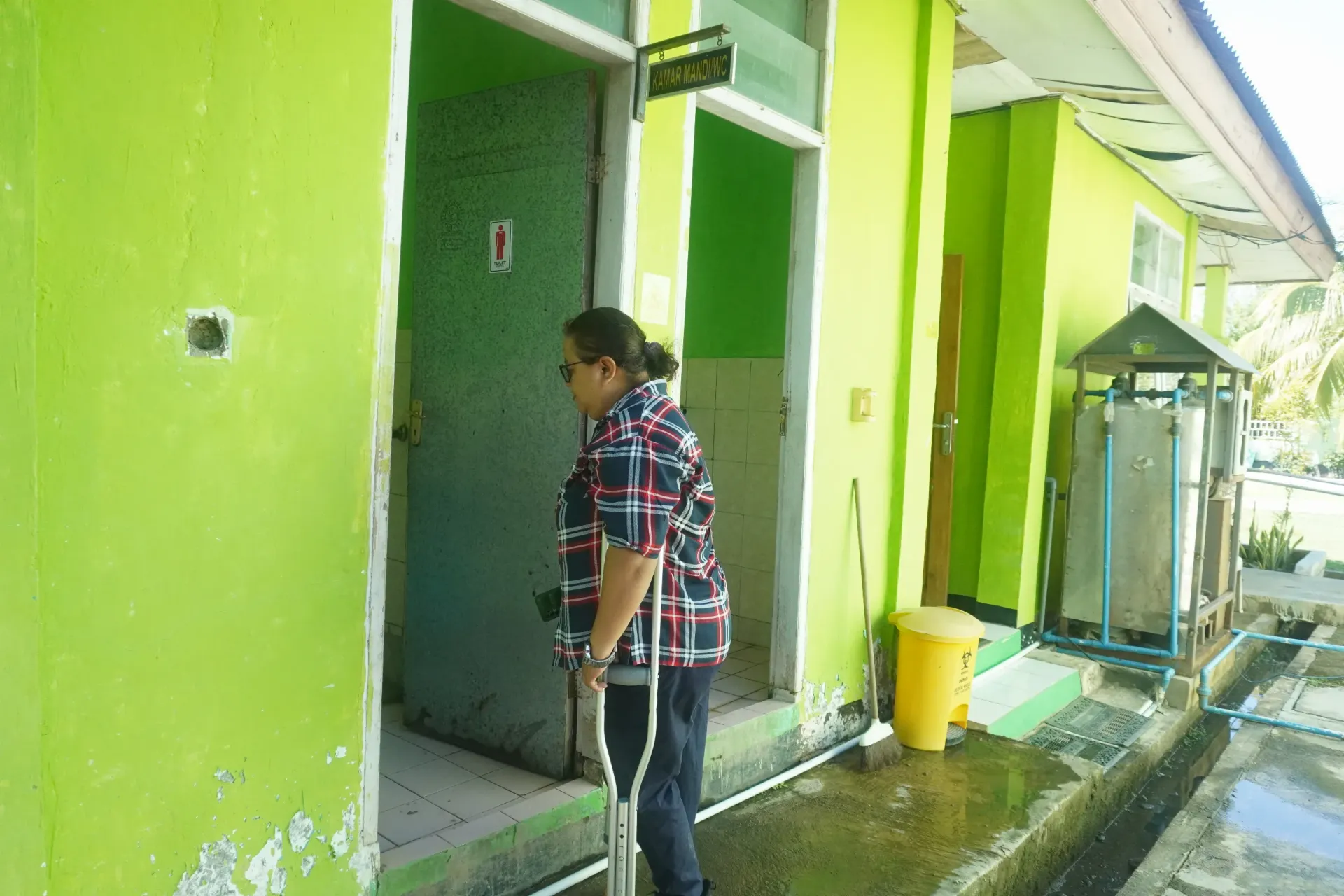
Dressed in her favorite plaid shirt and leaning on her crutches, Yomi greets patients and passersby in the waiting area of Poto Health Center, in Kupang District, East Nusa Tenggara (NTT). Many assume she is waiting for treatment, but she is here for something bigger – to champion inclusion.
Yomi was not born with a disability. A life-changing accident forced her to adapt – first to wheelchairs, then walkers, prosthetic legs, and now an armpit cane. Not because it was ideal, but because the world around her was not built for accessibility.
“Being disabled is not a disgrace,” says Yomi. “These are the puzzle pieces of life that I embrace. I build networks, support capacity building, and most importantly, I educate and empower people with disabilities, wherever they are.”
Yomi is a member of GARAMIN (Gerakan Advokasi Transformasi Disabilitas untuk Inklusi), a local non-governmental organization advocating for the rights of people with disabilities. Lately she has been traveling to remote health centres – sometimes crossing rivers where roads have washed away – to speak with health workers and community members.
“I have joined activities like this before, but they are always in a room,” she says. “Now, I see it with my own eyes. I speak with people. I can understand how basic access is still out of reach for many.”
UNICEF, with support from partners including the Government of the Republic of Korea, is working closely with the Ministry of Health to strengthen climate-resilient water, sanitation and hygiene (WASH) systems across health facilities in Indonesia.
This effort involves making it easier for persons with disabilities to access health facilities with improved WASH services and infection prevention and control, even during climate hazards. The Water and Sanitation for Health Facility Improvement (WASH FIT) and PERIKSA (Climate Resilience assessment) tools are used to help ensure participatory assessment and action planning to improve WASH services.
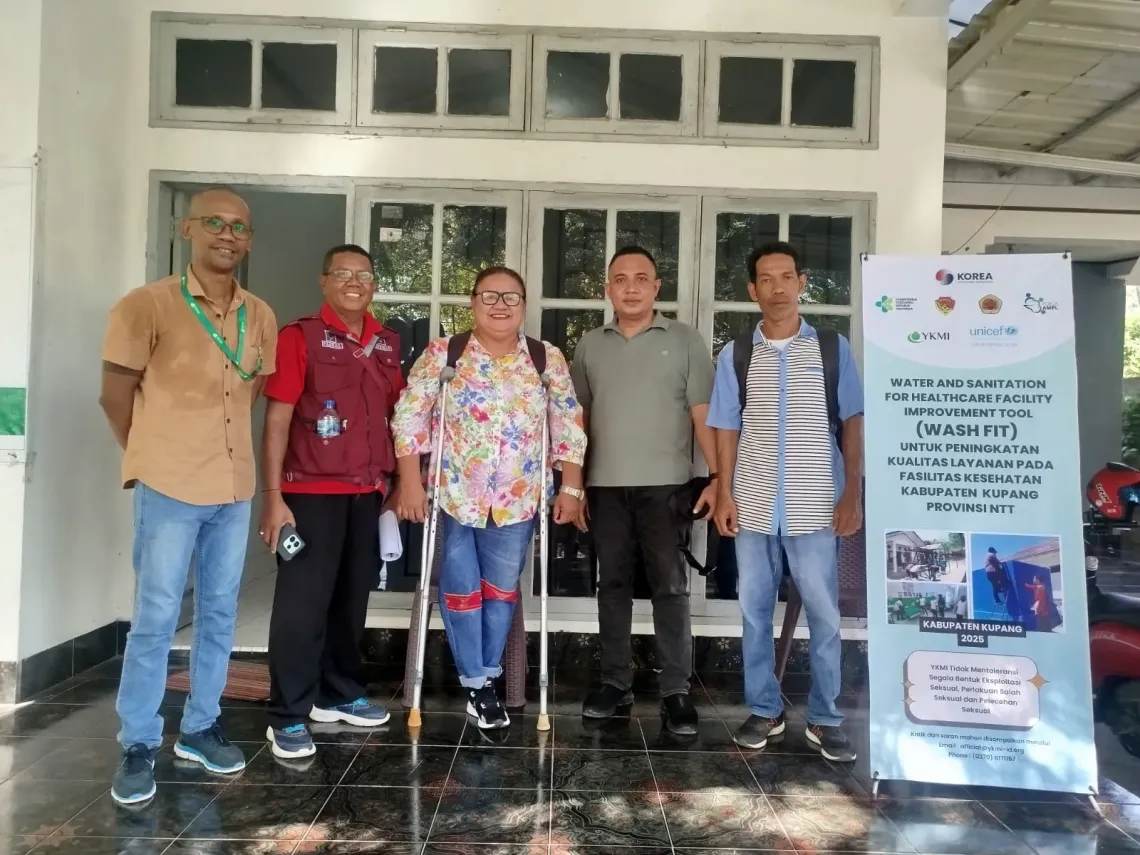
When GARAMIN was engaged to help assess WASH services in health facilities in 26 health centres (Puskesmas) in Kupang District, Yomi became involved with a deep sense of purpose.
“I never imagined I would be speaking directly to the Deputy Regent of Kupang, to the heads of planning and health offices,” she says, reflecting on the moment she presented the findings of the WASH assessments. “It felt like a dream, but it was real.”
Yomi didn’t just raise concerns, she offered solutions. With clarity and conviction, she outlined the need to train health workers, improve WASH infrastructure, involve communities in the planning process for constructing facilities, and develop Standard Operating Procedures for both routine and emergency situations.
Yomi and GARAMIN have a shared goal – to help ensure that health facilities are more accessible, inclusive and climate resilient. Their vision is clear: persons with disabilities must be included in all stages of decision-making, from village meetings to provincial planning.
Yomi’s advocacy goes far beyond reports. Using social media as a tool for change, she is actively promoting ‘NTT Inclusion 2030’ – a long-term vision and rallying call at building a more inclusive society where persons with disabilities and other vulnerable groups are actively involved in development planning.
Yomi knows that inclusion is not about pity. It is about justice and creating space for everyone to thrive with dignity. “NTT Inclusion 2030 is not an empty dream,” she says with a smile. “We are knitting it, thread by thread, with sincere hands and small but sure steps.”