Dignity for Children with Disabilities: Making Toilets Safe at Home
Safe sanitation initiative creates easy access in East Flores, NTT

- English
- Bahasa Indonesia
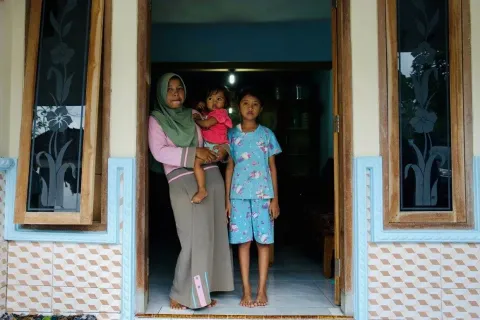
Fourteen-year-old Febi, who has multiple disabilities, used to start each day with a daunting challenge. To reach the toilet – located behind her home in Lamahoda village on Adonara Island in East Flores – Febi had to navigate through sand, rocks and uneven ground, risking injury. Her aging parents, who took turns helping her, feared that Febi would one day have to face this alone.
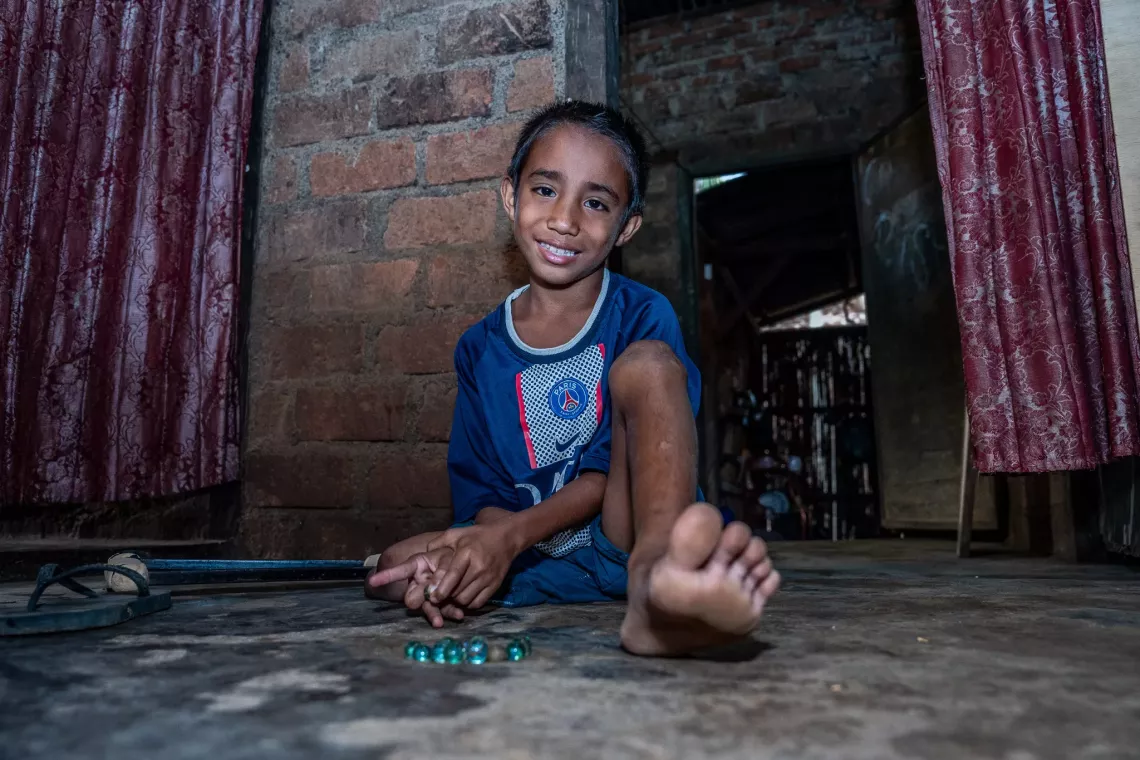
In nearby Lewopulo village, eight-year-old Chafanno had similar hardships. Born with a physical disability, he had no toilet at home. "We had to hitchhike to a house owned by a neighbour or relative, about 50 meters from home," recalls his father, Sukri. Sometimes Chafanno had to make the uncomfortable trip in the early morning darkness.
These scenarios are common in villages across Adonara Island, where many children and teenagers with disabilities struggle without the facilities they need close by. An estimated 1 in 500 persons who live on the island has a disability – yet accessible, disability-friendly toilets are rare, and many lack clean water.
The lack of proper basic sanitation facilities makes it difficult for these children to maintain proper hygiene, leaving them more vulnerable to infectious diseases including diarrhea, which can lead to chronic malnutrition and hinder growth, especially in the critical first 1,000 days of life.
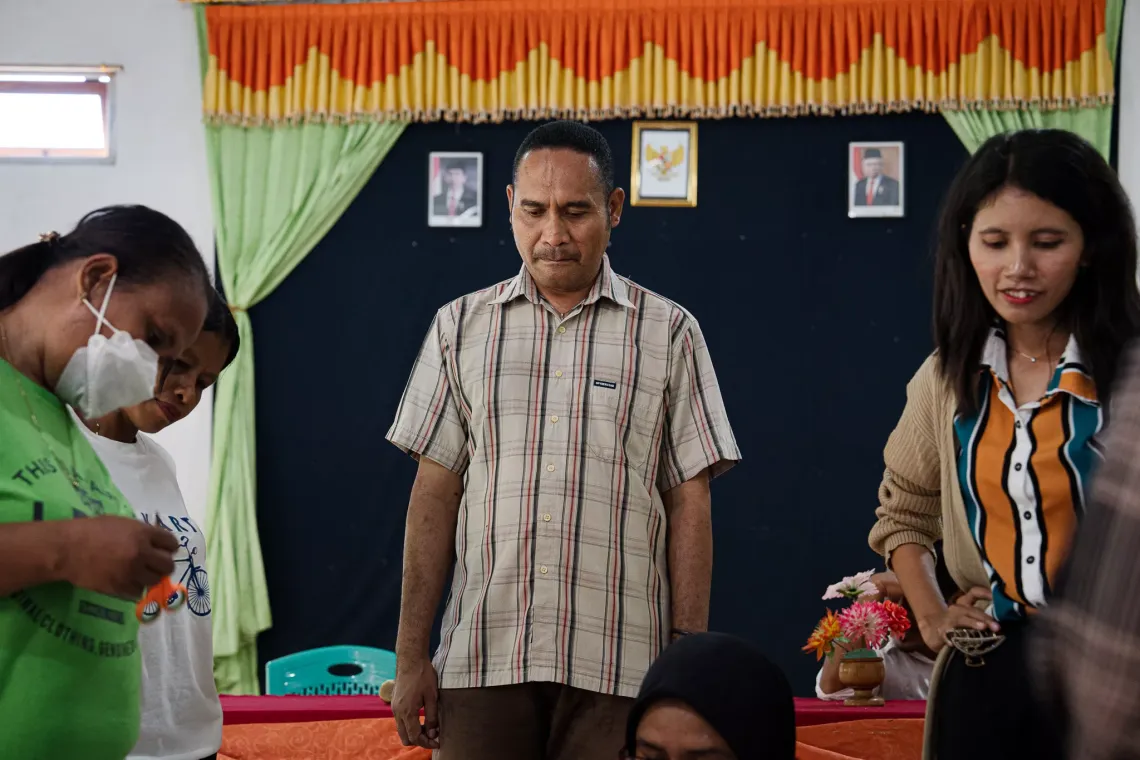
Over the last year, however, East Flores has seen significant improvements. The local government has collaborated with UNICEF to include Gender, Equality, Disability and Social Inclusion (GEDSI) considerations in the government-led Community-Based Total Sanitation (STBM) approach, a national policy designed to improve community hygiene and sanitation practices.
STBM is built on five pillars essential for the health of families: eliminating open defecation, promoting hand washing with soap, ensuring safe drinking water and food management, and the proper management of household waste, both solid and liquid.
The GEDSI component takes this approach a step further by addressing the unique challenges faced by vulnerable groups in accessing sanitation facilities, including upgrading bathrooms or toilets with handrails to make them disability-friendly. This is done through participatory discussions.
Through the partnership, sessions were held in over 570 communities across three districts in NTT and five districts in Papua to educate communities about the importance of accessible and safe toilets for everyone, including people with disabilities, women, and girls. Local health workers, sanitarians, disability organizations, and other stakeholders were engaged to further strengthen the initiative and ensure its sustainability.
As a result of these efforts, 25 communities in NTT have achieved open defecation-free status – a significant milestone. Since 2023, close to 63,000 persons in 50 villages in East Flores have benefited from the initiative, including Febi and Chafanno, who now have accessible toilets in their homes, outfitted with handrails and wider doors.
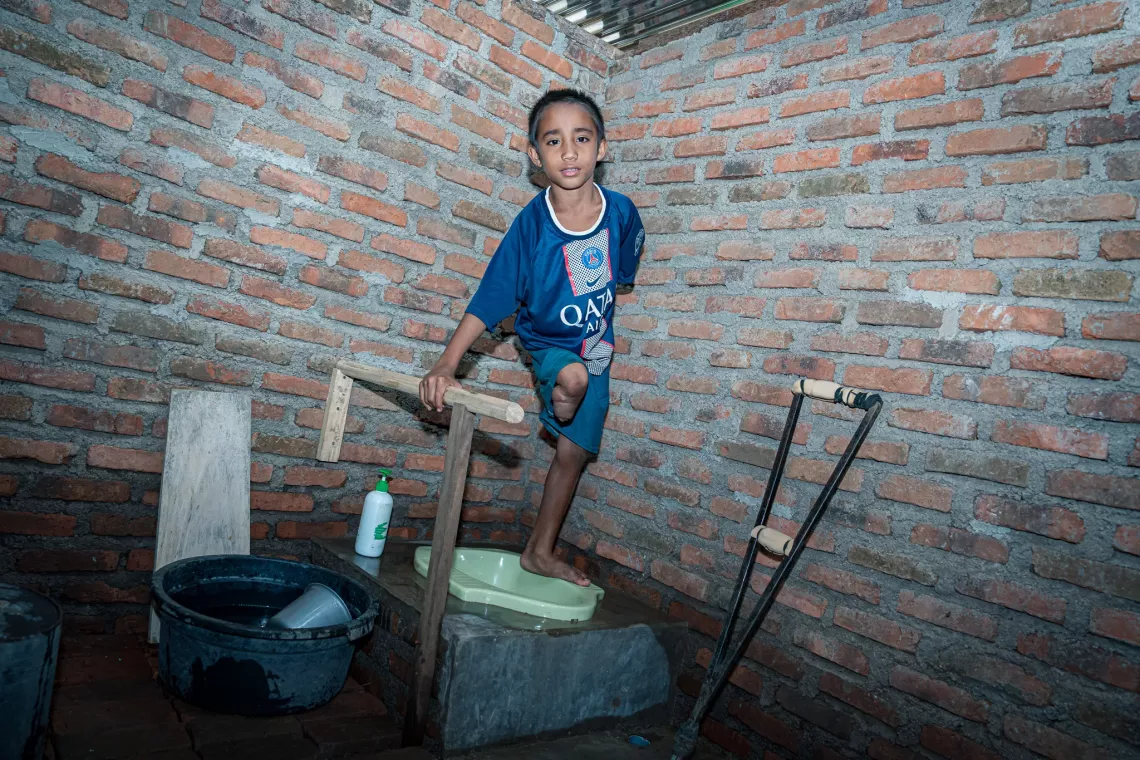
"I'm happy to finally have my own toilet. There is no need to be afraid anymore and I feel more enthusiastic every day," says Chafanno.
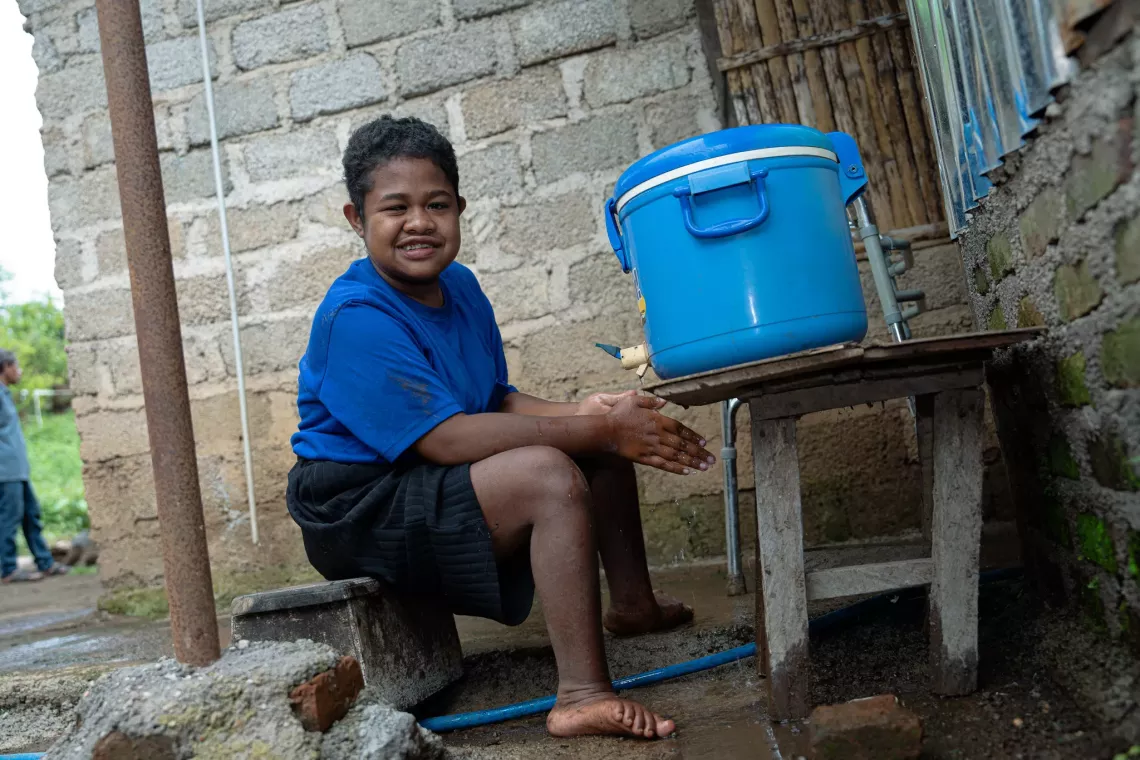
Febi’s mother, Yuliana, is relieved about her daughter’s future. “One day when I am no longer here, I can rest assured knowing Febi can go to the toilet easily by herself,” she says. “And I am certain she will show the world that she is capable of doing great things on her own.”