Let's act to reduce obesity
Facts you need to know about overweight and obesity

- English
- Bahasa Indonesia

The number of people affected by overweight and obesity in Indonesia has increased across all age groups. In the past, these conditions were more common among people living in cities, but now they are increasingly common in rural areas. Indonesia faces the 'triple burden of malnutrition', where overweight and obesity exists alongside other long-standing nutritional challenges, such as stunting and wasting.
Find out more about overweight and obesity and let's take action to ensure happier, healthier, and longer lives for everybody.
What are overweight and obesity?
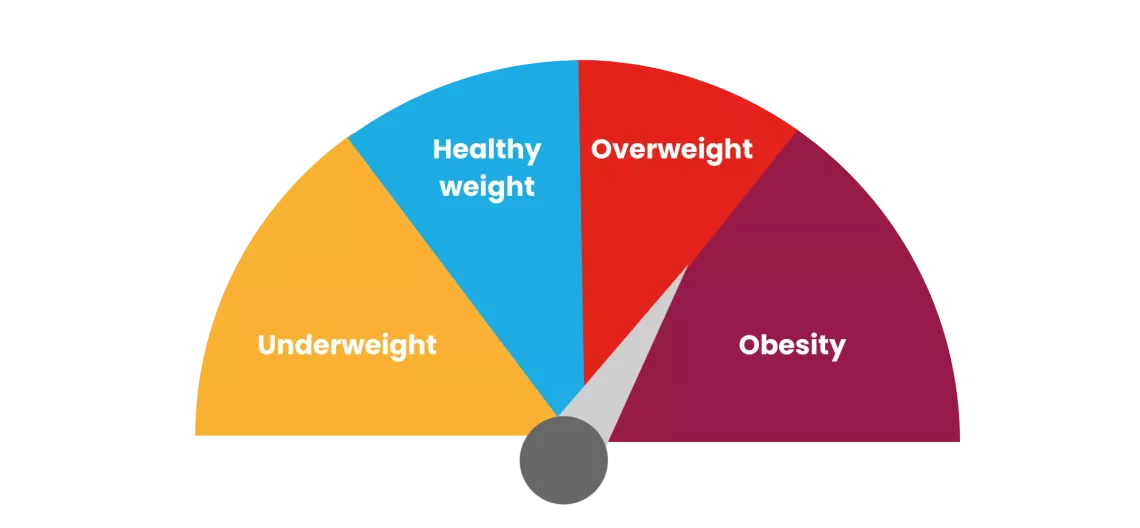
Overweight and obesity – when someone’s body weight is more than what is considered healthy for his or her height – are characterised by an excessive accumulation of body fat.
While obesity is a more severe form of overweight, both have serious health consequences such as increased risk of heart disease, diabetes, and other chronic diseases.
How to know if you have overweight or obesity?
The Body Mass Index (BMI) is the standard method to assess adult overweight or obesity. To calculate your BMI, use this formula or a calculator: BMI = weight (kg)
divided by the square of the height in meters (m).
For example: if you weigh 60 kg and your height is 165 cm (1.65 m), you can calculate your BMI as:

This would be considered a healthy weight (see the table below).
| HEALTH STATUS | BMI |
| Underweight | <18.5 |
| Normal | 18.5-24.9 |
| Overweight | 25.0-29.9 |
| Obese | 30.0 and above |
Source: World Health Organization
You can also use an online calculator to determine your BMI, like this one:
The guide above is for adults. Overweight and obesity in children and adolescents are measured differently, using age-specific thresholds. Please consult a doctor for more information on your BMI or health status.
What are the risks of overweight and obesity?
People who are overweight or obese are at greater risk of developing chronic diseases such as:

Diabetes

Heart disease

Stroke

Some types of cancer
Overweight children are more likely to become overweight or obese adults and could face physical and mental health challenges. They may be bullied because of their weight, which can lead to low self-esteem, anxiety, and depression.

What causes overweight and obesity?
While genetics may play a role as a predisposing factor, unhealthy diets and insufficient physical exercise are the primary direct causes of overweight and obesity.
When individuals consume more calories than required to meet their energy needs, their bodies store the excess as fat. A sedentary lifestyle characterized by minimal physical activity and prolonged periods of inactivity, such as watching TV, using smartphones, or playing video games, is another key risk factor. Besides these individual factors, environmental factors also play a prominent role. For example, the high availability of unhealthy foods in and around schools, and the marketing of these products across traditional and online media.

How to prevent overweight and obesity?

Eat a variety of foods and include at least 5 portions of fruits and vegetables per day.

Exercise, take the stairs instead of the lift, walk or dance - get your body moving.

Drink 6 to 8 glasses of plain water every day.

Eating healthily does not have to be expensive, cook local meals with family or friends, such as gado-gado, pindang telur, soto kudus, ikan kuah asam and many others.

Refer to the Indonesian dietary guidelines/Isi Piringku to guide your daily food choices.

Eat less foods that are high in unhealthy fats, sugar, and salt. For the maximum recommended daily amounts, remember G4-G1-L5.
What else can I do to improve my health?
What else can I do to improve my health?
These provide important information about what you are eating and drinking and help you to avoid products that are high in unhealthy fats, sugar, salt or any other ingredient that can be harmful – even in items marketed as ‘healthy’. For example, misleading adverts claim that fruit juices and sports drinks are ‘healthy’ – yet these are high in sugar – containing as much as two tablespoons per serving– which is well over the health recommendation.
Food companies use persuasive marketing techniques to encourage you to buy their products. For example, promotions such as “Buy 1, Get 1 Free” and other deals for items such as bubble tea, fast foods and sugary drinks can make you buy and consume more than you intended. Food and beverage companies utilise many tactics, including appealing packaging and flavours, promotions, free samples, merchandising, complimentary gifts with purchases, prize-based games and competitions, paid advertising, and partnerships with social media influencers to exploit individuals, who may make poor dietary decisions, often disguised as offering better value for money.
You can also advocate with your local government and other organisations to establish policies that can have significant impacts on our health. For example, regulations can require food companies to use nutrition labels on food products and limit the sale of unhealthy foods in school canteens.
Resources
Download and share these digital resources to learn more about overweight and obesity