Fathers Take the Lead on Immunization in Kupang City
How the engagement of fathers is changing traditional views on childcare and immunization

- English
- Bahasa Indonesia
One morning in the Oebobo district of Kupang city, Daniel Atawolo adjusts his three-year old daughter’s backpack and checks that her vaccination card is tucked inside. It is now a familiar routine for Daniel to bring his children to the integrated health post (Posyandu) in his village for check-ups and immunization. But just a year ago, he never imagined doing this himself.
“Before, it was always my wife bringing our children to the health centre,” Daniel recalls. “I thought my job was just to earn money. Child health was her responsibility. I did not realize how important it was for fathers to be involved too.”
Daniel’s job allows him flexibility to spend more time with his wife and their four children. Yet, like many fathers in the community, he was socialized to believe that childcare and health decisions were “women’s work.”
That changed after he was invited to an information session about gender barriers to immunization, organized by health workers at his local Posyandu. “I was surprised when I got the invitation,” he admits, smiling. “I asked the cadre, ‘Why me? Isn’t this for mothers?’ But I went to the information session, and it opened my eyes.”
During the session, Daniel and other fathers learned for the first time about a child’s immunization schedule, the importance of timely vaccines, and the shared responsibility of caregiving between mothers and fathers to improve child health. It was new information, which men in his community rarely have access to directly.
“I didn’t know much about immunization before,” Daniel reflects. “Usually, the information goes only to mothers at the Posyandu. But in the session, we talked about how fathers also need to take part. It made me realize how important our role is to support our children’s health outcomes.”
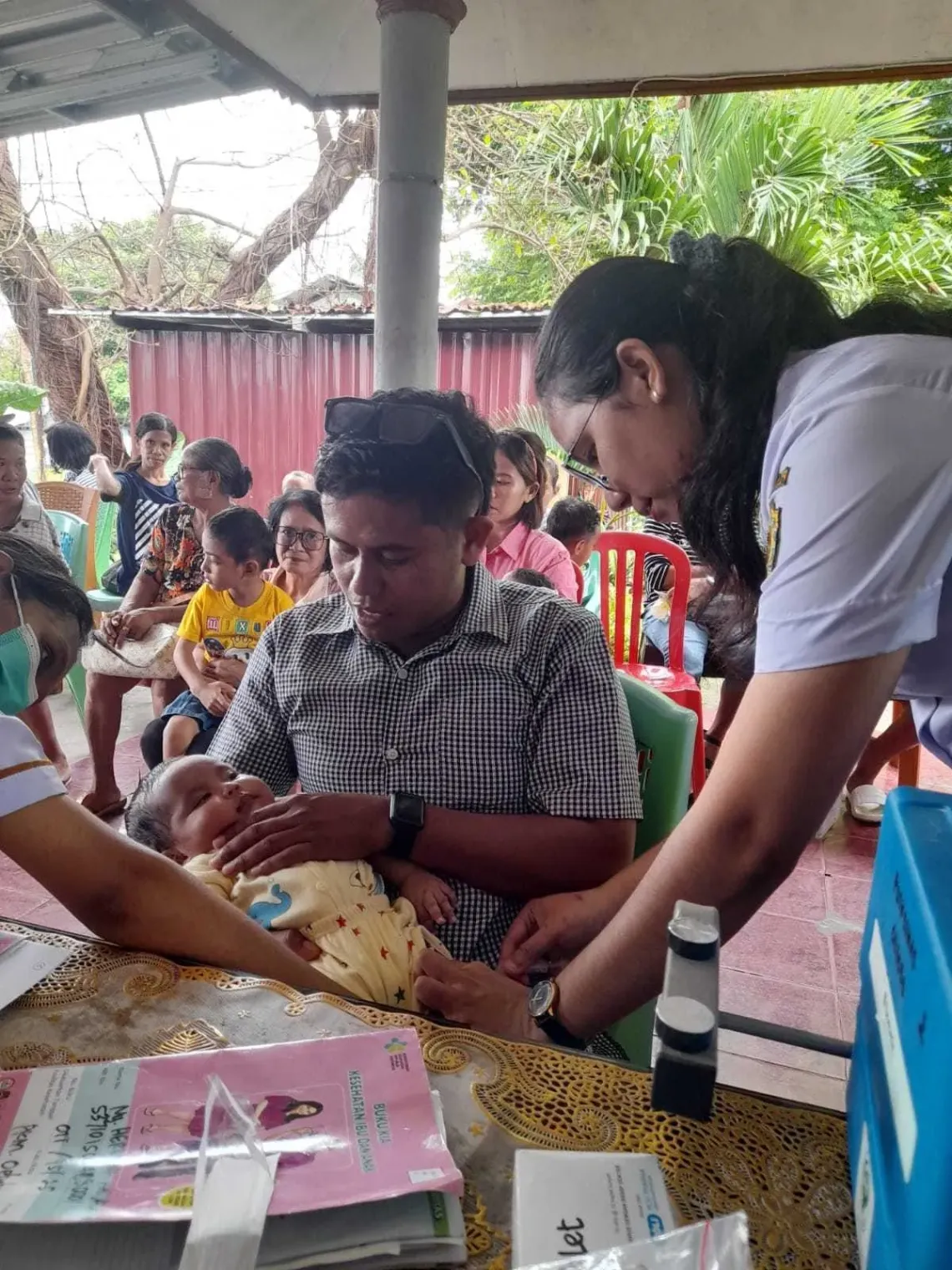
The session was part of the Fathers’ Engagement in Immunization campaign, implemented since 2024 by the East Nusa Tenggara (NTT) Provincial Health Office, the community-based organization Pemberdayaan dan Kesejahteraan Keluarga (PKK) / Family Empowerment and Welfare, and religious organizations, with support from UNICEF.
The initiative aims to strengthen fathers’ roles in child health through a gender-responsive approach. It involves training fathers, caregivers, community and religious leaders, strengthening the capacity of health workers to recognize and address gender barriers, and supporting Posyandu to develop local strategies that make immunization more inclusive and accessible.
In just over a year, more than 140 fathers in Kupang city have become male champions for immunization – fathers who promote immunization in their community by supporting their own children’s vaccination and encouraging other fathers to do the same.
Champions share accurate information, counter misconceptions and serve as positive role models, often drawing from their own experience of overcoming vaccine hesitancy.
Daniel now makes it a point to accompany his wife to the Posyandu and to help manage their children’s immunization schedules. The change has strengthened his family relationships.
“My wife says she feels more supported,” he says. “She has more time to rest or do other things while I bring them to the Posyandu. And I feel a stronger connection to my children now.”
The impact extends beyond his own home. When neighbours saw Daniel bringing his children to the Posyandu, some began doing the same. “At first they teased me,” he laughs. “They said, ‘Why are you doing a mother’s job?’ But now, more fathers are joining in. It’s becoming normal in my community.”
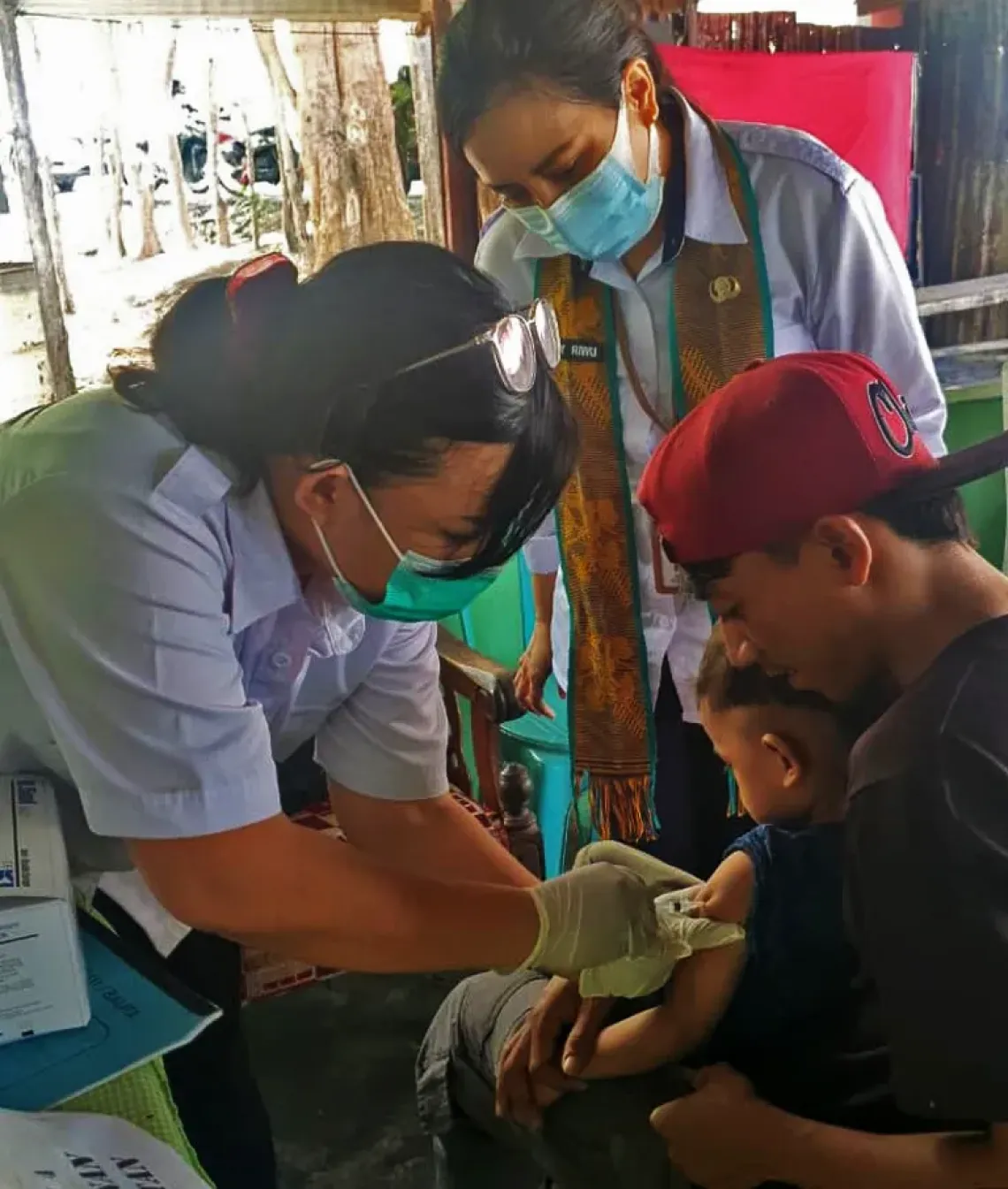
He continues to encourage others whenever he can, often informally, at community gatherings. “It’s easier to talk about these things in a relaxed setting,” he explains. “Nowadays, at my Posyandu, it’s not just me who brings the children, many other fathers also come. It has become something normal, and we no longer feel shy even though it’s the fathers, not the mothers, who bring the children.”
While there are still fathers who hesitate to get involved, Daniel believes change is possible, one conversation at a time. “My message to other fathers is to be more active in helping mothers,” he says. “Taking care of children is not just a mother’s duty. We have to share it. When we do, our families become stronger and our children healthier.”
To help ensure lasting impact, health workers will be trained to recognize and help overcome the gender barriers that prevent families from accessing immunization services. By including gender awareness in health training institutions, universities and government learning platforms, the model can spread nationally. This way, fathers’ involvement in childcare and immunization becomes part of everyday life and ensures children grow up healthier.