Building Trust to Close the Immunization Gap in Aceh
Empowering health workers to reach every child with vaccines
- English
- Bahasa Indonesia
Marlina walks door to door under a relentless sun. Navigating the narrow, winding roads between the rice fields in Aceh Province, she tightens her grip on a stack of papers: health records. They belong to dozens of local children. Some of them have never had a single vaccine (also referred to as zero-dose children). Others simply missed too many.
As the immunization coordinator for the community health centre (Puskesmas) in Padang Tiji, Pidie District, this has been her routine for the last 15 years. “Home visits are what we call immunization sweeping. We are looking for children who have dropped out or are 'zero-dose' in their immunization schedule,” explains Marlina. Though visibly tired, she keeps going to make sure every child is protected.
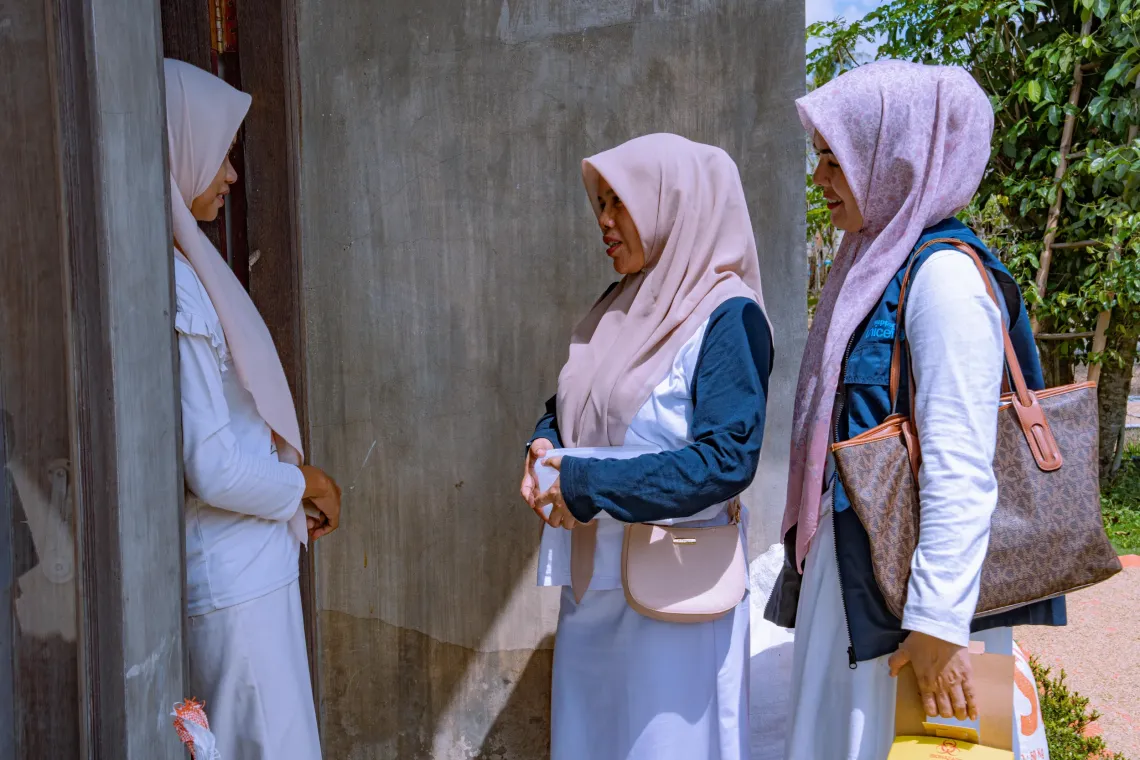
She finally reaches Dahniar’s doorstep. A young mother of one, Dahniar is a familiar face to Marlina. Although a community health worker (or ‘Health Cadre’) herself, she is among the mothers who are hesitant to have their children immunized because they are afraid of the adverse effects that may follow.
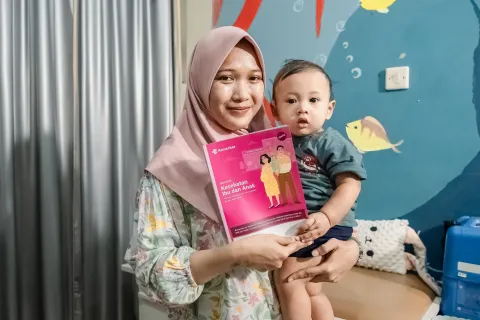
“I am afraid of the high fever, especially since there is no one else at home. It’s just me and my child,” says Dahniar when she thinks about vaccinating her nine-month-old son, Shaquel. This fear is amplified by the influence of those around her. “Many people told me it’s better not to immunize at all, just to avoid the fever,” she continues.
Dahniar's experience reflects a wider problem: Pidie is one of the districts with the lowest immunization rates in Aceh, itself one of the provinces with the lowest rates in Indonesia.
In 2024, 36.7 per cent of children were fully immunized in Aceh compared to 87.7 per cent across the country, and only 5 per cent of children under 1 year old were immunized in Pidie District (Ministry of Health). In addition, Pidie has one of the province’s highest rates of children who have not received a single dose of any vaccine, with approximately at 6,900 children classified as zero-dose. (Pidie Regency Health Office).
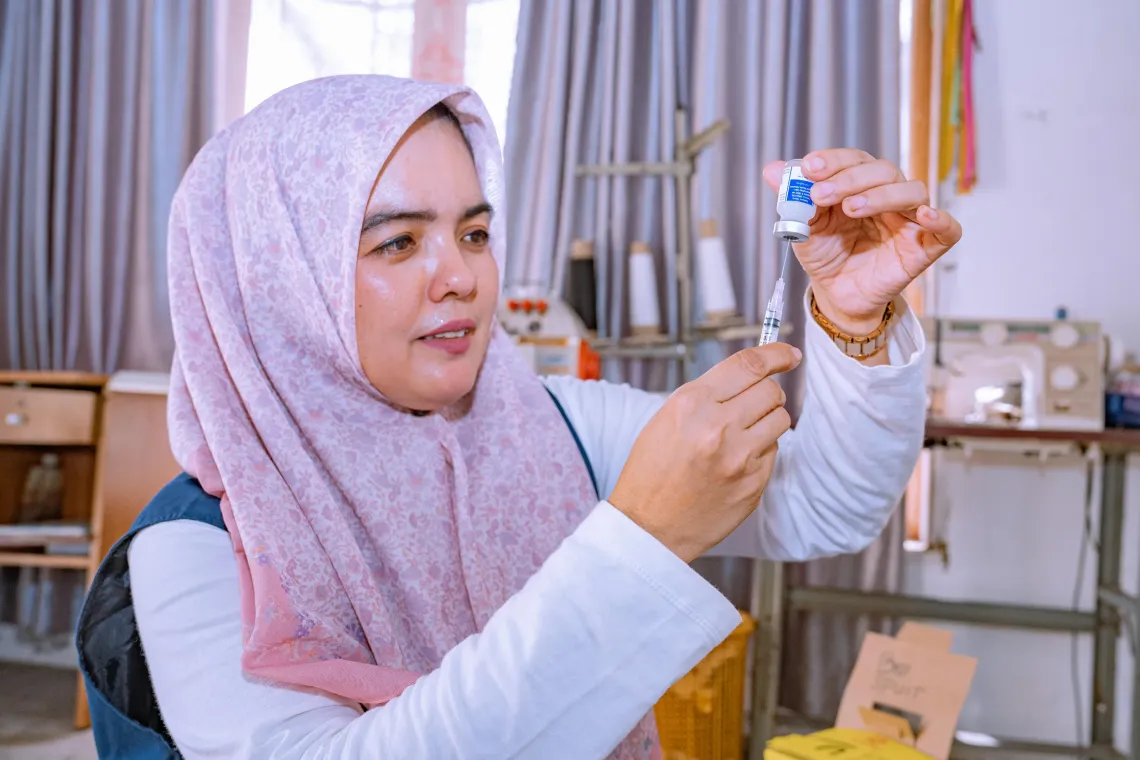
Missing immunization is costly and dangerous, for everyone. When too many children are unvaccinated, diseases can spread. This threatens to reverse progress towards protecting every child from vaccine-preventable diseases. As a painful reminder of this, the latest polio outbreak in Pidie in 2022 was a direct consequence of immunization gaps.
To make sure every child can receive timely protection through immunization, UNICEF is working with the Ministry of Health and its partners – including Gavi, the Vaccine Alliance – on the MEUSEURAYA+ initiative. Rooted in Acehnese culture, the initiative explicitly frames immunization improvement as a community endeavour grounded in shared responsibility and local cultural values. Its goal is to improve routine immunization coverage in Aceh through regular training, mentoring and monitoring of health workers.
A key focus of MEUSEURAYA+ is to improve health workers’ communication skills with communities. Engaging with parents with more empathy and clarity helps build trust, which turns concerns into confidence. This is particularly important to address vaccine hesitancy and misinformation, which have historically been barriers for families to vaccinate their children.
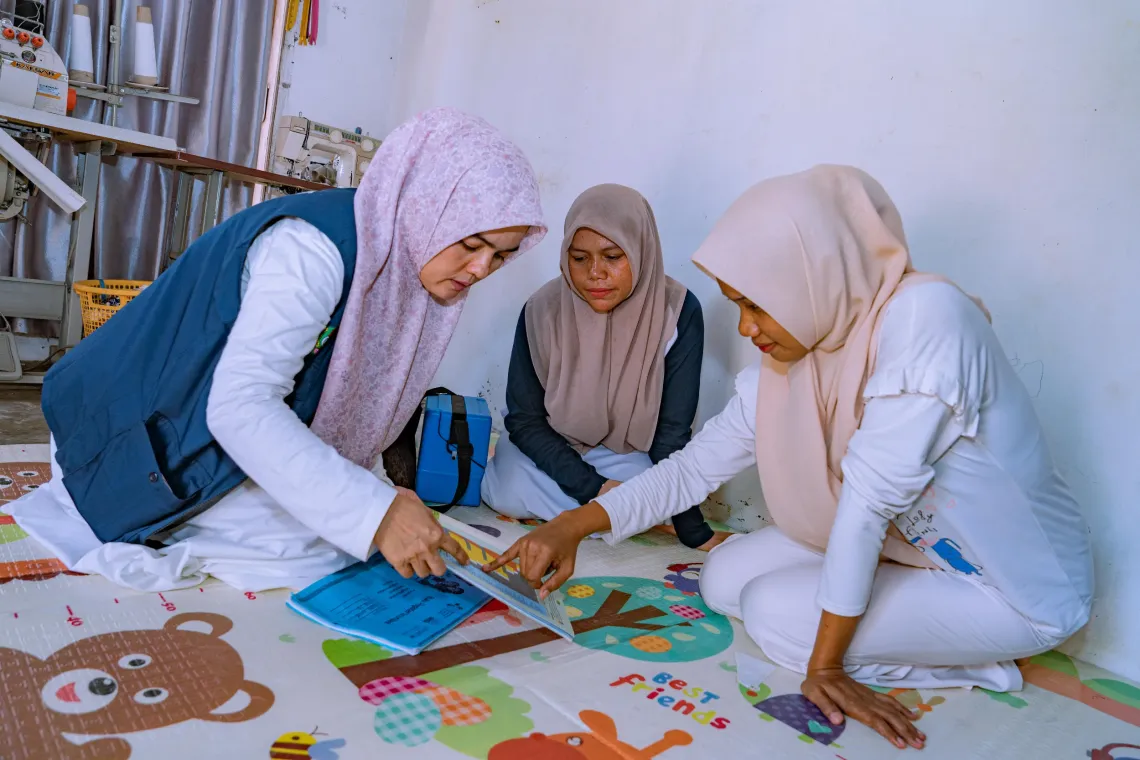
Marlina is one of the health workers who has been trained as part of the MEUSEURAYA+ initiative. She is among 75 other health workers trained under this initiative. As a result, communicating with parents has become much easier for her. Previously, she was quick to judge parents who were hesitant or refused to vaccinate their children. Now, she can listen with empathy and understanding, and handpicking words to get her message across more clearly.
“I use much simpler words now... I avoid medical jargon that people might not fully grasp or understand,” she explains. The results? Parents are more open, as understanding becomes mutual. “People are more willing to listen, and they truly understand what we are saying,” adds Marlina.
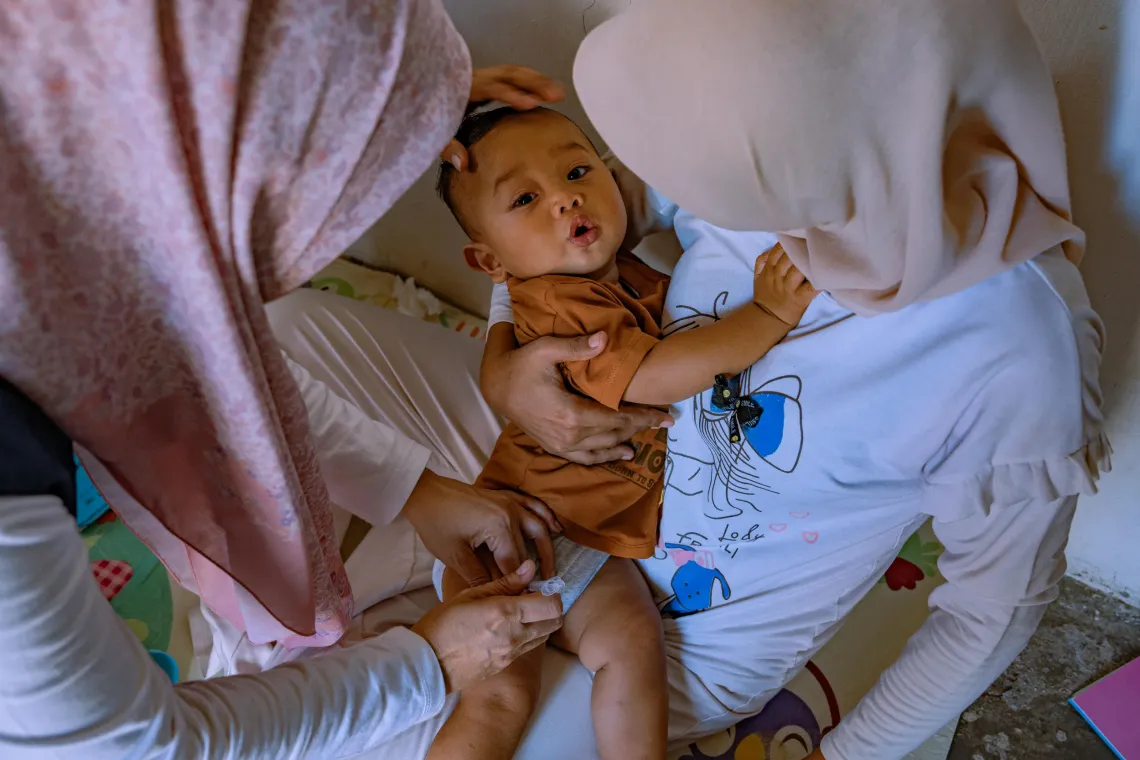
Such positive impact is reflected in Dahniar’s choice. Marlina’s new approach changed not only how Dahniar understood immunization, but how she felt about it. Until then, her knowledge of side effects following immunization came only from rumors, planting seeds of fear towards a process that she did not understand well.
When Marlina explained reassuringly that possible side effects are manageable, Dahniar was surprised. Now, she sees immunization in a completely different light. “Immunization is like an umbrella that protects a child from the rain. In the same way, immunization protects us from disease,” she says, while cradling Shaquel as he drifts off to sleep.
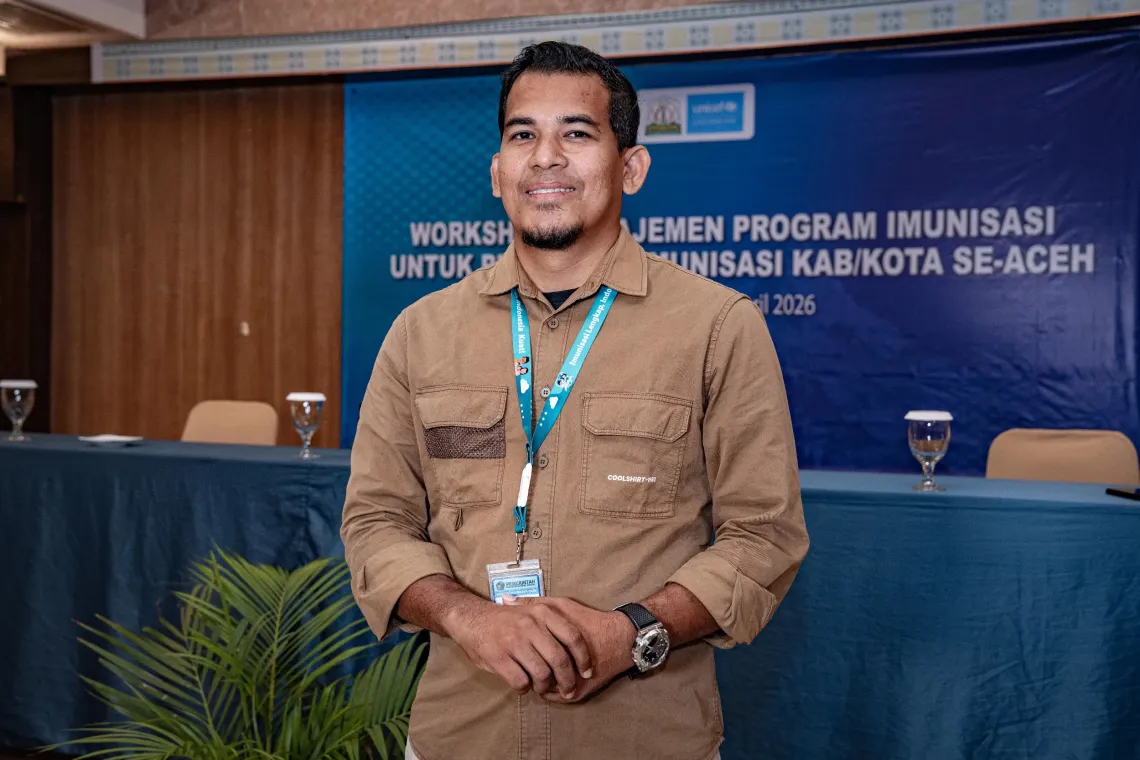
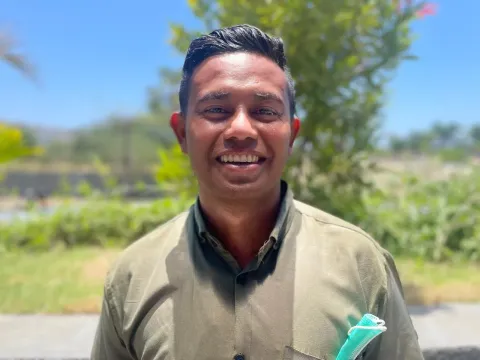
In addition to training, post-immunization monitoring is a vital part of building family confidence. Arif Irwandi, head of the District Immunization Team, explains that health workers are expected to pay close attention to children after vaccinations and respond to parents' concerns with care and clarity.
“We explain that a minor reaction [an adverse event following immunization] is a sign that the immunization is working. It shows that the child’s body is successfully building antigens and antibodies – the building blocks of immunity – to keep them protected,” he says.
Since the initiative was launched in 2025, immunization coverage in Pidie District has doubled, from 5 per cent in 2024 to 10 per cent in 2025 (source: Pidie District Health Office). “Through MEUSEURAYA+, health workers gained skills and knowledge they could apply day to day. This led to measurable improvements in immunization services across several participating health centers and villages,” continues Irwandi.
MEUSEURAYA+ is part of larger efforts. UNICEF is supporting Indonesia’s Ministry of Health to reach zero-dose children in ten priority areas across the country, with a goal of cutting the number of unvaccinated children by 25 per cent.
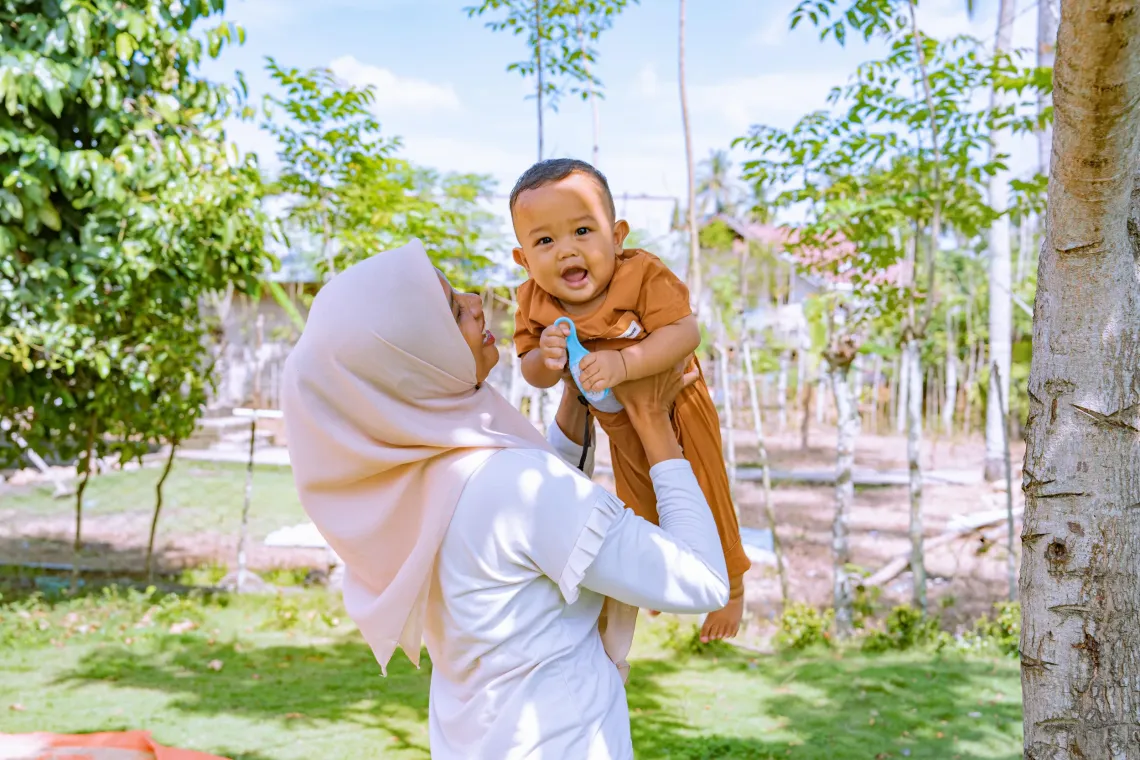
Today, nine-month-old Shaquel does not get sick as often. Seeing this change in her own son, Dahniar is now a strong advocate for getting children immunized. She has also become more active as a health worker, helping families understand the importance of vaccinating children on time.
"Vaccines are there to help our children grow healthy, not make them sick," explains Dahniar. "I think it has definitely helped my child to be healthier, happier and better prepared to face his future."