Adolescent voices lead to lifesaving choices in Central Java
Peer counsellors educate adolescents about the importance of HPV vaccination

- English
- Bahasa Indonesia
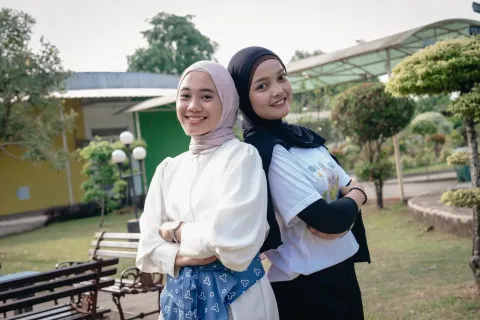
In the coastal city of Pekalongan in Central Java, two adolescent girls are reshaping how their peers think about health. Rara and Hesty are not doctors or nurses, but they are becoming powerful advocates for something life-saving: the Human Papillomavirus (HPV) vaccine.
Cervical cancer is one of the leading causes of death among women globally. In Indonesia, it is the second most common cause of cancer-related deaths among women, with nearly 21,000 lives lost each year. Most cervical cancer cases – around 95 per cent – are caused by the HPV virus, which can be prevented through vaccination.
But many girls don’t know that, leaving them vulnerable. That’s where Rara and Hesty come in.


At 16, Rara realized how little her friends talked about health. After facing her own health scare and speaking with her sister, a doctor, she decided to learn more and eventually became a peer counsellor at her school.
Now she spends time patiently listening to concerns, responding with empathy. She explains HPV and other health topics in everyday language, making it easier for other students to understand. When questions go beyond her knowledge, she directs them to health workers for support.
“I feel like it’s important to seek out things we don’t yet know, especially when it comes to health. That’s beneficial not only for ourselves but also for others,” Rara shares. “That's why I try to make the most of small opportunities that might have a big impact on myself and those around me.”
"I try to make the most of small opportunities that might have a big impact on myself and those around me.”


Far away in a quiet, secluded park, 17-year-old Hesty, who is also a peer counsellor, leads conversations with younger girls. Sitting beneath the hazy sun, she listens attentively and takes notes while they speak.
She has learned that her peers do not spend enough time on their mental, physical or reproductive health. "Some adolescents still take health lightly,” she reflects. “There is no guarantee they are actually paying attention to it.”
As a member of the Pekalongan Children’s Forum, Hesty also engages directly with local government officials, making sure young voices are heard in decisions that affect their well-being. “I learned how to make our voices heard and face people with confidence,” she says. “This has really changed how I see myself.”
“I learned how to make our voices heard and face people with confidence.”
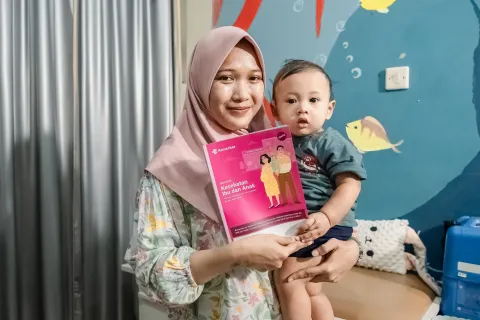
These efforts by Rara and Hesty are part of Adolescent-Friendly Health Services (AFHS/PKPR), a national programme established in 2003 by the Health Ministry, with support from UNICEF, to provide comprehensive care for adolescents aged 10–19 years. The aim is to expand access to quality, adolescent-friendly care, supporting girls to lead healthier lives and understand more about reproductive health.
In Pekalongan, UNICEF has worked closely with the District Health and Education Offices and the Office of Women’s Empowerment and Child Protection to include HPV vaccination in health services delivered through primary health centres.
The programme empowers adolescents like Rara and Hesty to become agents of change – educating and influencing their friends and communities about the importance of getting vaccinated and advocating for policy changes with decision makers.


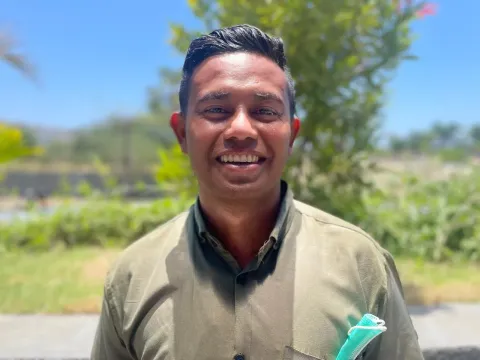
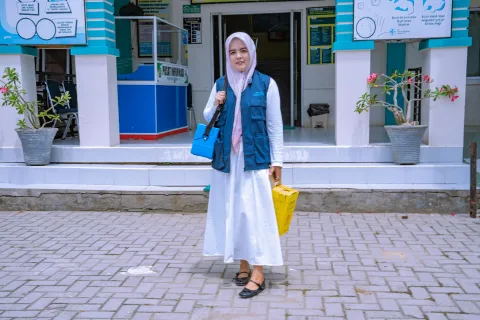
Local health workers like Dr. Dian Puspitasari, Head of the Jenggot health centre, know that peer counsellors are key to reaching adolescent girls. “Their role is important. When they encourage their friends to get involved, that is exactly what we hope for,” she explains. “The biggest challenge is when young girls feel they don’t need it [health services].”
Slamet Budianto, Head of the District Health Office of Pekalongan city, also believes that engaging youth makes the initiative sustainable. “If they’re given a direct role, the hope is that they’ll feel a sense of ownership,” he says. “When we involve young people, the programme flows naturally.”
Through the Adolescent-Friendly Health Services initiative, peer counsellors like Rara and Hesty are playing a pivotal role in bridging knowledge gaps, encouraging open dialogue and linking their peers to trusted health workers. This approach not only empowers adolescents to make informed health decisions but also builds community trust and ownership, helping to ensure that HPV vaccination is seen as a vital step toward protecting girls’ health and future aspirations.
To ensure lasting impact, health centres in Pekalongan are taking steps to make adolescent participation a consistent part of health services. Dr. Dian has embedded peer counselling in the annual strategy for the Jenggot health centre.
Hesty is beginning to see something new among her peers – a growing desire to be healthier and better prepared for the future. Her conversations are helping them realize that caring for their health is also a way of realizing their dreams.
“My hope is that we continue to protect girls’ and women’s health, their voices, and their empowerment,” she says. “They are vital for our shared future.”