AstraZeneca Young Health Programme and UNICEF extend collaboration to advance adolescent health in Indonesia
New five-year phase will support government efforts to strengthen noncommunicable disease prevention, youth leadership, adolescent-responsive services and healthier environments for young people
- English
- Bahasa Indonesia
JAKARTA, 1 October 2026 – AstraZeneca’s Young Health Programme and UNICEF are extending their collaboration in Indonesia for another five years to support the Government’s efforts to prevent noncommunicable diseases (NCDs) among adolescents and support young people to lead healthier lives.
Indonesia is home to around 47 million adolescents aged 10–19, representing 17 per cent of the population. Adolescence is an important period for establishing behaviours that can affect health later in life. In recent years, Indonesia has made significant progress in improving adolescent health and well-being. Yet, important gaps remain. According to the Ministry of Health’s 2023 Indonesian Health Survey (SKI), overweight affects 12.1 per cent of adolescents aged 13-15 and 8.8 per cent of those aged 16-18, while obesity affects 4.1 per cent and 3.3 per cent of the same age groups, respectively. The same survey found that just 2.4 per cent of adolescents meet the recommended intake of fruits and vegetables. Tobacco use also remains a concern, with the 2023 Global School-based Student Health Survey (GSHS) finding that 23 per cent of adolescents aged 13-17 use tobacco.
Addressing these challenges requires early action to prevent NCDs and greater support for adolescents to adopt healthy behaviours, including through schools, health services and communities.
In Indonesia, AstraZeneca’s Young Health Programme and UNICEF have worked together since 2020 to support adolescent health and NCD prevention through health promotion, youth leadership and peer-led action, adolescent health services, and policy and systems strengthening. The new five-year phase will build on this work by supporting government-led efforts at national and subnational levels, specifically through collaboration with the Ministry of Health and local authorities, to promote healthy behaviours, strengthen adolescent-responsive services and environments, empower young people as leaders and partners in development, and enhance the policies and systems needed to improve adolescent health and wellbeing.
“Over the past five years, our partnership with AstraZeneca’s Young Health Programme has reached more than 2.5 million adolescents in Indonesia with information on healthier lifestyles, strengthened youth-led action, supported more responsive adolescent health services, and helped reflect young people’s voices in policies and programmes that affect their health,” said Thomas Davin, UNICEF Indonesia Representative. “In the coming five years, this partnership will help more adolescents adopt healthy behaviours and will address the growing impacts of climate change on their health and well-being, contributing to lasting positive change in adolescent health and prevention of non-communicable diseases.”
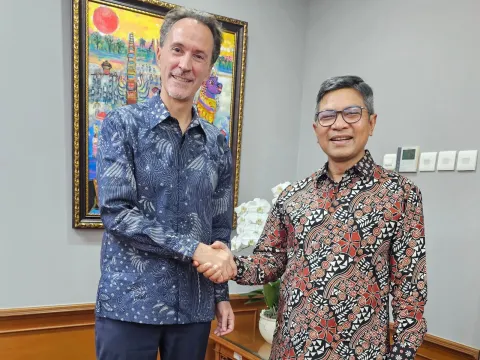
Esra Erkomay, President Director AstraZeneca Indonesia, said, “Investing in young people’s health is an investment in Indonesia’s future. Through our continued partnership with UNICEF, we aim to equip more young people with the knowledge, skills and opportunities to play an active role in preventing non-communicable diseases and creating healthier environments."
“By expanding the Young Health Programme, we hope to drive lasting change—not only for young people today, but also for their families and communities,” said Esra Erkomay, President Director of AstraZeneca Indonesia.
During the previous phase, UNICEF’s support enabled reaching 2.5 million youth with behaviour change communication on NCD prevention, including nutrition, physical activity, mental health and tobacco use. Tobacco-use screening was also integrated into adolescent health services in East Java, West Nusa Tenggara, East Nusa Tenggara, South Sulawesi.
The partnership also strengthened youth participation and leadership on adolescent health. More than 25,000 adolescents and 350 youth leaders were trained through advocacy networks and school-based initiatives, in collaboration with Ministry of Health, Provincial Health Offices in Aceh and Bandung, and local youth groups in Jakarta, Aceh and Bandung. In addition, 120 young leaders strengthened their skills to participate meaningfully in Ministry of Health consultations that helped shape national adolescent health guidelines. More than 30,000 young people were also engaged through an open call to represent Indonesia at the 4th Global NCD Alliance Forum.
The previous phase also contributed to efforts to strengthen tobacco control for children and adolescents through Government Regulation No. 28/2024, expand the national School Health Programme, and supported the development of the guideline to conduct Indonesia’s school-based free health screening initiative or CKG Sekolah, as well as field testings to selected schools in Jakarta and Banten, prior to the national launching.
From 2026 to 2030, the collaboration in Indonesia will focus on three areas: promoting healthy behaviours and meaningful youth engagement; strengthening adolescent-responsive environments and services; and supporting policy, evidence and systems for adolescent health and NCD prevention.
This will include strengthening NCD prevention education in collaboration with Ministry of Health and relevant ministries including Ministry of Education, Ministry of Religious Affairs, Ministry of Social Affair, through schools, communities and digital platforms; improving early awareness, screening and follow-up; supporting adolescent leadership; and building the capacity of health providers and teachers on prevention, counselling and follow-up.
The next phase will also consider how climate and environmental risks affect adolescent health, including through climate-informed prevention approaches in schools and youth-led action on climate and health.
The Indonesia programme is part of an extended global collaboration between UNICEF and AstraZeneca’s Young Health Programme from 2026 to 2030. Globally, the partnership aims to reach seven million young people across seven countries with NCD prevention messages, support 2,000 schools and community centres, empower 750,000 young leaders to advocate for change, and contribute to at least 17 policy actions to strengthen NCD prevention and improve youth health outcomes.
The new phase builds on six years of global collaboration between UNICEF and AstraZeneca’s Young Health Programme, with continued emphasis on youth-led action, health equity and climate responsiveness.
AstraZeneca has announced a total investment of more than US$100 million in its global Young Health Programme between 2010 and 2030 across all supported countries. This includes US$1.3 million for the programme in Indonesia for the 2026–2030 period. The programme supports young people, especially those in vulnerable situations, to prevent NCDs and advocate for healthier environments and policies.
# # #
Notes to editors
UNICEF does not endorse any company, brand, product or service.
Media contacts
About UNICEF
UNICEF promotes the rights and wellbeing of every child, in everything we do. Together with our partners, we work in 190 countries and territories to translate that commitment into practical action, focusing special effort on reaching the most vulnerable and excluded children, to the benefit of all children, everywhere.
For more information about UNICEF and its work for children, visit www.unicef.org.