Breathe easy: East Java pursues smoke-free schools
Smoking prevention campaign, screening and cessation programme for adolescents
- English
- Bahasa Indonesia
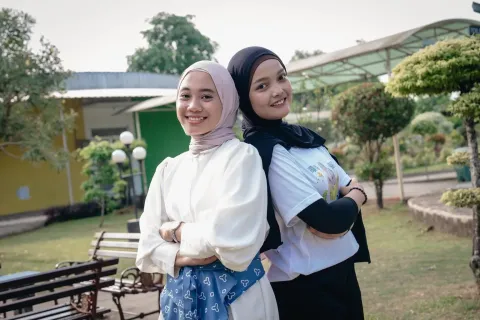
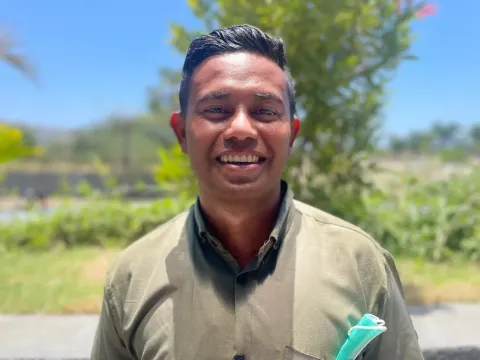
In the tobacco-filled landscape of East Java, 16-year-olds Aisya Nur Jannah and Naufal Rifki Ramadhan, students of Annur Islamic Boarding School in Malang District are trying to change the norms they grew up with. Against the odds, in an environment that normalizes smoking, they are choosing a different path.
“I have many friends who smoke, and I have been encouraged to join them. However, I have chosen not to give in, no matter how curious I may have been, because I am aware that smoking will limit my options for pursuing next education paths.”
“I have my father, brothers and uncles who are active smokers at home,” says Aisya. While she could easily be swayed by the habits prevalent in her home, she remains steadfast. Her asthma makes the risks even more pronounced, but it is her ambition that truly keeps her away. She pours her energy into the student council at her school, nurturing her leadership skills for the future she envisions as a diplomat.

The high prevalence of smoking in Indonesia is a major public health concern. Tobacco use is the leading preventable cause of disease and death in the country, and smoking-related diseases account for more than 21 per cent of all cases of chronic disease in the country.
Nationally, adolescent smoking has been on the rise, growing steadily from 7.2 per cent in 2013 to 9.1 per cent in 2018, while e-cigarette smoking rose from 1.2 per cent in 2016 to 10.9 per cent in 2018 (Riskesdas, 2018).
Currently, 11 per cent of adolescents (age 13-18) are smokers, with projections this could reach 16 per cent by 2030.
Provinces on Java Island, including East Java, have some of the highest adolescent smoking rates in Indonesia. In Malang district, where Aisya and Rifki grew up, close to 20,000 children under the age of 18 smoke, according to the local District Health Office.
The Ministry of Health (MoH), with support from UNICEF and partners, leads an initiative in three districts in East Java, including Malang District, to help prevent tobacco use among adolescents. The programme, which includes regular screening activities, is carried out in collaboration with local and regional stakeholders, including the Health Office, Education Office, Religious Affairs Department and Children's Forum.
This effort is in line with the Ministry of Education and Culture's Regulation No. 64/2015, which outlines measures to which local governments have committed to establish smoke-free schools in East Java. These include a ban on tobacco advertising, the display of smoking-related paraphernalia and the sale of tobacco products on school premises, and regulations against the sale of candy-shaped cigarettes or any items that resemble tobacco products.
Schools are also mandated to engage students who smoke in guidance and counseling, providing them with smoking cessation interventions and referrals when needed to community health centers (Puskesmas) for more support to stop smoking.

Aisya and Rifki actively lead campaigns about the dangers of smoking among their fellow students through a school-based approach integrated with the school health programme (UKS –Usaha Kesehatan Sekolah).
“This screening activity is invaluable for promoting a smoke-free environment. This is crucial given the presence of unapologetic active smokers and those who feel powerless to refuse. I envision its extension beyond schools to encompass the broader community."
How You Can Help
Thanks to your generous contribution and collaboration with all stakeholders, UNICEF can develop more initiatives to help prevent tobacco use among adolescents and ensure a healthier environment #ForEveryChild. The story above is one among many activities initiated by UNICEF and partners to reduce cigarette consumption among Indonesian adolescents, especially in schools.
This effort is not excluded from the support of our supporters like you who care about the health growth and development of adolescents in Indonesia. For that, we need your continuous support.
If you want to help our health or other programs, please join and become part of the #PendekarAnakUNICEF through monthly or one-time donations here. We would really appreciate it.