

Stop stunting
Together we can prevent stunting and other forms of undernutrition, helping ensure every girl or boy has the best possible start in life.
- English
- हिंदी
Stunting causes irreversible physical and mental damage to children. A stunted child is too short for their age, does not fully develop, and stunting reflects chronic undernutrition during the most critical periods of growth and development in early life.
It is defined as the percentage of children, aged 0 to 59 months, whose height for age is below minus two standard deviations (moderate and severe stunting) and minus three standard deviations (severe stunting) from the median of the WHO Child Growth Standards.
In India, 35 per cent of children younger than five years of age are stunted, a manifestation of chronic undernutrition. Stunting and other forms of under-nutrition are thought to be responsible for nearly half of all child deaths globally. (Source: CNNS 2016-18)
Stunting is associated with an underdeveloped brain, with long-lasting harmful consequences, including diminished mental ability and learning capacity, poor school performance in childhood, reduced earnings and increased risks of nutrition-related chronic diseases, such as diabetes, hypertension, and obesity in future.
While India's economy has been growing at an impressive rate, the Country still has the highest number of stunted children in the world (40.6 million children), representing one-third of the global total of stunted children under the age of five. (Source: NFHS3 2005-06, CNNS 2016-18)
Stunting starts from pre-conception when an adolescent girl who later becomes a mother is undernourished and anaemic, and it worsens when infants' diets are poor, and when sanitation and hygiene are inadequate. It is irreversible by the age of two.
Stunting has a negative impact on school attendance and performance. This, in turn, can reduce later income generation in adulthood. Under-nutrition hinders economic advancement due to productivity losses, poorer cognitive abilities, and lower educational outcomes.
India has recorded a declining trend in child stunting from 48 per cent in 2006 to 35 per cent in 2018 - a relative 20 per cent decrease. Even with an impressive decline, 40.6 million children are stunted in India today (JME 2018). (Source: CNNS 2016-18)
The Country accounts for nearly a third of the global burden of childhood stunting, and disparities between/within states are pretty visible.
Just four states - Bihar, Madhya Pradesh, Maharashtra and Uttar Pradesh are home to more than 50 per cent of stunted children in India. Also, the prevalence of stunting is higher among the Scheduled Castes (39 per cent) and the Scheduled Tribes (42 per cent). (Source: CNNS 2016-18)
The immediate and underlying factors causing stunting include inadequate infant and child care practices, poor hygiene, and limited food security among the poorest households. It is inseparably connected to reproductive and maternal nutrition and is often determined in the womb by a mother's social status and level of education.
Traditional beliefs related to food intake and quality of care of an adolescent girl and of a woman during pregnancy and breastfeeding are also factors. While exclusive breastfeeding practices have improved in the past 10 years, complementary feeding practices have worsened.
Poverty is not a clear cause of stunting, as there are stunted children even among the wealthiest households.
Even when families have access to nutritious food, young children are not given a nutrient-dense diet, and only half of mothers nurse their children below six months of age.
A lack of clean water, sanitation and hygiene practices that lead to illnesses and life-threatening diseases like diarrhoea are also responsible for up to 50 per cent of all child malnutrition. (Source: World Health Organization, Geneva, 2008).
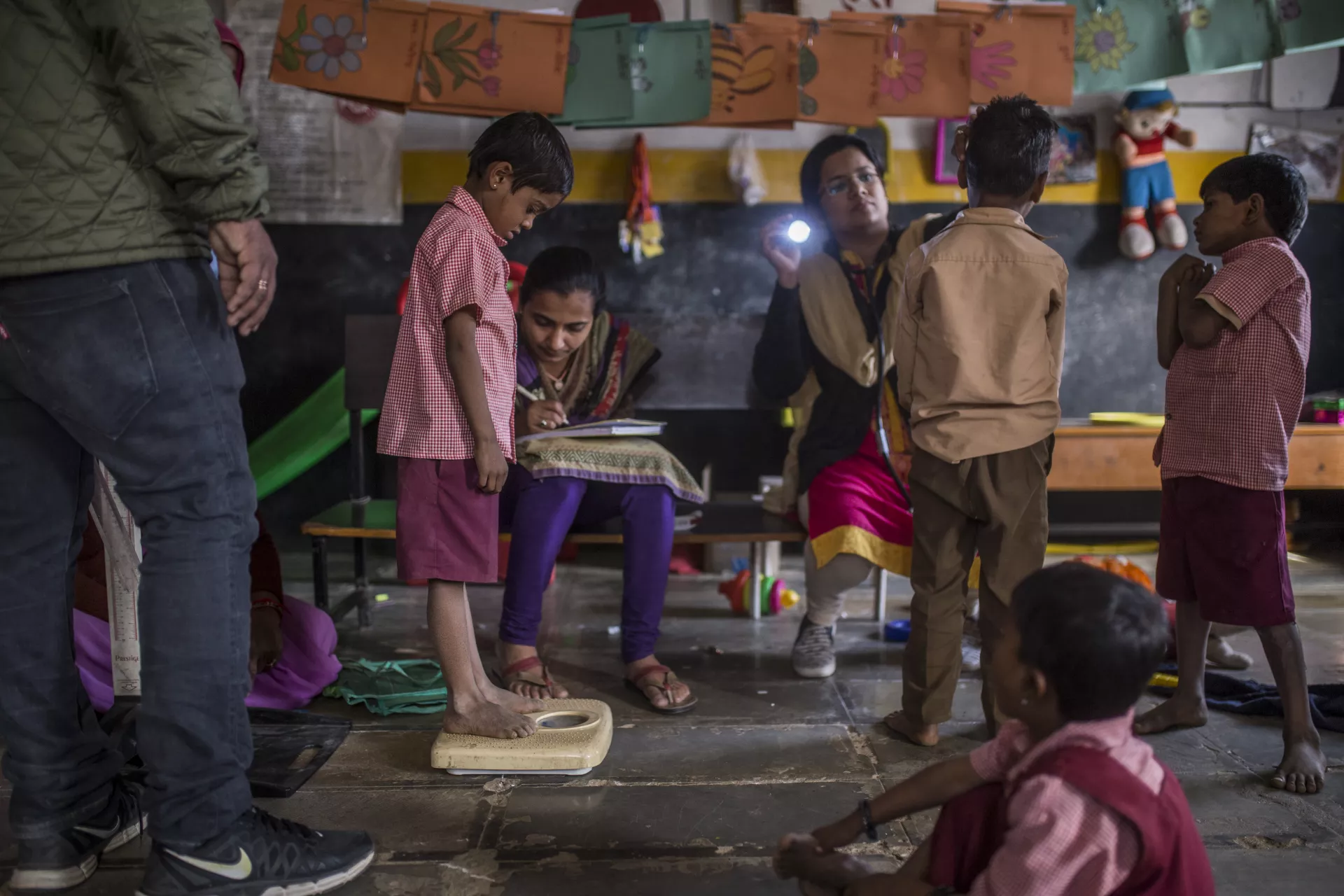
Problems such as stunting, which are often invisible, need to be made visible so that families and communities can take action.
In cooperation with the Government, UNICEF's large-scale programming focuses on stopping stunting, especially among marginalised groups, by reducing and preventing malnutrition overall. UNICEF's technical support in rolling out quality services for women and children, and in generating demand for them by promoting healthy eating, child feeding, and caring practices, is a key value-added contribution to the government's efforts in reducing child stunting.
A key strategy is to strengthen the Village Health and Nutrition Days as a community-based platform for delivering health, hygiene, and nutrition services to mothers and young children. The programme will also improve water, sanitation and hygiene services in Anganwadis.
Efforts are also being directed towards enabling access to quality essential maternal and child health services, including skilled birth attendance, essential newborn health, early initiation of breastfeeding, exclusive breastfeeding during the first six months and immunization.
UNICEF's success in advocating for State Nutrition Missions has been instrumental in the launch of the National Nutrition Mission called POSHAN (PM Overarching Scheme for Holistic Nourishment) Abhiyaan, of which we are a key implementing partner.
Launched in March 2018 by the Prime Minister, POSHAN Abhiyan aims to improve the nutritional status of children aged 0-6 years and of pregnant and breastfeeding mothers. Through a life cycle approach, it seeks to achieve a six per cent reduction in childhood stunting (below 5 years of age) from 38.4 per cent to 29.3 per cent over three years (2018-2020).
Lowering the rates of stunting is crucial to achieving the Sustainable Development Goals, as well as national and regional targets for malnutrition.
We know how to end stunting and other forms of undernutrition. There are proven solutions that India implements today to improve nutrition for all – solutions that can boost development and help break the cycle. Together we can and must stop stunting.