Why Breastfeeding Is Everyone's Duty
Breastfeeding is a Shared Responsibility — Let’s Support Every Mother for a Healthy Start

- English
- हिंदी
Breastfeeding is not just the responsibility of the mother—it is everyone’s duty. Families, employers, communities, and governments all play a vital role in supporting mothers to breastfeed successfully.
Sustainable support systems ensure that mothers receive timely help—whether at work, at home, or within their communities. These systems lead to higher rates of breastfeeding, improved child health outcomes, and reduced healthcare costs for society.
Read More

Creating breastfeeding-friendly spaces at home, in workplaces, and across communities allows mothers to breastfeed optimally. UNICEF India emphasizes the importance of supportive environments, especially for informal and temporary workers.
Employers and managers must implement policies that offer flexible schedules, adequate breaks, and safe, hygienic, and private spaces for breastfeeding or expressing milk. Facilities such as crèches and lactation rooms should be made available to all working mothers, reinforcing that breastfeeding support is a collective responsibility.
Breastfeeding gives children the healthiest start to life. That’s why we recommend:
🕐 Starting within one hour of birth.
👶🏻 Breastfeeding exclusively without food or water for the first six months.
💪🏽 Complementing Breastfeeding with semi-solid foods beyond the age of six months, up to two years old.
Breastfeeding is everyone's duty!
Let's play our role and support mothers to breastfeed successfully.

Supportive Fathers
Encourage, support, and appreciate mothers for their breastfeeding efforts.
Family support
Provide a healthy diet to breastfeeding mothers to meet their nutritional needs. Mothers are better able to breastfeed when they have the support of their spouses and families through positive encouragement and the sharing of household responsibilities.

Advocacy for Health Workers:
- Medical staff should counsel mothers and family members on the importance of mother's milk and convince them that there is no replacement for it.
- Provide counselling on expressing milk if the baby is unable to suckle, ensuring the baby gains weight and improves overall.
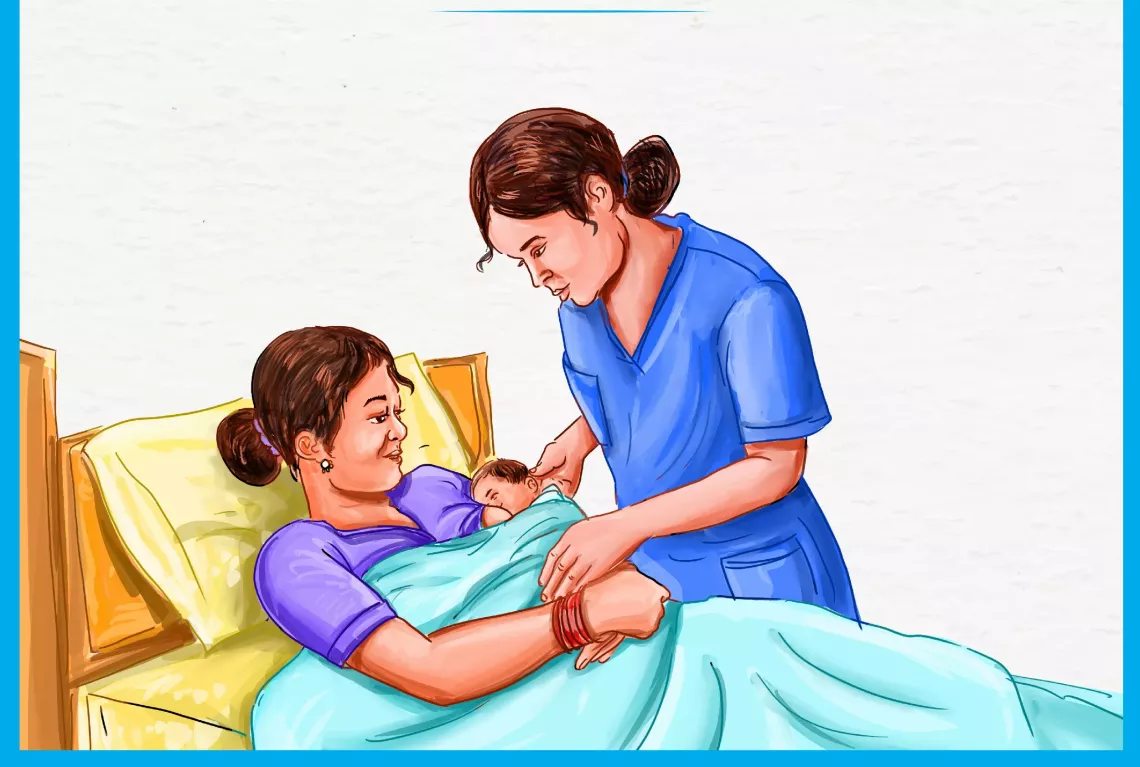
Hospital staff's role
Support the mother in practising successful latching and teach her the technique for expressing milk. Working mothers can express milk into a clean cup or jar, cover it, and store it in the refrigerator. Family members can then feed the milk to the baby using a katori and spoon, maintaining proper hygiene and storing it safely for up to 6 to 7 hours.
Workplace support
Supportive spaces and crèches should be established at workplaces to assist with breastfeeding. Breastfeeding is essential for the overall development of children. Let’s create a nurturing environment for all mothers, including informal and temporary workers.

Let’s come together to support breastfeeding mothers with compassion and understanding. By showing our love and care, we can help nurture their physical and mental well-being during this beautiful, yet challenging, journey. They deserve our encouragement and support every step of the way.