Special Newborn Care Unit: Breath of Hope
More than 1,000 Special Newborn Care Units (SNCU) across India save vulnerable newborns’ lives and bring hope to parents
- English
- हिंदी
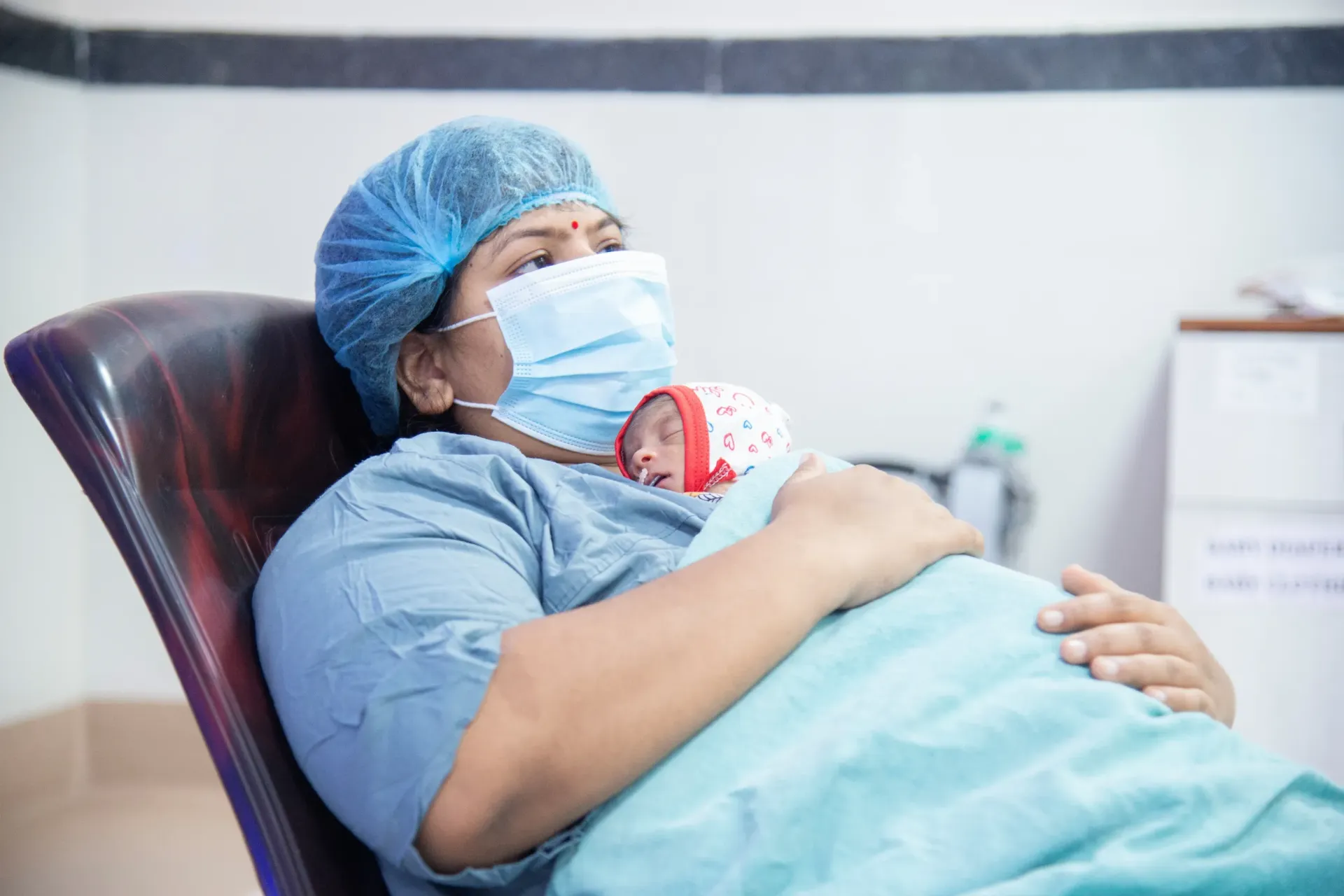
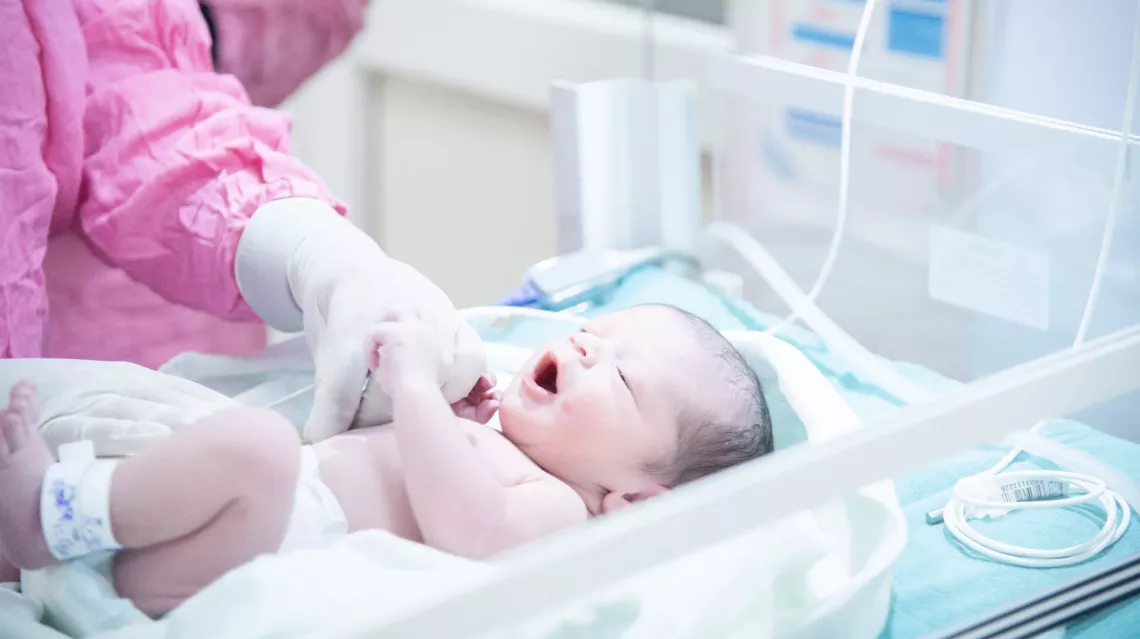
Lalita Bai’s heart ached with hope and worry as she walked through the hospital corridors to the Special Newborn Care Unit (SNCU) in Guna District Hospital, Bhopal. For the past 12 days, her tiny baby had been fighting for her life, surrounded by the hum of machines and the gentle care of nurses. Each day, Lalita would stand by her baby's side, gently touching her tiny hands and forehead, whispering words of love and encouragement.
Today, as she approached the incubator, something felt different. The room seemed to hold its breath, waiting. Lalita reached out, her fingers trembling slightly, and touched her baby's hand. Her baby's eyes fluttered open for the first time in 12 days, and her hand showed movement. Lalita gasped, tears welling up in her eyes. She watched in awe as her baby moved her hand, a small but powerful sign of life and strength.
This tiny movement was a promise of better days to come. She leaned in closer, her heart swelling with love and gratitude, and whispered “mera bacha” (my baby).
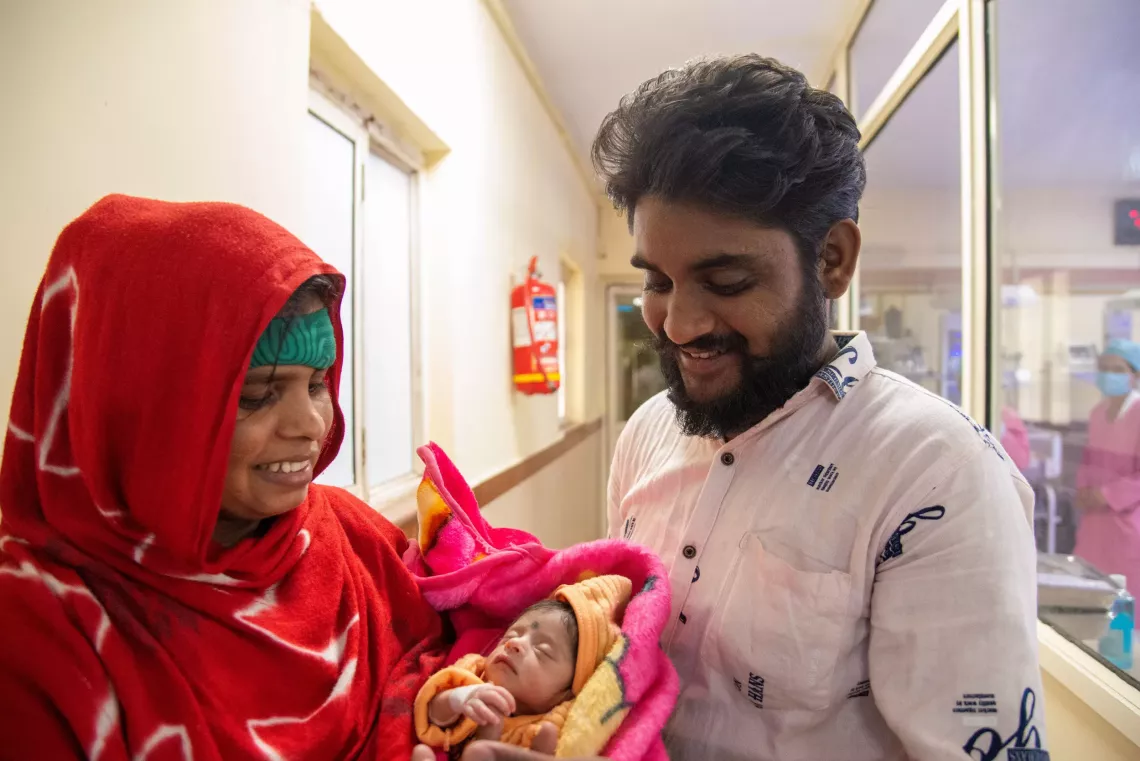
Lalita is not alone, Mamta and Bivod’s baby was in the SNCU as she was born prematurely. The baby was released today after 16 days. “She is our first baby; we were not sure if she would survive. Thanks to doctors and nurses, for their dedication and support. Today, we are returning home with our baby,” says Bivod, the proud father of the baby girl.
SNCU: A Beacon of Hope for Parents
Today, SNCUs across the country are saving thousands of newborns’ lives. This initiative began with a modest step in the Purulia district of West Bengal in 2003. In the context of addressing the high number of neonatal deaths in India, the first 12-bed Sick and Newborn Care Unit was established. It was a collaborative effort of UNICEF, Society for Applied Studies, Kolkata (SASK) - a research organisation, District Health & Family Welfare Samity, and Zilla Parishad, Purulia.
“This pilot led to substantial reductions in neonatal mortality in the facility and had a direct impact on the reduction of neonatal mortality in the population. It showed that state-of-the-art care for sick and small newborns could be provided at the district level in the government sector,” says Vivek Virendra Singh, Section Chief (OIC) and Health Specialist of UNICEF India.
Madhya Pradesh: Setting an Example
“Madhya Pradesh (MP) being a vast geographical area faced challenges in tackling neonatal deaths. With the support of UNICEF, the government established the first SNCU of the state in the district of Guna in 2007 followed by another SNCU in Shivpuri,” says Dr. Himani Yadav, Deputy Director, Child Health, National Health Mission, Government of Madhya Pradesh.
The unit is equipped with the necessary equipment and trained paediatricians and nurses along with other support staff. It brought to life a modern facility in rural areas, designed to save the lives of the tiniest and most vulnerable newborns. As these units began to operate, the impact was clear and profound. It established a robust platform for facility-based newborn care.
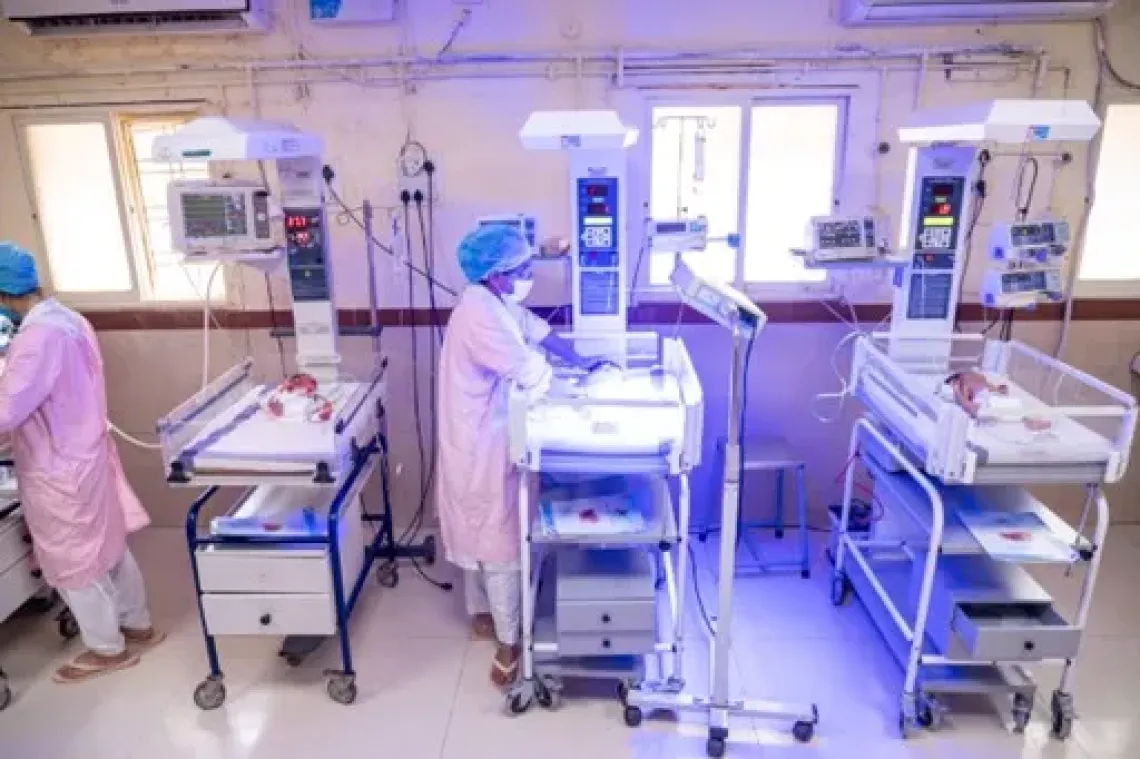
These units were unlike anything seen before, offering advanced care beyond the existing essential newborn care package, positioning Madhya Pradesh as a leader in the field. Following the experience, this rapid scale-up of SNCUs across the country demonstrated the government's commitment to improving newborn care.
“The success of the model inspired the national government to replicate the SNCU concept from Himachal Pradesh to Tamil Nadu and other states. As of today, 1054 SNCUs are operational all over the country, saving thousands of lives every year,” says Dr Himani with pride. This model has been instrumental in shaping the nationwide SNCU initiative under the National Health Mission (NHM).
With time the SNCUs further strengthened by adding more modern and essential equipment like Continuous Positive Airway Pressure (CPAP). It’s a game-changer. This non-invasive technique supports young babies, allowing them to grow stronger without more invasive treatments giving them a better chance at survival and recovery.
“In this, UNICEF was the catalyst for doing that. Along with UNICEF and NHM, we are able to integrate CPAP operations in SNCUs,” says Partha Sarthi Sen Sharma, Principal Secretary, Medical, Health and Family Welfare, Government of Uttar Pradesh (UP).
Today, 1054 Special Newborn Care Units (SNCU) across India have become a beacon of hope for countless families, saving the lives of newborns. The SNCU is a place where every heartbeat is a victory, every breath a triumph—a testament to the miracles of modern medicine and the indomitable spirit of life.
“My child was born with a heart problem and was underweight. I did not think he would survive, but today he is with us,” says Malti Mayuria, tears of gratitude filling her eyes. Malti lives with her family in a district town of Uttar Pradesh. She is one of many mothers who share the same sentiment across the country.

Collective efforts to save lives
Dr. P.N. Verma, SNCU In-charge, who has been with SNCU at Guna District Hospital since its beginning, reflects on the incredible progress. “We now cater to the needs of over 300 newborns each month, four times more than our initial number in 2007.”
His team not only cares for infants during their stay but also prepares families for the journey ahead, ensuring they know how to nurture their babies at home.
Referring to the importance of human connection between parents and Health care providers, Dr Himani Yadav says, “Our work starts as soon as the newborn is brought to the SNCU but continues until the baby fully recovers. We provide comprehensive counselling to the family members including fathers for taking care of the baby – as it is a collective responsibility of the whole family.”
After discharge, the baby is put under the careful supervision of “ASHA Didi”- an Accredited Social Health Activist (ASHA). She helps parents schedule regular follow-ups at intervals. A dedicated free-of-cost ambulance service is available to the parents to commute from home to the hospital.
ASHA is a community volunteer under India's National Health Mission (NHM). For new parents like Bivod, whose daughter was recently discharged, this ongoing support is invaluable. “My wife and I learned how to take care of our baby,” he says proudly. “In emergencies, we have 24/7 access to help.”
“My baby is scheduled for her first follow-up after eight days. Besides, we can get support by calling 108- a dedicated toll-free number for any emergency,” says Bivod, the confident young father.
Since 1949, UNICEF has been working in partnership with the Government of India and other stakeholders to improve child health.
Thanks to these collective efforts, India has achieved a significant milestone by halving its neonatal mortality rate from 40 per 1,000 live births in 2003 to 20 per 1,000 live births in 2020. This success story highlights replicable healthcare innovations that continue to inspire hope for families across the country.