Powered by Solar Energy, Led by Communities
How Solar Energy is Transforming Rural Water Security in Chhattisgarh
- English
- हिंदी
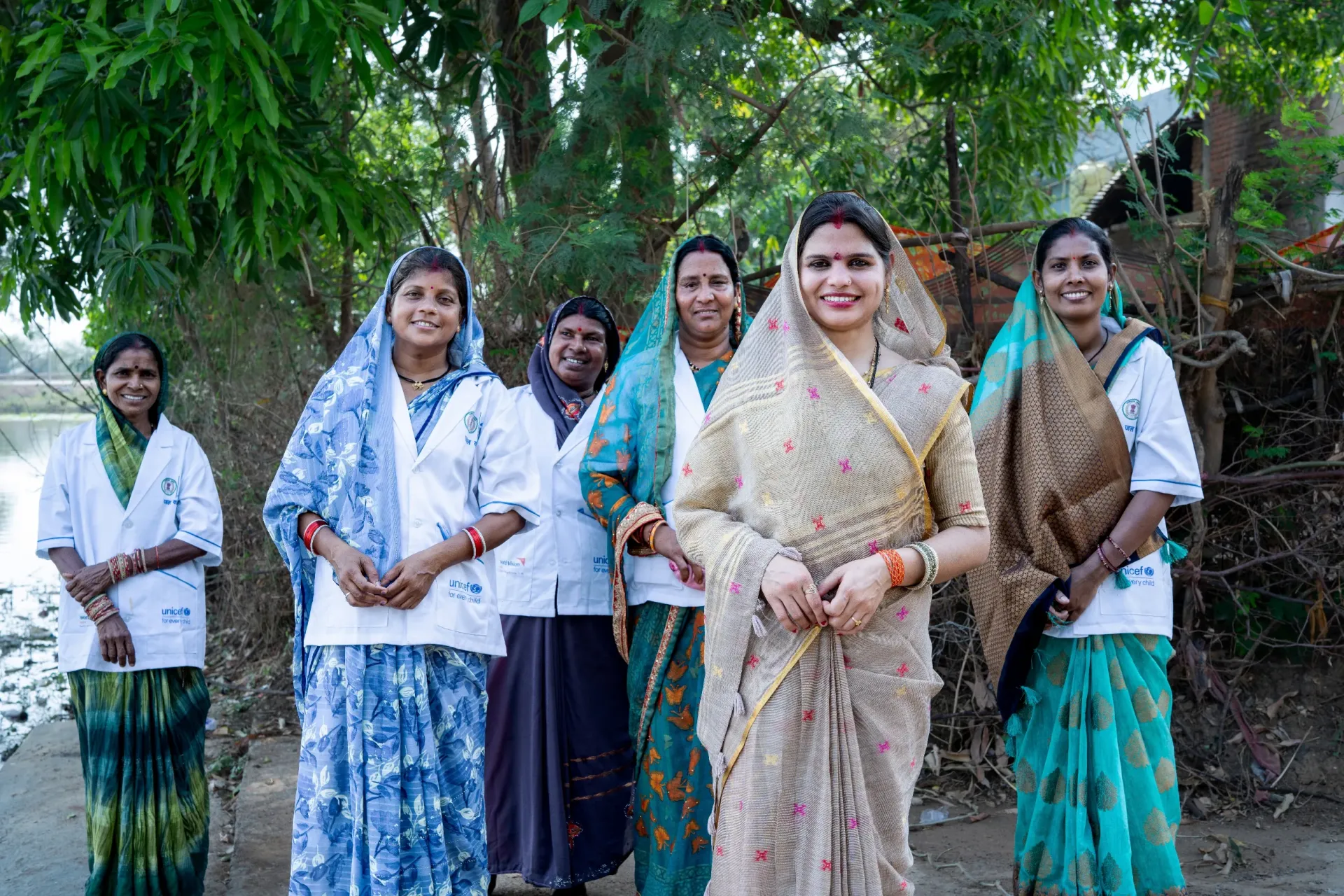
Thirty-five-year-old Pooja leads a remarkable group of women dedicated to safeguarding their community's most precious resource: safe drinking water.
Driven, focused, and deeply attuned to what her community needs, she heads a team of committed Jal Bahinis1 in the village of Darba, Dhamtari, Chhattisgarh.
For women and girls in the remote tribal hamlets of Chhattisgarh, collecting water was not a chore. It was a task placed on them. Hours are lost each day on a journey that no amount of effort could shorten.
Today, something has changed.
The sun that once made that walk harder is now powering water directly into homes through solar pumps.
Water is precious. Access to clean, safe drinking water is the right of every child.
"I became Sarpanch last year. I come from Dhamtari, and when I moved to this village after my marriage, I started noticing the hardships the community members were facing, especially when it came to water supply."
Rural Chhattisgarh is one of India's most geographically complex states, densely forested, hilly, and home to a significant tribal population. Extending electricity grids across such difficult terrain was neither technically feasible nor financially viable. Without power, there was no pump. Without a pump, there was no piped water. The infrastructure gap was, in many ways, a geography problem.
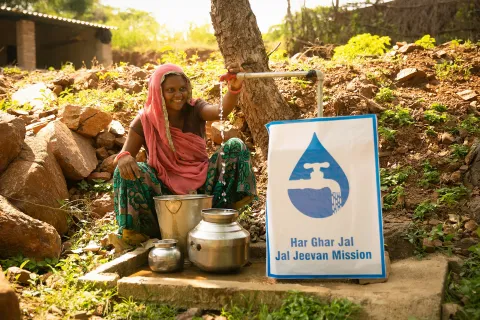
Under India's Jal Jeevan Mission, Chhattisgarh made a decisive shift. Rather than wait for grid extension to reach its remotest villages, the state deployed standalone, off-grid solar pumping systems, bringing piped water supply to communities that conventional infrastructure had long bypassed.
Unlike grid‑connected schemes that rely mainly on electricity generated from coal‑based sources in this coal‑rich state of Chhattisgarh, off‑grid solar systems operate independently, drawing power directly from the sun.
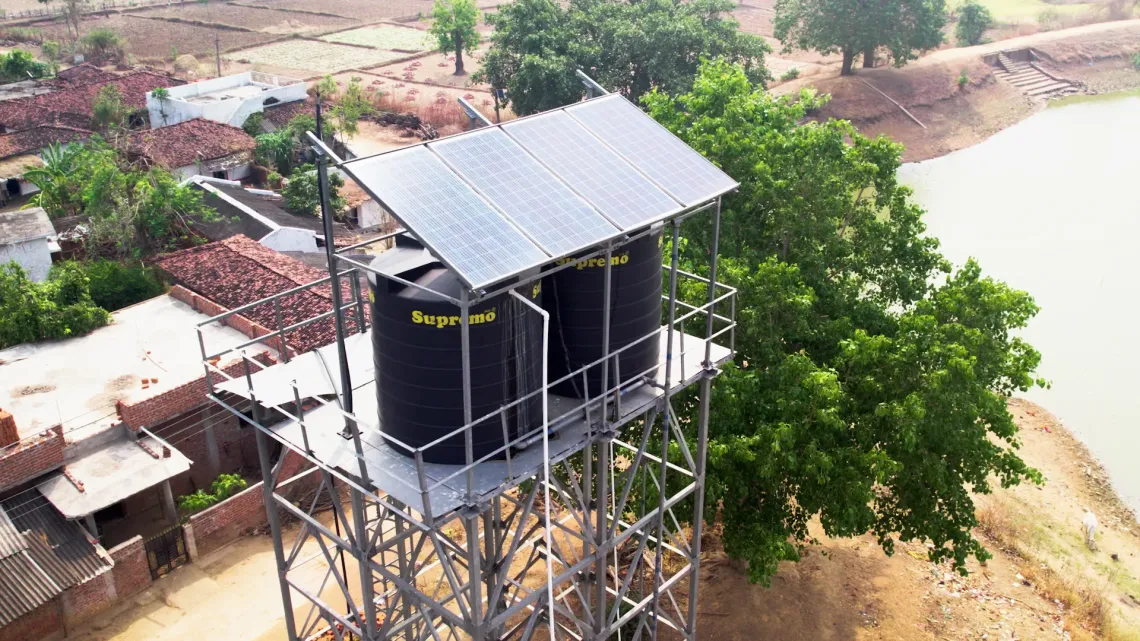
"Solar pump-enabled supply was deployed in areas with scattered habitations and hilly terrain where power grids cannot be extended easily."
As climate variability intensifies and energy costs rise, UNICEF and the Government have been supporting solar-powered and energy-efficient rural water supply systems to build more climate-resilient WASH services.
These systems help ensure a more reliable supply of safe drinking water while reducing costs, dependence on traditional energy sources, fossil fuel use, and the burden on communities.
The model is elegantly simple and sustainable: a 1.2-kilowatt solar pump, a 10,000-litre storage tank, and a network of household tap connections.
Each unit operates entirely on solar power, delivering water twice a day, every day, with no fuel, eliminating recurring electricity expenses, and no dependence on an external grid.
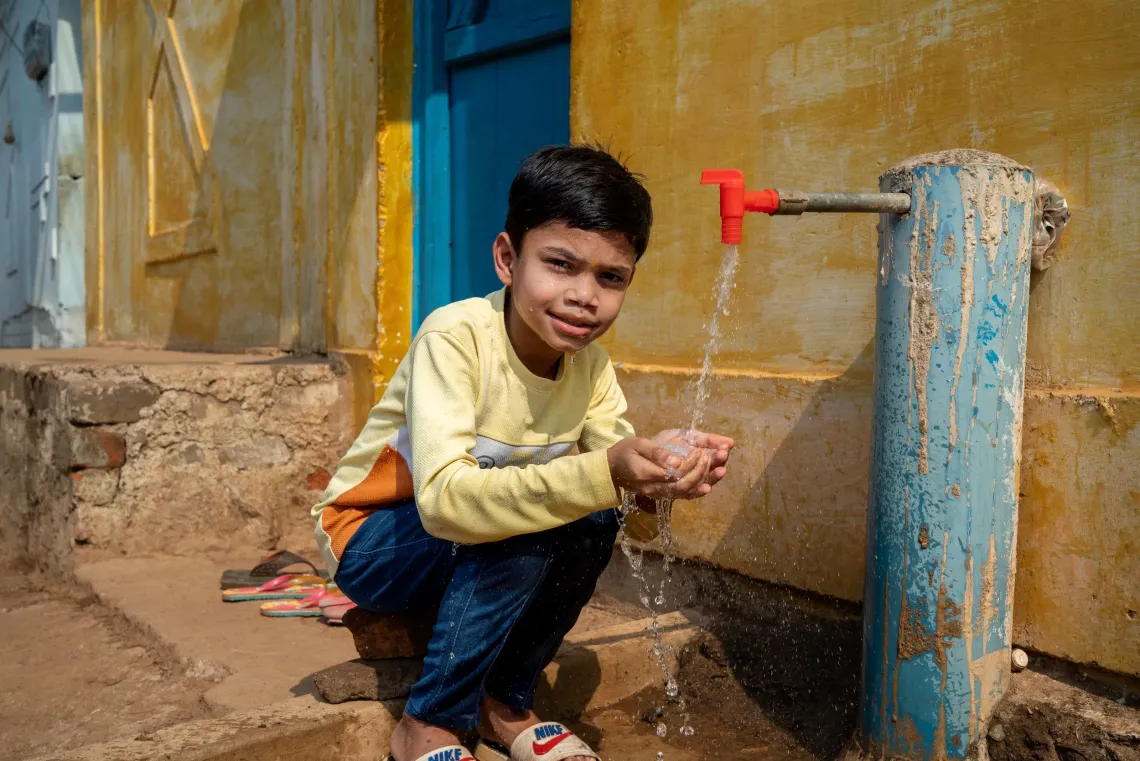
By April 2026, nearly 7,500 such schemes were operational across all 31 districts of Chhattisgarh, accounting for 25 per cent of the state's single-village piped water supply systems.
In Dhamtari district, now recognized as a model solar hub, 226 schemes serve over 6,500 households, generating nearly 594,000 units of clean energy annually and avoiding over 420 tonnes of CO₂ emissions each year, further reinforcing India's NDC 3.0 mandate.
What began as a solution to an infrastructure gap has quietly become a climate solution too.
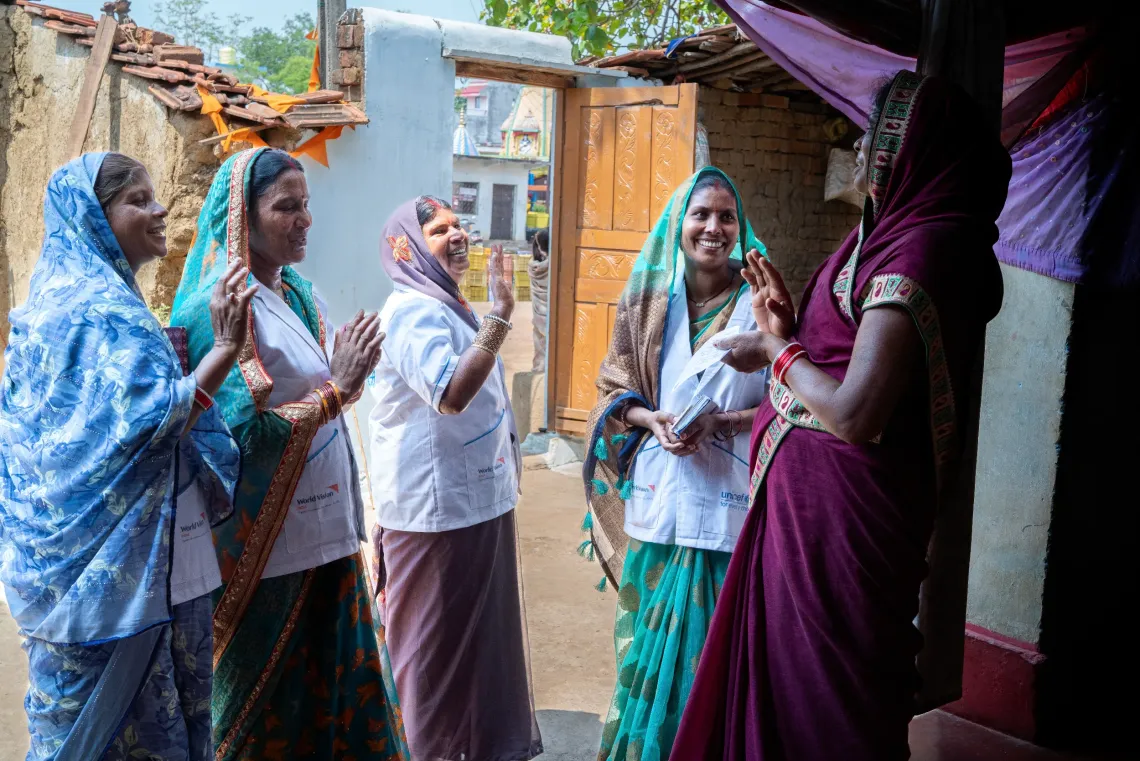
And the accelerators driving this model forward are women. It is women who hold these systems together.
Village Water and Sanitation Committees, supported by trained women members known as Jal Bahinis, manage daily operations, oversee tariff collection, monitor water distribution and quality testing, and flag faults for repair.
They are not passive beneficiaries of this infrastructure. They are its custodians.
For the women who once spent two to three hours every morning fetching water, the tap connection at their doorstep represents something far greater than convenience.
It is time reclaimed: for their children, for their livelihoods, and for themselves. It is a quiet but profound redistribution of one of life's most fundamental resources.
"Earlier, getting water from the borewell was very difficult. Solar pumps have made water supply so much more convenient. What used to take hours now takes just a few minutes, right at our doorstep. I now get precious time with my young child."
Chhattisgarh's solar water story is real and remarkable. It is also unfinished.
Solar-powered water supply in Chhattisgarh is no longer a pilot. It is a proven, scalable model, one that delivers clean water to the last mile, reduces carbon emissions, cuts operational costs, and places women at the centre of service delivery.
What Chhattisgarh has demonstrated is what becomes possible when technology is matched to terrain, when communities are trusted to lead, and when clean energy and clean water are pursued together.
From the Sarpanch to the Jal Bahinis to the Chief Engineer, this story reflects the power of women at every level of a sustainable model that is quietly transforming lives.
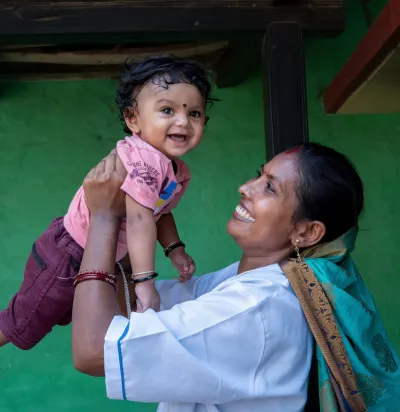
"My children say they are proud of me ever since I became Sarpanch. They see me attend meetings and resolve people's problems. I would like to urge all community members to value water and avoid wasting it. Now that water has reached their doorstep, it is time to be mindful of how we use it."
In Chhattisgarh, the sun rises every morning over forests and hills that once isolated communities from the most basic of rights.
Today, it rises over solar panels that hum quietly to life, drawing water upward and sending it flowing into homes, into kitchens, and into the hands of children leaving for school. The technology is simple. The change is not.
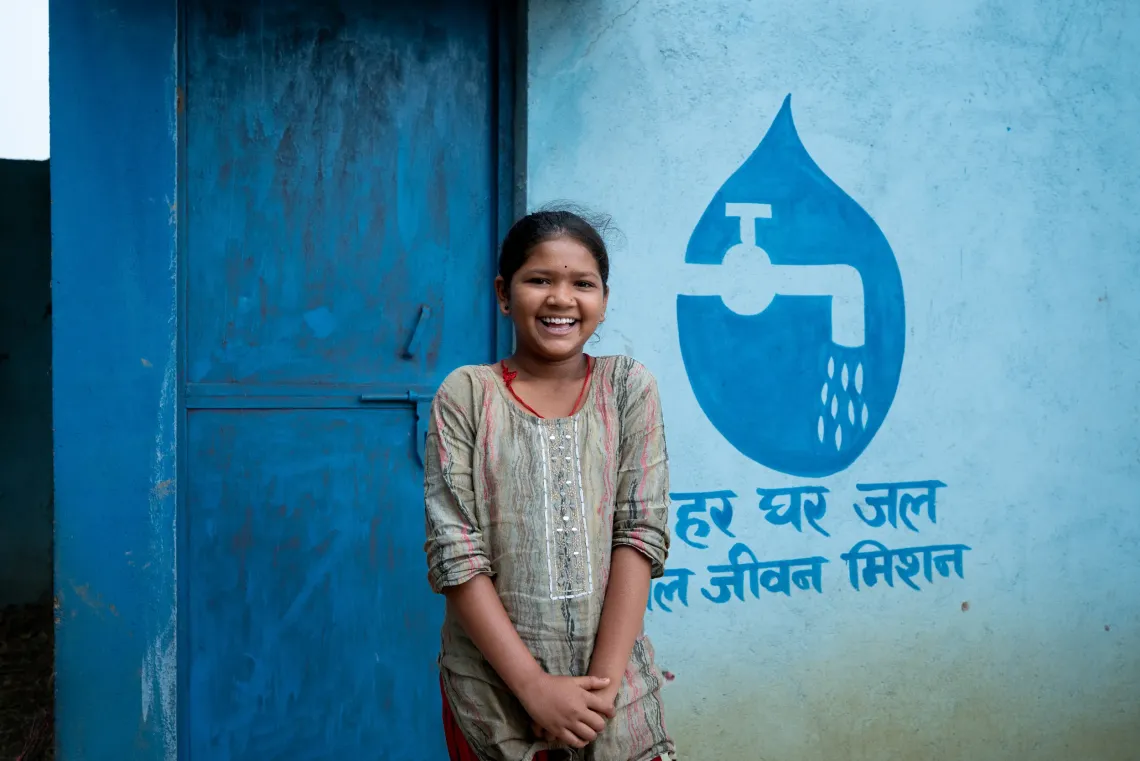
What has been built here is something that will outlast any single scheme or statistic. It is a new compact between communities and their future, powered not just by sunlight but by the belief that clean, safely managed water supply and the dignity it carries belong to everyone.
For children, it means healthier lives, more time in school, and the chance to grow up in communities where access to safe water is no longer uncertain.
Water is precious. And access to clean and safely managed drinking water is the right of every child.