Nurturing Beginnings: Frontline Workers Promote Early Childhood Development in Bihar
Today, it is not just Wajeda and Pinki but a total of 650 frontline functionaries and 40 supervisors have been trained and empowered to deliver integrated ECD services during home visits reaching around 10,000 children
- English
- हिंदी
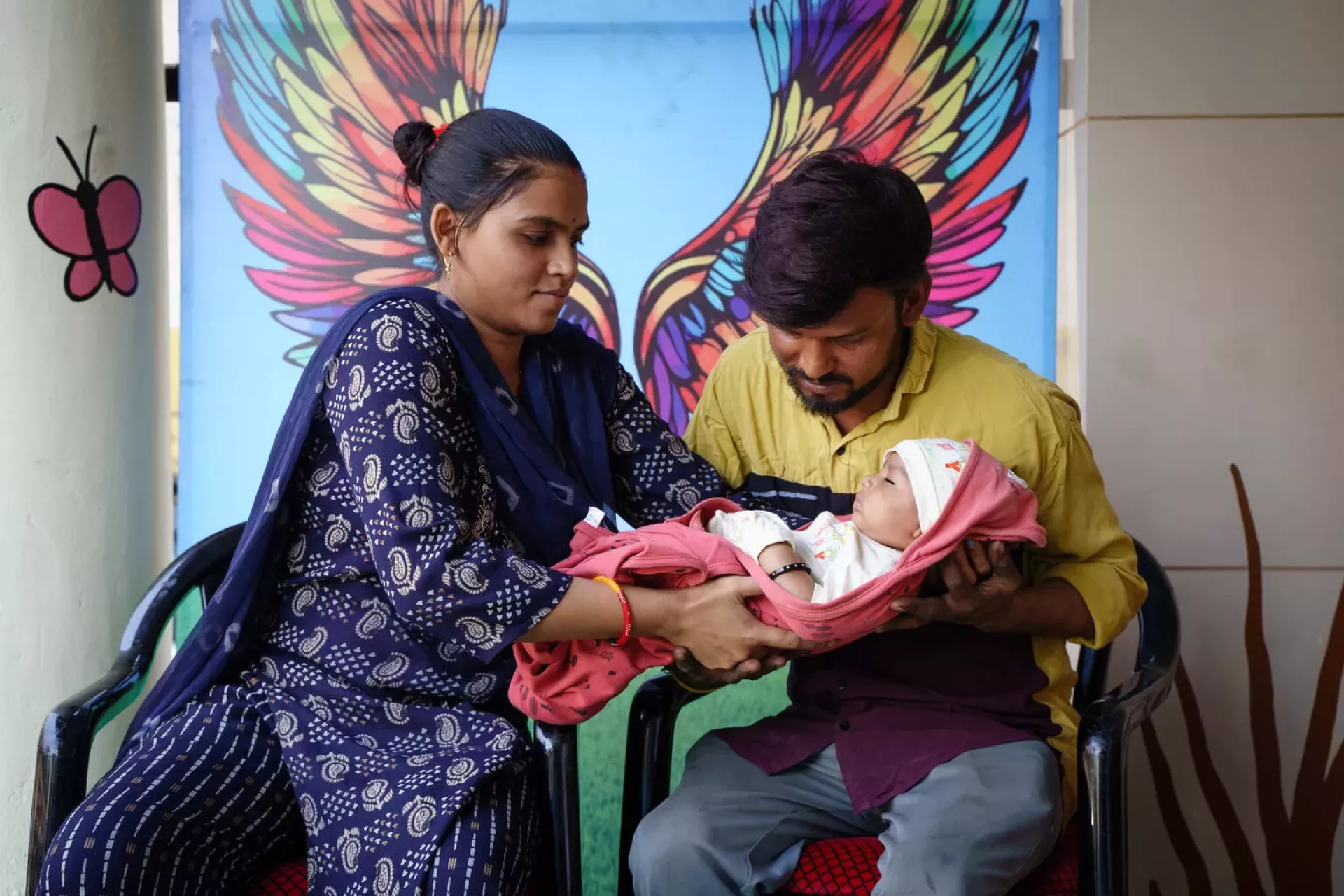
PURNEA, India – In the quiet village of Dangraha Ghat, located in the Baisi block of Purnea district in the eastern Indian state of Bihar, 18-month-old Suhana Praveen now spends her days playing joyfully with her father, splashing water, rolling soil balls, and laughing with her cousins, Aamir and Almish.
Until a few months ago, scenes like these were rare. The community believed that only plastic toys and soft cloth dolls were meant for children. They did not realise that simple, everyday household items and playful family interactions could be equally, if not more, valuable for a child’s overall development.
This shift did not happen overnight. Earlier, Anganwadi Worker Wajeda Tabbasum and Accredited Social Health Activist Pinki Kumari were performing their duties with dedication, albeit within a limited scope.
Pinki would conduct home visits for Home-Based Newborn Care (HBNC) and Home-Based Young Child Care (HBYC), with a primary focus on identifying danger signs in newborns, promoting proper feeding practices, and educating families on the importance of handwashing.
Meanwhile, Wajeda Tabbasum would focus on growth monitoring, promotion, and counselling on breastfeeding and complementary feeding. Neither of them actively monitored a child’s social, emotional, and intellectual development by checking milestones such as babbling, responding to touch or playing interactive games.
Moreover, the involvement of fathers, grandparents, and siblings in child caregiving was almost non-existent.
In September 2024, the three-day training on Early Childhood Development (ECD), supported by UNICEF, introduced Wajeda Tabbasum and Pinki Kumari to the significance of brain development in the early years.
Through interactive sessions, practical demonstrations, and joint home-visit exercises, they learned how to integrate play-based stimulation into their routine interactions with families.
Key components of the intervention included using the Mother & Child Protection (MCP) card to track developmental milestones, promoting touch, talk, and play activities, and encouraging inclusive caregiving that engaged fathers, mothers, and grandparents alike.
They were also equipped to identify and support children with potential developmental delays or disabilities at an early stage.
Upon returning to their village, Wajeda and Pinki began conducting joint home visits, delivering unified messages on the importance of play and responsive caregiving. Initially, families resisted, citing busy schedules and a lack of understanding.
Through persistent demonstrations, storytelling, and relatable examples from the Navchetna book, the workers gradually convinced parents and grandparents to engage more actively with their children.
A key part of the success was the Navchetna activity book, created by the Government of India and adopted in Bihar as a small, easy-to-use pocketbook. It made complex ideas about brain development simple and offered families easy, everyday activities to help their children learn and grow through active caregiver involvement.
Workers were trained to teach parents how to use everyday household items—like utensils, water, clay, and cloth—to create fun, sensory play activities for young children. They also learned how to identify early signs of developmental delays and disabilities, enabling children to receive help on time.
Gradually, these efforts began to show results
Families started responding positively. Children like Suhana, Aamir, and Almish became more active, socially engaged, and visibly happier. The atmosphere in some homes has begun to shift, with playtime becoming an integral part of the family’s daily routine.
As Pinki Kumari puts it, “We now feel proud that we’re helping build not just healthy but happy, smart children in the villages.”
Today, it is not just Wajeda and Pinki but a total of 650 frontline functionaries and 40 supervisors in the Baisi block who have been trained and empowered to deliver integrated Early Childhood Development (ECD) services during home visits, potentially reaching around 10,000 children in Baisi.
The progress in Baisi is an essential first step. To continue and grow this success across Purnea and other areas, Early Childhood Development needs to be made a regular part of existing government health and nutrition programs.
Expanding training to more blocks and districts—with a focus on practical, hands-on learning—will help ensure that all frontline workers have the skills and confidence to support early stimulation and responsive caregiving.