The girls who taught a school to listen
How Kasturba Gandhi Balika Vidyalaya (KGBVs) residential schools in Purnea Bihar are proving that inclusion isn't about helping—it's about listening
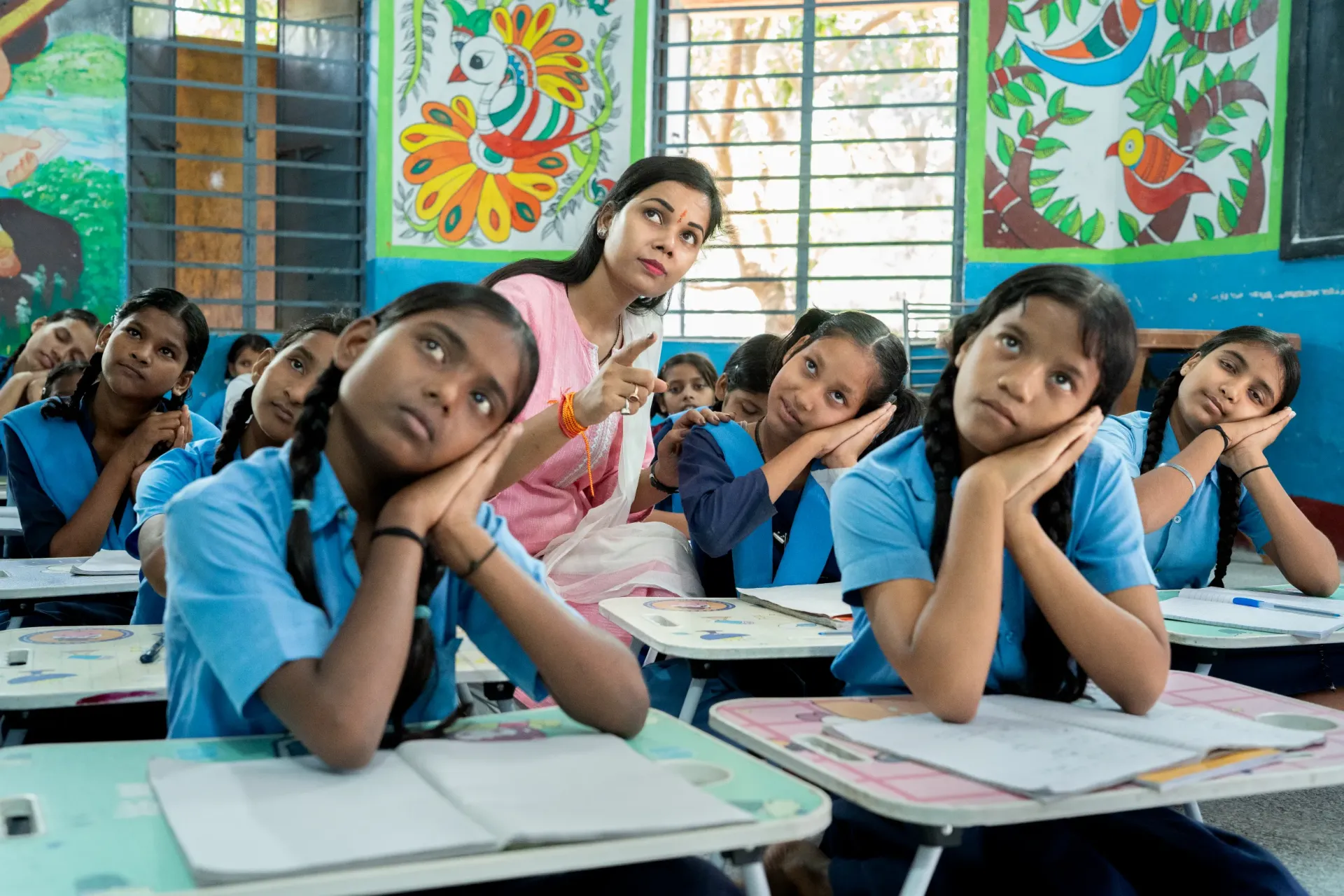
- English
- हिंदी
Ajmati Khatoon has two sisters and three brothers. Her house was always packed—full of voices she couldn't hear, conversations she couldn't join, jokes she'd never understand.
At 19-years-old, she'd never been to school. Not really.
Then someone mentioned a residential school where girls like her might actually learn something.
Her bags were packed. She was ready to leave.
When Nobody Knew What to Do
Mansi Kumari is 31 years old. Teaches social science at Kasturba Gandhi Balika Vidyalaya in Purnea, Bihar. When 25 hearing and speech-impaired girls like Ajmati showed up at her school, she froze.
"How do you teach someone who can't hear you or understand what you speak?"
She had no answer. Neither did anyone else.
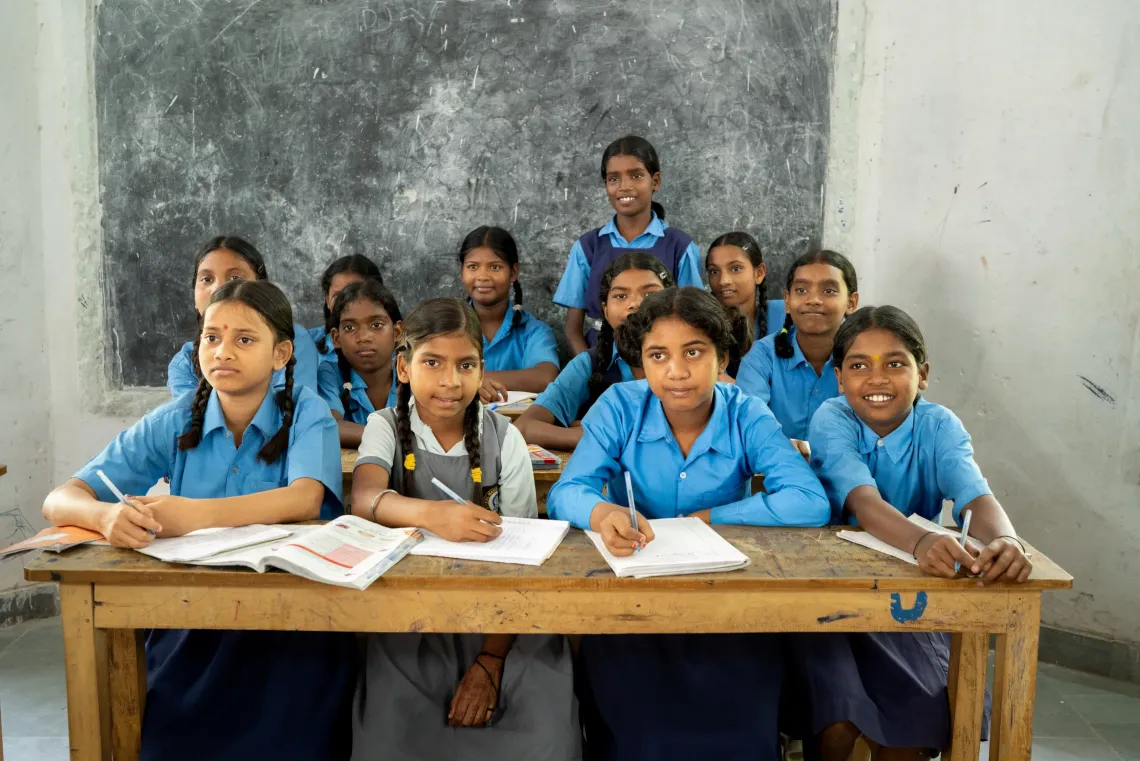
The girls sat in regular classrooms with regular teachers and regular students learning from a regular curriculum. But they understood nothing. Couldn’t hear. Couldn’t speak. Just sat there, present but invisible.
Kaushal Kumar, the District Programme Officer, Samagra Shiksha, Purnea, Bihar, met these girls and found that their learning level was extremely low. “They were sitting in regular classrooms where teachers were teaching, but the girls could neither hear nor speak.”
Most places would’ve shipped them elsewhere. Too difficult. Too specialized. Not our problem.
Kaushal made a different call, “If we leave these children like this, they will not be able to move forward in life.”
Then came the more complex question: Now what?
Learning a New Language
They made a plan. Install smart boards. Teach in sign language.
Small problem: Nobody knew sign language.
"We did not have any resource teachers who knew sign language," Kaushal says. "It was essential for teachers first to learn."
With support from UNICEF and the Bihar Education Project Council, they brought a professor from Uttar Pradesh. For eight days in July 2025, teachers became students again.
Mansi laughs about it now, "We were copying movements, getting confused, mixing up signs."
Santosh Mourya, the special educator, remembers feeling lost. "When we received the training, we all gained confidence to work here."
But something clicked. Teachers stopped trying to make girls learn their way, they started learning the girls' way instead.
Aruna Kumari, a general teacher in Purnea, remembers her first real day. Nervous, fumbling with signs. A small girl walked up and hugged her.
That's when she got it, "This isn't about perfect signs. It's about showing up."
What Changed
Before the smart boards, Santosh taught with a blackboard. Basic stuff—ABCs, counting. The girls tried, but it was like reading through fog.
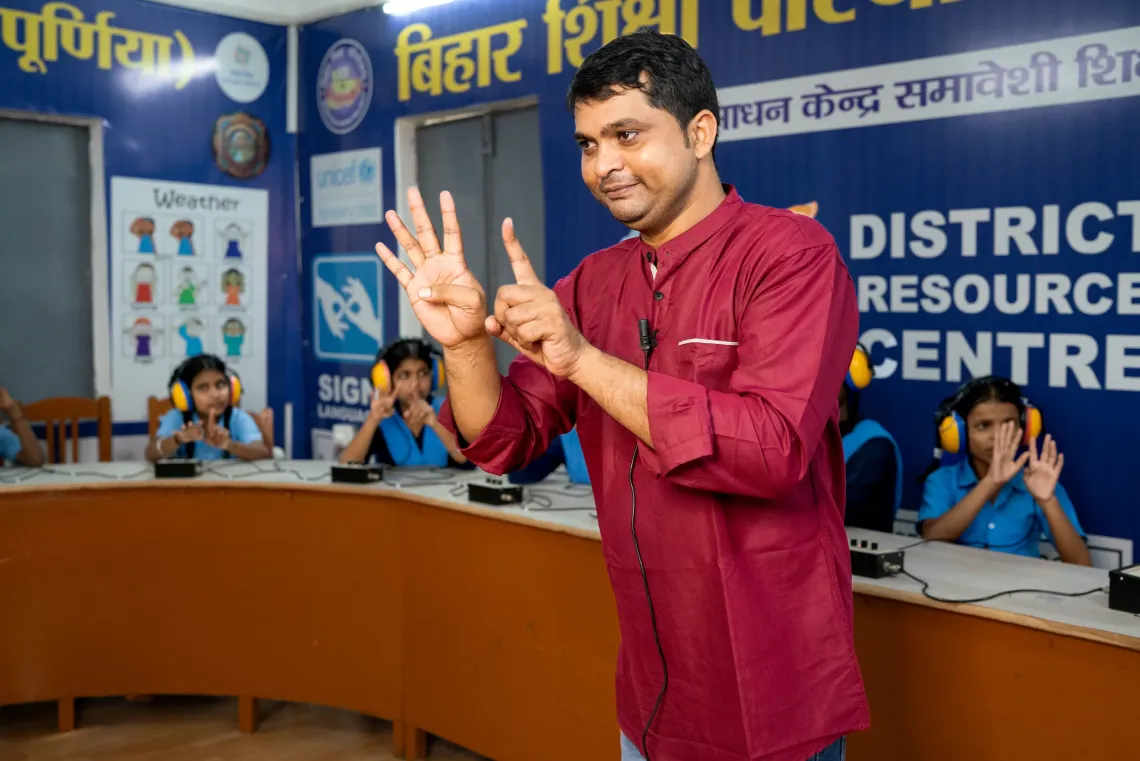
Then the panels went up. Suddenly, lessons had pictures, videos, and movement. Sign language posters covered the walls. Group hearing aids got installed.
The whole setup transformed into what Kaushal calls "an inclusive model"—not separate rooms or special classes, but everyone learning together using sign language.
Ajmati, who'd never studied at home, says: "Here, with the smart board, I can learn. I love maths a lot!"
A girl who'd never been to school now loves math. Let that sit!
Within weeks, girls who'd been written off as "unteachable" scored 80-90 per cent in the tests.
Santosh did the assessments, "In mathematics, some children performed very well. Almost all children showed good progress in sign language."
Kaushal was floored, "Some children performed exceptionally well. This proves that if correct information is given through the right medium, these children can learn very well."
Then he adds, "These children are not weak mentally. On the contrary, they are brilliant."
They always were.
Real Inclusion
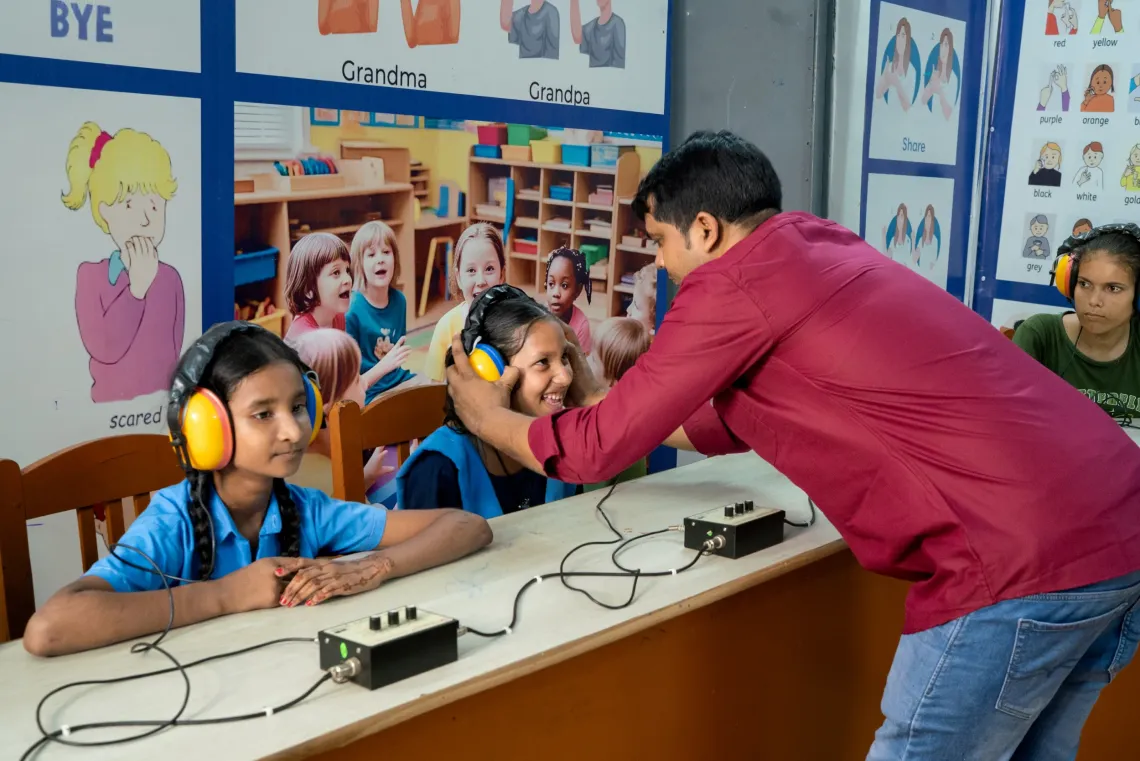
Here's what makes this different: The 25 deaf girls don't study separately.
There are 75 other girls at the school. No disabilities. Same classrooms, same hostel, same life.
And the hearing girls? They're learning sign language, too.
Mansi explains: “Children with hearing impairment study, eat, and live together with other children. They are not separated.”
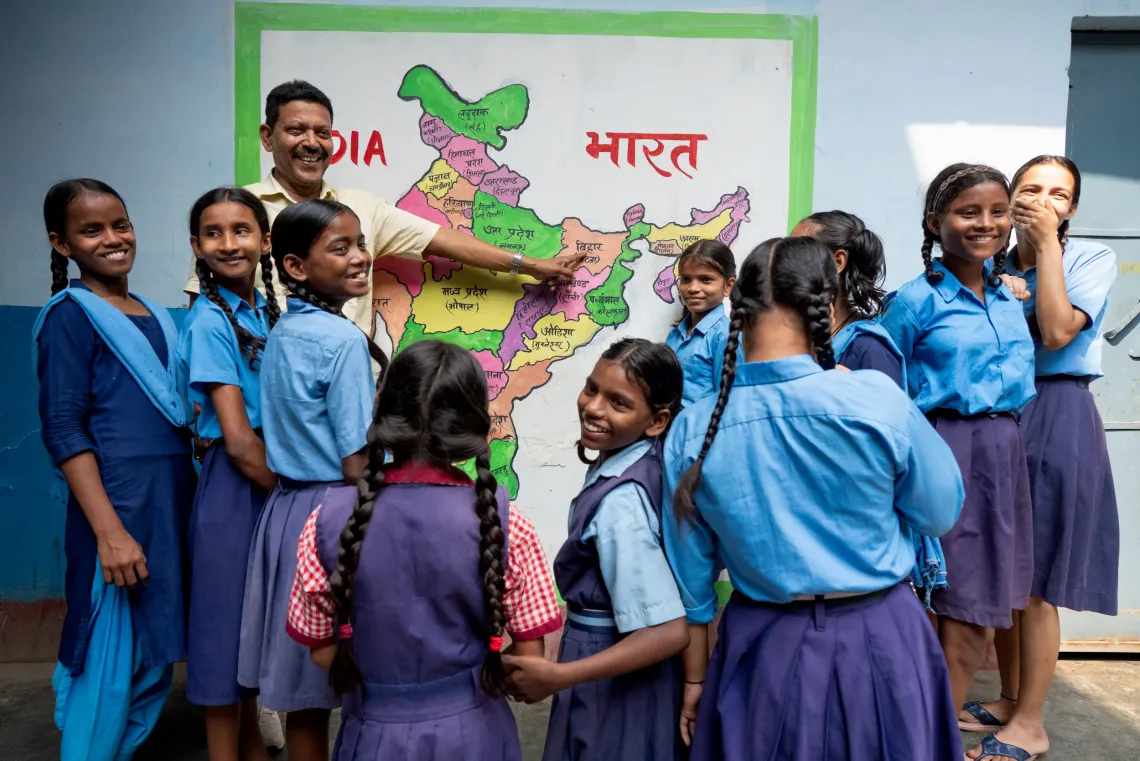
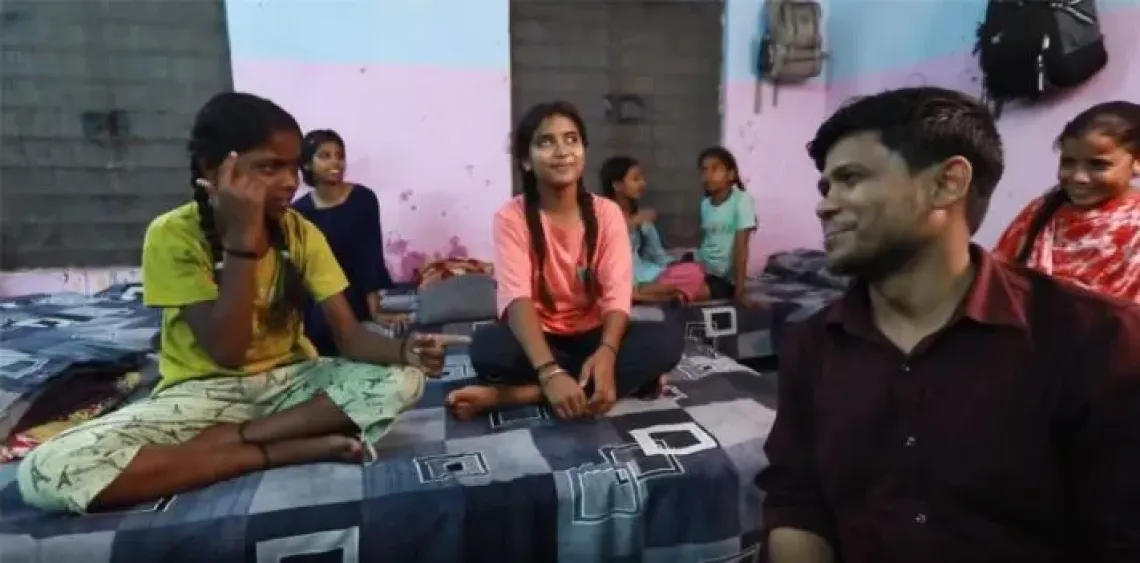
In the evenings, 11-year-olds Nusrat and Shaheena practice signs together. When 15-year-old Monika uses signs to name fruits in class, everyone—deaf and hearing—responds in signs.
The hostel warden noticed something funny. Girls sign even when they don't need to. "They'll be across the room, and instead of shouting, they'll just sign."
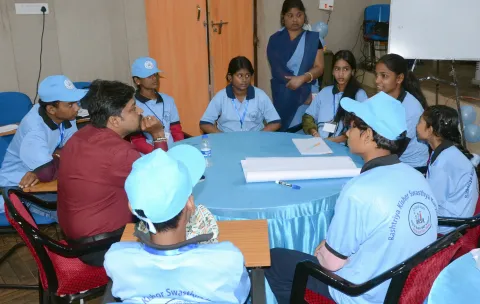
What started small has spread. Peer-driven learning took over—girls teaching girls, figuring things out together across different grades and learning levels. The teachers who had limited formal training created something remarkable: a space where communication isn't a barrier, it's just a different language everyone speaks.
Mansi sees the more profound shifts, "Normal children often help—guiding them, helping during prayers, explaining instructions. If any child faces a problem, other children immediately notice and help."
During a recent art competition, deaf girls won prizes. They participate in various celebrations and performances. Girls make solar system models together, paint together, and live together.
"Children only need the right guidance," Mansi says.
What Happens Next
The big worry? What happens when these girls finish Class 8?
Arvind thinks about this constantly, "For Classes 9, 10, and 11, there is no sign language expertise available. We have decided to try that teachers of other Kasturba schools will be given continuous training so when these children move, they don't face difficulties."
The plan is ambitious: Develop a complete curriculum from Class 1 to 5 in sign language. Create videos for smart panels. Train every KGBV teacher. Eventually, open centres will be established in every district. UNICEF India and Samagra Shiksha are developing pedagogical tools and state-level capacity-building initiatives to scale this across Bihar.
"Next year, we plan to submit a proposal to the state government requesting that every district have at least one such centre," Kaushal says.
But he's honest about the obstacles, "One major challenge is content creation. It requires people who are not only skilled but also caring and sensitive."
There's a bigger issue, too—the system itself.
"In general, I have observed that we do not put enough effort into inclusive education," Kaushal says. "We assume that children with disabilities cannot achieve much. We do not think about what they can do if given the right opportunity."
He pauses. "Every child has some form of intelligence. The key is to identify what they are good at."
Arvind knows it'll take time. "Hearing-impaired girls are admitted in Classes 6, 7, and 8, even though their learning levels are often not at that level. We have to face many difficulties. But we've started the work. We will continue with full confidence and faith."
The Quiet Shift
Walk past the KGBV classrooms during the special two-hour sessions. You won't hear much. No lectures, no chatter.
But look through the window. Hands moving. Faces alive. Girls leaning in, engaged, excited.
Santosh teaches these sessions. "Working with these children is very enjoyable. It becomes important to understand their needs, their environment, and their language. It feels special."
Twenty five girls who thought they were broken are learning they're not. They were just speaking a language nobody bothered to learn. Until now.
Ask Ajmati about her future, and her hands fly, forming words in the air. She wants to study more. Maybe teach.
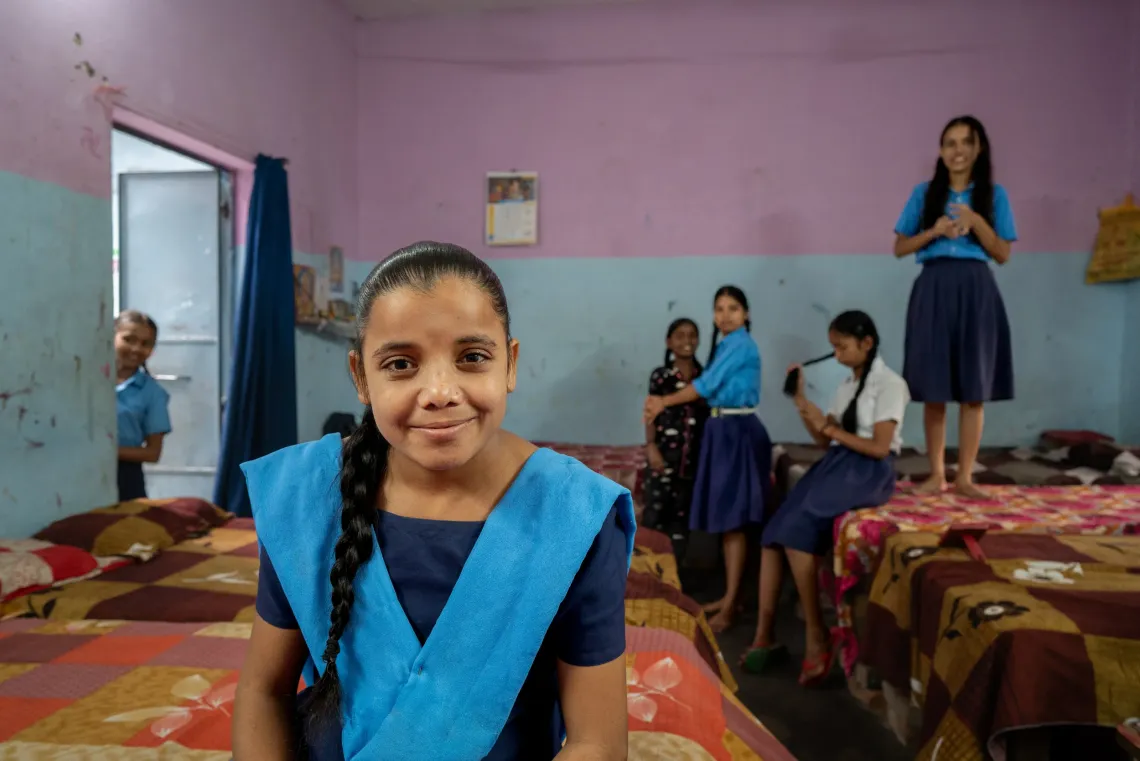
18-year-old Ladli says the best part isn't classes—it's having friends who understand her. "At home, I was always alone. Here, I belong."
What began as a small step to help a few girls has grown into something bigger. Today, these select KGBV classrooms in Purnea are more interactive, teachers are more empowered, and girls are more expressive. They've built a clear pathway for girls to transition to grade-level curriculum AND embedded inclusion right into the mainstream school system.
In three schools in Purnea, teachers and special educators learned to listen with their eyes. Students learned to speak with their hands.
And together, they're proving inclusion isn't about fixing people. It's about changing systems.
When education speaks every language, every child learns.
In three Kasturba Gandhi Balika Vidyalayas in Purnea, Bihar, nearly 75 deaf adolescent girls in Grades 6–8 are building strong foundations in literacy, numeracy, and sign language—within a mainstream residential school. Bihar Education Project Council, Samagra Shiksha Bihar, and UNICEF India are collaborating to ensure that every girl—regardless of hearing ability—learns, thrives, and moves confidently toward her future.