

Didi Ki Dukaan
A community-based retail model designed to promote women-led entrepreneurship in rural India.

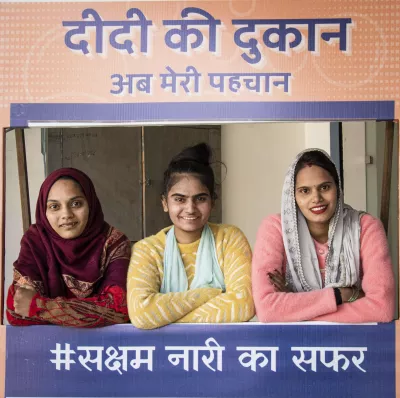
Didi Ki Dukaan (DKD) is a community-based retail model designed to promote women-led entrepreneurship in rural India. Building on the familiar kirana store format, DKD offers women the tools, training, and support to establish and manage their own micro-enterprises.
It combines traditional retail with digital enablement, helping women build stable livelihoods while improving access to everyday essentials within their communities.
Operating through a decentralized network of stores, each Didi Ki Dukaan is locally owned and operated by a woman entrepreneur. These stores function not only as points of sale for daily need products but also as platforms for promoting locally made and women-centric goods. Through this model, DKD creates dignified income opportunities for women, enhances access to essential supplies in underserved areas, and strengthens the rural economy from within.
UNICEF YuWaah is working in close partnership with the B-ABLE Foundation to implement the DKD initiative on the ground. As a leading organisation in skill development and micro-entrepreneurship, B-ABLE brings deep expertise in identifying, training, and supporting rural women entrepreneurs. The initial model of Didi Ki Dukaan in Gajraula was supported by both B-ABLE and the Jubilant Bhartia Foundation.
Addressing Barriers to Women’s Economic Participation
Despite increasing demand for goods and services in rural India, women face structural barriers to economic participation.
According to the Periodic Labour Force Survey (PLFS) Annual Report 2025, released by Ministry of Statistics and Programme Implementation (MoSPI), the female Labour Force Participation Rate (LFPR) in India was 40.0%, compared with 79.1% for men, among people aged 15 years and above.
Limited livelihood opportunities, safety concerns, restricted mobility, and unpaid care responsibilities continue to constrain women’s access to income-generating platforms.
In parallel, many rural households still lack access to affordable, quality goods, especially products related to women’s health and hygiene. Norms around mobility and discomfort in approaching male-run shops further limit women’s access to these essentials.
Didi Ki Dukaan addresses these gaps by:
- Creating dignified, home-based income opportunities for women
- Improving local access to household essentials and women-focused products
- Encouraging non-migratory livelihoods that fit within existing social norms
- Promoting locally produced goods and rural entrepreneurship
How the Didi Ki Dukaan Model Works
Each Didi Ki Dukaan is run by a trained woman entrepreneur, selected based on community fit and readiness.
Women between 18-29 years, preferably married, with at least 10th grade education, and a low and flexible investment, based on Didi’s capacity are onboarded through a structured one-year journey of training and handholding support.
B-ABLE Foundation leads the end-to-end execution of the model - from mobilising women and delivering structured training in entrepreneurship, retail operations, and digital tools, to providing handholding support, facilitating supply chain integration, and enabling access to finance.
The DKD model combines local ownership with centralized support, comprising:
- Access to essential products including groceries, hygiene products, and household goods
- Supply chain integration through regional hubs
- Training in entrepreneurship, retail operations, digital payments, and financial literacy
- Technology tools for inventory management and cashless transactions
- Market linkages for locally produced goods
- Ongoing mentorship and refresher training sessions
Operational Presence and Scale
The model is currently active in Andhra Pradesh, Uttar Pradesh, Madhya Pradesh, Rajasthan, Odisha, Jharkhand & Bihar, where it has demonstrated strong viability and scalability.
Each store is physically located within the village and digitally connected to a wider network, enabling resource-sharing, collective branding, and stronger bargaining power for procurement and sales. As of September 2026:
- 1,250 stores are operational across rural communities
- The dropout rate is less than 2%
- Women with four or more months of engagement report average earnings of Rs.9000-10,000/month
- Across all stores, average profit margins align with rural retail benchmarks, at approximately 15%
Data from the pilot also shows that most entrepreneurs break even and begin earning profits within four months of operation demonstrating a short gestation period and strong growth potential.
Enabling Technology and Infrastructure
Technology plays a central role in enabling scale and consistency across Didi Ki Dukaan stores.
Each entrepreneur is trained in the use of UPI and other cashless payment systems. Additionally, all stores are digitally linked, allowing for real-time data sharing, collective procurement, and coordinated marketing efforts across the network.
Community Impact
Didi Ki Dukaan is designed to generate multidimensional impact, aligning with national and global priorities on gender equality, decent work, and inclusive economic growth.


- Women's Economic Empowerment: Enables income generation, financial autonomy, and enhanced decision-making power.
- Access to Essentials: Brings affordable goods, including women-centric products, closer to underserved populations.
- Local Enterprise Development: Provides a platform for promoting local products and producers.
- Community Resilience: Encourages non-migratory, home-based livelihoods that strengthen local economies.
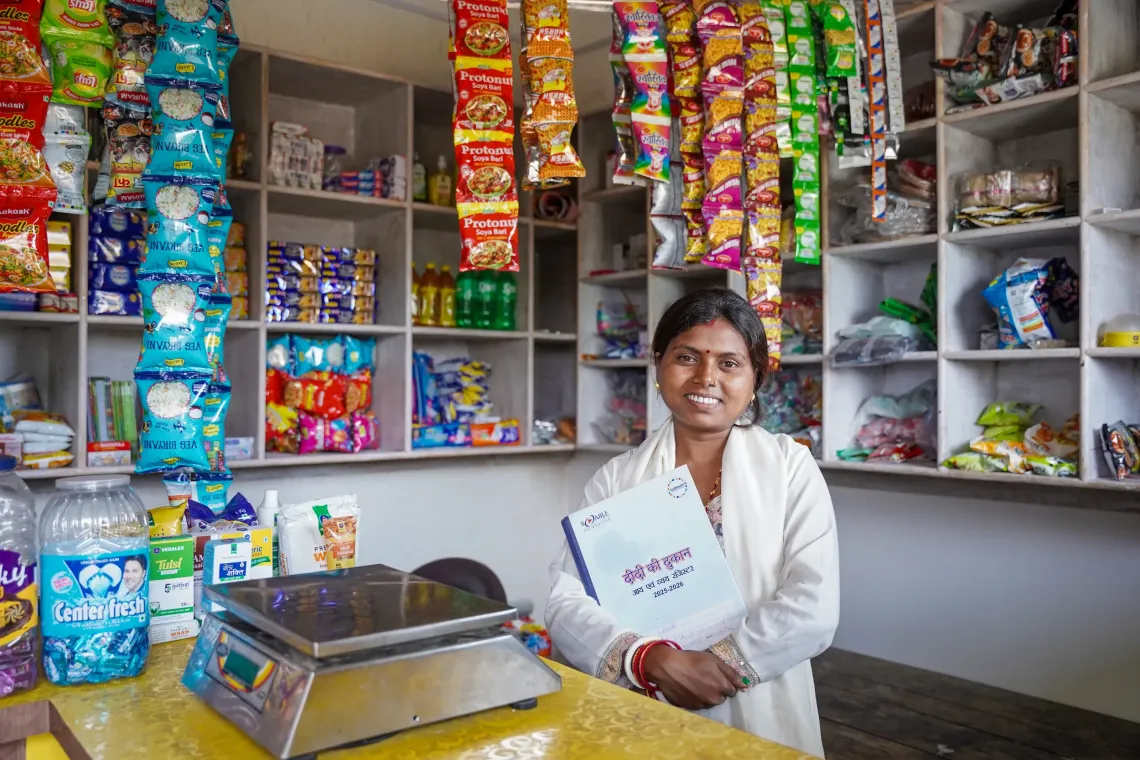
“From Bhabhiji (sister in law) I became Seth ji (business woman). Being called a businesswoman makes me feel proud.”
Jyoti Devi, from a remote village in Jharkhand, always dreamt of having her own income.
Through Didi Ki Dukaan, she gained the skills and support to turn her dream into reality. With the right on-ground support and training, she opened her own local shop and learnt to think like an entrepreneur–how to gather funds, track profits, and build trust with customers.
These skills made a tangible difference. Villagers soon noticed Jyoti’s professional approach, and her customer base steadily grew, especially among girls who could now buy feminine hygiene products without hesitation or stigma.
“Since opening my shop, my opinion has become more valued in household decision-making. I have earned respect and am seen as someone worth listening to. It makes me feel proud.”
Contributions to the Sustainable Development Goals
Didi Ki Dukaan supports progress on multiple SDGs:

With a proven model and encouraging results, Didi Ki Dukaan is positioned for scale. The roadmap includes expanding to new districts, building supply chain infrastructure through regional hubs, and enabling convergence with government livelihood missions.