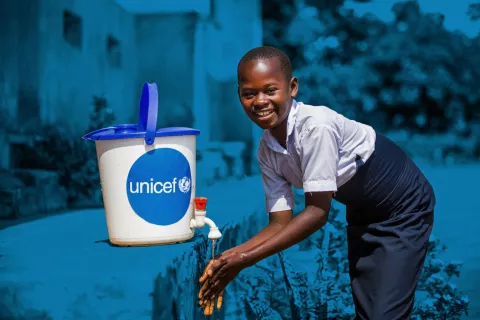
Evaluating access to clean water and hygiene
UNICEF uses evidence to improve WASH services and promote healthy environments for children.

UNICEF’s WASH evaluations focus on ensuring communities have access to safe water, adequate sanitation, and effective hygiene practices. We assess the impact of infrastructure improvements, behavior change campaigns, and emergency response strategies to reduce waterborne diseases and improve public health. By evaluating these programs, UNICEF ensures interventions effectively address the needs of vulnerable populations.
In addition, our evaluations focus on how WASH initiatives integrate with education and healthcare programs. We analyze UNICEF's efforts to promote hygiene practices in schools, healthcare facilities, and households, ensuring children grow up in environments that support their health and well-being. UNICEF's evidence-based insights guide policymakers in delivering sustainable WASH solutions that create healthier futures for children worldwide.
- Independent Evaluation of the Accelerating Sanitation and Water for All Programme (ASWA II)
- Evaluation Synthesis of UN System and Development Bank Work Towards SDG 6
- Climate and Environment Readiness Assessment
- Global evaluation of UNICEF WASH humanitarian action in protracted crises, 2014-2019
- Global Evaluation of UNICEF’s Drinking Water Supply Programming in Rural Areas and Small Towns, 2006–2016
- Equity, sustainability and scalability in UNICEF WASH in schools programming: Evidence from UNICEF evaluations 2007-2015
- Equity, scalability and sustainability in UNICEF WASH programming: Evidence from UNICEF evaluations 2007-2015
- UNICEF WASH Action in Humanitarian Situations: Synthesis of Evaluations 2010-2016
- Evaluation of the WASH Sector Strategy "Community Approaches to Total Sanitation" (CATS)