At the High-level Political Forum on Sustainable Development (HLPF) — and now as the Evidence for Climate Action (E4CA) coalition heads to COP30 — we have a rare opportunity to use evidence to shape decisions that reduce deprivation and poverty for children growing up in slums and informal settlements.
The case is clear: (1) these children are among the most left behind; (2) their hardship is compounded by overlapping deprivations in housing, WASH, health, education, and protection; and (3) climate shocks hit hardest where services, infrastructure, and safety nets are thinnest.
The good news is equally clear: the evidence shows practical solutions exist — and can be adapted and scaled. Evidence alone does not reduce deprivation, but it can guide investment choices, policy reforms, and delivery models that do — targeting what works, for whom, and under what conditions in slum contexts.
What our evaluation found—plainly stated
This year, I led a global evaluation of UNICEF’s work with children living in slums and informal settlements[i]. This excellent evaluation was delivered with UNICEF EO support from Tami Aritomi, Evaluation Office, and by our consulting team—Gonzalo Hernández Licona (team lead), Paola Pereznieto, both from Mexico, and Sebastián Anapolsky, Melina Tobias, and Nicolás Ferme, all from Argentina. Across countries and cities, the pattern was consistent:
- Hazards compound pre-existing risks. Heatwaves, floods, landslides and climate-linked disease spikes don’t create deprivation; they magnify it.
- Service fragility drives harm. When the tap runs dry, the clinic closes, or a school can’t operate safely in extreme heat, children pay first and longest.
- Vertical projects underperform. Siloed interventions struggle in dense, hazard-exposed environments; area-based, multisector approaches work better.
- Data invisibility = budget invisibility. If settlements, children, and services are missing from the data, they’re missing from the plan and the budget. '
We also documented solutions already delivering value: community-led profiling and settlement mapping, municipal health and WASH plans in high-risk wards, rapid WASH restoration after floods, and forecast-based, shock-responsive social protection to help families avoid harmful coping.
From invisibility to impact: the HLPF 2025 moment
At HLPF 2025, I presented these findings alongside city practitioners, community leaders, youth slum dwellers and evaluation colleagues. Three shifts resonated across the room:
- Make slum children visible in official data, baselines and performance frameworks—using community profiling, settlement mapping and hazard overlays.
- Shift from projects to places. Converge WASH, health, education and child protection in the same high-risk micro-zones, with municipal leadership and budgets.
- Design for continuity. Plan and finance operations, maintenance and rapid restoration so essential child services stay open through shocks.
The conversation didn’t stay inside our community. A UN News piece amplified the message; engagement widened. That visibility matters—but only if it moves us from promises to evidence.
What “evidence” could potentially look like? Let’s explore for example three child-centred metrics
To make climate finance accountable for children in urban informality, we need simple, meaningful measures that city teams and funds can adopt now:
- Safe water when needed [ii]
Do families in slum areas have drinking water when they need it, and how quickly is service restored after a flood of heatwave?. - Service continuity for children [iii]
Percentage of child health, protection and education services that meet minimum operating standards during heatwaves and floods. - Shock-responsive social protection [iv]
Share of eligible households receiving child-sensitive support within 14 days of forecast-based triggers.
These indicators are practical, auditable, and compatible with existing municipal and program data. They keep the focus where it belongs: on outcomes for children, not just inputs purchased.
How cities can deliver—five design principles
Evidence from our cases points to a common playbook:
- Visibility & targeting: Put settlements on the map; disaggregate by gender, disability and age; overlay hazard and service data.
- Area-based convergence: Align multiple sectors in the same place, at the same time, with shared milestones.
- Municipal, Localization and co-ownership: Co-design plans with city departments and communities; budget realistically and surge capacity.
- Reach the most vulnerable first: Prioritize children with disabilities, girls, migrants and female-headed households.
- Scale through systems: Pair upstream policy and budget reforms with downstream service pilots designed for municipal uptake.
Cases that show feasibility
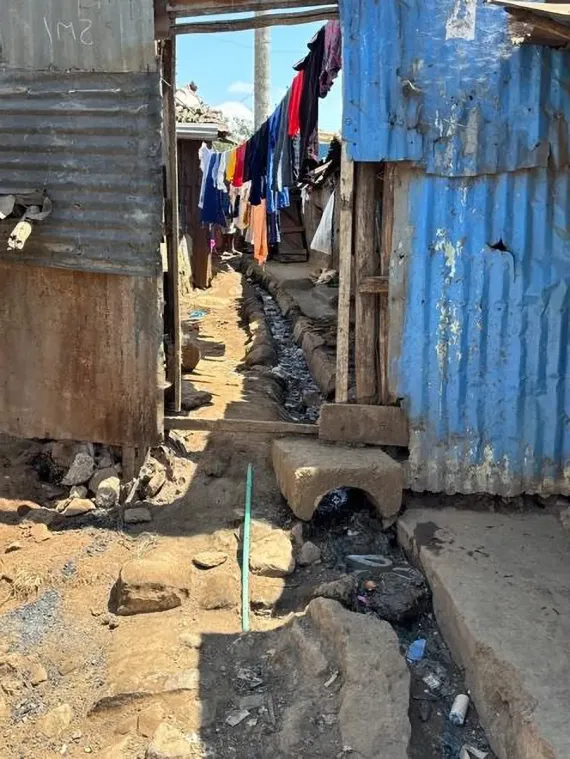
- Nairobi (Kenya): Flood emergencies met with rapid WASH repairs and targeted cash support to protect children, paired with efforts to keep clinics, protection and schooling services open.
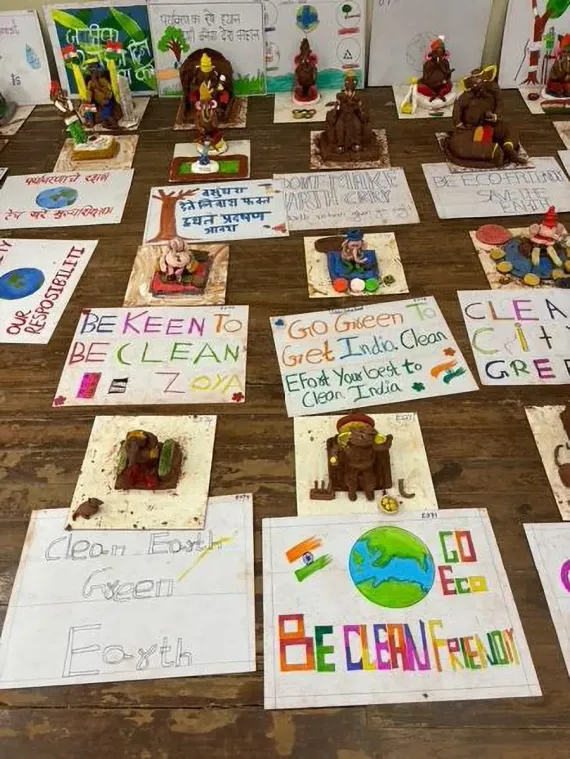
- Maharashtra (India): Ward Health Action Plans—a municipal, participatory and multisector model to prioritize high-risk slum wards.
- Colombia (Atlántico): AI/satellite mapping and neighborhood “territorial notes” to target WASH, schools and clinics within walking distance of informal settlements.
Different cities, same lesson: when you focus on places and continuity, you protect children’s health and learning—through the shock, not just after it.
Why E4CA at COP30 matters
The Evidence for Climate Action (E4CA) Pavilion at COP30 is built to close the gap between climate finance, implementation and measured results. It brings evaluators, funds, multilateral/bilateral partners, researchers and communities into the same space to share what works—and what doesn’t—so decision-makers can steer resources toward outcomes at scale.
Children in slums cannot remain an afterthought in climate action. With the evidence we now have—and the platform E4CA provides—we can move from invisibility to impact. The task ahead is disciplined and achievable: measure what matters for children, fund what works, learn in the open, and scale through city systems.
[ii] UNICEF/WHO JMP Service ladders
[iv] Programme Guidance: Strengthening Shock-Responsive Social Protection Systems