Community Reintegration for a Better Future
Community reintegration in the Central African Republic, a second chance for children affected by conflict

- English
- Français
Before the 2023 events that struck the Central African Republic and the Bambari region in particular, Marie*, now 16 years old, lived happily ever after with her parents and her two brothers.
Life was peaceful until their father and mother were killed in the events. It was at this time that the three children decided to leave Bambari to join the capital Bangui in the hope of finding a better life there: ” The road has been long and exhausting, but our grief and fear of being alone in a conflict zone motivated us to go to Bangui. We walked for two days and two nights».
Unfortunately, things did not go according to their plan.
“When our parents were killed, my brothers and I fled and found ourselves in the streets of Bangui, homeless and without anyone to welcome us. We stayed close to the market in the PK12 district where a merchant noticed us and offered us food in exchange for some small chores we were doing for her. However, with having no home, we had to sleep in the streets from day one,» explains Mary.
Life on the streets was very difficult, especially for the girl. One night, two men approached her and raped her. “It happened several times,” she adds, “There was no one to stop them and with my brothers we didn’t know where to go to take refuge.”
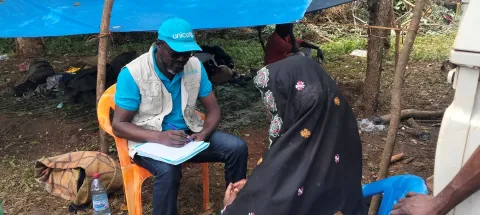
Marie told us that one day, during a marauding activity, a psychosocial expert social worker, working for a UNICEF partner, found them on the street and took them to shelters for vulnerable children, including those at risk of violence or homeless children.
“Unfortunately, my two brothers and I could not stay together, we were placed in a boys' center and another girls' center. We spent six months apart.”
It was not until 2016, three years after their departure from Bambari, that, thanks to UNICEF’s reintegration project supported by the Government of Luxembourg, that child protection workers finally managed to find a their maternal aunt and reunite them all together.
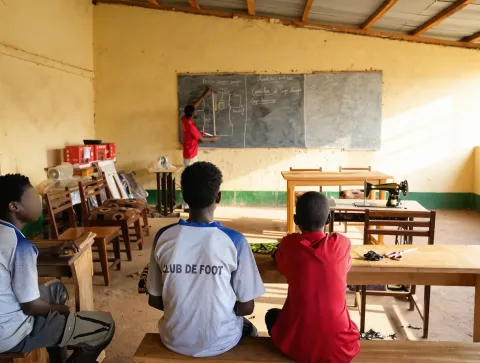
“Since we’ve been with our aunt and thanks to this new opportunity, my brothers have been enrolled in school and have received school kits and outfits,” she says with joy. “I was able to take vocational training in sewing and my aunt, who became our tutor, received support for setting up a small sewing workshop, which helped us to have a stable income and to live better.”
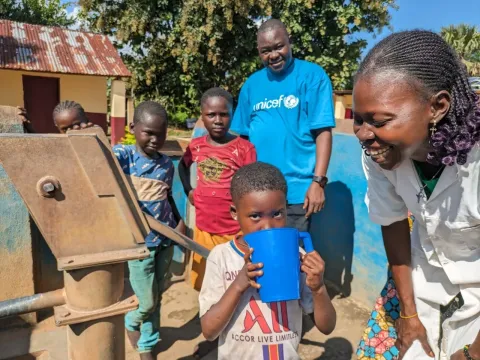
The project supported by the Government of Luxembourg aims to build a resilient system for the reintegration of children affected by armed conflict. Since its launch in 2019, the project has helped more than 141,000 children, like Marie, who have been supported by either psychosocial support or community reintegration services.
“I thank those who helped us get off the streets, find our aunt, send my brothers to school and allow me to do a job I love and live better. I won’t stop here. Once my internship is over, I will work to have the means and materials necessary for my installation and thus have my own sewing workshop. My goal is to help other girls and boys in difficulty, as I was one day,” says Marie.
----- End