Childhoods rediscovered
Children make up half of the population of the CAR. Many have found themselves exploited by armed groups. UNICEF is working to secure their release.

- English
- Français
Ahmat Ahmet* was 10 years old when his life was turned upside down. One sunny day during the dry season of 2024, he was grazing his parents’ cattle in a green space in the village of Bokolobo when, suddenly, armed men emerged from the forest and forced him to follow them. The young boy obeyed and left his parents’ animals behind.
What followed was a long and gruelling journey from village to village, punctuated by massacres, looting, destruction and rape. Exhausting days of walking passed before the child found himself in his captors’ hideout: a forest he could neither name nor even pinpoint on a map. Ahmat explains that, for just over a year, he was forced to carry out various domestic tasks for the armed men.
“I used to sweep, fetch water and do little odd jobs for them. But they never physically abused me because I did everything they asked me to do.”
Nevertheless, the boy remains deeply affected by the violence to which he was exposed during the raids carried out against the villages by members of the armed group.
“They raped women, they killed and burnt down the homes of innocent people right in front of me, and they abducted other children from those villages.”
Ahmat admits that he still has nightmares about those scenes to this day.
He regained his freedom in March 2025 thanks to the dialogue efforts led by UNICEF and MINUSCA with the armed group. In total, twenty children were thus released and saw renewed hope for a better future. Following their release, UNICEF and its partner, the NGO Espérance, took 14 of them to Bambari to place them with foster families whilst they waited to be reunited with their biological parents. In the most complex cases, it took around nine months to trace the families.
“When I got home, I saw my mother and my brothers and sisters crying with joy. They thought they would never see me again,” said Ahmat Ahmet.
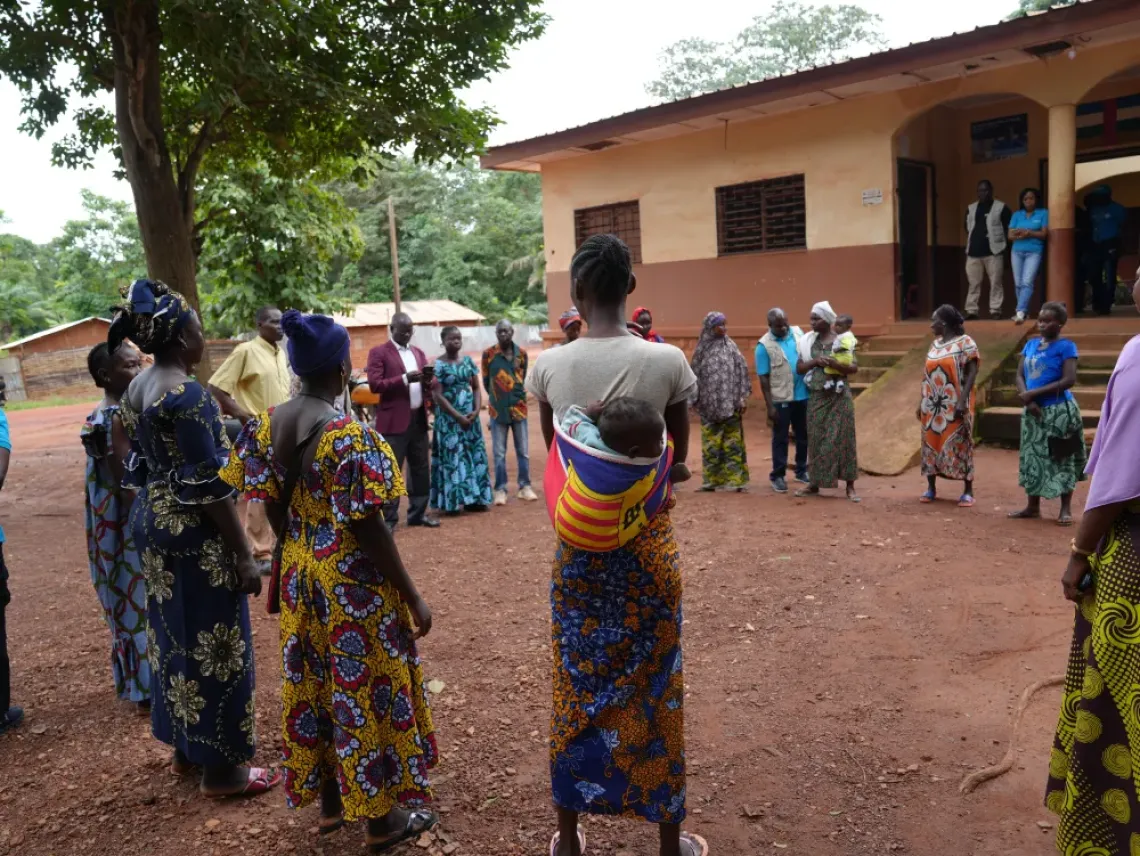
A ceremony to reunite the children with their families then took place in the village of Maloum. Those who were originally from the villages of Bokolobo, Gréyanda, Sabagoudé, Goya, Marché Lundi, Kouango and Pombolo were taken to Bambari before being transported to their respective villages. The others, whose parents were already in Maloum, remained in that village. All received medical and psychosocial care designed to support their recovery and reintegration into their families and communities.
These children have also had access to socio-economic reintegration opportunities tailored to their aspirations and the local context, including vocational training in various fields such as dressmaking, mechanics, bricklaying, baking and agro-pastoralism. These activities, funded by UNICEF Spain, the Bureau for Humanitarian Affairs (BHA) and the US Department of State, help to strengthen their independence and improve their prospects for the future.
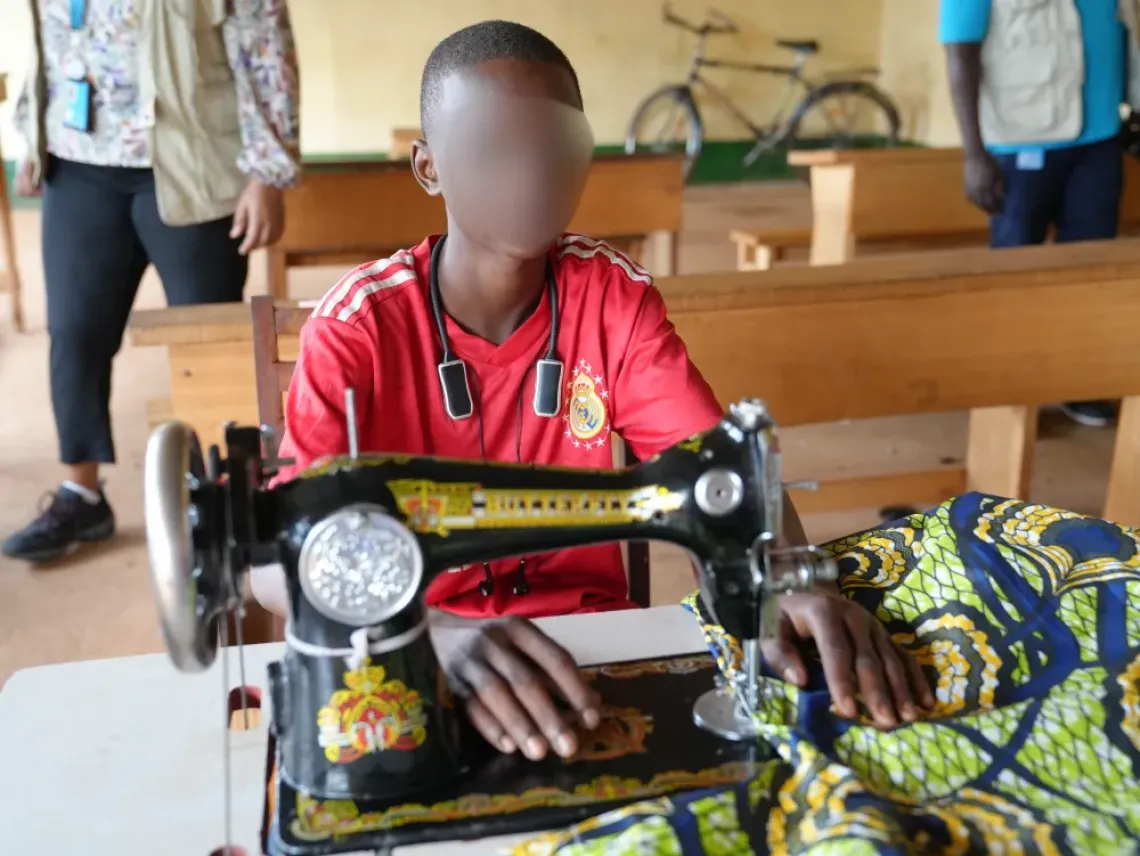
As part of his reintegration programme, Ahmat chose to learn sewing. He spent six months learning how to cut fabric, baste with a machine and, above all, how a sewing machine works so that he could repair his own machine if necessary. Like other children formerly associated with armed groups, Ahmat was given his own sewing machine after completing his fast-track training.
Il ambitionne également de retourner à l’école pour mieux apprendre à lire et écrire afin de poursuivre son rêve:
“I chose to train as a seamstress, but what I really want is to become a civil servant in the Central African Republic, even though I don’t yet know in which field. I just want to be someone of note in my country.”
Like Ahmat Ahmet, children who were previously members of armed groups, children separated from their families and those affected by various forms of violence may be temporarily placed with foster families whilst their situation is assessed and a lasting solution is sought that respects their best interests.
These foster families receive support to help with the temporary care of children released from armed groups, in particular to meet their basic needs during the transition period.
Aishatou Souleymane is one of the people who take in children. This 62-year-old mother has eight children of her own and 16 grandchildren. She first opened her home to children in need in 2015, purely out of altruism, through the NGO Nda – now known as Espérance – a UNICEF partner.
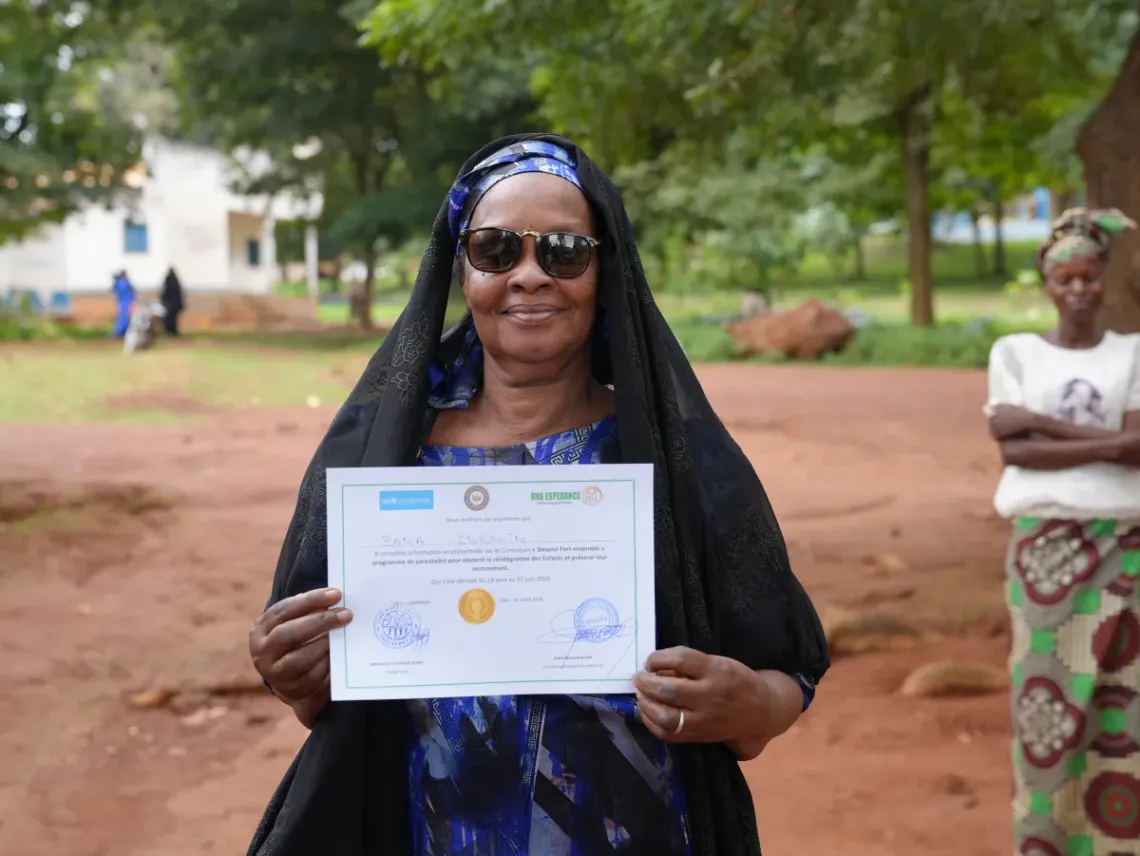
“At the time, there was very little financial support, but it was as if God himself was asking me to help these children,” says Ms Aishatou. It was in 2015 that she first took in children who had been freed from armed groups.
This group came from Alindao and consisted of 11 children: 3 girls and 8 boys aged between 10 and 16. Aishatou, who has been a foster mother for several years, explains that she has sometimes encountered difficulties with the behaviour of certain children, often shaped by their experiences within armed groups. “There was a 10-year-old boy who was determined to return to the armed groups at any cost. I never understood why, but he eventually ran away to rejoin the armed groups,” she says.
In order to provide a safe and suitable environment for children in distress, Aichatou has made one of her properties available to them. It comprises four bedrooms, in which she has accommodated the children according to gender and age group. For over a decade, this devoted woman estimates that she has temporarily accommodated around fifty children, with financial support not only from UNICEF and its partners but also from her own children, who are now all grown up and already in work.
---------------------------------------------------------------
*A fictitious name used for protection reasons.