Japan government support to reach 60,000 children in CAR’s Haute-Kotto prefecture including health, nutrition, protection and clean water
The 12-month programme with UNICEF provides vital humanitarian support in one of the country’s most vulnerable areas.

- English
- Français
BANGUI, 8 April 2026 – With generous funding from the Government of Japan, UNICEF is launching a new 12-month programme of humanitarian support to strengthen essential services and community resilience for around 117,000 people, including 60,000 children, in one of the Central African Republic’s most vulnerable areas.
The $700,000 programme in the north-eastern prefecture of Haute-Kotto will help rebuild essential social services, particularly for children in a region long deprived of basic services and affected by armed groups.
“This rapid assistance is crucial at a time when a growing number of vulnerable people are seeking refuge in Haute-Kotto. Japan supports the Central African Republic in its efforts to restore peace and stability to the crisis-affected community,” said H.E. Kentaro Minami, Ambassador of Japan to the Central African Republic.
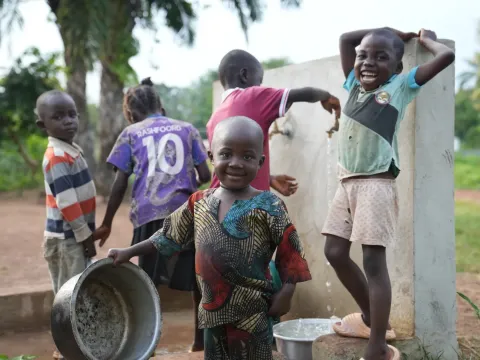
Working closely with the local authorities in the towns of Bria and Yalinga, the support will aim to delivery life-saving aid before the arrival of the seasonal rains that cut off many communities for months at time. UNICEF will upgrade two water points with solar-powered pumps; provide medical and other health supplies giving access to improved healthcare to over 23,000 people including 19,000 children; support the treatment of 1,500 children for severe malnutrition; and reach over 9,000 highly vulnerable children through the establishment and strengthening of 10 community-based child protection networks. Twenty motorcycles and four tricycles will improve capacity for health workers and supplies to reach isolated communities in the area.
“This generous support from the Government of Japan meets a critical humanitarian need and provides a vital investment to roll-out essential services to some of the most neglected parts of the country, particularly for children,” said Felix Ackebo, the UNICEF Representative to CAR. “Japan’s support shows solidarity with the children and families of the country, who are hoping to rebuild after years of conflict and insecurity. This helps strengthen resilient communities that can better contribute in the future to the country’s recovery and prosperity.”
The investment will directly contribute to strengthening health services, sustainably improving access to safe water, peacebuilding, social cohesion and long-term development, including for displaced communities.
In 2024, more than 1,000 cases of violence against girls and women were record in the prefecture (Bria, Ouadda, Yalinga and Ouanda Djallé). Malnutrition is also a concern, with Haute-Kotto being among the areas of the country with the highest levels of acute food insecurity, something that will be faced by an estimated 43 per cent of resident in the second and third quarters of 2026.
Media contacts
About UNICEF
UNICEF works in some of the world’s toughest places, to reach the world’s most disadvantaged children. Across more than 190 countries and territories, we work for every child, everywhere, to build a better world for everyone.
For more information about UNICEF and its work in West and Central Africa, visit: http://www.unicef.org/wca Follow UNICEF on Twitter, Facebook, Instagram and YouTube