Fiercer than a swarm of bees
During humanitarian operations, UNICEF CAR and its partners need to expect the unexpected. A recent mission to remote villages of north-west CAR had a trip with a sting in the tail.

- English
- Français
Eve Guiyama, UNICEF’s emergency specialist, replies with a weary smile when asked how the distribution of humanitarian aid went in the village of Bedjangala:
“I never could have imagined that it all might have been ruined by an attack... from a swarm of bees. But my greatest surprise was to see how see how everything was saved in a matter of minutes.”
Bedjangala, a village in the Lim-Pendé Prefecture (in northwestern CAR), was among five hamlets that were struck by violent winds and torrential rains a few weeks ago that uprooted trees, destroyed homes and left more than 200 families without shelter.
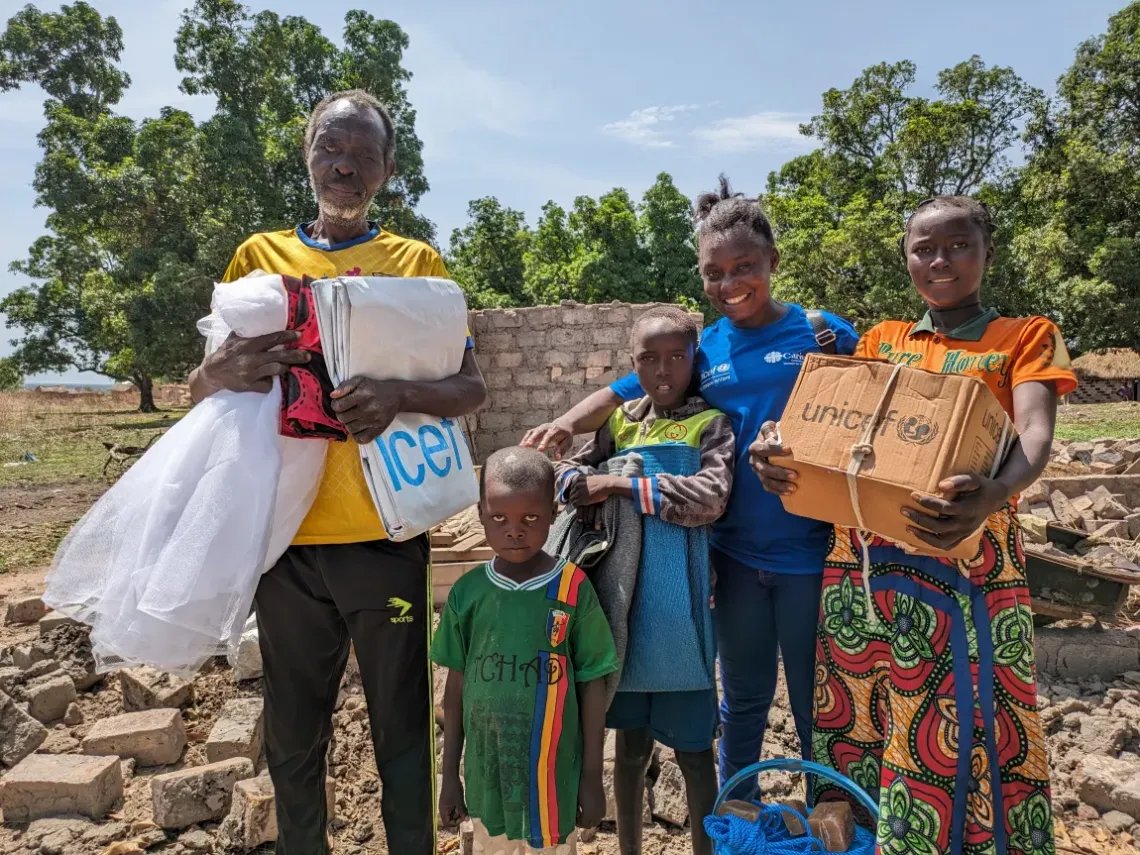
Few days later, a joint UNICEF-Caritas mission was on the ground to respond to the emergency. Serge, a father of four children, was one of the beneficiaries.
“After the storm left us homeless, my children could not even go to school because we lacked everything. Now, at least, they have some decent clothes, we have a provisional shelter, and we can collect clean water and prepare food at our home.”
But before people like him could safely be helped, an unexpected turn of events brought everything to a sudden halt. Nothing could have prepared the team for what unfolded this time.
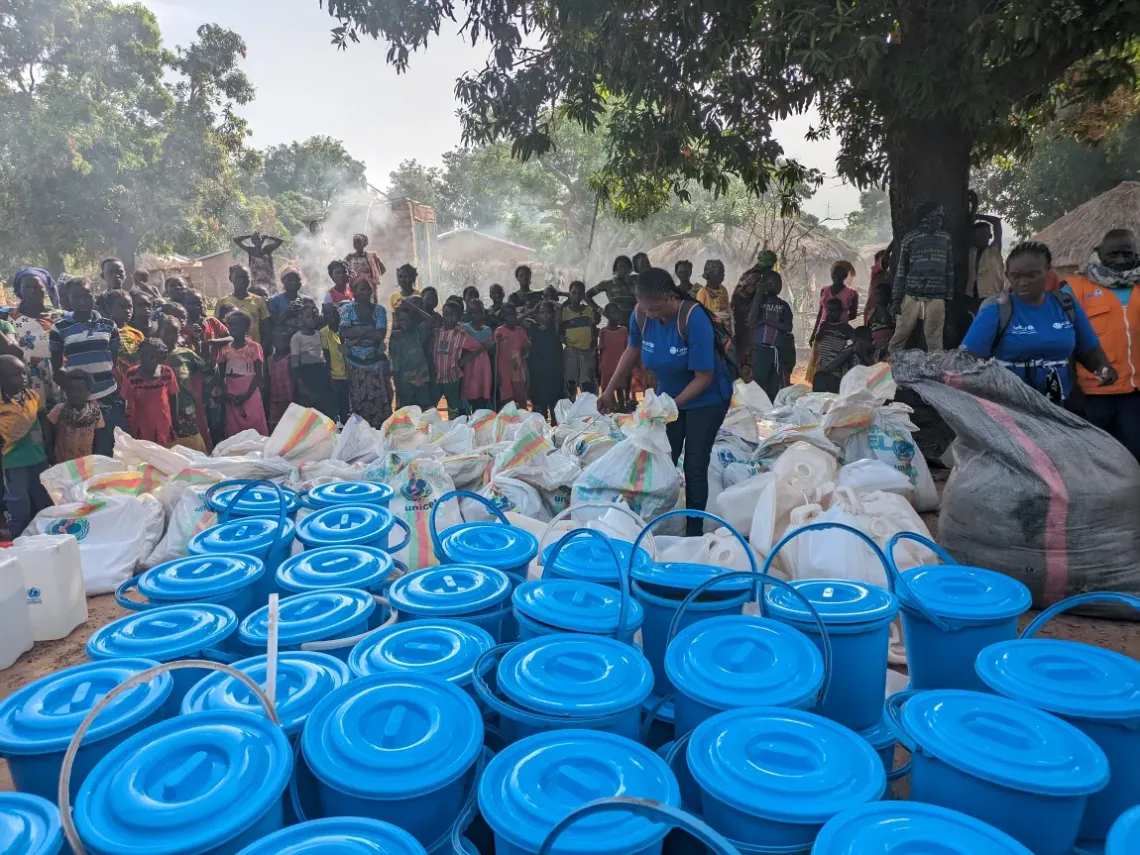
The domestic items had already been unloaded from the lorry and carefully arranged in neat rows across an open space beneath the generous shade of the trees. Two loudspeakers played lively music. Nearby, in a quieter corner, some members of the team had gathered the children, who sang songs and played games together.
Then, drama ensued.
First, it was some of the individuals from the village who started strongly waving their hands about. The startled villagers barely had time to react or wonder what was happening. Many began to feel uncomfortable sting. Within seconds, panic spread: “The bees are attacking us.”
Within seconds, everyone scattered in all directions. Well, not quite all directions. They soon realised where the bees were coming from and found the best escape route to reach relative safety.
Only four elderly women remained at the scene, unable to move. Risking their own safety, some young people rushed over to lift them onto their backs and carry them to safety.
Ten people, including two members of the humanitarian team, needed to be evacuated to a nearby health centre to receive medical treatment after suffering multiple insect bites.
Dazed and confused, everyone wondered what to do next. To suspend the distribution? Plan for another day? What about the many items that they had brought and that they lay abandoned in a place invaded by the bees?
The local leaders tried to calm everyone: “These things happen. Don’t worry. We’ve got it sorted.”
Without wasting a second, they gathered a large group of young people and talked to them.
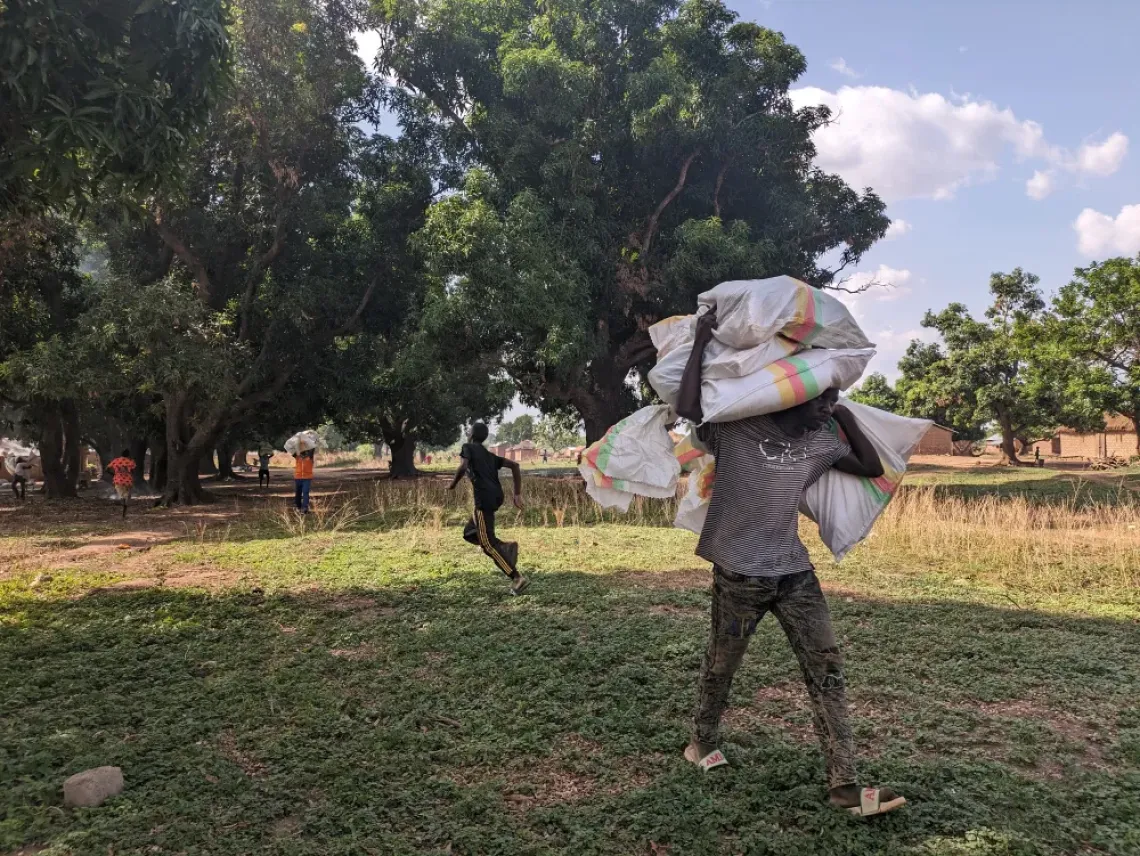
Within a matter of minutes, three rows of young people ran as fast as they could towards the spot where the precious cargo was piled up—buckets, boxes of kitchen utensils, jerry cans, hygiene kits, bundles of blankets and tarpaulins…—but not before covering their heads with T-shirts to protect their most vulnerable parts. Meanwhile, a vanguard of the bravest had arrived first and lit a large fire around the pile, so that the thick smoke might scare away the bees.
With astonishing speed, wave after wave of small groups of young people arrived at the spot, hoisted whatever they could onto their shoulders as fast as they could, and turned back, in a frantic dash, towards the place where the local leaders had summoned the people, considering it relatively safe and out of the way of the troublesome insects.
Everything took barely half an hour. During that time, the distribution location was moved to the new spot where – for some reason that was hard to fathom – the bees didn’t dare to fly.
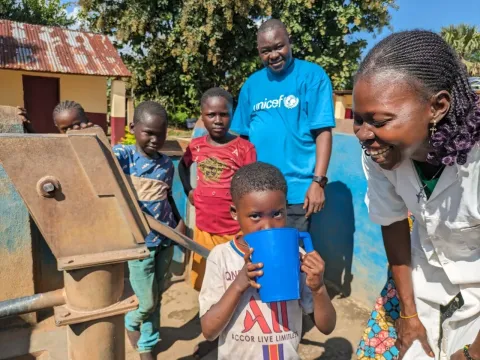
With morale restored, the humanitarian team took out the list of beneficiaries, improvised a desk and began calling everyone, one by one. Everyone received their parcels and went home happy. Meanwhile, another team of three technicians continued with their work of repairing two water pumps.
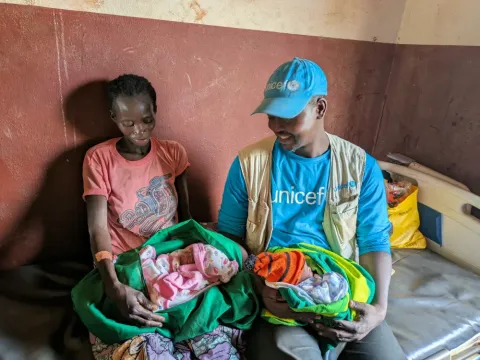
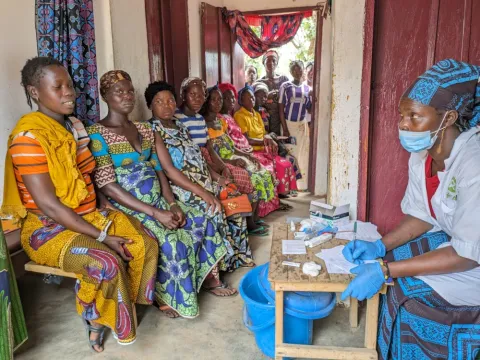
During the four days that the distributions took place, the team also deployed a mobile clinic in two villages. 294 children received medical consultations, including 180 who were vaccinated. In addition, 55 children were diagnosed with malnutrition — 35 of them suffering from severe acute malnutrition — and immediately began receiving treatment. The clinic also provided antenatal care to 95 women and postnatal consultations to 41 others.
Since 2025, the UNICEF-led So Fini programme, generously funded by the Swedish International Development Cooperation Agency (Sida), has responded to more than 12 humanitarian incidents across the Central African Republic. These interventions are often carried out under extremely challenging conditions — in remote, hard-to-reach areas, sometimes affected by insecurity.
That day, the team ended their work with a deep sense of accomplishment and got ready to set out for another village the next morning and continue their work. Having overcome a fierce swarm of bees, they felt prepared to face whatever other challenges might lie ahead.