Community health workers at the heart of the fight against malnutrition
BHA, a key player in improving the nutritional status of children in CAR.

- English
- Français
‘Helping children is my reason for living,’ says Faustin Yakite, a community health worker in Alindao.
Every Wednesday morning, mothers, often exhausted, arrive at the Ambulatory Therapeutic Nutrition Unit (UNTA) in Alindao hospital with their babies, some showing signs of malnutrition. Many of them walk more than 10 km to receive treatment for their malnourished children.
"Most of the children admitted to the UNTA have already overcome the most critical phase of malnutrition from hospitalization in the Therapeutic Nutrition Unit (UNT) next to the pediatrics department. After a week or two of intensive care, they are transferred to our UNTA to continue their recovery," he explains.
This is the case of Bintu, a 7-month-old baby, who will soon be able to return home to Bokolobo, 60 km from the UNTA, accompanied by her mother Faida. Thanks to the second phase of treatment provided at the health centre, funded by UNICEF and the USAID Bureau for Humanitarian Assistance (BHA), she will continue to regain strength.
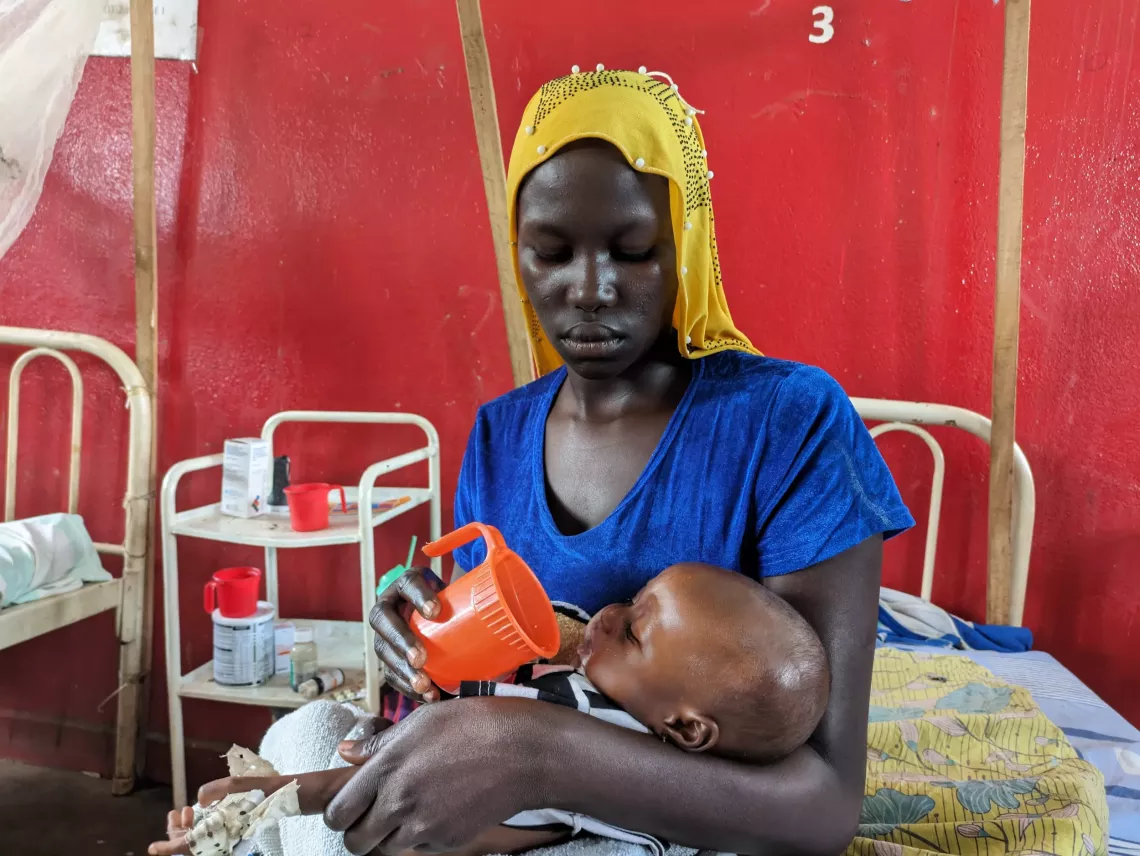
At the UNTA, Santine Abdoulaye, another community health workers, continues the nutritional assessment of children. She distributes to each mother, based on weight of their child, sachets of Plumpy'nut, a ready-to-use therapeutic food, rich in energy, provided by UNICEF thanks to the support of BHA. Mothers also receive hygiene kits.
"In addition to the medical follow-up carried out by the first-aid nurses in charge of the UNTAs, we distribute hygiene kits to mothers. It's a small gesture that has a big impact. It allows them to come to the UNTA regularly, without having to worry about the practical aspect. Moreover, these kits encourage exchanges between mothers and break isolation," says Santine.
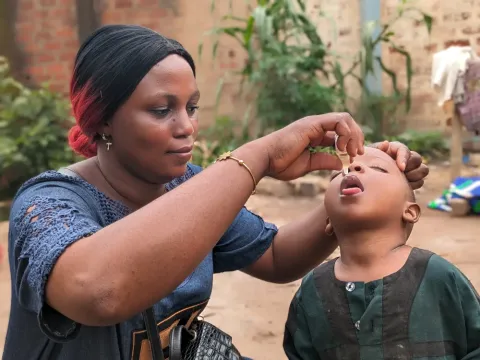
Community health workers do more than just distribute therapeutic foods. They screen children early in the community and refer those who meet the criteria [for malnutrition] to UNTAs or UNTs. They raise awareness among mothers about the importance of good nutrition through Infant and Young Child Feeding (IYCF) sensitization themes, carry out home visits to ensure that treatments are being followed, and actively search for absentees to bring them back to the treatment units in order to reduce the dropout rate.
"Raising awareness is at the heart of our mission," continues Faustin. "We regularly visit families to inform them about good practices in nutrition and hygiene. I know the 43 children I am currently following, and I am here to answer all their mothers' questions. We share practical advice on preparing nutritious meals using local products. Our goal is to empower them so they can take good care of their children in the long term," he adds.
"Saving a life is a miracle, but it's only the first step. To build a future filled with hope and promise for these children, we must walk alongside them, hand in hand, every step of the way. This is the heart and soul of our mission as community health workers," concludes Faustin.