Stand by me
The most important conversation is the one between children and parents

- Български
- English
Mission of the “Stand by me” campaign
"Stand by me" is a media campaign by UNICEF Country Office in Bulgaria and NOVA TV. The main aim of the campaign is to support the most important conversation - the one between children and adolescents and their parents. The campaign is part of UNICEF's mission to support parents and encourage positive parenting because every child and adolescent has the right to grow up in a safe and caring family environment.
The "Stand by me" campaign aims to raise public awareness and provoke societal dialogue and discussion about child-parent relationships and the generational gap.
Positive parental relationships are essential to children's mental wellbeing and emotional health.
The campaign highlights the crucial role of parents, schools and social services in providing support for children's and adolescents’ mental health and preventing violence in all its forms and highlights the need for specialist support services for both children and their parents.

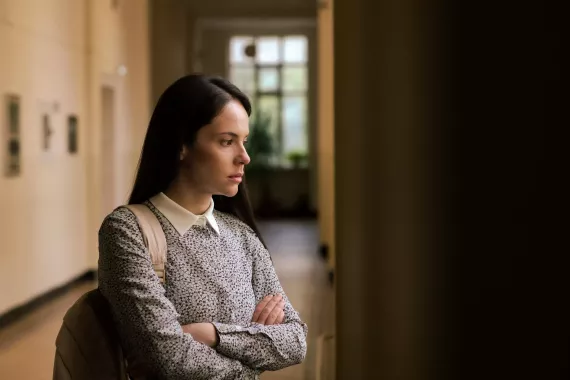
UNICEF/2025/ChristoChuchkov

UNICEF/2025/ChristoChuchkov
„When parents actively listen and engage with their children—whether about their fears, dreams, daily experiences, or difficult moments—they build a foundation of trust, emotional well-being, shaping their futures in ways that can be difficult to heal. “
Christina de Bruin, UNICEF Representative in Bulgaria
Because we believe that:
Family is the main support for children - open conversation, mutual support and understanding within the family help children grow confident and able to handle life's difficulties. Parental alienation, family disputes , violence, and parental neglect leave deep marks on a child's emotional and mental wellbeing .

Trust and communication between children and parents are key to building healthy relationships - Children need to know they can share their problems without fear of punishment, judgement or rejection, and rely on support. Lack of communication between parents and children can lead to alienation, children closing trust , aggression and depression.
Violence is never the solution
Solutions come with patience, understanding and empathy - not punishment or fear. Violence only distances and hurts. Children need to understand their emotions so they can deal with conflict without turning to aggression.

Support is key - It is important that both children and parents know they are not alone. Support from family, friends and professionals is essential. The school is the place where the whole community can work together for prevention, open dialogue and non-violent conflict resolution.

Violence and mental health challenges affect every one of us. They are society-wide problems and require a response and action from everyone - institutions, professionals, parents, media and children.

About the TV series “The Mothers”

UNICEF/2025/ChristoChuchkov

UNICEF/2025/ChristoChuchkov
"Mothers" explores the issue of the broken child-parent relationship and the resulting pain and life choices.
The campaign was created in collaboration with the TV series "Mothers" by NOVA TV, which tells the story of the importance of supportive family relationships and what the consequences could be when they are missing. "Mothers" explores the issue of the broken child-parent relationship and the resulting pain and life choices.
The plot follows the lives of six teenage children who were deprived of love in their families, but at the same time received support and love from their teacher, Yavora. However, there is a hidden or obvious problem in each of their families and Yavora, whom the children almost idolise, becomes the missing mother they all dream of.
What do the characters in the show have to say?

Each character in the series "Mothers" carries with them a story - of pain, silence and hope. In these special video messages, they share how important are the relationships between children and parents and what it means to listen, understand and support your child.
- Watch the videos (coming soon)
The messages behind the scenes

In these videos, the cast and crew of "Mothers" share not only what it is to create a TV show with a cause, but also their personal views on support, difficult choices, and the relationship between parents and children. They also talk about their characters - what they go through, what scares them, and how real the situations are the TV show depicts.
Watch the Behind the scenes videos (coming soon)
Main challenges which children and parents in Bulgaria face
- UNICEF estimates suggest that around 11 per cent of girls and boys aged 10-19 in Bulgaria live with a diagnosed mental health disorder, with anxiety and depression accounting for half of them. Other prevalent challenges include drug and alcohol abuse, behaviour challenges , eating disorders and suicidal behaviours.
- UNICEF data shows that 1 in 5 deaths among 15 to 19-year-olds in the EU is caused by intentional self-harm and suicide is the second most prevalent cause of death for adolescents of the same age in Europe. 1 in 5 children experiences a mental disorder each year (WHO Report “Spotlight on adolescent health and well-being“).
- Mental health is a significant concern for children and young people across Europe including in Bulgaria. The report “Our rights, our future: Europe we want” shows that mental health is the second biggest concern for children after ‘war and conflicts”. Worryingly, children feel dismissed or not taken seriously when discussing their challenges with adults such as teachers or parents. Social challenges, such as loneliness, bullying, or discrimination, are significant contributors to mental health challenges, as well as poverty, substance use and social media.
- The latest UNICEF Bulgaria study: “Mental Health: Voices of Youth” (2022) provides insights on how adolescents and young people perceive, experience and talk about mental health. Because of stigma and discrimination, young people often prefer to hide their feelings, to keep quiet and not to seek help when they have mental health problems. According to the participants in the study, parents do not take their teenagers’ feelings seriously, neglect or reject them, do not understand or cannot accept the reasons for their experiences.
- According to “Study of violence against children in Bulgaria”, еvery second child and young person in the country has experienced some form of violence. One in three children in Bulgaria say they feel unsafe at home, at school or in the community. One in three children has been a victim of physical violence. 15.6 per cent have experienced sexual violence. One in seven children report having been victims of online bullying on social networks. According to the study, violence is most common among children at school (38.3 per cent), followed by in the community (37.6 per cent ) and at home (30.9 per cent).
- Аround 40 per cent, or 2 in 5 parents and caregivers reported using physical violence as a form of discipline in 2020, and around 1 in 20 had reported use of severe physical punishment. Approximately one in 5 (18.5 per cent ) children and young people report experiencing physical violence in their home. Оne in 6 (16.7 per cent) children and young people reporting experiencing emotional abuse at home.
- One in 10 children and young people reported any experience of neglect as a child: 3.5 % said that their caregivers sometimes forgot to feed them, 6.8 % said their caregivers sometimesforgot to take them to school or to tell them to go to school, and 5.9 % said that their caregivers sometimes forgot to take them to the doctor when they were sick.
- One in seven children report having been victims of online bullying and stalking, especially on social networks. 2023 is a record high year for the number of reports received by the Hotline for reporting harmful content and online crimes against children, managed by Safer Internet Centre: 46 359, which is double the number in 2022. The study further reveals that while most children and young people said they knew where to seek help if they were to experience violence or abuse, only a small percentage were aware of specific resources such as school counsellors, the national child helpline 116 111 or Safer Internet Centre (www.safenet.bg).
UNICEF supports these policy solutions
UNICEF is working for a systematic change and improvement of the policies at national level.
UNICEF provides technical support, analysis, research and advocacy to generate change and improve laws, policies, programmes and measures, aiming at prevention of violence and child protection and positive parenting programs models – with a focus on creating healthy and safe relationships among children and between children and youth and their parents.
Child Advocacy Centre Model “Zona ZaKrila” - a model of support for child victims or witnesses of violence, providing psychological, legal and social assistance. Several centres are currently operating in the country, but expanding the network is crucial.
‘Steps Together’ programme – a national programme supported by UNICEF and the Ministry of Education and Science for safe and secure learning and online environment. A model for non-violent conflict resolution in schools.
UNICEF is partnering with the Ministry of Interior, the State Agency for Child Protection and the Safer Internet Centre (www.safenet.bg) to promote dialogue, knowledge sharing and improvement of national online safety policies.
One in seven children in Bulgaria report having been victims of online bullying, especially on social networks. Learn more about cyberbullying and ways to prevent it here.
Report and seek support:
116 111 - National helpline for children
124 123 - Online Safety Advice Line
[email protected] | 0885 525 545 - Cybercrime Directorate (GDBOP)
Scale up the digital programme for parenting support: Bebbo app - used by almost 60,000 parents in Bulgaria and more than 1 million parents in Europe and Central Asia.
UNICEF works to integrate mental health care into the educational, health and social systems. A key focus is also creating a safe environment for children, raising awareness and preventing stigma, mental health care for parents and teachers, trainings on early recognition and response to mental health problems, and actively involving and engaging young people.
UNICEF offers a variety of support programmes to help parents build trust and closeness with their children - without violence, through patience, understanding and positive parenting.
Behind the scenes of "Mothers