Growing Up Online: Children Want More Understanding and Support in the Digital World
- Български
- English
SOFIA, 4 September
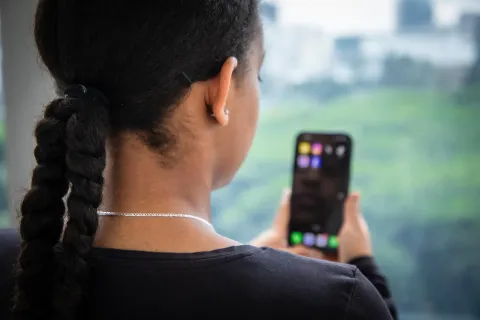
New data from a study by UNICEF Bulgaria and a global survey by UNICEF’s youth platform U-Report show that the internet is an integral part of children’s lives, but adults often do not fully understand how young people experience the digital environment.
“Growing Up Online: Children, the Digital Environment and Safety” is a study involving children, parents and professionals from Bulgaria’s education system, carried out jointly by the Bulgarian Safer Internet Centre, Parents Association and UNICEF.
The findings show that children’s digital lives in Bulgaria begin at an increasingly early age. More than one third of students (37%) started using the internet before the age of 8, while nearly 80% are already active online before turning 10. Almost all students aged 12 and older have their own smartphone.
More than half of children spend over four hours a day online in their free time, while approximately one quarter spend more than six hours a day, with no difference between girls and boys.
One of the report’s key findings is the gap between how children experience the digital environment and how adults perceive it. Children see the internet as an important part of their social lives and development. Nearly 80% of students communicate with friends online every day, 62% search for information for school, and 64% search for information related to personal interests. Adults, by contrast, are more likely to focus on potential risks. At the same time, parents and teachers also recognize the significant benefits of the online environment, particularly the opportunities it provides for access to information, knowledge and communication.
“Online communication allows me to stay connected with my friends all the time, share my interests and find information about everything I care about. We want adults not only to protect us, but also to understand why the internet is such an important part of our lives,” said a student who took part in the study in Bulgaria.
Particularly concerning are the findings from the national study showing that children find it difficult to talk about troubling experiences online. When they encounter shocking content, 41% of students say they would not tell anyone.
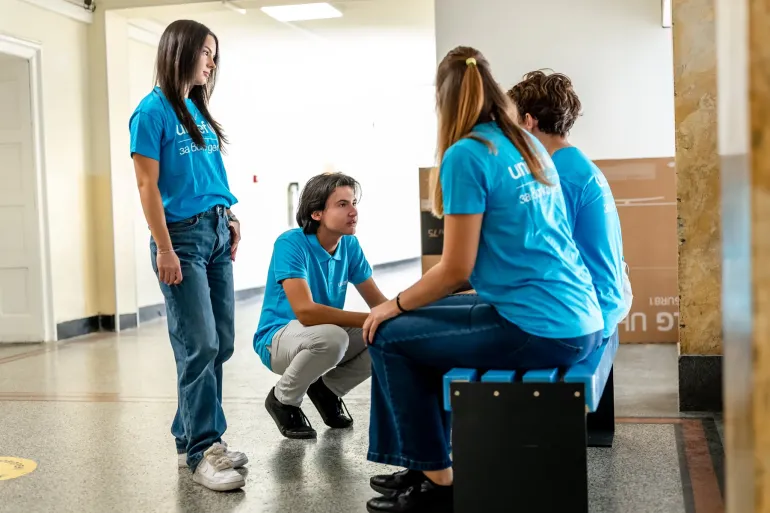
More than one in five students report having experienced online bullying, most often from peers and classmates. In these cases, 44% of children tell a parent or another adult, but only 11% seek support from a teacher or school professional. The findings reveal a communication barrier between children and adults and highlight the need to build more accessible and trusted channels of support.
“Schools have a key role not only in responding when problems arise, but also in helping children develop the skills to use the digital environment safely, responsibly and critically. This requires joint efforts by teachers, parents, institutions and students themselves,” said a representative of the school community who took part in the study.
The trends observed in Bulgaria are also reflected in the global Life Online survey conducted through UNICEF’s youth platform U-Report, in which more than 211,000 children from 119 countries took part. Bulgaria was not part of this international survey, but the findings point to similar patterns in young people’s attitudes towards the digital environment.
The global data reveal an even deeper generational gap. For many young people, the digital environment is not separate from real life, but rather a natural extension of their social relationships, interests and participation in society. This underscores the need for adults to first accept the digital environment as a natural part of children’s lives and then build relationships based on trust and dialogue with them, rather than relying solely on restrictions and control.
The international survey also highlights a specific trend: many young people say they use digital spaces to discuss personal topics, identity, mental health and life challenges, often perceiving online communication as more accessible and less intimidating than face-to-face conversation.
The data from both studies show that online safety cannot be achieved through restrictions and control alone. A comprehensive approach is needed, starting from an early age and consistently developing digital and media literacy, critical thinking, social and emotional skills, and responsible use of technology. This requires closer partnership between schools, families, institutions and children themselves, as well as clear mechanisms for prevention and response to online risks. Through the Steps Together programme, UNICEF Bulgaria continues to work with the Ministry of Education and Science, the Bulgarian Safer Internet Centre, schools, parents and civil society organizations to build a safe, supportive and inclusive digital environment in which every child can not only be protected, but also learn, develop and participate fully in the online world.
Media contacts
About UNICEF
UNICEF, the United Nations agency for children, works to protect the rights of every child, everywhere, especially the most disadvantaged children and in the toughest places to reach. Across more than 190 countries and territories, we do whatever it takes to help children survive, thrive, and fulfil their potential.
For more information about UNICEF and its work, please visit: www.unicef.org
Follow UNICEF on X (Twitter), Facebook, Instagram, and YouTube