The four invincible men
Sergei’s life has changed ever since his younger son Kolya was 18 months: he became a donor for little Kolya and left the job, devoting all his time to taking care of the family.

- русский
- English
Sergei Sergeyenko is a single parent of two sons and a sole caregiver of his elderly disabled father. Sergei’s life has changed ever since his younger son Kolya was 18 months: he became a donor for little Kolya and left the job, devoting all his time to taking care of the family. Eight years in a row, he alone has been combating his son’s disease. The battle is won so far, but further actions need to be taken to socialize Kolya and help him live a full life.
Since his childhood, Sergey has lived in the same one-bedroom apartment in a residential building on the edge of Rechitsa town. Together with his sons, he occupies the living room, while his father Nikolai lives in the bedroom. ’Grandfather Kolya’, as the boys call him, hardly walks and never leaves the flat.
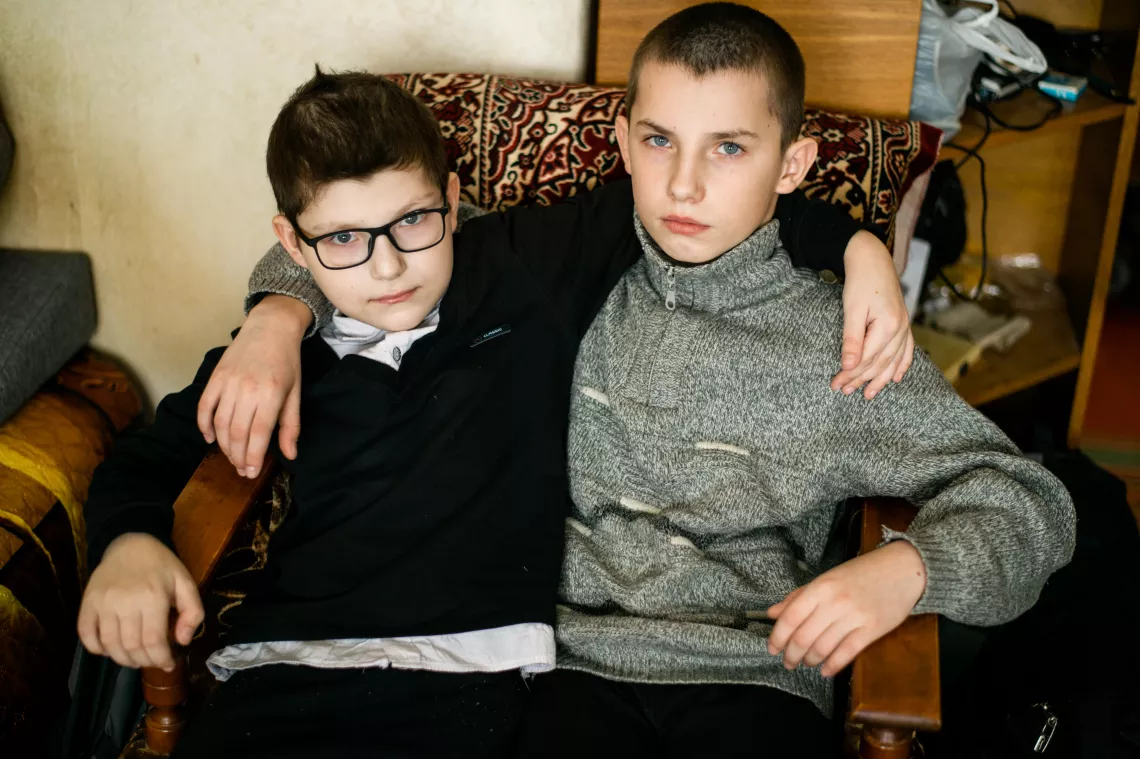
Sergei’s elder son Volodya is the fourth family member. He is very mature for his age despite being only two years older than his brother. He is also very skilful and self-disciplined for a fifth-grader: he wakes up and gets ready for school on his own, often cooks breakfast, checks his brother homework in the evening, and helps his father do the chores. While we talk, he is anxiously checking the time, not to be late for his judo training. Volodya is his father’s main helper and they communicate almost like equals. He knows that he is the older brother and, most importantly, is in good health.
The illness of the younger son affected the life of the whole family. Sergei had to become his son’s donor. That was the first living related donor liver transplant in the country, and it saved Kolya’s life.
‘I feared but never hesitated,’ Sergei says. ‘The surgery was long and complex – it lasted 18 hours and was performed by two surgical teams. We were even visited by the head of the state who gave Kolya a big teddy bear.’

Then there was a long process of rehabilitation. Having hardly recovered himself, Sergei started fighting for his son’s life. Besides the operation, he took Kolya through 10 courses of chemotherapy, multiple checks in different hospitals and long yearly visits to Borovljany Hospital for screening.
Today Kolya is a regular schoolboy, which is a great relief indeed.
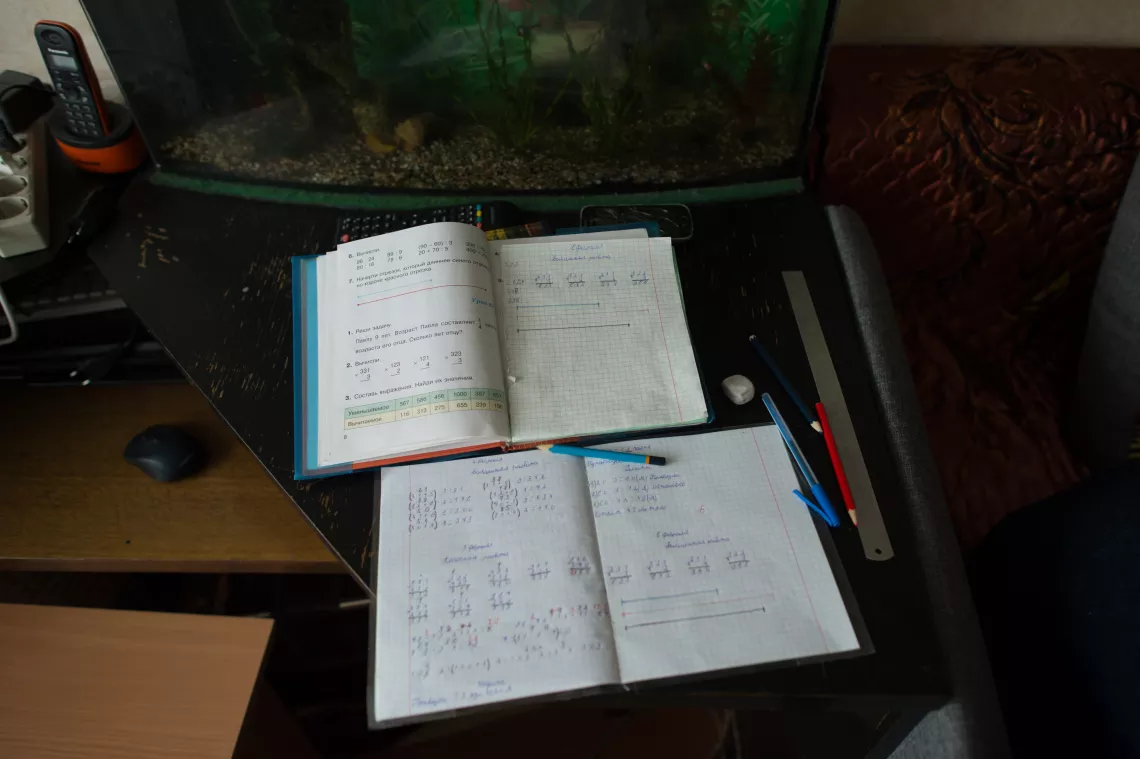
Still, he needs to listen to the questions very attentively and do the lip reading: partial loss of hearing and vision are the consequences of his illness. Integrated education will enable him to continue his studies together with the other kids in a regular fifth grade class. While we talk with his father and brother, he diligently writes numbers in the exercise book and draws precise straight lines with a ruler and pencil, giving us an occasional sideways glance.
Then his father Sergei calls him to join us, and he cuddles near him on the sofa. Pronouncing the words loud and clear, he talks about his school and his friend Kirill, about math, his favourite subject, about playing football with his brother and friends in the yard, about his bicycle and fishing on the lake in the summer. He tells us about his dream to become a doctor and wear a white gown.
Despite Kolya’s uneasy medical history, his childhood is full of many things that make him happy. We can only imagine how much effort it takes Sergei and how often he faces despair, weakness and fatigue. He alone must take care of his son’s special needs as well as of the household and finance of the family.
Against all odds, he stands firm. Some parents in severe circumstances break and make decision to pass on the care of their disabled children to the state.
Over ten thousand children live in children care homes in Belarus. About half of them have a disability or special needs.
70% of these children have at least one living parent, deprived of parental rights or not capable of taking care of their children for a variety of reasons, including financial problems, lack of support and assistance, insufficient knowledge about taking care of a child with special needs, or fear of the future.
Sergei won’t give up. His days are long: they start at 6 am with cooking meals for the whole day and getting the boys ready for school, and then end late at night when the homework and the chores have been finished and the children are sleeping. It all repeats the next day. Sergei continues his daily battle for the normal life for his children, the life that most people take for granted.
At the moment there are no established practices or algorithms of social work with such families. It’s a comprehensive effort involving legal, administrative, psychological and medical aspects.
In 2018, United Nations Children's Fund (UNICEF), in cooperation with Priorbank JSC, has launched the national program called “Family for every child”, aimed at creating the basis for the social patronage system.
'Parents, raising children with disabilities, need to undertake much more efforts just to live an ordinary life,’ says Natalia, the social worker assigned to the Sergeyenko family. ‘Even the simplest tasks, like leaving the house or shopping, can become a problem. Quite often they don’t know who can give them information or where to go for assistance. They literally need to be taken by the hand and led from one office to another.’
Within the Program, Sergei has received a legal advice on claiming child support from his former wife. Before the consultation, he was not even aware of his eligibility to it. Moreover, regular visits to neurologists and oncologists have been set up for Kolya by the social patronage service.
‘Quite often parents are locked into the circle of their problems and fall into depression, get exhausted,’ Natalia continues. ‘They obviously need some psychological support. It is very helpful to engage with other families, who find themselves in similar life situation. Sergei and his sons are taking part in the meetings of the self-help group called “We are together” for the families raising children with disabilities, organized within the Program. At the beginning, Sergey was inhibited, but starting from the second meeting, he has opened up and begun smiling. The group is mostly comprised of mothers with disabled children. They are happy to talk to Sergei, admire his ability to cope and share their experiences. And for him, I think, it was important to communicate and feel supported.’
Sergei is a welder by profession but he had to quit his job due to Kolya’s health condition. Can he ever return to his occupation? He doesn’t know and shakes his head in uncertainty. He will be there to support his younger son for as long as necessary. Social patronage, with its individual casework mobilizing and improving adaptive capacities of the family, will be of great help here.
The program “Family for each child” creates the basis of the system of social patronage and exists thanks to voluntary donations. You can help by making a contribution in the amount of 1 BYN using the form for online payments using VISA, MasterCard, BELCARD cards via WEBPAY.
You can also use other payment options:
1. Internet Bank "Priorbank".
2. Mobile bank "Priorbank".
3. Bank transactions via Priorbank ATMs.
4. USSD-request *222*22# in the amount of 2 BYN (for MTS subscribers).
5. Payment through the ERIP system "Raschet".
Everyone has a power to change lives for the better!