"Children need to be told that their uniqueness is their special charm"
How a Minsk kindergarten supports children with disabilities
- русский
- English
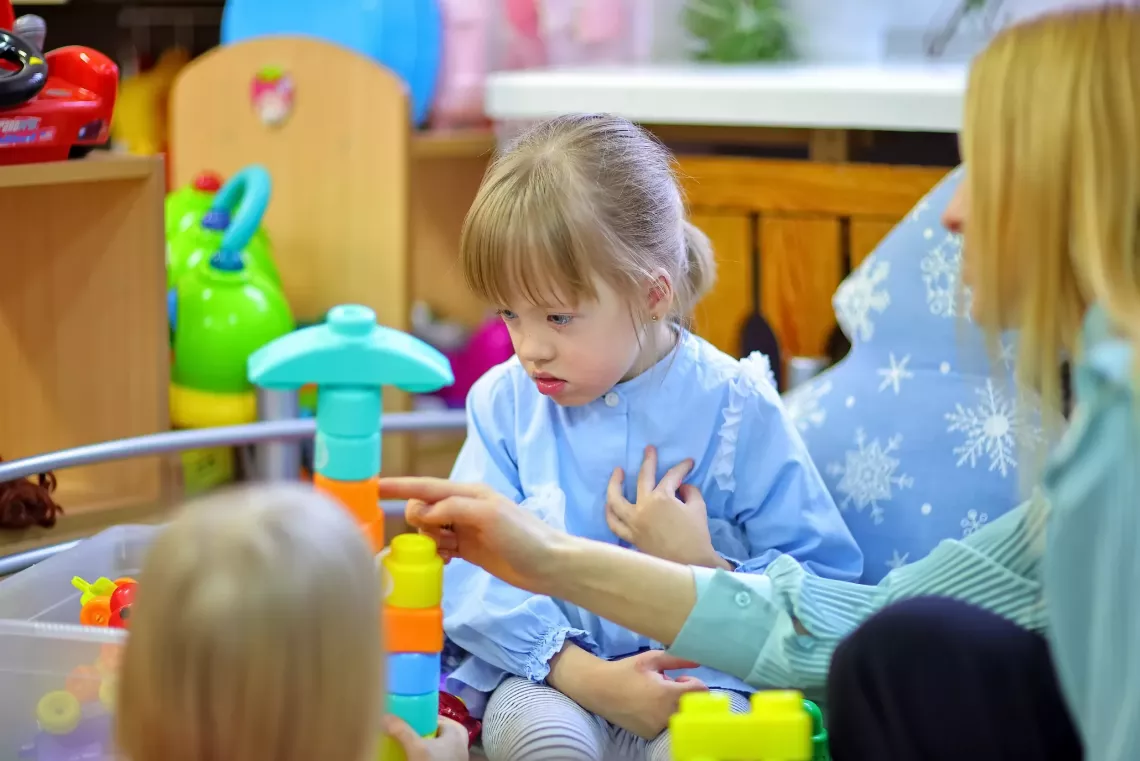
Minsk Kindergarten 206 stands as a shining example of an institution that provides an accessible environment for children with developmental disabilities. Here, nine groups operate, four of which are integrated learning classes where children with mobility impairments, intellectual disabilities, and Down syndrome learn alongside their peers. Additionally, there are two groups dedicated to children which have difficulty communicating or understanding messages.
This educational establishment has been serving the community for 60 years, and the first integration initiative was introduced back in 2011. For parents of children with disabilities, these kindergartens offer a vital opportunity for socialization, allowing their children to engage with peers who do not have health challenges. The demand for integrated groups is so high that many parents are undeterred by distance, bringing their children from the outskirts of Minsk every morning for classes. We personally witnessed how the idea of inclusion positively impacts these young learners and why it’s essential to teach children about the diversity of people in society from an early age.
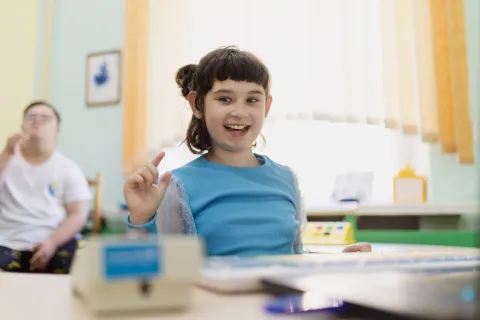
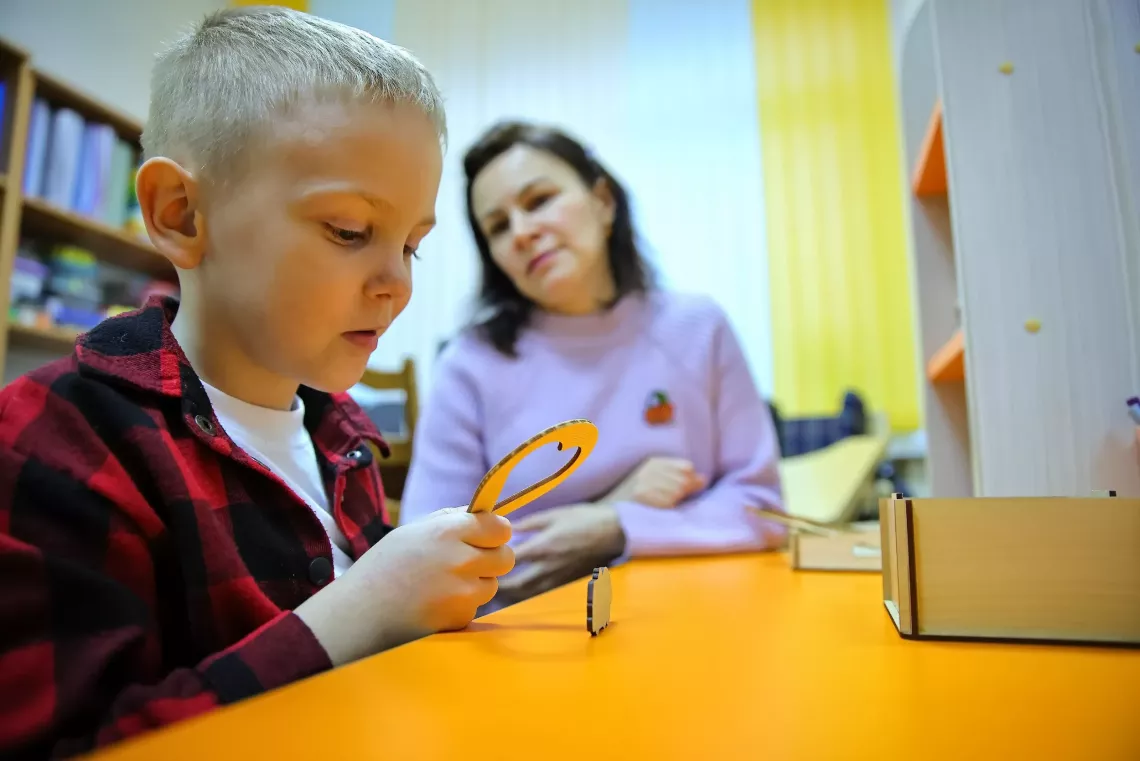
We found six-year-old Miron engaged in a session with a speech therapist. The boy picked up wooden figures adorned with images and tried to pronounce the words clearly.
“My straaawberry. No straaawberry.”
Miron was born prematurely and spent the first two months of his life in the hospital. Initially in intensive care, he later entered the recovery stage. Doctors had little hope for his survival. But both he and his mother persevered.
“Even in the hospital, we were told that after premature birth, there might be health consequences for my son, and we needed to keep an eye on him. By six months, I began to worry that he wasn’t active enough for his age, and I raised the alarm,” recalls Miron’s mother, Alexandra. “It took time to get the correct diagnosis; only later did the neurologist confirm my fears—Miron has the most severe form of cerebral palsy. As a mother, I went through all stages of acceptance—hatred, anger, and denial. It was incredibly challenging. But at some point, I realized that if I did nothing, things would only get worse. I pulled myself together. My greatest source of support is Miron himself! He has never let me sink into despair. With his optimism, he showed me that I have a reason to strive forward."
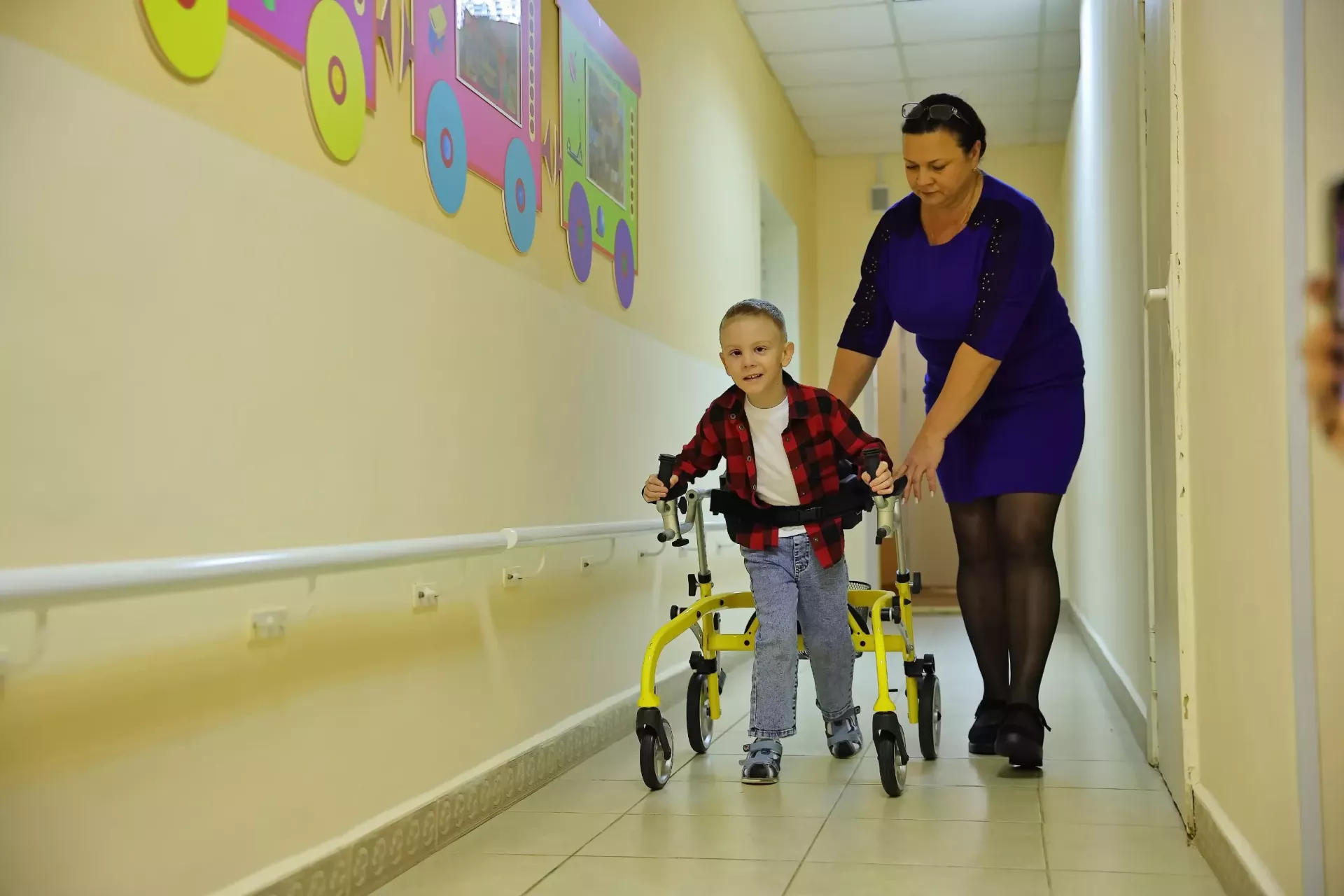
The family actively engaged in various activities and rehabilitation. At the age of four, Miron took his first independent steps, despite the odds stacked against him—many feared he would only be able to move in a wheelchair.
But now, Miron can walk hand-in-hand, move around independently, or use a walker—all with a smile and amusing remarks of his own.
“In the circus arena—it's Miron!” he entertains everyone present in the sensory room, one of the children's favorite areas in the kindergarten. Here, colorful lights twinkle, allowing kids to unwind to relaxing music, play in a ball pit, or engage in art therapy by drawing with sand on a special table.
Miron shows us how he lies on a wooden platform, rocking back and forth as he alternately places colorful rings on a cone with his left and right hands. These activities are designed for children with musculoskeletal disorders, helping to develop both hemispheres of the brain, coordination, balance, and strengthen arm muscles.
One can only envy Miron's openness and artistry. One day, he noticed his mother posting videos on TikTok and said, “Why don’t you film me?” Now he happily poses for the camera for 23 thousand followers. It was here that Miron’s mother found support when she openly shared her son’s unique qualities.
Next year, the boy will start first grade. Both his mother and teachers see that thanks to his socialization in the kindergarten community, he will easily adapt to school life.
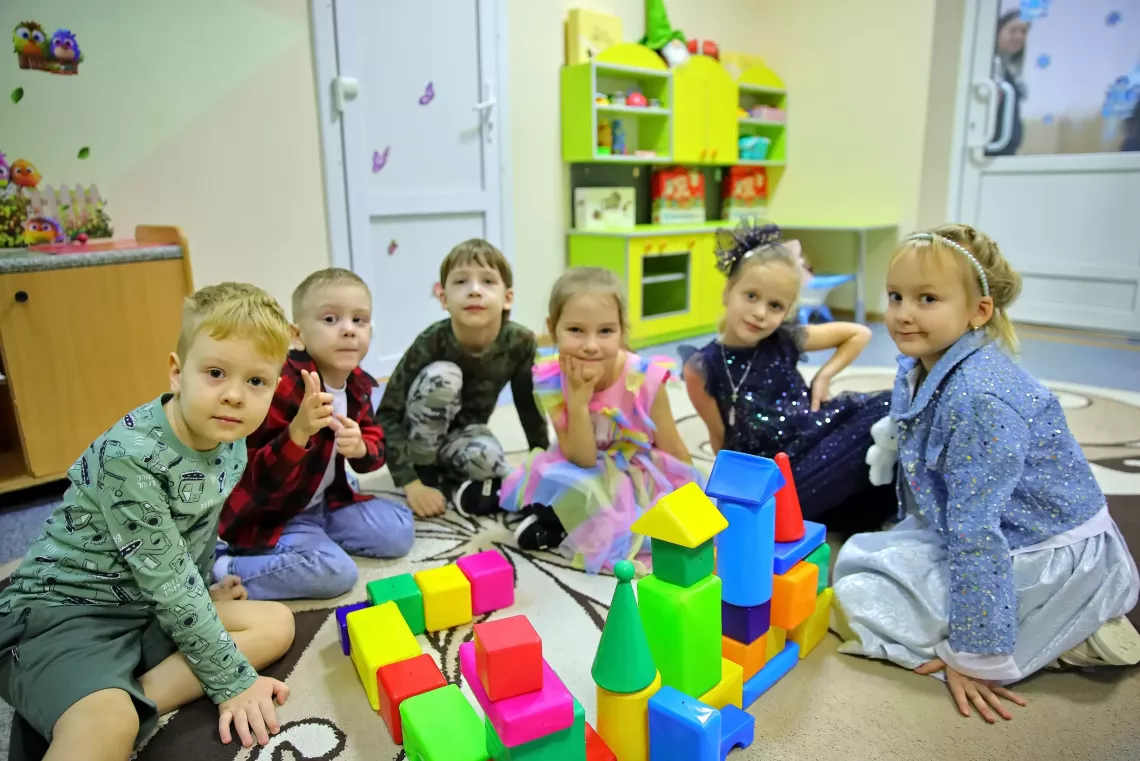
The head of Kindergarten 206 initially encourages all parents to enroll their children in the integrated group.
“Those who are encountering the concept of inclusion for the first time often approach this idea with caution. But we suggest giving it a try, as there’s always the option to transfer to a regular group,” explains Tatyana Semchik, the head of Kindergarten. “I am truly delighted to see parents who immediately request to place their child in a group with children with disabilities. They recognize the benefits: a smaller number of children—no more than 10-12—where the best educators work, and where the little ones gain a different experience of interacting with their peers from an early age. They become kinder and help each other in everything—changing clothes, moving around. We receive more gratitude from parents than doubts about the necessity of inclusion.”
“In our group, we create an atmosphere of acceptance and emphasize that our differences are what make us unique”
Elena Valeryanovna, Miron’s teacher, has extensive experience working in kindergarten, and she has been part of the integrated group for five years. She took the initiative to become a support for children with developmental differences.
“At first, it was nerve-wracking. But before taking this step, I prepared myself—I read extensively, learned about the topic, visited the integrated group, and observed how my colleagues worked here,” she recalls. “It’s wonderful to see the fruits of my labor, to witness how the children change over time, showing progress in their development despite their health challenges. I have been working with Miron for two years now. He adapted to the group in just a few days. He quickly made friends, and his peers love him for his kindness and openness. In our group, we foster an atmosphere of acceptance, discuss our differences, and teach mutual assistance and understanding. If adults present the topic of disability correctly, children will understand early on that the world is diverse, and our differences are, in fact, our unique qualities.”
The opportunity for children with disabilities to learn in kindergarten has emerged thanks to the accessible environment within the educational institution.
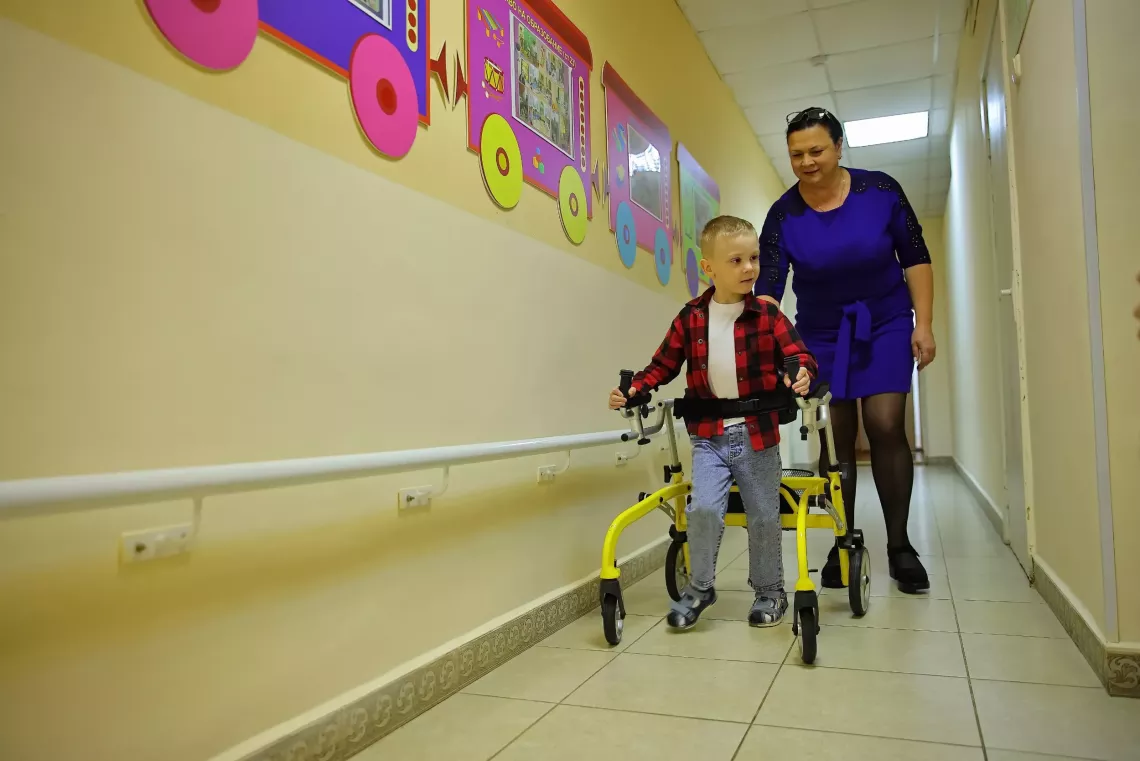
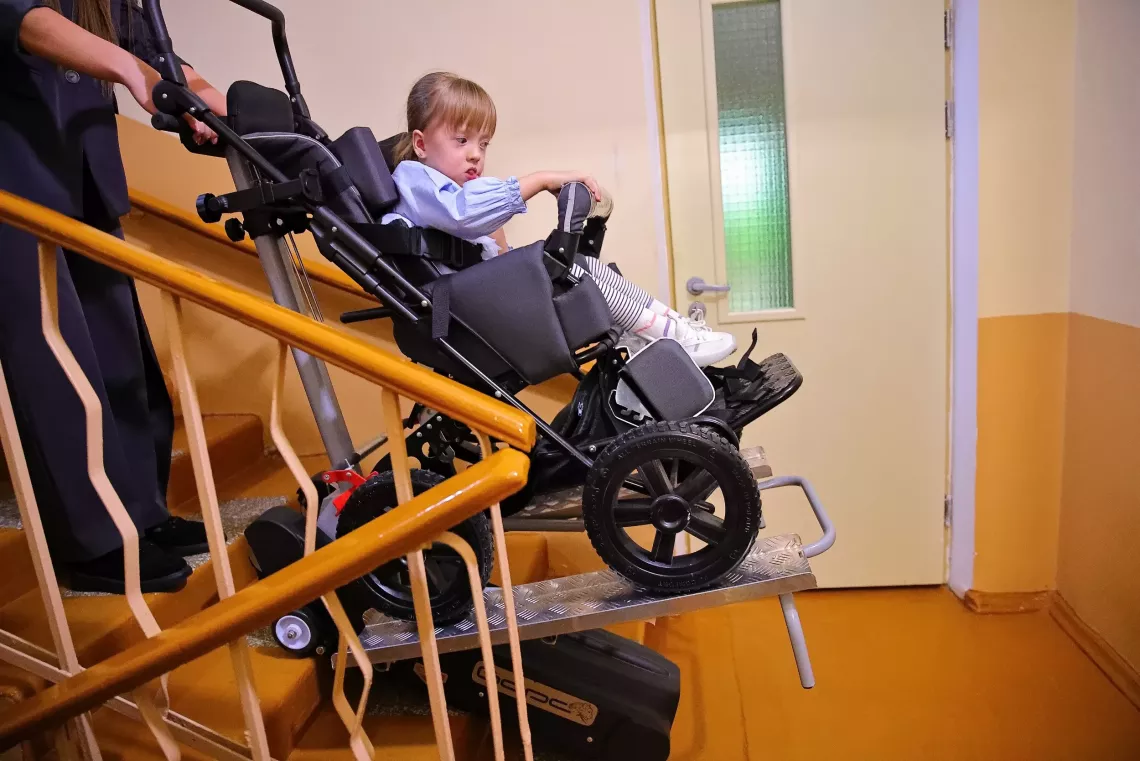
"We have made every effort to create the most favorable conditions for all children to receive quality education, feeling free and equal not only within the group but throughout the entire building. Handrails line the corridors, allowing children who have difficulty moving to hold on as they navigate. We have a modern wheelchair, a ramp, and a track lift that enables us to transport children between different floors. In the integrated groups, there are special chairs equipped with securing straps," adds Tatyana Semchik.
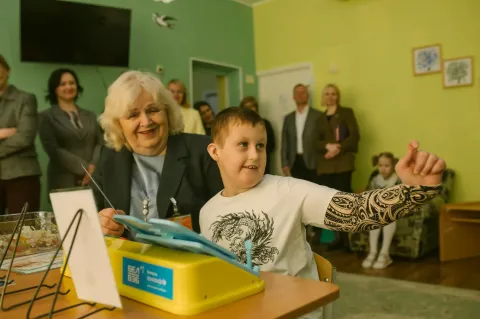
These are known as assistive technologies—special devices and equipment that help children with health challenges to learn alongside their peers. Such resources have been made available in our educational institution thanks to the international project implemented by the Ministry of Education of Belarus and UNICEF in Belarus.
In another integrated group, we meet blue-eyed Yesenia. The girl has cerebral palsy and is unable to walk; she moves around the room by crawling. She has reflexes that allow her to step forward one foot at a time, but an adult helper must always be nearby. Within the kindergarten, she gets around in a wheelchair or is carried by her caregiver. Despite not being able to speak, Yesenia actively engages in joint play with her peers.
"How do the children manage to understand each other?" we ask the group leader, Maria Fedorovna.
"It’s remarkable, but they understand and connect with each other much better than adults do. Yesenia replaces spoken language with actions, touch, and sounds. This helps her communicate and feel like part of the group. When we encounter situations where not all parents are ready for integrated groups, the children never have such concerns. They feel even more at home here than in a regular group. They also learn the value of mutual support. We have a very active boy named Artem. When Yesenia joined the group, he started behaving quite differently. During lessons and performances, he always helps her. If he sees that her shoelace has come undone, he makes sure to tell me that she needs assistance. In music class, he immediately declared, “I will bring Yesenia musical instruments!” Moments like these are truly heartwarming."