Nikita’s story
How a crawler lift at school played a pivotal role in the life of an adolescent with disability
- русский
- English
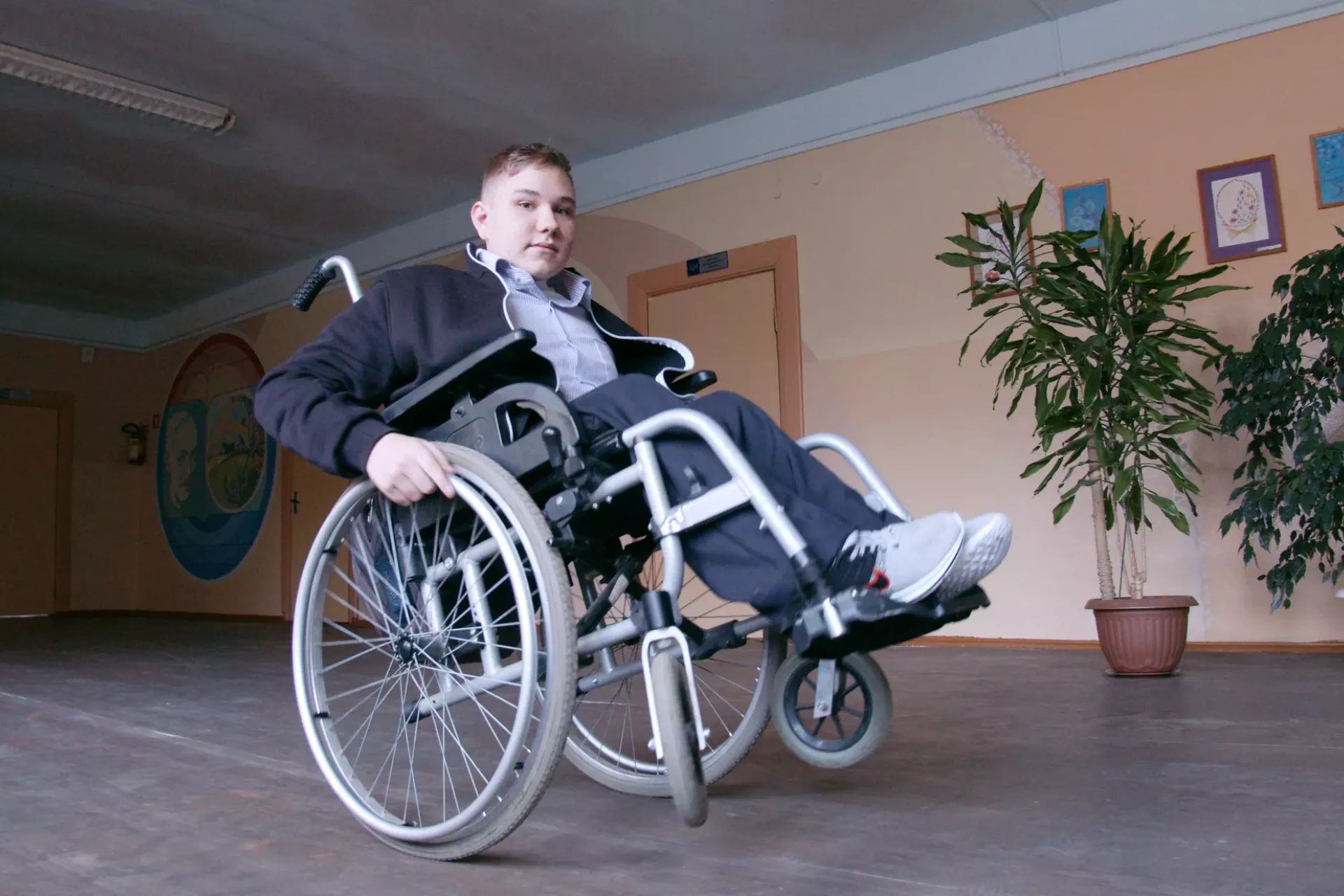
From early childhood, Nikita Ushakov, 17-year-old adolescent from Borisov city in Belarus, has relied on a wheelchair due to a congenital defect in his thoracic and lumbar spine, affecting his arms and legs. This was his only way to stay connected with the world around him. When Nikita was little, his father would carry him in his arms because the city lacked accessible facilities. There was neither an elevator nor a ramp in their building.
As Nikita grew older and started using a wheelchair, a new challenge emerged: stairs. His father had to lift and carry his son's primary means of mobility every day. Despite this, Nikita's parents were determined to keep him from being confined within the walls of their apartment.
"We always knew Nikita would go to school. He needs to develop and be part of a community. Why stay at home? He always liked children and interacting. He was determined to go to kindergarten crawling before he could use a wheelchair," says Denis, Nikita's father, now reflecting on his grown son's journey.
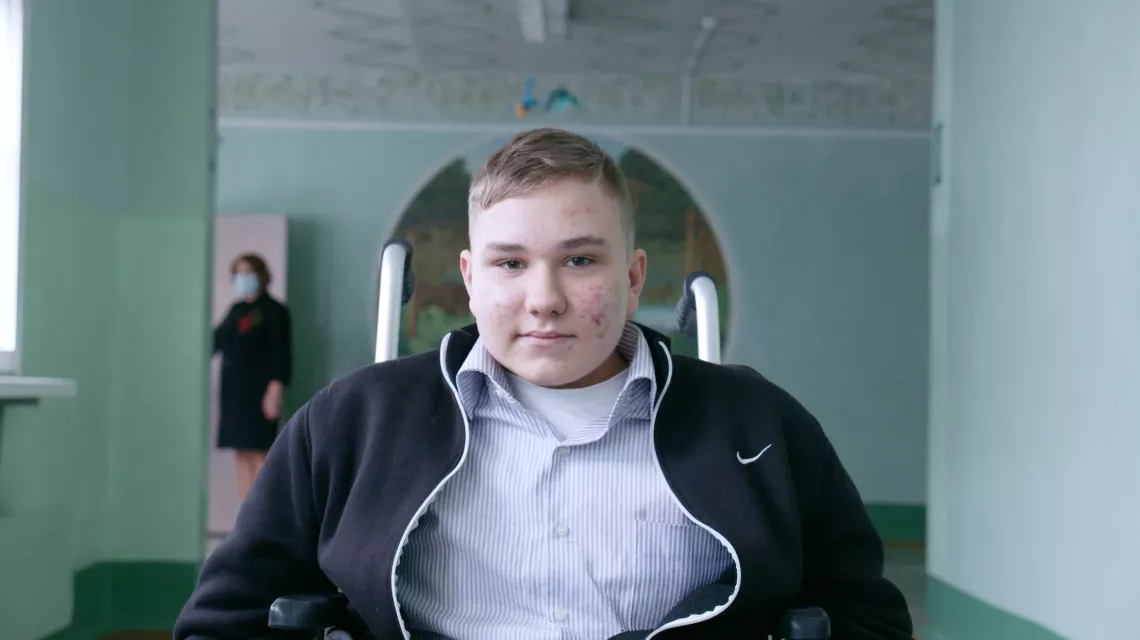
Nikita was accepted into a middle school, known in the city for its experience in educating children with disabilities. However, getting there every day was a challenge, despite the organized centralized transportation for students. It took Nikita 90 minutes to get to school and return three hours later after classes would end.
Since his father needed to be readily available to assist Nikita, he left the construction field and took a job maintaining the building of another school, which was located opposite Nikita's home. Eventually, Nikita was offered to transfer there, significantly easing the family's daily routine. Now, the school is just a five-minute journey from home, and his father is always nearby, working.
Being in a classroom with many people was unusual for Nikita. The teachers welcomed him warmly and even became overprotective. Nikita had to encourage them to treat him like any other student, including calling him to the blackboard. Over time, he made friends, and school became an opportunity for learning and socializing.
The new school presented another challenge though: steep stairs, with classes on different floors. Nikita's father, with help from colleagues, had to carry the wheelchair up and down the stairs every break, making this routine increasingly difficult. Due to these barriers, Nikita was switched to home schooling soon after.
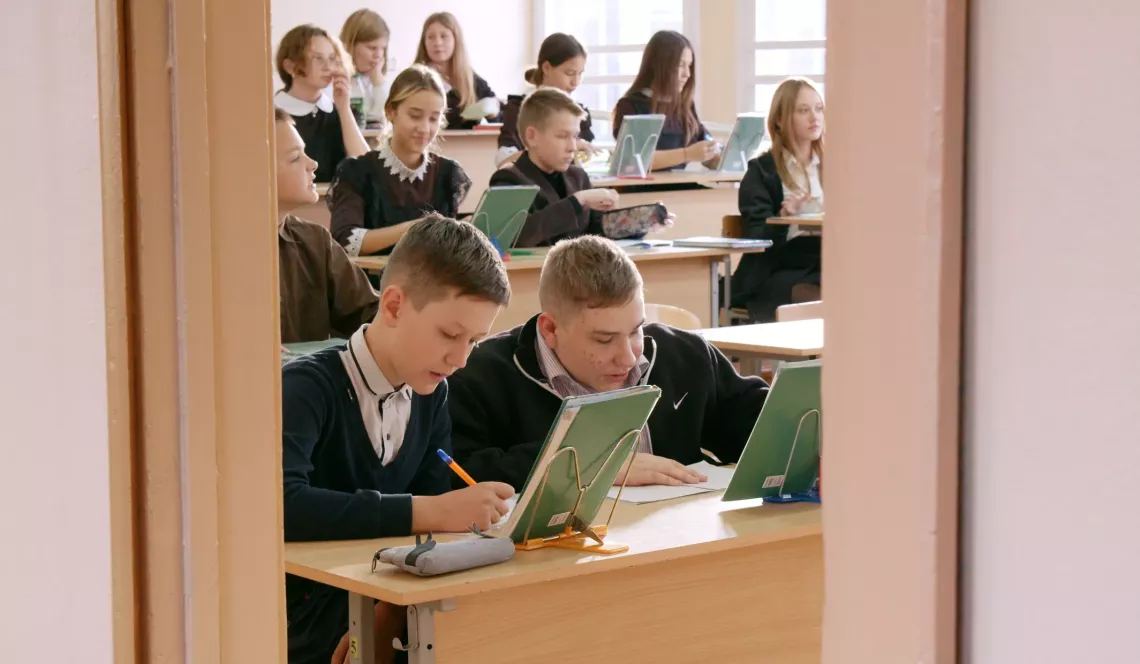
"I was shocked," Nikita recalls. "I thought I wouldn't see my friends again. It's boring at home, but at school, I could interact. There, I didn't feel different; we did everything together. I always wanted to be treated like any other child," says Nikita.
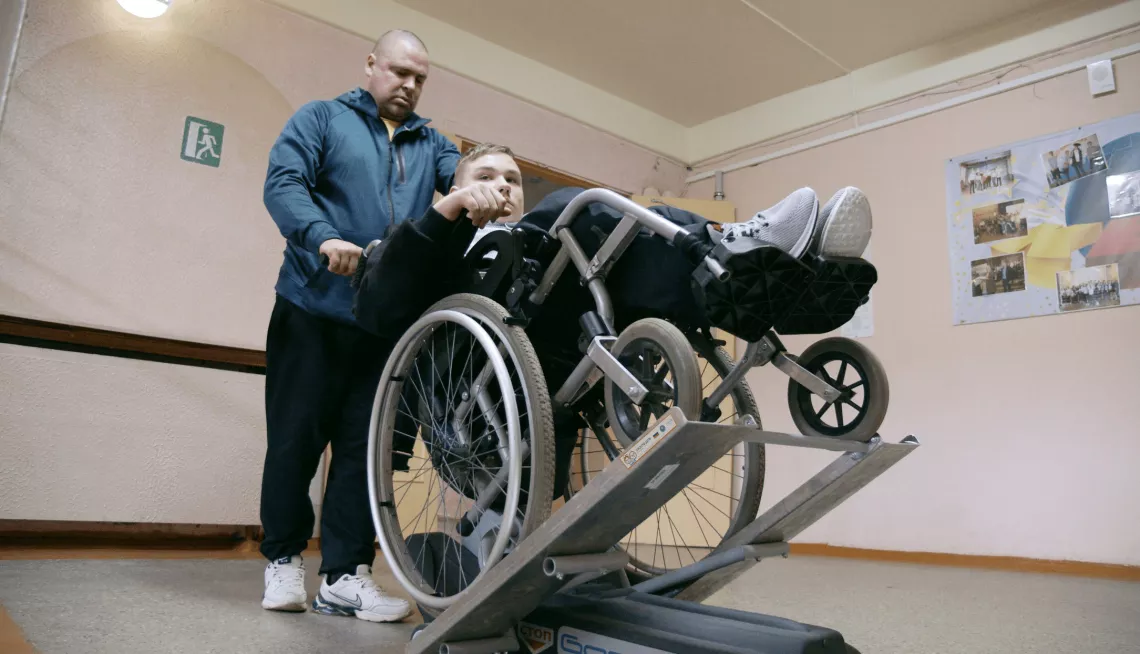
For several months, Nikita studied from home, hardly going out. The chance to return to classroom occurred after UNICEF in collaboration with the Ministry of Education and donor funding, installed a crawler lift for children with disabilities to the school. This lift, along with a ramp installed at the school's entrance, drastically changed Nikita's school life, allowing him to rejoin his classmates.
Now in 9th grade, Nikita has a few years left to decide on his future profession. He plans to pursue distance learning in university after he graduates from school, likely in computer programming, given his interest in computers and video games. Though he considered a career of a chef, his wheelchair presents some challenges. His parents believe in his success and are willing to support Nikita’s education, even if it means studying full-time in capital city Minsk.
Thanks to inclusive education, Nikita can easily interact with peers and is fully adapted to daily life, managing tasks independently. He has friends to spend time with, adding joy to his life.
"I enjoy going to school. I use the lift, and ramps help me move between classes. I have many friends, with whom I enjoy spending time almost every day. My only concern is that I happen to be on sick leave sometimes due to my condition, and I have to miss classes. Nevertheless, teachers help me keep up with the curriculum through home or online lessons," Nikita shares.
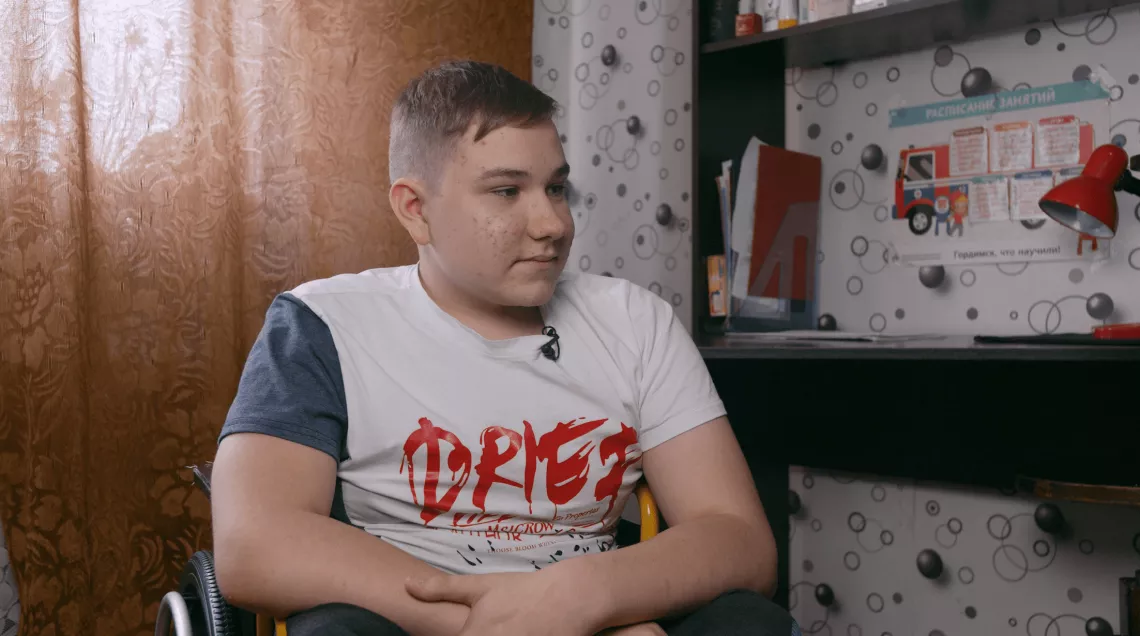
Nikita remains the only student with a disability in his school. "Although the school wasn't entirely ready, they warmly welcomed him. We faced challenges in creating an inclusive and barrier free environment, but we managed thanks to the lift. Accepting Nikita as a student was never an issue. Initially, teachers were anxious which is a natural human and professional reaction, but they're gaining experience, and these fears are gradually fading. The main thing is to start and believe that any effort, if sincere, will lead to positive educational outcomes," believes Tatyana Zagrebelnaya, the school's principal.
Reflecting on his son's future, Denis Ushakov recalls how Nikita, even in kindergarten, envisioned his adult life: "He said that with his first salary, he'd buy a car for dad and a beautiful dress and golden earrings for mom. He talked about wanting a family, having a beautiful spouse and lots of children. And he always looked at life positively,” Nikita’s father shares.
“Let it be so! We'll support him in everything. And to parents of children with disabilities, I advise not to be afraid. Our world is very diverse and there's no need to hide what exists. The more open you are, the more vibrant the world will appear to children, and the more opportunities they will see for themselves in adult life.”