The Unsung Heroes Keeping the Homes of 1.2 million People Clean
With support from the Bangladesh Humanitarian Fund, more than 450 solid waste volunteers work tirelessly every day to keep the Rohingya camps clean, safe, and livable.

Keeping the Rohingya refugee camps in Cox’s Bazar clean is a major challenge. More than 1.2 million people live in shelters pressed one against the other in overcrowded and congested spaces. With around 48,000 people living per square kilometer, making the camps more densely populated than the world’s most crowded city, 120 tons of solid waste is produced daily across 33 camps. Keeping this densely populated settlement clean is no ordinary task. A quick question may arise in mind; how do they keep the camp clean and functional?
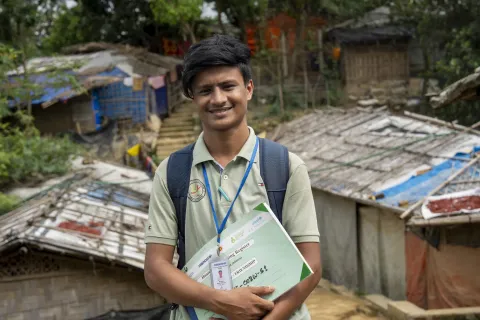
26-year-old Kamal Hossain is one of the many unsung heroes working quietly and diligently every day to keep the camps clean, safe, and functioning for the families who live there.
Kamal was just 17 when he first arrived at the camp in 2017. Traumatized, frightened, and with no idea what the future would hold. But he did not sit back and wait for things to change. He began working with different organizations, gradually building skills and experience that would help him support his family.
Working as a waste collector, he learned about proper waste management, the difference between organic and inorganic waste and why separating them is important. Today, he puts that knowledge into practice, as he works in collecting and managing waste across the camp.
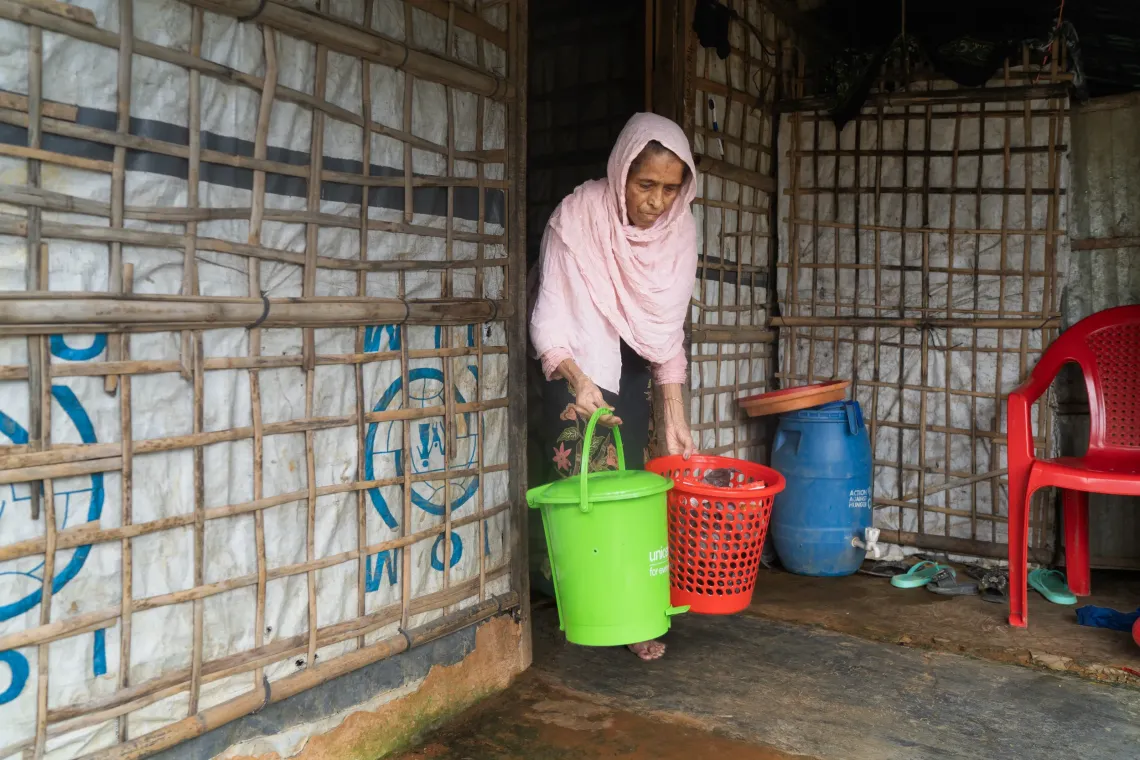
Kamal shows up at one household after another across the camp early in the morning. The families are already provided with two bins to separate waste at the source, a green bin and a red bin. The green bin is used for biodegradable organic waste, such as food scraps, while the red bin is for inorganic waste like plastics. Visiting each household, Kamal carefully empties each bin into separate buckets, keeping the two types of waste apart.
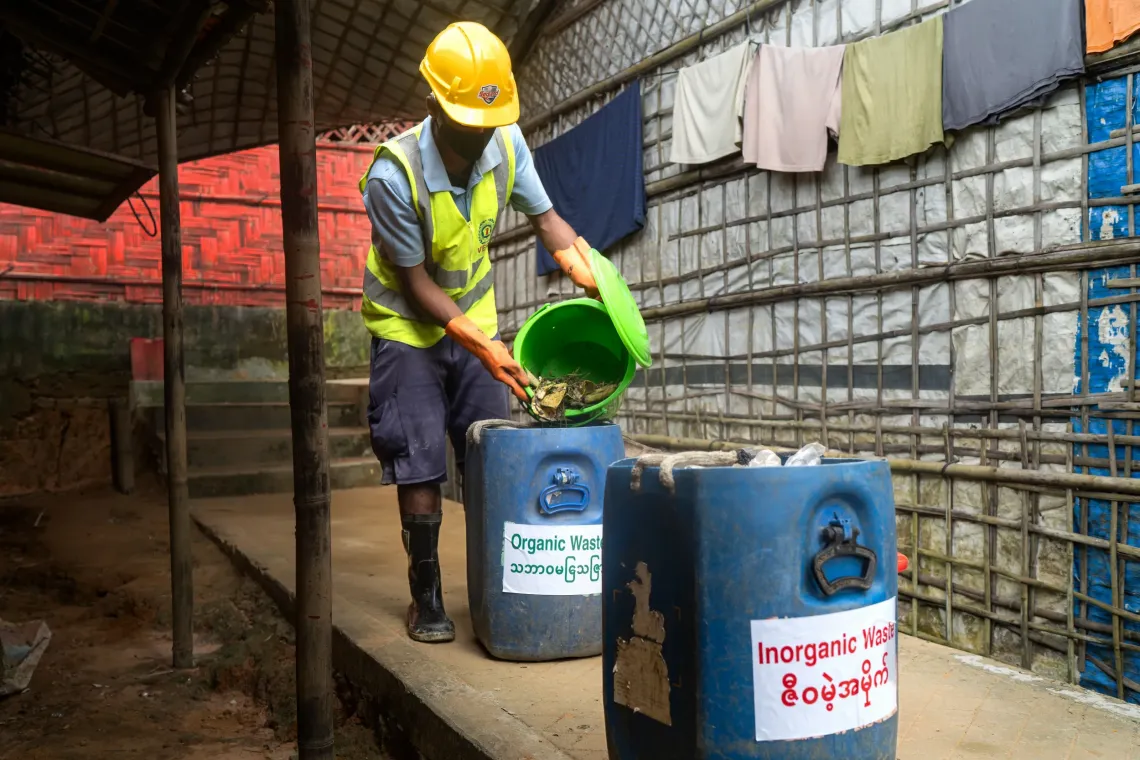
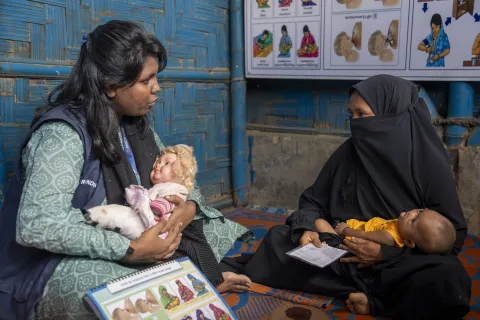
If families mistakenly mix the waste, Kamal takes the time to explain why keeping waste separate matters and gently guides them to do it correctly. There are also monthly sessions conducted with each of these families by hygiene volunteers where they are engaged in proper waste management practices.
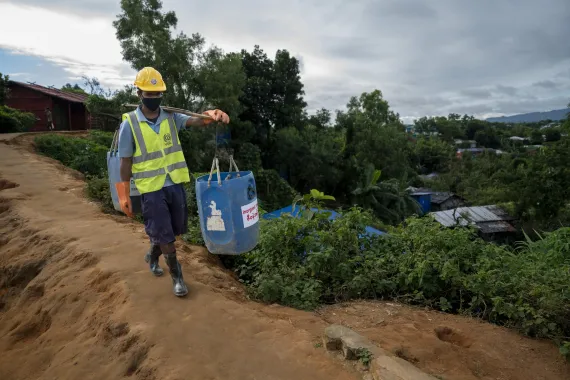
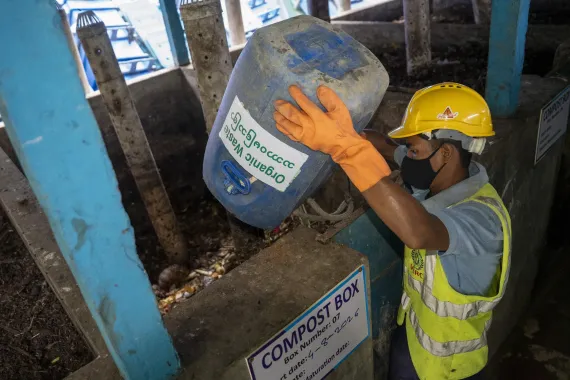
Once the buckets are full, Kamal carries them to the Solid Waste Management Facility, where the waste is processed. The collected waste is segregated again and stored in large separate cement boxes. This process turns the discarded waste into useful materials. Plastics are sold to be recycled and food waste is turned into compost. The compost is later given back to the community for agricultural use. Men and women at the camp use this fertilizer to grow fresh vegetables and fruit around their households, and it is given to them for free.
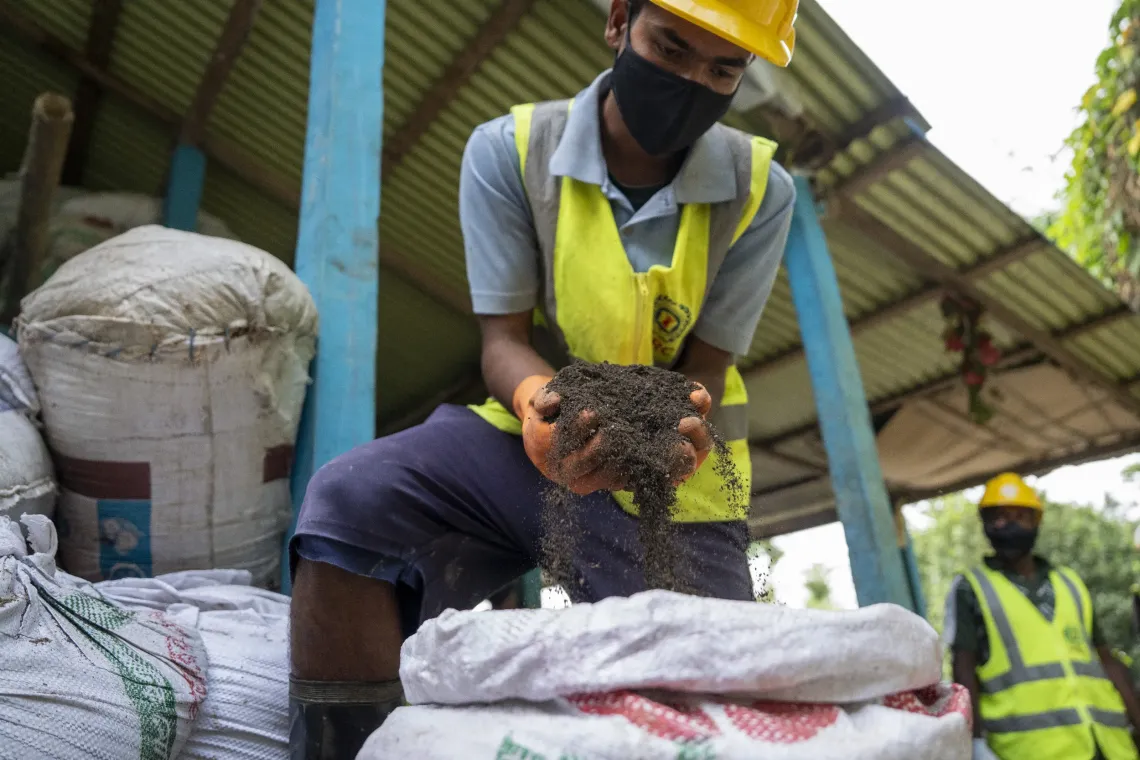
Kamal’s job is physically demanding. Each day he climbs up steep hills and walks long distances to reach 200 to 250 households. Despite the effort, he takes pride in his work as he gets to serve his own community.
“If we don’t keep our home and the camp clean, we will have to live within this waste,” he says. “As we are producing it, it is also our responsibility to clean.”
Dreams Beyond the Camp Life
But Kamal was never this confident back in 2017. At just 17, he and his family were forced to flee violence in Myanmar and cross the border into Bangladesh. Along the way, the family became separated from one another. Staying alive and finding his family members again were his only priorities at that time.
“I thought I was never going to see my parents again,” Kamal recalls, tears in his eyes.
Luckily, he was eventually reunited with his parents and his six siblings.
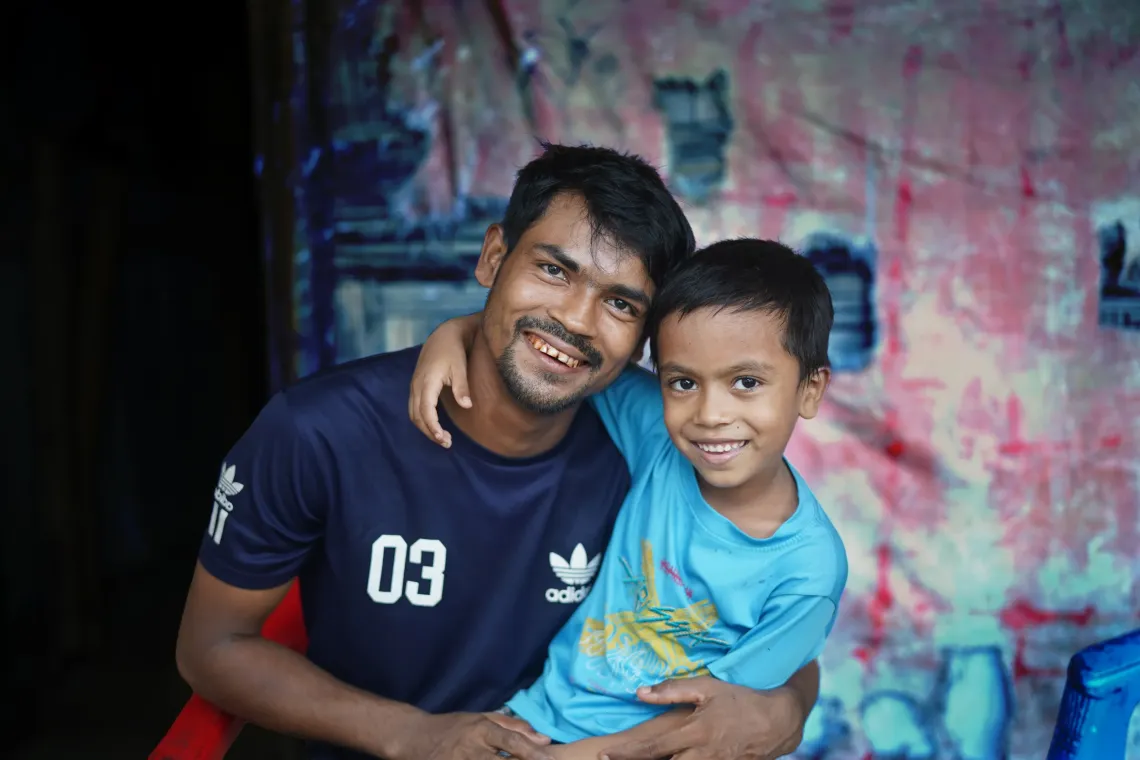
Now, being a father of two, Kamal dreams of a life beyond the boundaries of the camp. This dream motivates him to continue his unfinished education journey. He is studying in Grade 5 while working as a waste management volunteer. Kamal often sees people from different countries visiting the camp and wishes he could speak with them without needing someone to translate for him. This desire made Kamal interested in learning English. Amid all the challenges and struggles, he holds on to the hope of giving his children a life where they can grow up happy and peacefully without having to face the hardships he has endured.