Breaking the Silence Together
With support from UNICEF and the Bangladesh Humanitarian Fund, Sabukun is creating spaces for women to learn and manage their periods with confidence and dignity.

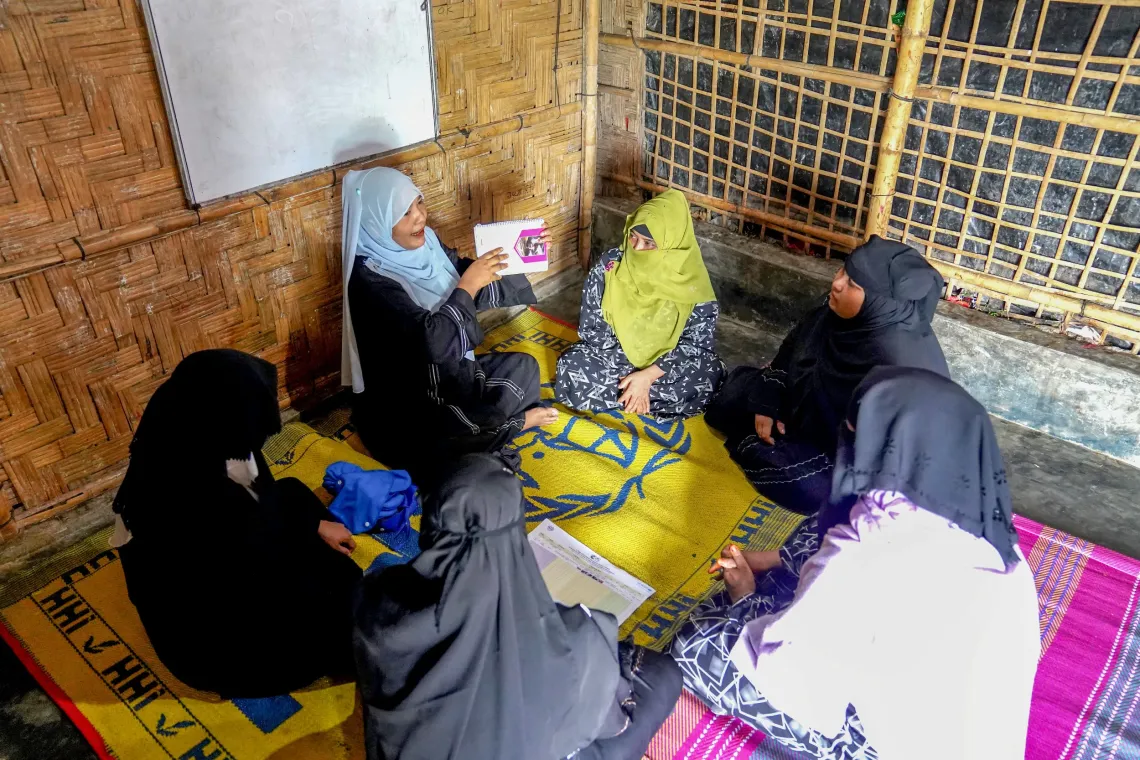
Walking through the narrow alleys of the Rohingya refugee camps in Cox’s Bazar, you may come across a group of women sitting in a circle inside a small makeshift shelter. It looks like an ordinary gathering. One greets another and shares stories from their daily lives. But there is something extraordinary about this ordinary gathering. Together, they are comfortably discussing something that can sometimes be uncomfortable to discuss in a group: menstruation.
Sitting among them, 31-year-old Sabukun Nahar, a menstrual hygiene facilitator, is leading the discussion. She did not need to wear any title or hold a position to become a leader. But when she speaks, women around her listen attentively.
But Sabukun was not this confident before. When she arrived in Bangladesh in 2017, crossing borders with her husband and their 40-day old newborn, life became uncertain overnight. When meeting regular needs becomes a repeating daily struggle and the future unpredictable, buying menstrual pads became a luxury.
During this most sensitive time of the month, unhygienic old cotton clothes pieces became the only solution for her. She knew little about the consequences of infections and long-term life-threatening impacts.
“The itchiness and discomfort of using the old clothes was unbearable,” Sabukun shares. “Cloth pieces don’t soak much, so sometimes blood stains my dress too."
Beyond finding a clean piece of cloth, washing it with soap and finding a place to dry it was another challenge in an overcrowded camp where menstruation was still considered a taboo topic.
This was the reality for many women in every household across the camp.
Finding Solutions and Bridging the Gap
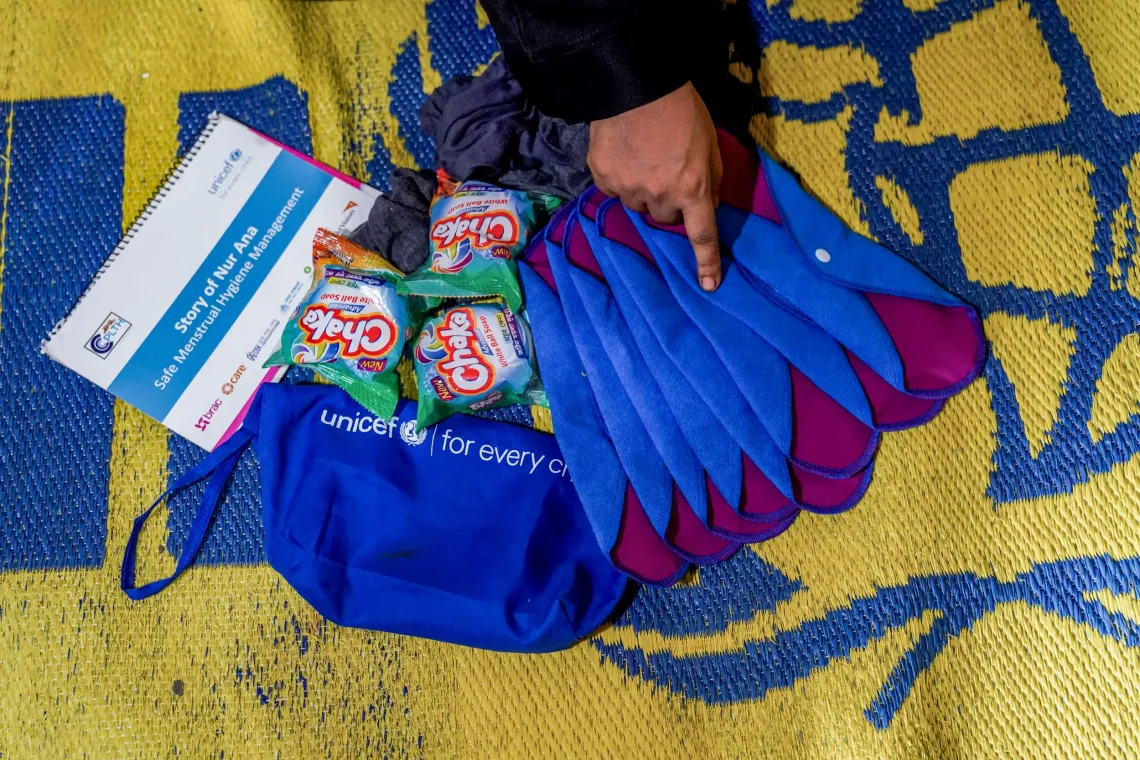
The scarcity of essential menstrual hygiene products is one of the main challenges facing women and girls in the camp. To help them manage their periods, women and girls receive a bundle of reusable menstrual pads, underwear, and soap every six months. Each bundle includes eight pads that can be washed and reused for more than six months. Keeping hygiene concerns in mind, the bundle comes with three bars of laundry soap so they can wash the pads.
Sabukun is one of the women who receives the supplies to manage her period. But her involvement does not stop at receiving the support.
Through the UNICEF-supported WASH activities in the camp, Sabukun was identified as a women's leader to promote safe menstrual hygiene management amongst her peers in the camp.
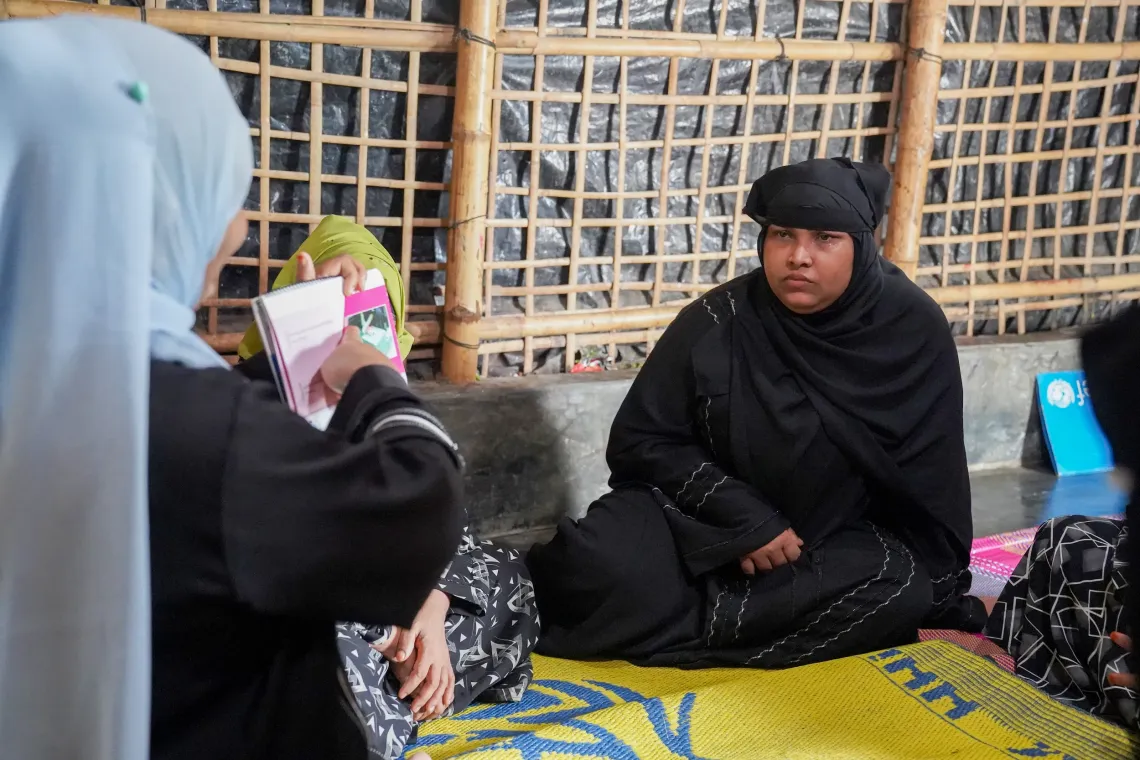
She received training on safe menstrual management and leadership and today, she welcomes different groups of five to ten women at her home every week. They sit together, talk about their lives and discuss menstruation, asking questions they may otherwise hesitate to ask.
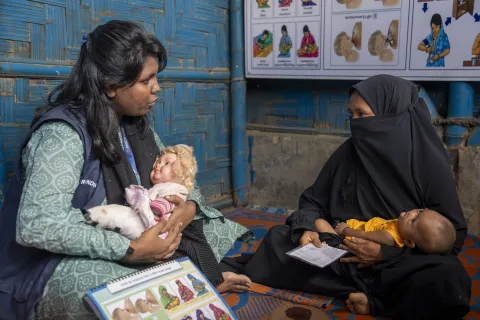
Sabukun hears them, shares what she learned and demonstrates the correct way to use and clean the reusable pads. To make the session engaging, she uses a booklet that tells the story of a girl experiencing her first period.
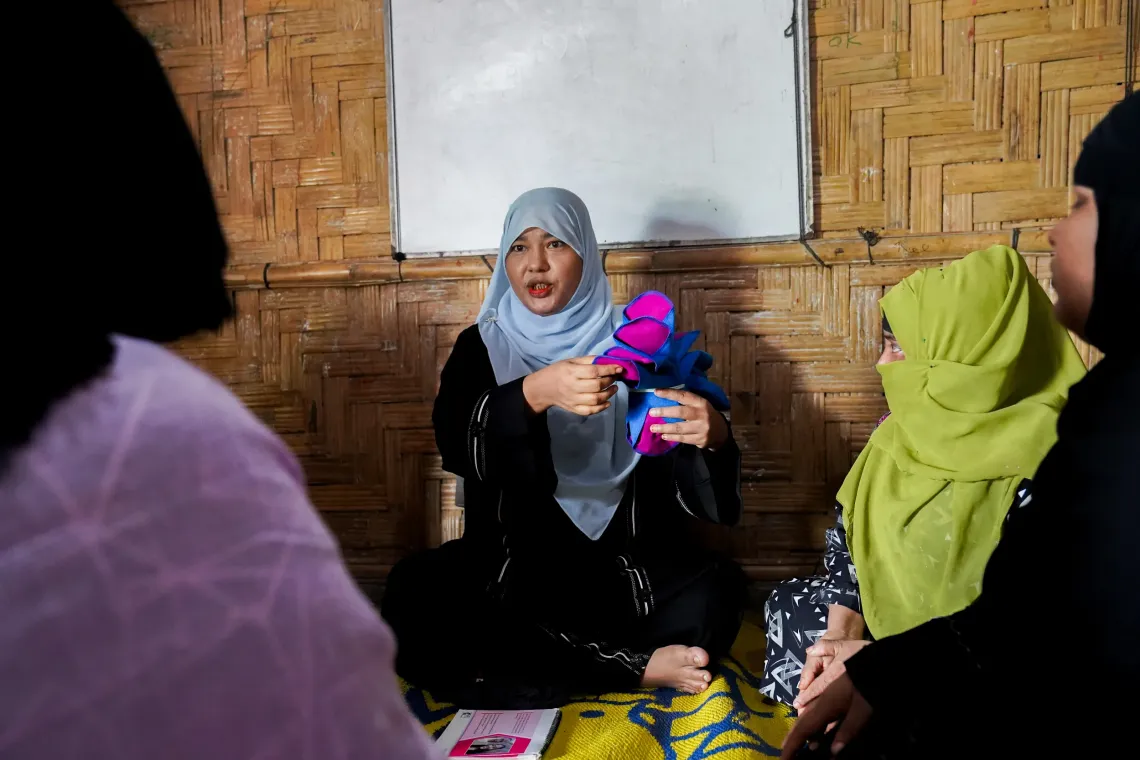
“Menstruation should not be kept hidden. The more we talk about it, the more we will know,” she says.
In the beginning, she faced criticism from people around when she first started talking openly about menstruation. But brave Sabukun was never bothered. Rather, she kept using her voice to amplify awareness and encourages others to speak openly, helping more women feel comfortable talking about it.
Passing on the knowledge to the next generation
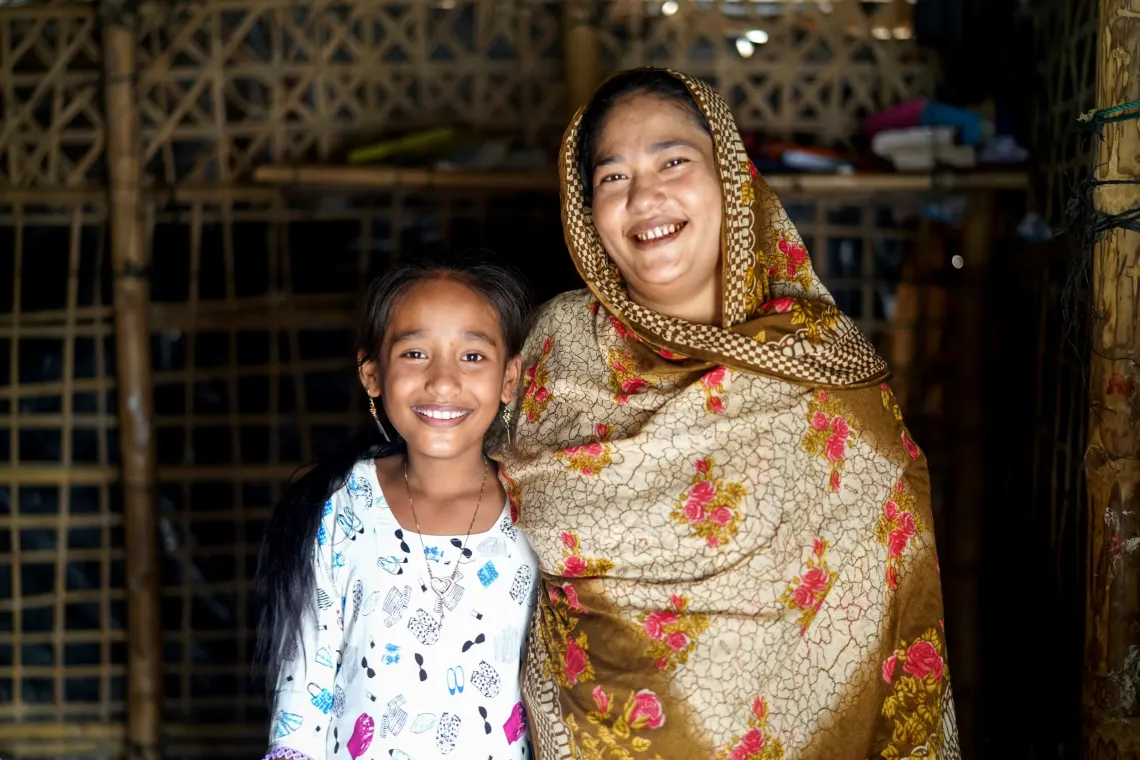
The 40-day-old baby Sabukun carried across the border in 2017 is now nine years old.
Rushdi is in Grade Three. She has not had her first period yet, but she is already curious about it. She flips through the pages of the booklet her mother uses during her sessions. Reads the words one by one and asks her mother whenever questions come to mind. Sabukun has made sure her daughter knows what menstruation is, why it matters, and what to expect when her first period comes. She has a dream for Rushdi.
“I want her to become a gynaecologist,” Sabukun says. Serving her own community is a dream that she hopes to pass on to her daughter.
In the Rohingya refugee camps, where more than half of the 1.2 million people are women and girls, menstrual health is unquestionably an important part of everyday life. With support from the Bangladesh Humanitarian Fund, UNICEF goes beyond reaching women with supplies. Around 200,000 women and girls of reproductive age receive menstrual hygiene kits, supported by a community network of more than 4,000 menstrual hygiene facilitators like Sabukun, across 15 camps, helping women, girls and their family members access the knowledge they need to manage menstruation safely, confidently and with dignity.