From Refugee to a Lifesaver
Displaced at 13, Mohammad Amin found a new purpose in protecting children of his community through life-saving nutrition services.

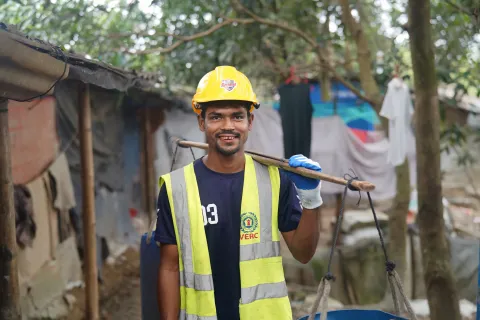
When violence erupted in Myanmar's Rakhine State in 2017, Mohammad Amin was only 13 years old. Forced to flee with his family, he left behind his home, school and dreams for the future. Today, at 22, he helps save children's lives as a nutrition volunteer in the Rohingya refugee camps of Cox's Bazar finding not only meaningful work to help the people of his community but also a renewed sense of dignity and hope.
“I have learned how to save lives. I learned about nutrition and how to protect children in my community,” he says.
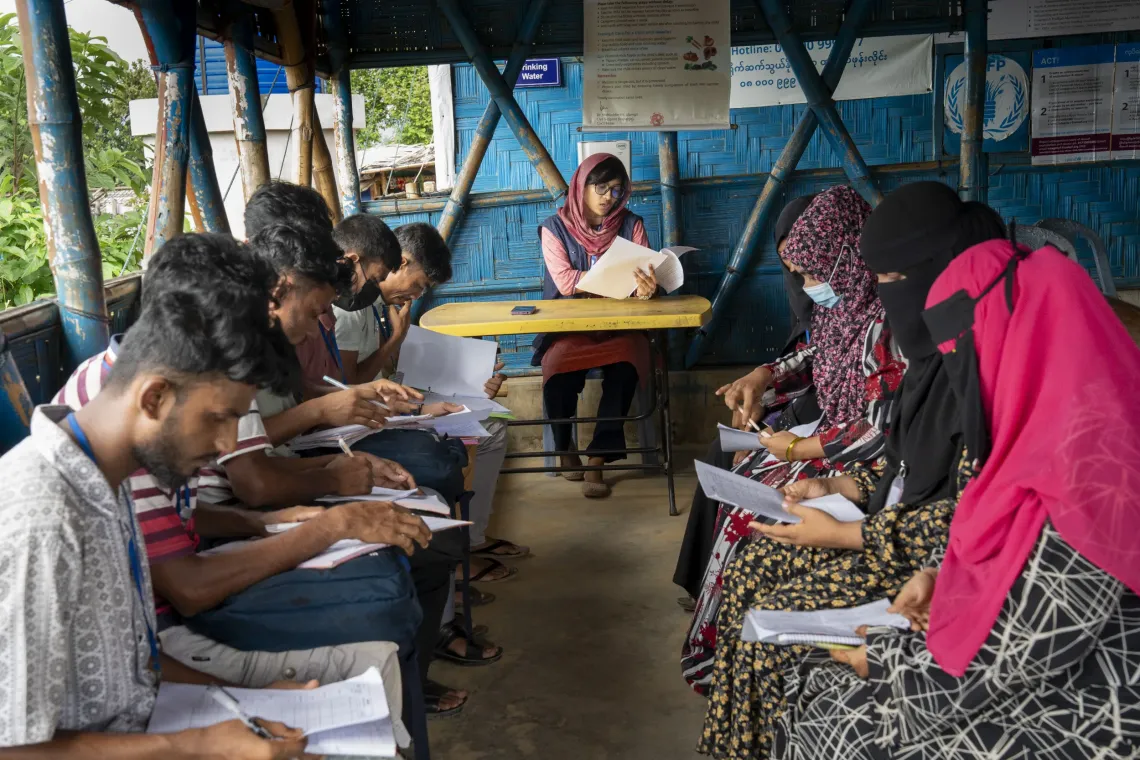
For Amin and other nutrition volunteers, the mornings start with a brief meeting at the nutrition facility premises. Together with the team, volunteer pairs review the day’s plan, identify the blocks to visit and the children and families who need follow-up.
Working in pairs, every volunteer team has a male and a female volunteer who set out to visit the households. Having both men and women on the team helps families feel comfortable discussing sensitive health and nutrition concerns. Alongside Amin, the team includes Tofura Begum, a Bangladeshi volunteer working closely with Rohingya families.
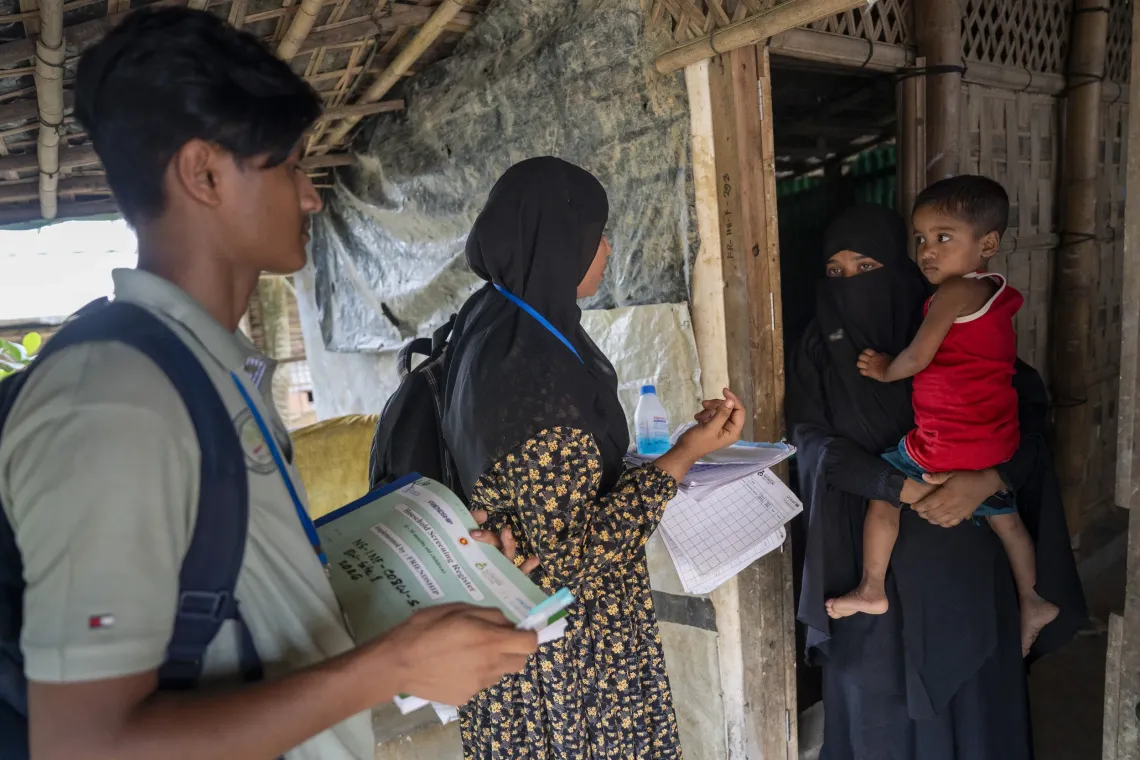
Once the meeting at the facility is concluded, Amin and Tofura head out to visit 50 to 60 households across the camp every day. Today, they walk uphill and stop in front of a makeshift home, where a young mother lives with her thirty-one-month-old son Shahed. When Tofura carefully measures Shahed's Mid-Upper Arm Circumference (MUAC), checks for oedema, Amin documents the findings. These simple essential assessments help identify whether children are at the risk of malnutrition and might need immediate support or not. Shahed's MUAC measures came out 14 centimeters; this indicates that Shahed is well nourished for his age.
The result is rewarding for Amin as he recalls the moment he first met Shahed nine months ago, when he was underweighted and weaker than other children of his age with visible signs of poor health condition. Recognizing the signs, Amin immediately referred Shahed to the Integrated Nutrition Facility (INF), where he started receiving nutrition care, regular follow-ups, nutrition supplements and his mother received counselling and practical guidance and support on complementary feeding. Since then, Shahed and his mother have continued receiving nutritional support from the facility. Alongside the support received from INF, Amin and Tofura regularly visit their home to monitor his progress, provide guidance, and document his growth regularly.
Today, Shahed’s healthy MUAC measurement is the reflection of months of consistent care, timely treatment, and the collective efforts of Amin and Tofura.
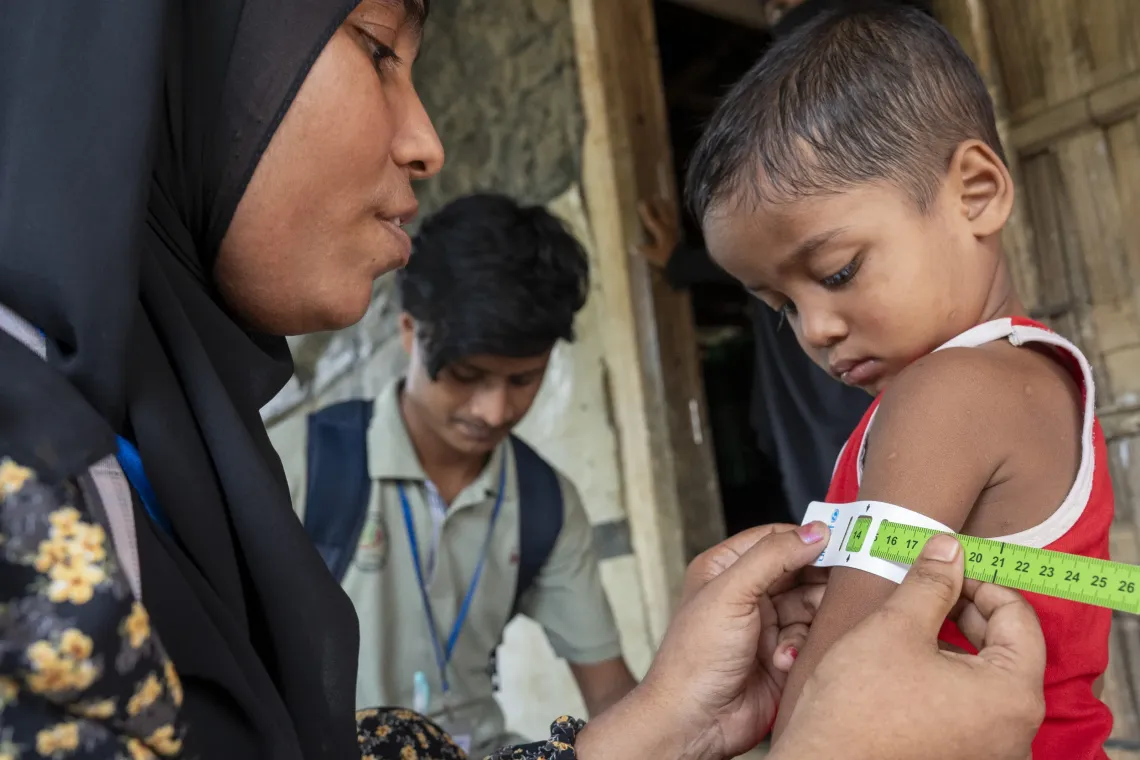
The job is more than measuring MUAC or checking for oedema. Nutrition volunteers like Amin are the foundation of building trust and reassure families that they are not alone on this journey. They identify children at risk, detect potential health and nutrition concerns and connect families with the services they need through regular visits. They are the first responders within the community. As members of the community themselves, volunteers have earned the trust of the families they serve. Mothers feel comfortable sharing sensitive concerns about their children's health, allow volunteers to provide timely guidance, referrals, and support.
Looking across the crowded camp, Amin sees reflections of his younger self in many children he visits. Through every household visit, referral and counselling session, he hopes to ensure that no child is denied the chance to grow up healthy and strong.
“We lost many opportunities when we were forced to leave our homes,” he says. “I want children growing up here to have a better future.”
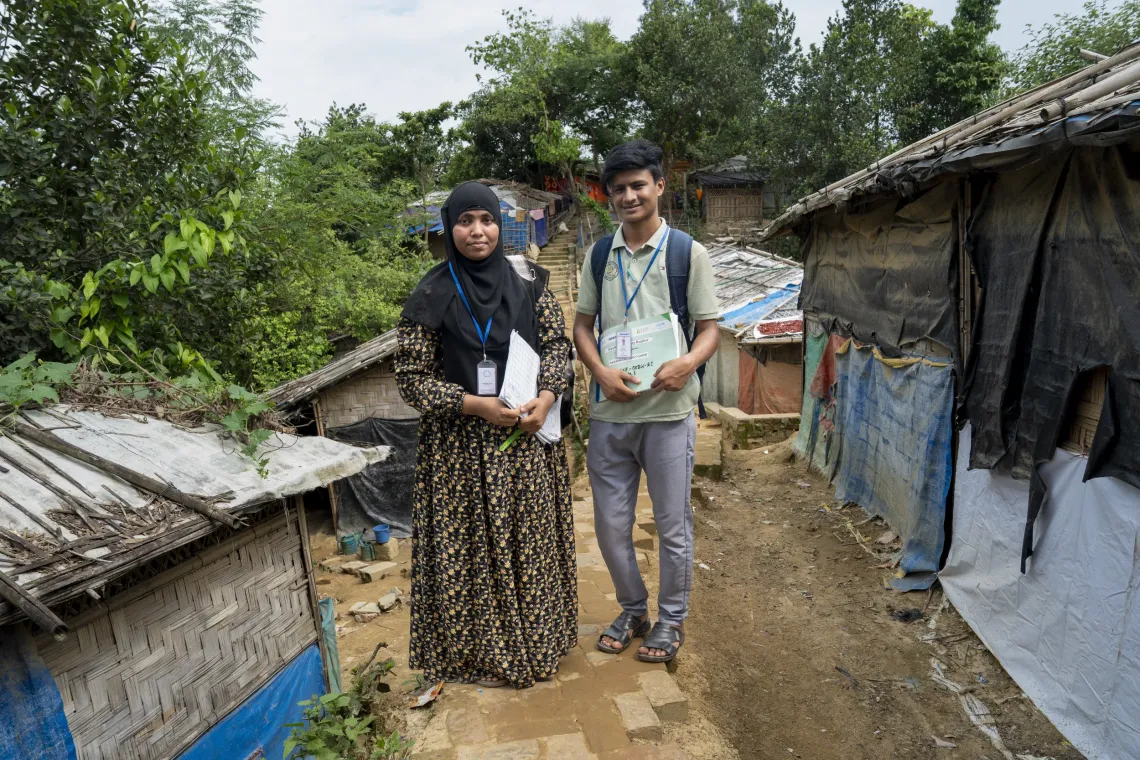
With support from the Bangladesh Humanitarian Fund and US Foreign Assistance, each volunteer pair reach around 500 households every month bringing the initial screening at their doorsteps. Every month, more than 760 nutrition volunteers work tirelessly to connect around 174,000 Rohingya children aged 0-59 months with screening, life-saving care and access to nutrition services. For these volunteers, the opportunity to serve their own community not only builds confidence and but also a sense of purpose to protect children from malnutrition and gives them a chance to actively engage in keeping their community healthy.