Nepal: A long road to recovery
This is a summary of what was said by UNICEF Spokesperson, James Elder, to whom quoted text may be attributed – at today's press briefing at the Palais des Nations in Geneva
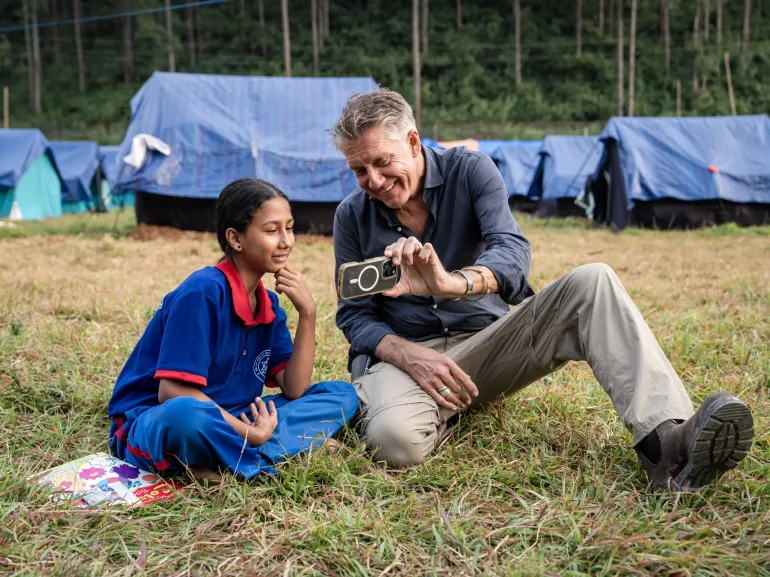
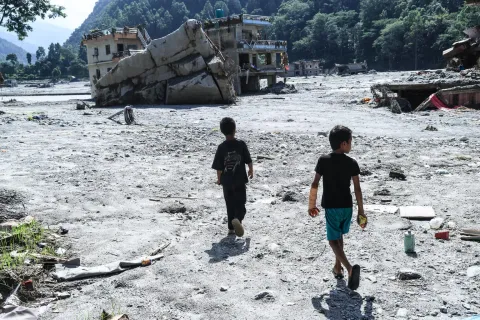
Kathmandu, 9 October – “More than 32,000 children in Nepal have been affected by floods that began when a mountain of glacial ice and rock collapsed into a Himalayan river in late August. Parts of towns and villages look like war zones. Scientists warn, that as the Himalayas warm, this kind of disaster is becoming more likely. And the countries that have done least to cause it are being left to pay for it."
“Eighty-four children have been declared dead. With 5,285 people still missing, that number will, sadly, swell."
“And so, six weeks after the disaster, heartache remains daily. Sahara is 16. I met her at her technical training centre on Tuesday. Her mother was swept away by the floods and killed. Through tears, Sahara told me: "It's not nice to live without a mother."
“I asked Sahara whether she thought climate change had played a part in the disaster. She said that at school they learnt how to look after their own surroundings. Her community does what it can to protect the land around it. Sahara has done nothing to cause this crisis, yet children like her bear a disproportionate share of its consequences, from disrupted education to the loss of safety and of loves ones."
“Scientists are careful about pinning one disaster on climate change, and rightly so. But the conditions behind it are well understood. The Himalayas are warming about twice as fast as the global average. Glaciers are shrinking, permafrost is thawing, and the ice and frozen ground that hold these slopes together are weakening."
“This reaches far beyond Nepal. The Hindu Kush Himalaya holds more ice than anywhere on Earth, outside the polar regions. Two hundred and forty million people live in these mountains. Another 1.65 billion live downstream and rely on the rivers this ice feeds. That is nearly two billion people. About a quarter of humanity."
“That system is being pushed out of balance. Faster melting brings more water and more flood risk now, and serious shortages later as the glaciers disappear. Both are driven by a heating planet."
“Nepal produces only around 0.1 per cent of global greenhouse gas emissions. Yet children, who are least responsible for the climate crisis, are among those bearing its heaviest consequences."
“Parties to the United Nations Framework Convention on Climate Change (UNFCCC) have agreed to provide finance and support to avert, minimise and address loss and damage. For countries like Nepal, these commitments must translate into practical support that reaches affected communities quickly. Such finance must be grant-based, accessible and responsive to children's needs and rights."
“What could money do now? Let me tell you about Shushila and her husband, Jivan."
“Jivan is deaf and does not speak. Shushila is an amputee. Together they built two businesses, a tailor's shop and a tea shop, and send their three children to fee-paying schools. I have seen photos of those shops from before the flood: bright, welcoming, full of care. And successful. They bought an apartment of their own."
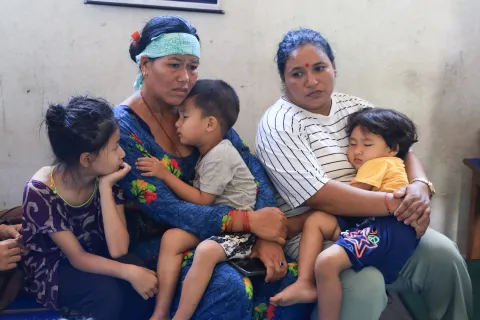
“Then the flood came. Water rose more than two metres through their home and destroyed both businesses. They escaped with the clothes they were wearing, and nothing else. Shushila told me: ‘Maybe it would have been better if we weren't able to escape."
“That is the stress and trauma brought on by inaction elsewhere in the world. And this is what climate finance is for: letting a family like this start again."
“UNICEF has supported Shushila and Jivan’s family with cash assistance. With so many needs, how did they prioritise their spending? On their children. Books, stationery and clothes."
“A one-off payment is of course not the solution. Sustained cash to this family, and many thousands like them is essential."
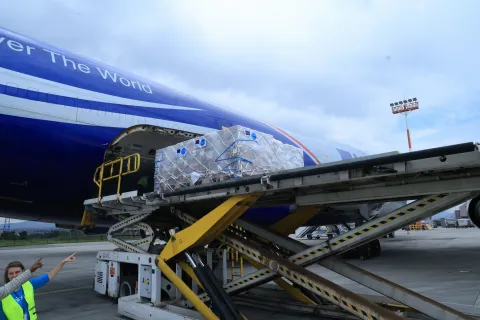
“Humanitarian cash is part of UNICEF’s winterization response. While we also distribute blankets, newborn kits, and warm winter clothes, cash gives people the dignity to decide for themselves what they need most this winter. Whether that is to pay the rent, to keep their girls in school, money for gas and fuel, or seed funding to restart their small shops and business. And winter is coming."
“Lastly, let’s be clear: this disaster did not begin when the water rose. Before the floods, more than half a million children in Nepal were already exposed to at least three multiple overlapping climate and environmental hazards."
“Disasters like this harm children in three ways. First, they destroy essential services. In these floods alone, 23 schools, seven health facilities and 64 water systems were damaged or destroyed. Second, they leave deep emotional scars, so psychosocial support matters as much as food, water and shelter. Third, they put a generation at risk. Children miss out on learning, and in a country where 28 per cent of young women were already married as children, girls face a greater risk of child marriage."
“Some positive news to end on. The response from Government, communities and the UN is comprehensive. I saw new bridges built just weeks after a mountain of water and rock ripped through such infrastructure. In weeks, UNICEF and partners have vaccinated more than 68,000 people against cholera, restored water to 27,000 and got thousands of children back into learning and play spaces. And we have reunited dozens (51) of children with their families."
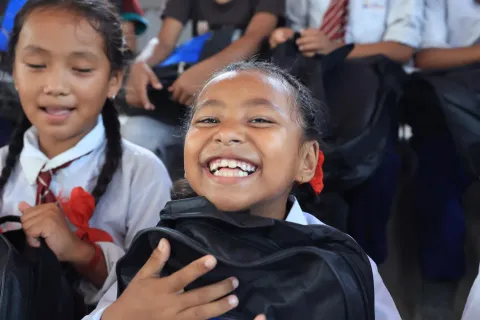
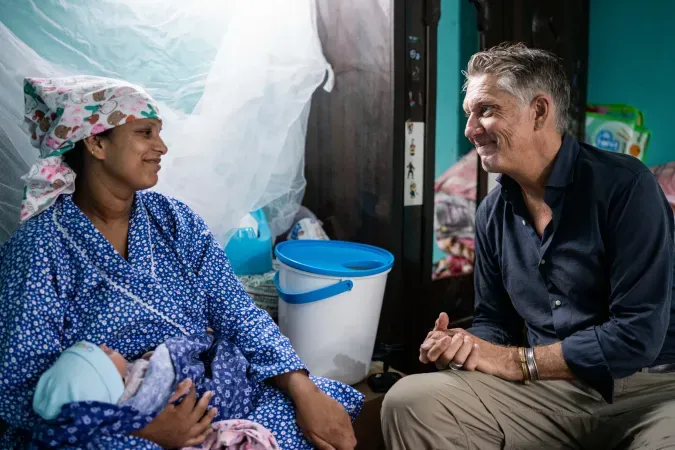
“I saw our response in the face of smiling children in school tents, in the relief of mums with babies and newborn kits, and in children getting after-school psychological support. However, unless the world acts to reduce climate risks, we will keep returning to the same valleys after the next flood and the next landslide, and yet again find children once paying the highest price.
That is true in Nepal, across Asia and the Pacific, and around the world.”
Media contacts
Additional resources
About UNICEF
UNICEF promotes the rights and wellbeing of every child, in everything we do. Together with our partners, we work in 190 countries and territories to translate that commitment into practical action, focusing special effort on reaching the most vulnerable and excluded children, to the benefit of all children, everywhere.
Follow us on: Facebook • X • YouTube • LinkedIn