What you need to know about extreme child poverty in Armenia
5 essential questions about extreme child poverty in Armenia and the strategies underway to address it with UNICEF’s Social Policy Specialist Armenuhi Hovakimyan.
- Հայերեն
- English
What is extreme poverty and how does it impact children?
Poverty is generally defined as lacking enough financial resources to meet basic needs like food, shelter, and clothing, while also having limited access to essentials like healthcare, education, and clean water.
Extreme poverty is the harshest form of poverty, where families struggle to survive with less than 1,000 AMD (about US$ 2.50) a day, so not only lacking the financial means but also being almost entirely cut off from essential services to keep them safe and healthy. For context, the minimum monthly food basket in Armenia costs around 33,000 AMD, so these families are constantly falling short.
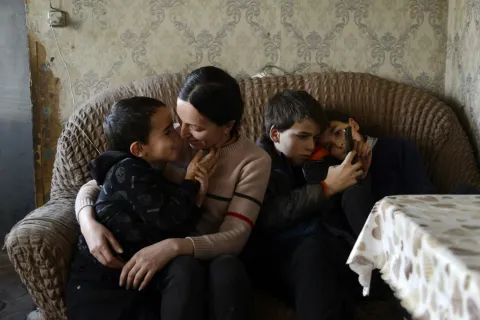
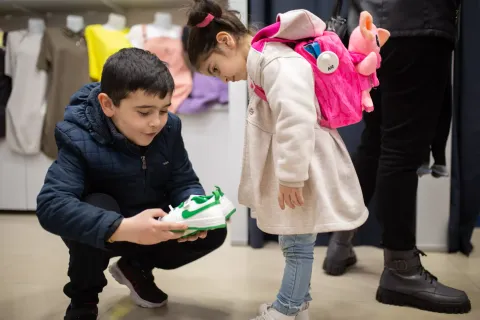
For a child living in extreme poverty, it’s not just about the lack of money, but missing out on the things that make childhood what it should be. Imagine going to bed or school hungry, wearing shoes that don’t fit or clothes that aren’t warm enough for winter, or sleeping on the floor because there’s no bed. These children often feel left out of social activities, unable to afford new things or discover new interests. This is what extreme poverty looks like through a child’s eyes—deprivation on multiple levels, affecting their basic needs and rights.
Children in extremely poor households are more likely to experience malnutrition, stunting, and wasting, which can impact their physical growth, mental development, and consequently earning potential when they are adults. They don’t get the healthcare they need, which means they are more likely to get sick or, in the worst cases, die young.
Quality education becomes a distant dream, many children won’t enroll in early education or complete primary school, let alone secondary school, which they need to find decent work. Families often can’t afford the cost of schooling like textbooks, school supplies or social activities, leading to higher dropout rates.
Adolescent children may even be forced to give up school entirely to help support their families by working, losing their chance at a better future. Disability, climate change and disasters, displacement are other factors that leave children living in extreme poverty with little to no chance to thrive.
At the end of the day, there are two things which are important to understand about extreme poverty: it affects every part of children’s lives, and it has long-term consequences that follow children into adulthood. As a result, extreme poverty traps children in a cycle of intergenerational poverty making it very hard to break through.
The trap of extreme poverty, as I already said, repeats itself from generation to generation. When a child is born into extreme poverty, the family, from young to old, is already struggling with low levels of education and employment, as well as a myriad of health issues, leading them to prioritize survival over other areas of life that will set you on the path to break through it. Many people living in extreme poverty are blamed for it or faced with negative social norms, so it is crucial to understand the nature of extreme poverty and understand that individuals are not to blame for it.
Every parent wants the best for their child, but sometimes life circumstances and your upbringing and the lack of support services around you trap you into extreme poverty where alone, you cannot break through it. These families are often isolated from society, which leads to stress, mental health issues, and feelings of hopelessness. In some cases, parents may struggle to cope, and children might experience neglect, abuse, or violence—creating lasting trauma.
To break through extreme poverty, you need to overcome:
- Structural barriers: economic inequality and lack of access to quality, affordable education, healthcare, and social services.
- Societal barriers: many poor families are socially excluded, lacking the community support systems that wealthier families take for granted.
- Behavioral barriers: families living in extreme poverty also struggle with financial literacy, parenting skills or dependence on limited support.
Overcoming these barriers requires a comprehensive approach and the work of multiple actors to address the financial, emotional, social, and psychological sides of extreme poverty.
Ending extreme poverty is not only a conscious choice for governments but also an obligation. As other countries, Armenia has also committed to the Sustainable Development Goals, and Goal #1 is about eradicating extreme poverty for all people everywhere by 2030. 11,885 children were estimated to live in extreme poverty in Armenia in 2022 and we cannot afford letting them lose all opportunity to reach their full potential in life.
Here are some immediate steps that should be taken to reduce extreme child poverty:
- Prioritize eradication of extreme poverty, putting it at the forefront of state policies, laws, and budgets. This means ensuring that relevant state programs are adequately funded and based on solid child poverty measurement.
- Improve access to and quality of social services for children, such as early learning and education, healthcare, nutrition, day care, mental health, rehabilitation or support for extreme cases, such as children victims of violence. Altogether, these services have a preventative influence that help families not to become extremely poor.
- Develop the social protection system to be child-sensitive, transformative, and responsive, improving the targeting and adequacy of poverty-targeted benefits and/or establishing universal child benefits as the most effective way to fight child poverty linked to services and income-generating opportunities that help families break through poverty.
- Encourage positive behavioral changes, including skills such as financial literacy, positive parenting, as well as ending stigma and harmful stereotypes around poverty.
Additional solutions in support of these immediate steps include family-friendly policies, such as paid parental leave, affordable childcare services, policies that support both mothers and fathers in the workforce, as well as affordable housing and teaching of important life skills.
Moreover, considering that extremely poor often experience welfare losses due to climate change, there is a need to lower their vulnerability by appropriate risk management practices and policies, increase their resilience to shocks, raise their awareness on sustainable practices and ensure access green and safe livelihood alternatives.
As you can see, breaking the cycle of extreme poverty requires more than just one solution or one actor. It takes a coordinated effort between many partners, such as the government, civil society, communities and the private sector.
While Armenia has managed to reduce overall poverty from 26.5 percent in 2018 to 23.7 percent in 2023, there has been less progress on cutting down extreme poverty: 1,4 percent in 2018 and 1.1 percent in 2023. The COVID-19 pandemic and repeated escalations of conflict and the refugee crisis have contributed to this of course.
It gives me hope to see that Armenia is taking steps in the right direction by expanding childcare benefits to all children under 2 and reforming its vulnerability assessment system to focus on ending extreme poverty. However, cash benefits alone are not enough. For families to truly break free from poverty, there must also be a focus on building skills and creating job opportunities. A stable job is one of the fastest ways to lift a family out of poverty, so employment and job training programs are essential.
UNICEF supports the Armenian Government through a variety of targeted interventions, including:
- We support the generation of vital child poverty data, both monetary and multidimensional. This helps identify the most vulnerable children and families. We also advocate for placing child poverty reduction at the heart of government policies and programs.
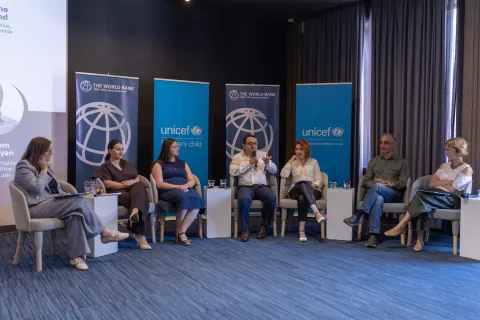
- In partnership with the World Bank, UNICEF is helping design and put in place a new vulnerability assessment system in Armenia. This system aims to eradicate extreme poverty and reduce overall poverty. UNICEF's support includes developing legal frameworks, program design, budget projections, and enhancing communication and awareness about this new approach. The goal is to lift families out of monetary poverty while promoting employment and access to essential services through "cash plus" interventions.
- We are also supporting the revision of the Law on Social Assistance to professionalize social work, improve the quality and integration of services, and strengthen the capabilities of social service professionals. This work includes enhancing information management systems for social protection and maximizing links between social programs and other sectors like education, health, nutrition, and child protection.
- UNICEF is also working to support the social protection system to be more responsive to crises, preparing for emergencies and strengthening mechanisms for coordination of humanitarian cash assistance. We also work with communities and adolescents to increase their knowledge on climate change and build resilience.
- UNICEF is supporting the revision and implementation of the disability assessment system, including assessment of extra costs of disability and developing needs-based service packages, expanding access to comprehensive and inclusive social protection throughout life, such as care, education, support and benefits.
- We are also supporting the testing, costing and expansion of inclusive early childhood education services, especially in the most remote and rural communities of Armenia.
We work with many partners, among which the European Union and the US Agency for International Development, along this process, and this collaboration is vital because, ultimately, by coming together in a unified approach, we can create a supportive ecosystem that empowers children living in extreme poverty, enabling them to break free from the cycle of poverty and build a better future.
Extreme poverty doesn’t just affect the families who live in it—it impacts the entire economy and society. We should not forget that collectively, we have a responsibility to leave no one behind – this is not just a collective sustainable goal but also a moral one. Next to that, when people are trapped in extreme poverty, they can’t earn a decent income, which limits their ability to buy goods and services. This lack of purchasing power means that businesses have fewer customers, which can slow down economic growth for everyone.
But the issue goes deeper than just money. When a significant portion of the population is left behind, it reflects a failure of the state and society to provide everyone with the support and opportunities they need. Even if the country is growing economically, extreme poverty shows that not everyone is benefiting from that progress.
Poverty is also expensive. The government has to spend more on social assistance and benefits to help families who can’t make ends meet. People living in extreme poverty tend to have poorer health, which leads to higher healthcare costs and lower productivity. This not only strains public resources but also reduces the country's ability to grow economically because there’s a shortage of skilled, healthy workers.
When children don’t have access to quality education, they can’t develop the skills they need to secure well-paying jobs in the future. This limits their earning potential, creating a ripple effect that holds back economic progress. Additionally, extreme poverty often goes hand in hand with other vulnerabilities that disrupt social cohesion and, if left unaddressed, can lead to higher crime rates and growing tensions in society.
In the end, extreme poverty affects us all. When a part of society struggles, it weakens the entire fabric of the country - economically, socially, and environmentally. That’s why addressing extreme poverty is not just a moral responsibility but an economic and social necessity for a healthier, more inclusive future.