Supporting Refugee Children with Disabilities
UNICEF has provided specialised support to refugee children with disabilities in Armenia.

- Հայերեն
- English
When military hostilities first uprooted 11-year-old Daniel and his family in 2020, they were among hundreds of thousands to find refuge in Armenia. When it happened again in the fall of 2023, it was Armenia once again became their refuge.
“When we were first displaced in 2020, UNICEF and the Source Foundation supported us. Now, after coming to Armenia again, my child has returned to the place where he receives not only therapeutic services, but also love and warmth,”
At home, due to the increased tensions, Daniel had become withdrawn, had to skip rehabilitation services for more than three months, rarely leaving the house or socializing. In 2023, after finding refuge in Armenia and settling in Yerevan, he was enrolled in a school and in the Source house that provides individual lessons two times a week with a social pedagogue, speech therapist, psychologist, and other specialists.
“The needs of refugee families, including children, are multifaceted. While humanitarian primary response efforts typically focus on addressing broad needs, the specific requirements of children, due to age, gender, disability or other factors, often go unnoticed. Under usual circumstances, the challenges faced by children and young people with disabilities are significant, and these challenges are only exacerbated in emergencies. By September last year, it was evident that Daniel and many other Armenian children like him had not received specialized support for months, indicating a substantial amount of work ahead,”

In October 2023, with the backing of the Norwegian Government, UNICEF and the Source Foundation collaborated to address the accessibility of rehabilitation services for refugee children with disabilities and bridge existing gaps in Armenia. This partnership ensured that child support centres were equipped in Kapan and Goris in the province of Syunik, as well as in Sevan in the province of Gegharkunik. The programme provided furniture and accessories for physical and sensory therapies, developmental exercises and palliative care.
Furthermore, around 50 professionals, including psychologists, special educators, speech therapists, and physical and occupational therapists, received training in practical tools and approaches for professional support. This training covered needs assessment, referrals, and the provision of specialized services and support for children and families with disabilities.
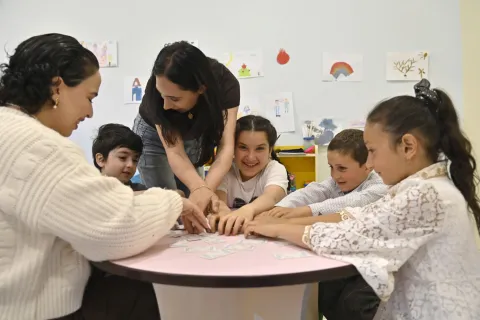
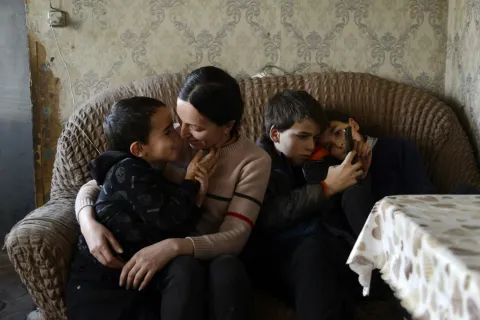
Daniel now attends sessions with a speech therapist, psychologist and art therapist three days a week, each lasting three hours. He primarily communicates with his parents through vocalisations or hand gestures. When he is not studying, he enjoys playing tag with his 12-year-old brother, watching cartoons, listening to music and taking early morning walks with his mother.
“It's very convenient that the child receives a comprehensive package of services in one visit here, participating in both individual and group sessions. It's particularly beneficial that the centre provides transportation assistance, which is often difficult to arrange,”

Narine is a trained Armenian language and literature teacher, but devotes her time to Daniel.
Thanks to the intensive and regular sessions, Daniel has become active once more and engages enthusiastically with other children during group activities. Moreover, his skills have improved significantly – he can now walk independently down the stairs at school.
“It would be wonderful if this initiative continued so that not only my son could benefit, but also other children like Daniel would have the opportunity to receive this professional support package. I am confident that all the children will make progress, which is incredibly important for any parent, especially under such challenging circumstances,”
UNICEF continues to collaborate with partners to meet the needs of the most vulnerable children and families in Armenia, including refugee children with disabilities.
Since September 2023, over 115 parents of children with disabilities have received child development counselling. Eighty-five children with disabilities have accessed professional, educational, health and social protection services tailored to their needs. Additionally, 30 refugee children with disabilities have been provided with soft and wooden furniture to support continuous therapeutic activities and home adaptation.
Furthermore, through other interventions UNICEF provided clothing vouchers and pharmacy cards to all families with refugee children with disabilities, enabling them to purchase necessary clothes, medicines and health supplies.