A place to grow: a new child friendly space opens in Martuni
A new child development centre is bringing free, specialized support closer to refugee children and families in Martuni and surrounding communities.

- Հայերեն
- English
Located in the southern shores of Armenia’s beautiful Lake Sevan, Martuni is a fairly small town that is now home to a sizeable ethnic Armenian refugee community who had to flee their homeland in 2023. For families, this has been a bumpy road as the vast majority of specialized services and spaces for children are not fully available in Martuni.
In June 2026, UNICEF joined Martuni’s Women’s Community Center to establish Gunapnak, which means color palette in English. And just like a color palette brings together a set of colors into play and harmony, Gunapnak has brought together the community to provide a set of services for its children, from speech therapy, counseling and psychosocial support to case management and positive parenting guidance.
So far, over 40 children have begun regularly receiving essential services in this tiny but colorful corner of Martuni, among them 16 children from refugee families and 15 children with various developmental needs receive specialized support. Families come here not only from Martuni, but also from nearby villages, including Artsvanist, Vardenik, Astghadzor, Lichk, Vaghashen, Nerkin Getashen and Geghahovit.
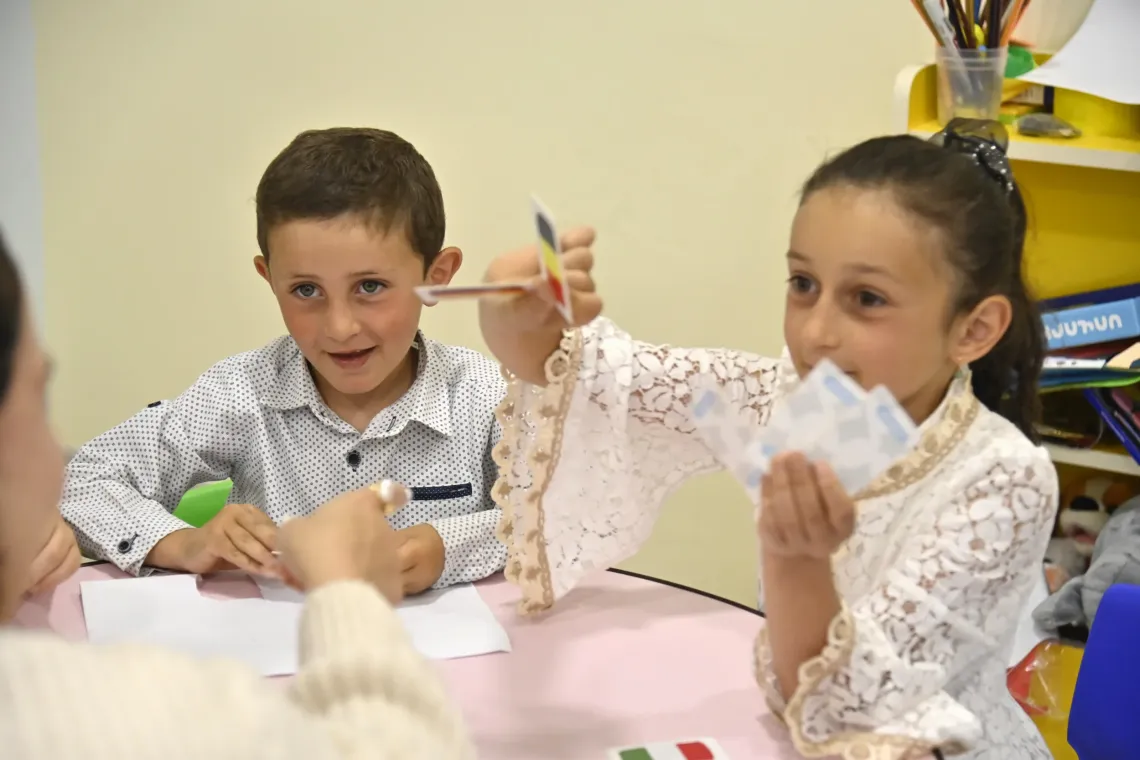
“For refugee children, the need for support does not end when an emergency is over. UNICEF’s flexible humanitarian funding has made it possible to establish and continue essential services, while helping ensure that children do not face gaps in the support they need. At the same time, we are working to make these services sustainable and available over a longer period of time. Through the Gunapnak Child Development Centre, we are bringing accessible services closer to children and families, right in their own community.”
For psychologist Mariam Ziroyan, the centre grew out of a need she had seen firsthand in the last few years. Parents who came to her for psychological support would often ask where they could find a speech therapist, special educator or social worker for their children. Martuni had private child development centres, but the cost of enrollment was a barrier for many families. “Parents were looking for a place where their children could receive quality, specialized support free of charge,” Mariam says.
At Gunapnak, that support is now available in one place.
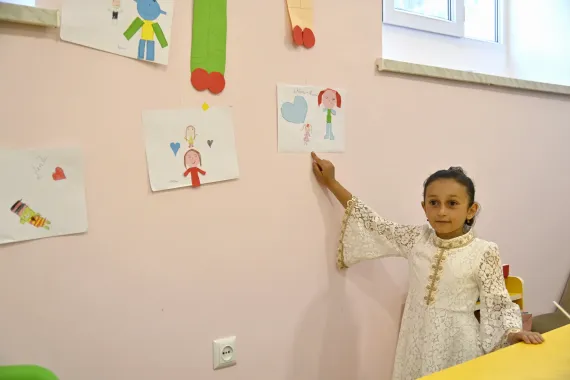
Viktoria, 7, proudly points to a colourful picture she made from pieces of paper hanging on the wall. “I made it with Ms Mariam,” she explains proudly. Her brother Monte, 5, is at the center with her, actively preparing for school in September. “I love playing here,” shares Monte, “I never get bored here!”
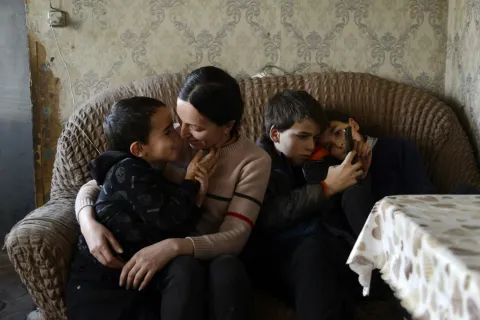
His mother, Ani Shaboyan, says that although her children are attending the centre for less than a month, she has already noticed changes in their mood and behaviour. She has even noticed changes in herself.
Displacement has placed a heavy burden on their whole family. Ani’s husband had to go find work abroad, while she stayed in Armenia to care for their three young children. At times, she shares, she has struggled with emotional connection and stress.
“The psychologist has taught me several techniques that help me better communicate with my children,” she says.
At Gunapnak, parents are not simply asked to bring their children to sessions and wait outside. They are part of the process.
“Our experience has shown that parents’ involvement makes a huge difference in our work with children. When the child, the parent and the specialist work together, we can achieve much better results. That is why we place such importance on parents being involved in the sessions.”
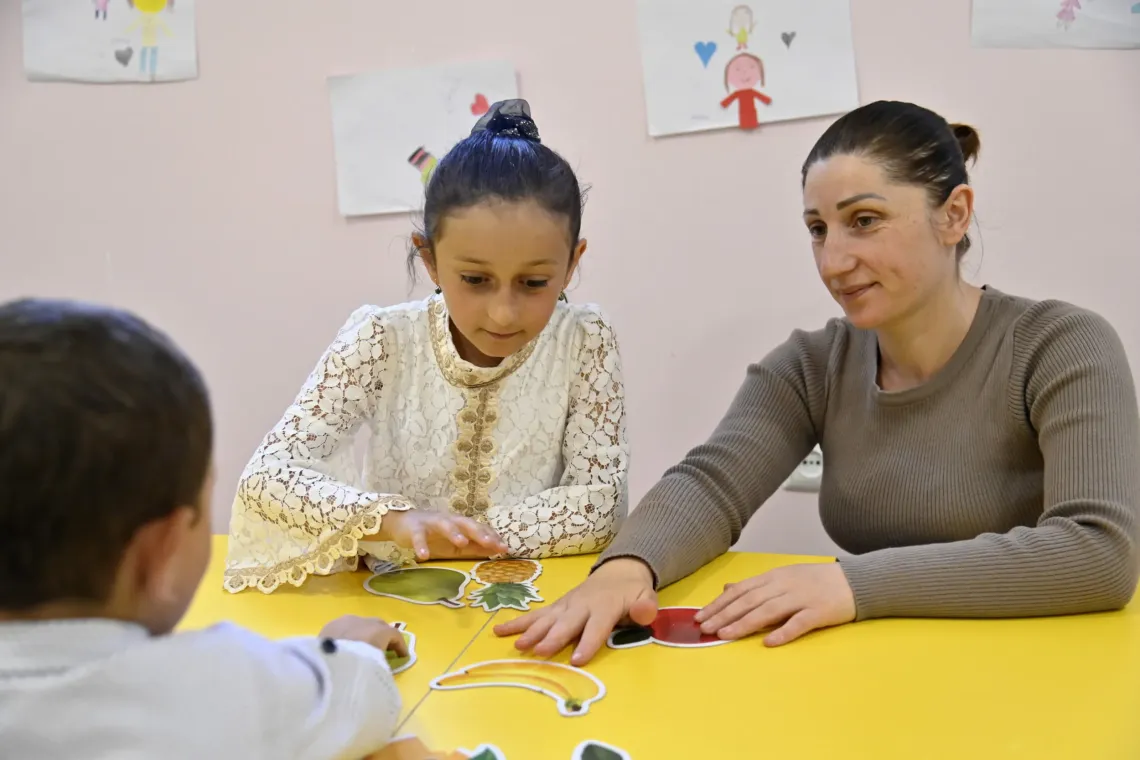
The centre uses a modular approach. After the first module, parents are invited to take part in interactive sessions with a psychologist and a social worker. Through discussions and art-based activities, they explore their child’s emotional needs, communication and behaviour, as well as their own responses as parents.
They then receive professional guidance and have opportunities to discuss their child’s progress and find ways to provide more effective support at home.
“Having a child with a disability means facing many different challenges, including financial ones,” Karine says. “I often had to take my son to Gavar because the services he needed were not available in our town. Sometimes I had to pay for these services for long periods, which is understandable because this is highly specialized work. But having access to this kind of support free of charge is very important. It helps children stay on the course of development while also eases parents’ work at home.”
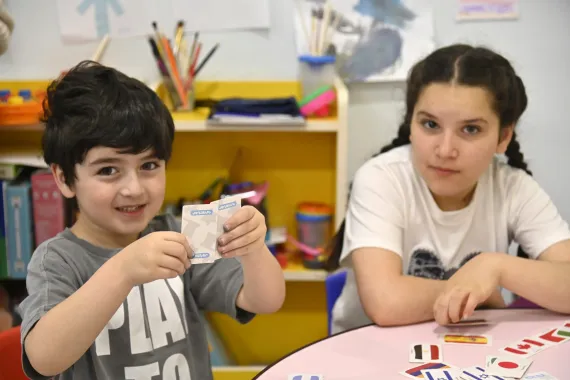
Aaron heads straight for his favourite educational game, matching flags from different countries. With speech therapist Hasmik Davtyan guiding him, he practices saying words clearly and carefully.
Hasmik turns exercises into games, making it easier for children to stay engaged.
Some children travel 40 to 45 minutes from surrounding villages to reach the centre, so keeping their attention and making each session interactive can be challenging. But it is also one of the most rewarding parts of the job.
“Having a child development centre like this in Martuni means families can access professional support without having to travel to another city or spend additional time and money,” Hasmik says. “Parents often had to take their children to Gavar or Yerevan. Now they can receive support from a multidisciplinary team here in their own community.”
Mariam says that providing support early can make a lasting difference in a child’s development and quality of life. “We provide both group and individual support, which allows us to respond to each child’s needs and make the services more effective,” she says.
The centre is being developed with a long-term vision, with the aim of establishing a fully functional and sustainable service for the host and local community of Martuni, as well as its adjacent communities where similar services are unavailable. “UNICEF is currently providing targeted capacity-building and technical support so that, by the end of 2026, the centre can apply to the Ministry of Labour and Welfare for a license to operate as a state-funded day-care children's centre,” notes Victorya Ohanyan.
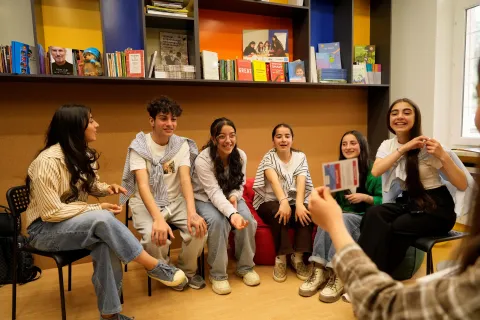
For now, the two large rooms at Gunapnak completely embody its name. In one, parents take a break from the demands of everyday life, exchange experiences and talk to one another. In the other, children play, make friends and receive the support they need.