Birth registration steadily increases worldwide, but 150 million children still ‘invisible’ - UNICEF
New report shows progress, while highlighting gaps—particularly in sub-Saharan Africa— leaving millions of children without legal identity

NEW YORK, 11 December 2024 — Over 500 million – or close to 8 in 10 - children under five have had their births registered in the last five years, reflecting notable strides in securing legal identity worldwide, according to a new UNICEF report released today.
The Right Start in Life: Global levels and trends in birth registration, 2024 update – released on UNICEF’s 78th birthday – is the latest update on the number of children registered since 2019, when global levels stood at 75 per cent. Despite the increase to 77 per cent today, 150 million – or around 2 in 10 – children under five remain unregistered and invisible to government systems.
The report also reveals that over 50 million children whose births are recorded lack birth certificates. This essential document serves as proof of registration and is critical for acquiring nationality, preventing statelessness, and ensuring children can enjoy their rights from birth.
“Birth registration ensures children are immediately recognized under the law, providing a foundation for protection from harm and exploitation, as well as access to essential services like vaccines, healthcare, and education,” said UNICEF Executive Director Catherine Russell. “As UNICEF marks 78 years of championing children’s rights today, we celebrate the progress made for millions of children in gaining their legal identity, while calling for stronger efforts to ensure that every child, everywhere, is registered at birth.”
Global progress has largely been driven by countries prioritizing timely registration, leveraging health, social protection, and education systems, expanding services to more locations, digitalizing the process, and eliminating fees.
Latin America and the Caribbean reached 95 per cent, Eastern and South-Eastern Asia 94 per cent, and Central and Southern Asia 78 per cent. However, sub-Saharan Africa lags significantly behind at 51 per cent, accounting for half of the world’s unregistered children (90 million).
Within sub-Saharan Africa, progress and levels vary widely. For example, Southern Africa leads with 88 per cent, while Western Africa has made the most significant gains over 15 years, reaching 63 per cent. Eastern Africa and Middle Africa trail behind, both at 41 per cent. However, with slow improvements and a rapidly growing child population, sub-Saharan Africa—poised to house the majority of the world's children in the coming decades—could see over 100 million unregistered children after 2030 if levels remain as they are today.
Many families around the world continue to face barriers due to weak political commitment, long distances and multiple visits to registration facilities, lack of knowledge about the registration process, unaffordable fees and prohibitive indirect costs, and, in some places, discrimination based on gender, ethnicity, or religion.
Despite these challenges, some countries have made significant gains. In sub-Saharan Africa, Botswana has achieved universal birth registration, while Côte d’Ivoire has reached over 90 per cent. Rwanda, Sierra Leone, Tanzania, and others have also shown sustained improvement over the past decade. These success stories serve as valuable models for other countries to emulate.
To ensure every child is recognized and protected, UNICEF is calling for five key actions:
- Register every child at birth as the foundation of a lifecycle approach to legal identity.
- Streamline registration processes to enhance service delivery and drive digital transformation.
- Leverage health, social protection, and education programmes to boost birth registration.
- Implement key legal reforms for inclusive and equitable civil registration and vital statics systems.
- Empower communities to demand civil registration services as a right.
“Despite progress, too many children remain uncounted and unaccounted for—effectively invisible in the eyes of the government or the law,” said Russell. “Every child has the right to be registered and provided with a birth certificate so that they are recognized, protected, and supported.”
###
Notes to editors on Zimbabwe:
Zimbabwe has made significant progress in strengthening its civil registration and vital statistics (CRVS) system, improving birth registration rates over the past five years. In 2023, the Country completed the national assessment of its civil registration and vital statistics system and developed a strategic action plan (2023-2027). The plan provides a framework for improving the civil registration and vital statistics system and fulfilling commitments made at African Union meetings focused on civil registration.
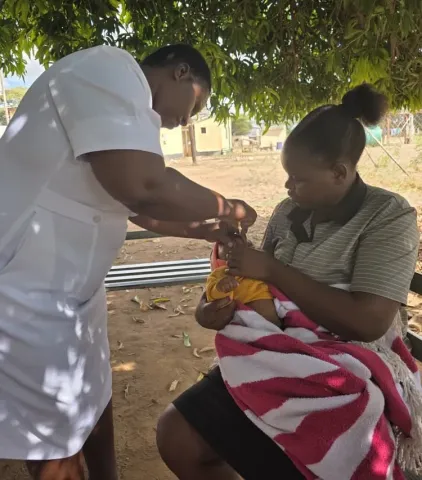
Digitalizing the system is essential for making the system more efficient and inclusive. UNICEF has supported the Government of Zimbabwe in this transformation by helping computerize 18 civil registration sub-offices and 2 district offices. Zimbabwe is also using health facilities to expand birth and death registration services, through a close collaboration between the health and civil registration sectors. Additionally, traditional leaders in Zimbabwe are now legally required to notify births and deaths in their communities, helping to improve birth registration rates in rural areas and reduce late registrations.
The work of Government, UNICEF and partners to improve the civil registration and vital statistics system in Zimbabwe is supported by the Child Protection Fund III and the Governments of Sweden and Switzerland.
Media contacts
About UNICEF
UNICEF promotes the rights and wellbeing of every child, in everything we do. Together with our partners, we work in 190 countries and territories to translate that commitment into practical action, focusing special effort on reaching the most vulnerable and excluded children, to the benefit of all children, everywhere.
For more information about UNICEF and its work for children, visit www.unicef.org.