Zimbabwe: Building a Stronger birth registration system through community voices
Across Zimbabwe, particularly in remote and border communities, many parents understand why birth registration matters. The challenge is not awareness—it is turning that knowledge into timely action.
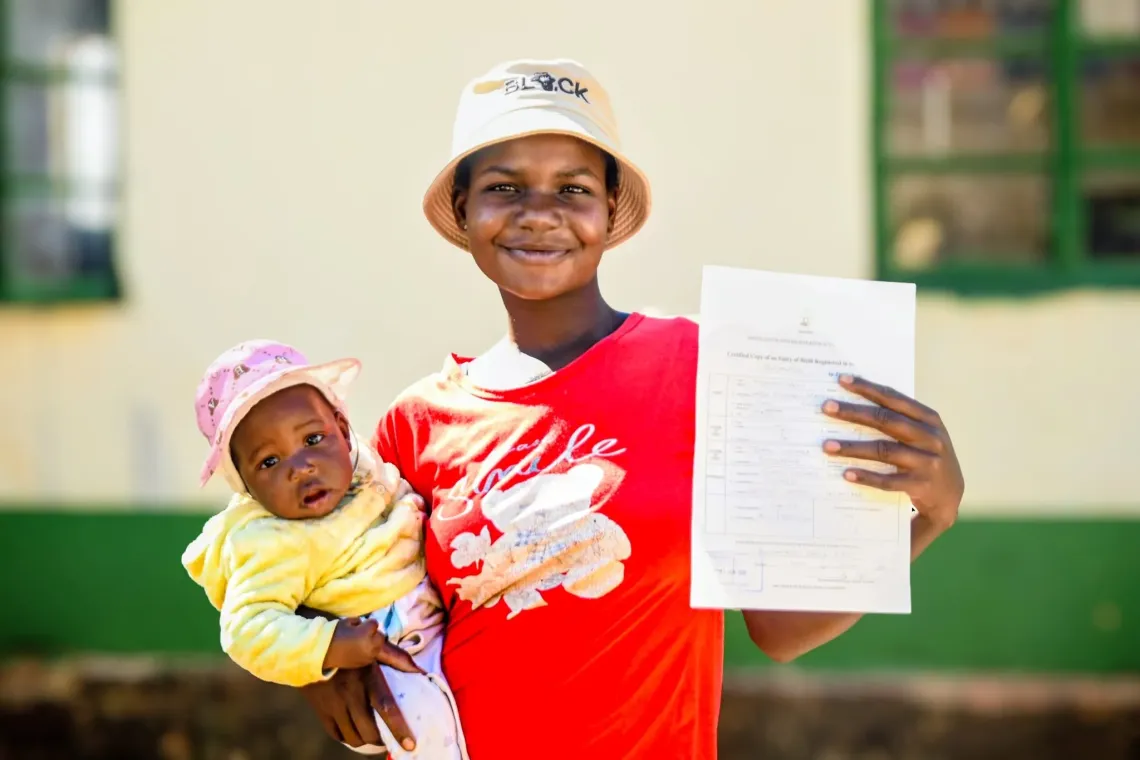
When Sophia Mutema cradles her young child, she sees endless possibility. Like every parent, she dreams of a future where her child can go to school, receive healthcare and one day build a life full of opportunity. But one missing document stands between those dreams and reality.
"When I went to register my baby, they asked for a birth record from the clinic, but I didn't have one," Sophia recalls. "I gave birth in Harare and have since moved to Mutasa. I felt stuck and didn't know what to do next."
Sophia's story is shared by many families across Zimbabwe. For some, registering a child's birth is not simply a visit to a government office. It is a journey shaped by distance, uncertainty, missing documents and competing daily priorities.
Yet a birth certificate is far more than a piece of paper. It is a child's first recognition by the state. It confirms nationality, opens doors to healthcare, education and social protection, and ensures every child can be counted in national planning and service delivery.
Across Zimbabwe, particularly in remote and border communities, many parents understand why birth registration matters. The challenge is not awareness—it is turning that knowledge into timely action.
To better understand these barriers, UNICEF, with support from the Government of Sweden, worked alongside the Civil Registration and Vital Statistics (CRVS) Department and the Department of Social Development to listen directly to families. Rather than relying on assumptions, the partners introduced a simple way of routinely collecting behavioural and social insights, helping uncover not only whether children were being registered, but why some families delayed or struggled to complete the process.
The conversations revealed an important insight.
Parents know where birth registration services are available, whether at District Registry Offices, health facilities or through outreach services. But uncertainty about costs, documentation requirements and late registration procedures often creates hesitation.
"Some say it's free, others mention different fees," explains Lydia Sithole, a caregiver from Mutasa. "It leaves parents confused and worried."
For many families, registration becomes something to do later, often when a child is ready to enrol in school or needs travel documents.
"Birth registration matters, but it's not something people rush to do," says community influencer Ezekiel Mutumbi from Zindi Village. "Many wait until the child actually needs it."
That gap between understanding and action is one of the most significant behavioural challenges identified through the community dialogues.
For families living far from registry offices, the challenge becomes even greater.
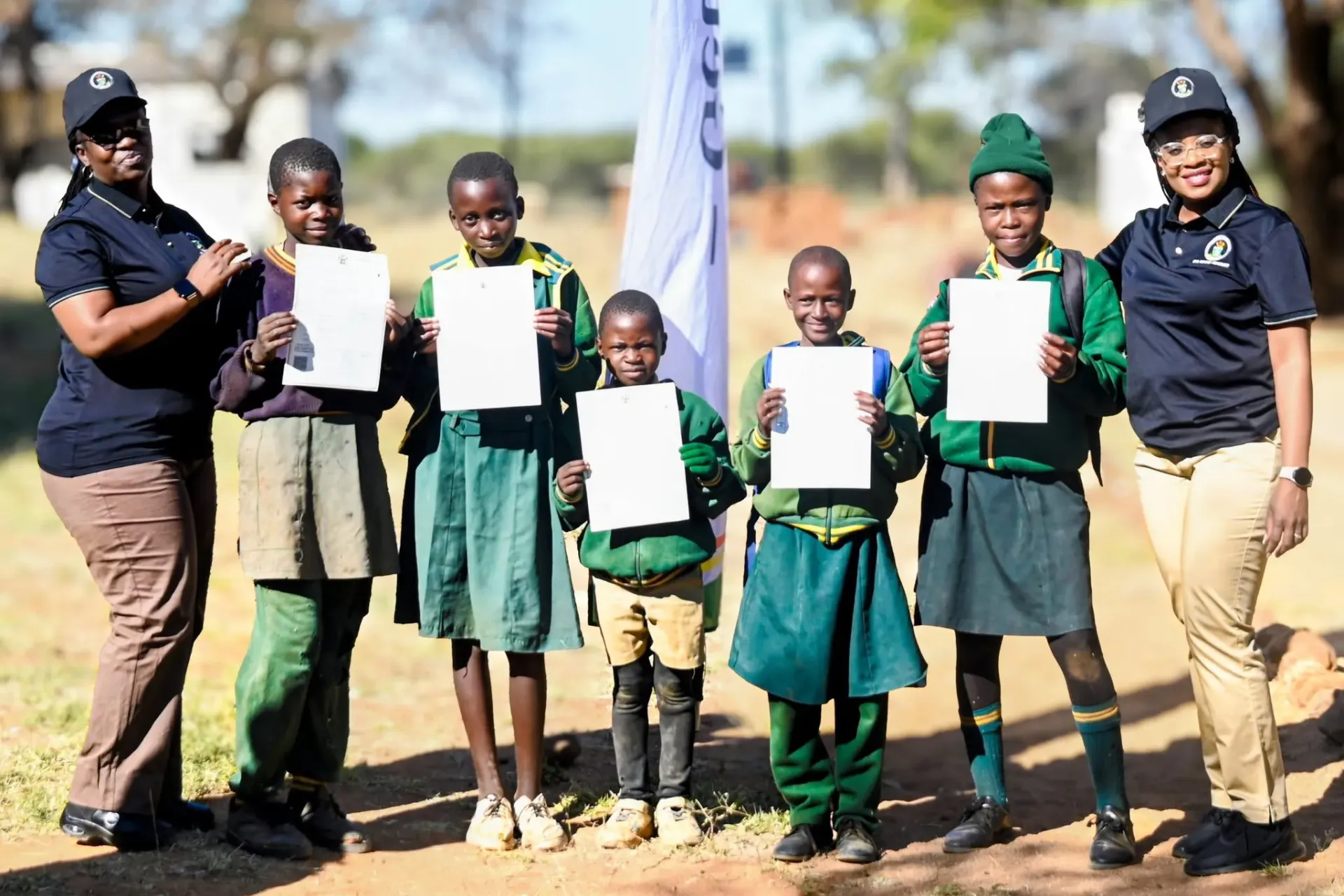
"The registry office is far from our community, and the last mobile outreach was in 2022," says Chief Sahumane. "Many parents are still waiting in hope while their children remain without an identity."
In Mangwe's border communities, the situation is often even more complex. Families crossing borders without identity documents face additional administrative barriers, increasing the risk that children inherit the same legal invisibility their parents experienced.
"Without intervention, the absence of legal identity doesn't end—it is passed from parent to child, quietly perpetuating a cycle of invisibility and exclusion," explains District Social Development Officer Tendai Taruvinga.
Listening to these experiences is already changing how services are delivered.
The behavioural and social insights gathered from communities are helping government and partners refine messaging around registration costs and required documentation, strengthen communication through trusted community structures and better target mobile outreach services to underserved communities.
"We are using these dialogues to continuously adapt our service delivery," says Mangwe District Registrar Mr Nyoni. "Making it more accessible, more responsive, and ensuring that no child is excluded because of where they are born."
For Sophia and thousands of parents like her, these changes represent more than improved public services.
They represent the chance for every child to be recognised, protected and included from the very beginning.
Because when communities are listened to, systems become stronger. And when systems respond, every child has a better chance of being seen—not only by their family, but by the nation they call home.