Three Girls, Three Dreams: Conversations I Will Never Forget
How integrated investments in education, health, child protection and community support help adolescent mothers return to school, rebuild their confidence and shape brighter futures.

Some conversations stay with you long after a field visit ends.
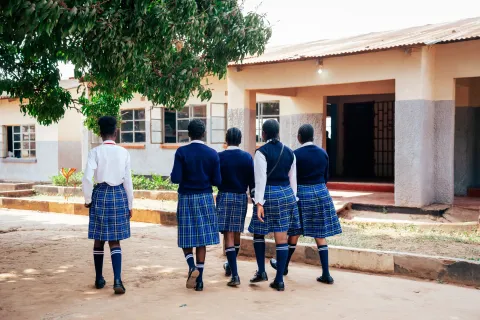
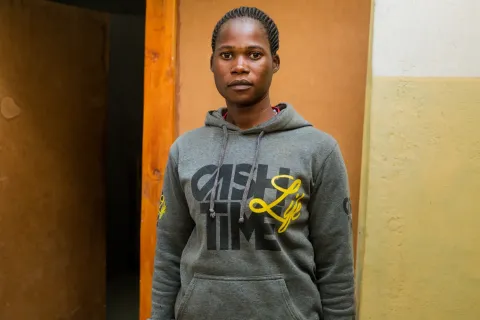
CHIFUNABULI District, Luapula Province, Zambia, February 2026 — During my visit to Chifunabuli District in Luapula Province, I met three adolescent mothers whose stories have continued to occupy my thoughts. Although they were around the same age, they came from different circumstances and had different personalities, yet each carried the same quiet determination: to stay in school, care for their children and reclaim a future that had once seemed uncertain.
As we spoke, I realised these were not simply stories about adolescent pregnancy. They were stories about resilience, second chances and what becomes possible when families, communities and public services support a girl instead of allowing her circumstances to define her life.
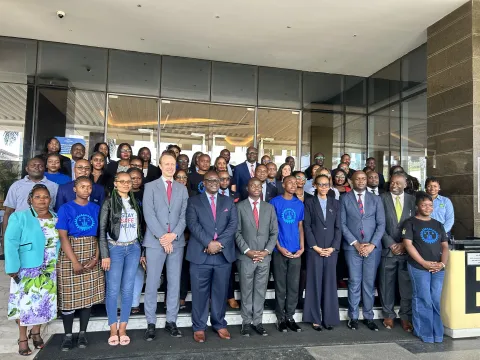
Their stories unfolded in Luapula Province, home to about 1.6 million people, where 45.56 per cent of the population is under the age of 15. Combined with one of Zambia's highest child stunting rates, at 45 per cent, this underscores the importance of sustained investments in children and adolescents. Through the Equal Chances for Human Development (EC4HD) Programme, jointly funded by the European Union in Zambia under the Global Gateway strategy and UNICEF, and implemented with partners, UNICEF is strengthening integrated education, health, child protection and community services across five of Luapula's twelve districts.
These are conversations I will never forget.
Behind Every Statistic, a Girl with a Dream
Each story reminded me that behind every statistic is a girl whose ambition, potential and aspirations are worth protecting.
Brenda (18): Choosing Education Despite the Odds
During my visit, I spoke with Brenda, 18, who was dressed in her school uniform while her baby made playful sounds nearby. The moment captured the reality she was balancing each day as both a learner and a mother.
As our conversation unfolded, I asked her a simple question:
"What do you want to become when you finish school?"
She smiled before answering confidently:
"I want to become a nurse when I finish school."
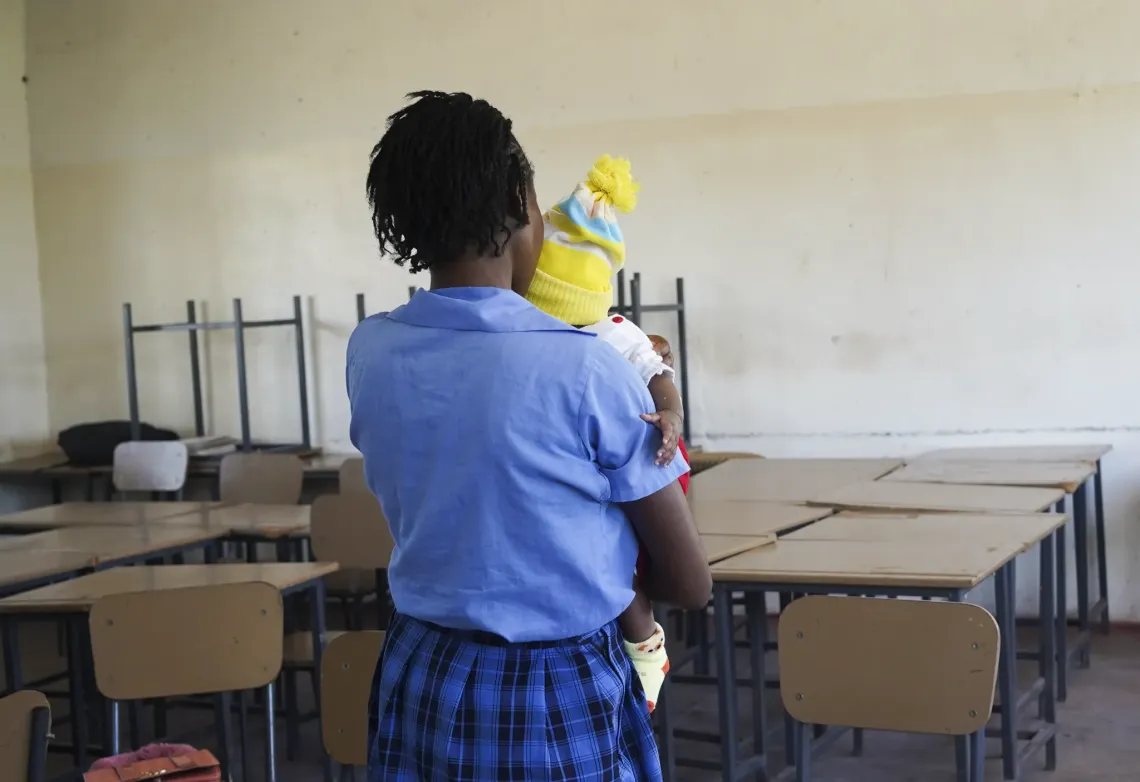
Brenda became pregnant shortly after completing her Grade 7 examinations. With her headteacher's support, she continued attending classes and antenatal clinic appointments before stepping away from school later in her pregnancy. Following the birth of her baby, coordinated support from the Safe Motherhood Action Group (SMAG), the Community Welfare Assistance Committee (CWAC), social welfare services, teachers and school leadership helped her return to school under Zambia's School Re-entry Policy.
"I welcomed the idea of going back to school," she said.
Today, Brenda is back in class. While she attends lessons, her mother cares for the baby and brings the child to school during breaks so she can continue breastfeeding.
Like many young mothers I met that day, Brenda's story showed how timely support can help an adolescent mother remain connected to her education and future.
Mwansa (18): Returning to School with Courage
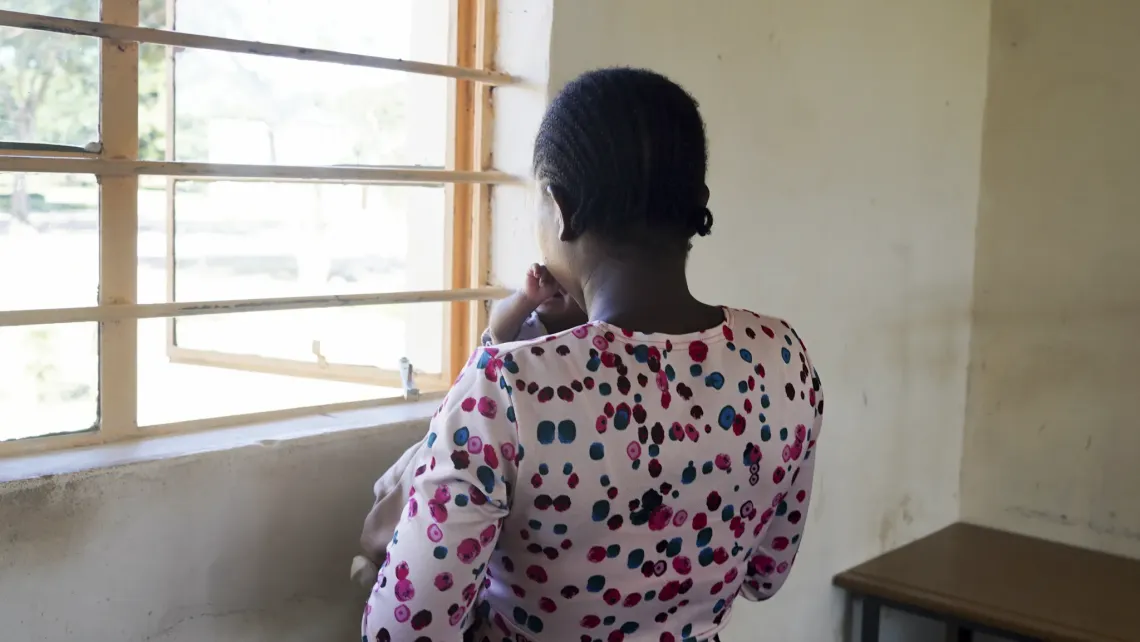
Similarly, Mwansa's story reflected the resilience I had already witnessed. Like Brenda, she was determined not to let motherhood define the limits of her future.
Now in Grade 9 and living with her grandparent in Chifunabuli District, Mwansa became pregnant while still in school. She remained in school throughout much of her pregnancy, attending both classes and antenatal appointments with her headteacher's support, before pregnancy-related discomfort eventually required her to pause her studies.
Following the birth, members of the Safe Motherhood Action Group (SMAG) and the Community Welfare Assistance Committee (CWAC) visited her home, encouraging her to return to school while ensuring both she and her baby continued receiving essential postnatal and child health services.
Supported by her family, who cared for her baby and brought the child to school so she could continue breastfeeding, Mwansa returned to class.
"Some of my friends laughed at me," she admitted.
But she chose to focus on her education because, as she put it, "it's important to be an educated person."
When I asked what returning to school meant to her, she reflected quietly before saying:
"I used to admire my friends going to school while I wasn't going to school."
Like Brenda before her, Mwansa saw education not as something she had lost, but as a path back to hope, belonging and a brighter future.
Mary (18): Keeping Her Future in Sight
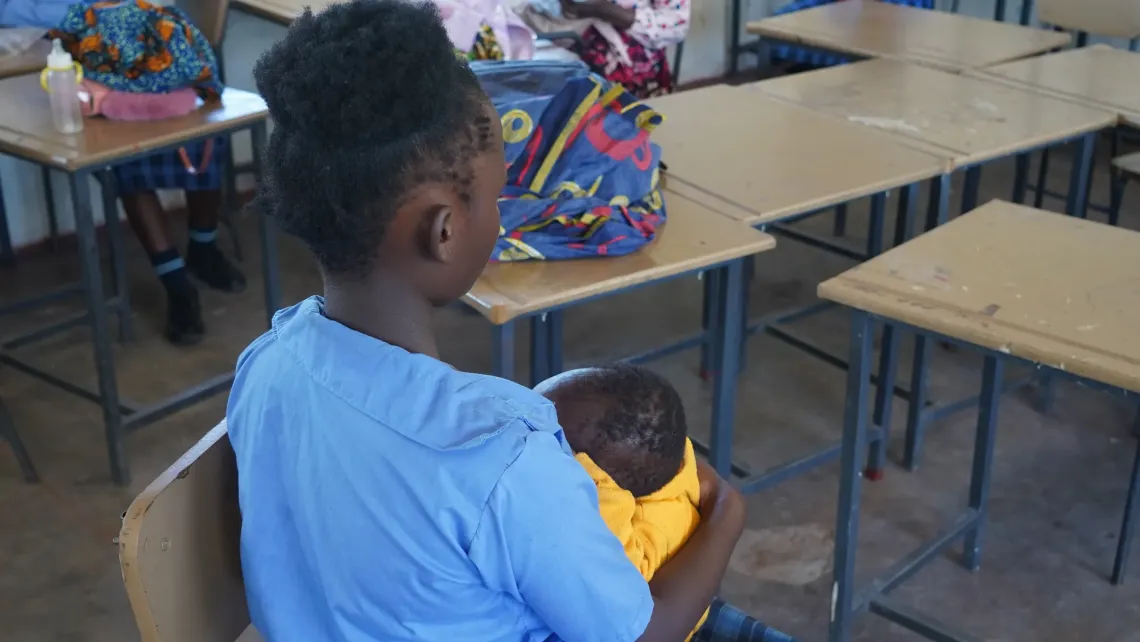
Mary's story carried many of the same themes, yet her dream was uniquely her own.
Mary, 18, arrived with the responsibilities of motherhood and a clear ambition for what lay ahead.
Like the other young mothers I met, Mary remained in school during her pregnancy, attending classes and antenatal visits until she began maternity leave at seven months with her headteacher's support. When she was ready to return, encouragement from CWAC members and her headteacher helped her resume her education, while her mother cared for the baby and brought the child to school so Mary could continue breastfeeding.
As we spoke, I asked her a simple question:
"What do you want to become when you finish school?"
She answered:
"When I finish school, I want to become a police officer."
Like Brenda and Mwansa, Mary was looking beyond her current circumstances, determined to complete her education and pursue her dream of becoming a police officer.
When Support Systems Become Lifelines
These three young women did not define themselves by the challenges they had faced. Instead, they spoke about education, opportunity and the lives they were determined to build.
In Chifunabuli District, supported through the Equal Chances for Human Development (EC4HD) Programme, jointly funded by the European Union in Zambia and UNICEF Zambia, I saw how comprehensive case management is changing girls’ lives.
The stories I heard showed how schools, health workers, social welfare officers and community structures worked together to help girls return to class. Teachers, including guidance and counselling teachers, played an important role in supporting girls through the re-entry process, offering encouragement, follow-up and a safer pathway back into learning.
CWACs, SMAGs and Community Health Volunteers (CHVs) helped identify vulnerable girls, link them to services and encourage their return to school.
These conversations reinforced a lesson from the mission: adolescent pregnancy cannot be addressed by one sector alone. When education, health, child protection and community services work together, girls are more likely to remain healthy and stay in school. These systems are not just programme components; they are lifelines.
UNICEF continues to work with the Government of Zambia, the European Union in Zambia, the Gates Foundation, the Hempel Foundation and community-based structures to strengthen coordinated services that help adolescent girls learn, thrive and realise their potential.
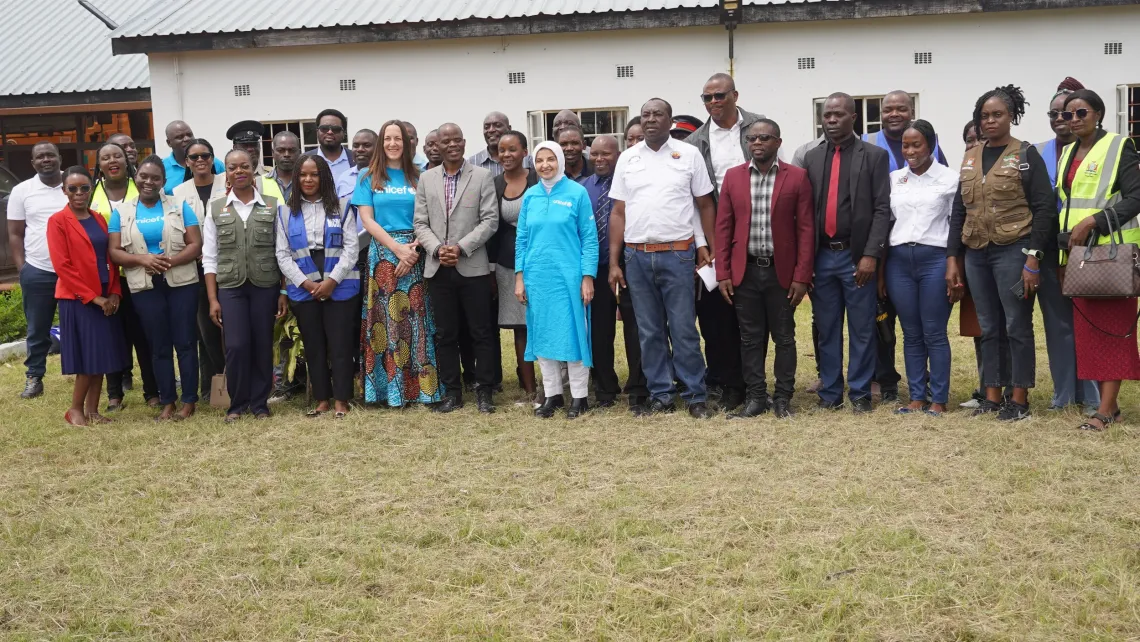
Three Dreams. One Shared Future
As I left Chifunabuli, I carried a reminder that when families, communities, schools, health workers and social welfare systems work together, adolescent pregnancy does not have to define a girl's life.
Brenda*, Mwansa* and Mary* reminded me that every girl deserves the chance to return to school, access the support she needs and pursue her ambitions. Their stories reinforce why UNICEF, and its partners continue working with the Government of Zambia and communities to strengthen the systems that help every girl learn, thrive and realise her potential.
* To protect the privacy of adolescent beneficiaries, pseudonyms have been used in this article.