Solar power and a stronger cold chain bring healthcare services closer to families in rural Zambia
At any hour of the day, communities have now access to reliable healthcare services

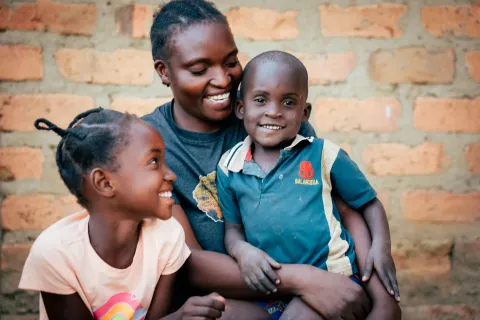
May 2026, Sinda, Eastern Province, Zambia – For 29-year-old Sara Zulu, accessing healthcare once meant travelling several kilometres from her village to seek essential services such as antenatal care, routine check-ups and vaccinations for her children. At night, it was particularly challenging. Without reliable electricity, people like Sara often had to travel further away to get help.
With the installation of solar power in the health facility, we are now able to visit the facility even in the dark, at any hour of the day or night seeking medical assistance,”
Sara said.
For Sara and other families in Nyamutuma Village, Eastern Province, Zambia, access to reliable power at the local Health Post has been transformative. At Nyamutuma Health Post, solar power, which has been installed to provide power to the whole facility, means that care no longer depends only on daylight. It means health workers can attend to patients after dark, mothers can deliver at night, vaccines can be stored and kept at the recommended temperature for children, and the facility can function more reliably as a whole.
Sara can now go to the health facility with greater confidence, knowing that services are available closer to home, even when the sun has gone down.
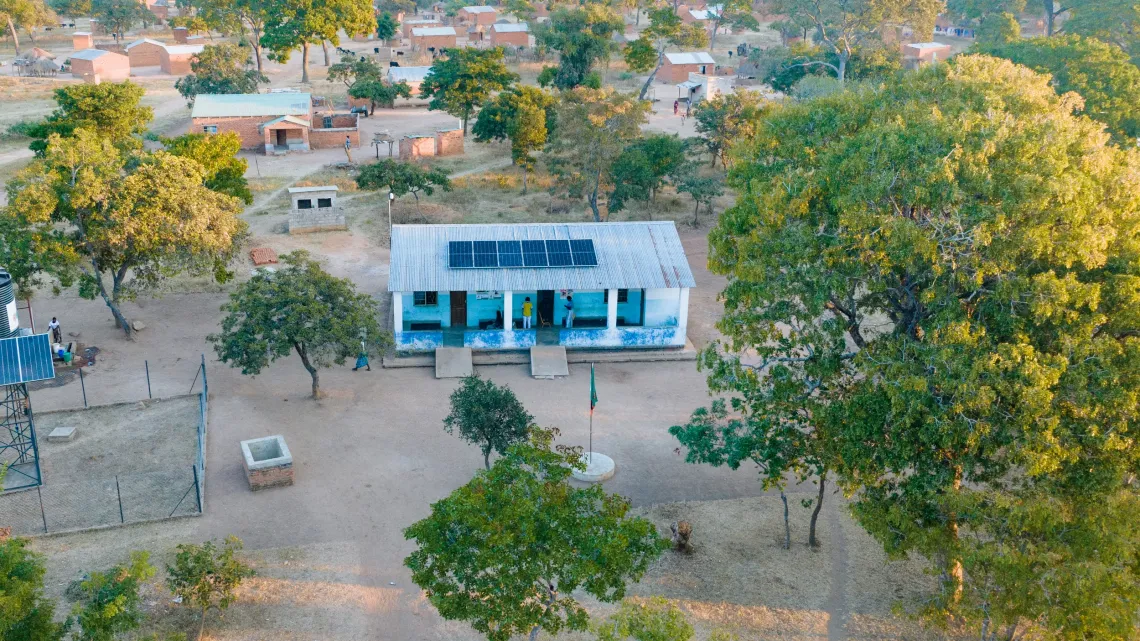
Before solar power was installed, healthcare was either a luxury, or a last-minute decision. The health post, established in 2023, served communities where transport options are limited and many people travel by bicycle, motorcycle, or on foot. Health workers used their own mobile phone torches during emergencies, there was no reliable power to be able to store vaccines at the facilities, and patients needing urgent care were often referred to Nyanje Hospital, about 12 kilometres away.
Sara’s experience is echoed by many families who rely on the facility. Agatha Banda, a Community-Based Volunteer who has served her community since 2009, has seen how access to power is changing the way people are seeking care. She said:
Patients, particularly women and children, are now able to receive medical attention at the health centre, unlike before when they would often be turned away because there was no power and essential medications could not be properly stored,
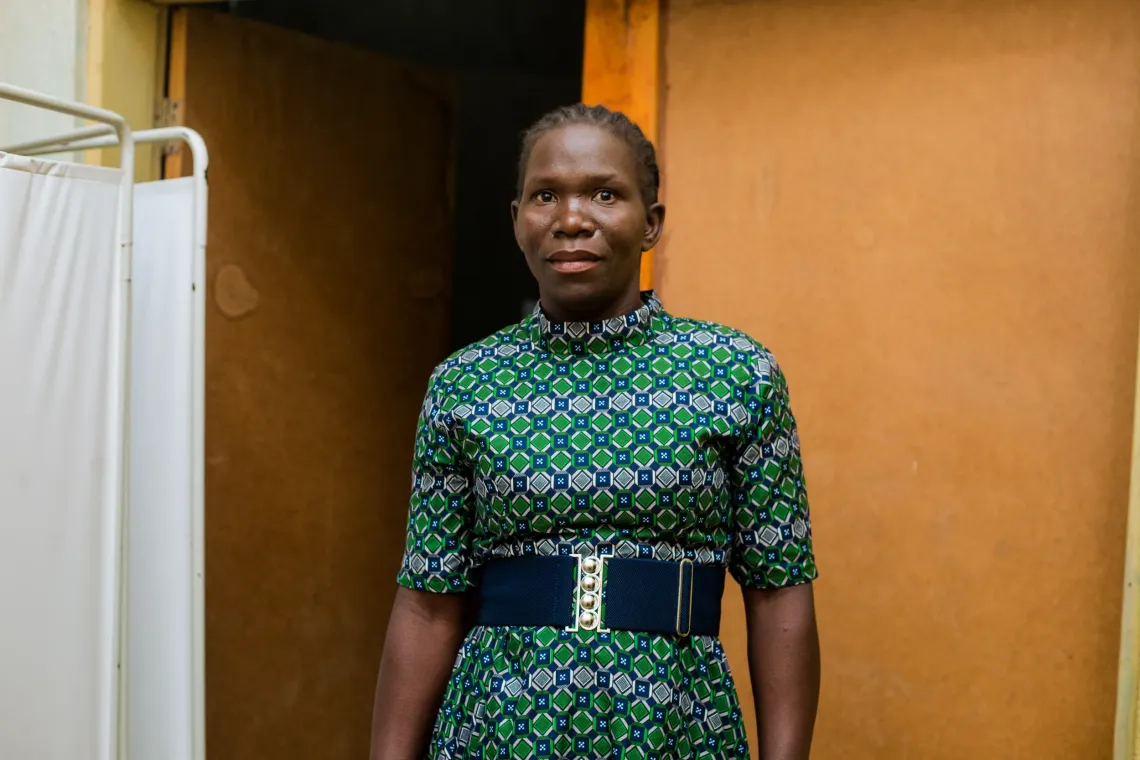
For Sara, reliable power also means stronger services behind the consultation room door. The health post is supported by two nurses, one Community Health Assistant, and two community-based volunteers. With electricity available, staff can work safely at night, keep their devices charged, communicate with other facilities when needed, and complete tasks that previously depended on daylight or borrowed power.
“Before, even charging a phone or completing our reports after dark was difficult. Now, with reliable power, we can communicate with other facilities, charge our phones at night, and serve patients more comfortably. It also just helps with our own motivation to keep going,” said Emmanuel Anderson Banda, Community Health Assistant, Nyamutuma Health Post.
Facility-in-Charge, Makasa Chanda, says these changes are helping staff respond more effectively to patients like Sara and her children.
“We faced numerous challenges when attending to patients at night, including difficulties in storing vaccines and transporting them to and from the zonal Health Center in Sinda. We are grateful for this support. It has made a huge difference, with patients receiving the much-needed healthcare assistance,” Ms. Chanda said.
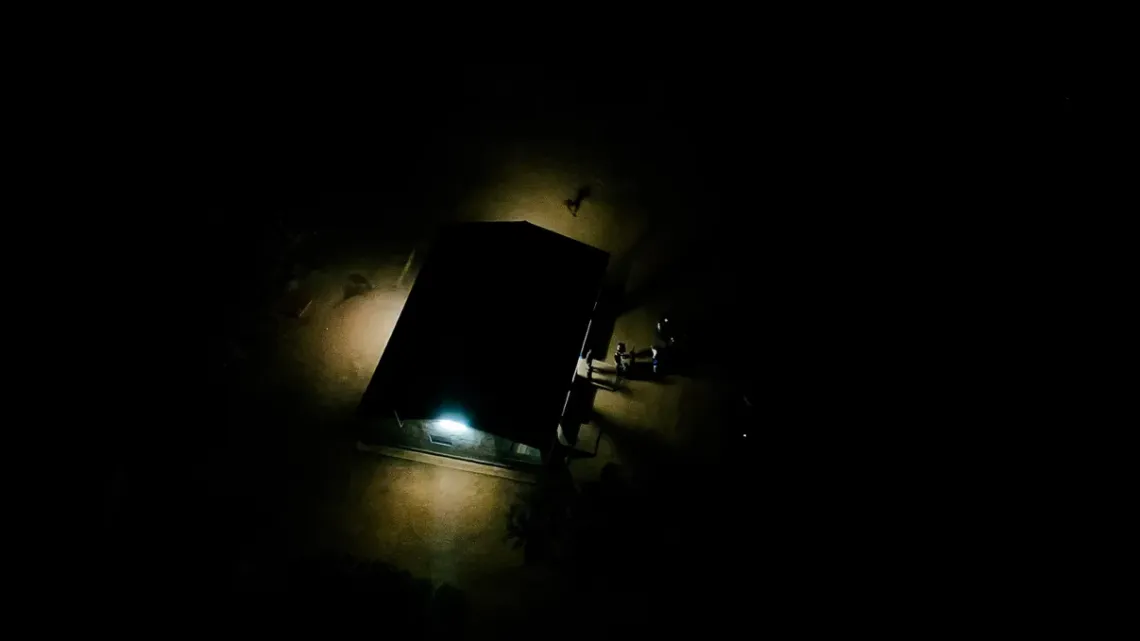
Solar electrification helps strengthen service delivery across Eastern Province. In Sinda District, the initiative is also supporting maternal and child health services, emergency care, immunization and health facility operations.
He added that power has helped make services more available at night and improved the working environment for health workers.
We have seen maternal health services improve because health workers can now provide care day and night, including during emergencies. Solar power has also transformed conditions for our staff. With electricity at the health centre and staff houses, health workers feel safer and more motivated, and they can charge their phones and have the basic power they need to live and work effectively in this remote community,
said Dr. Wadula Zulu, Director Health Services at the Sinda Health Council.
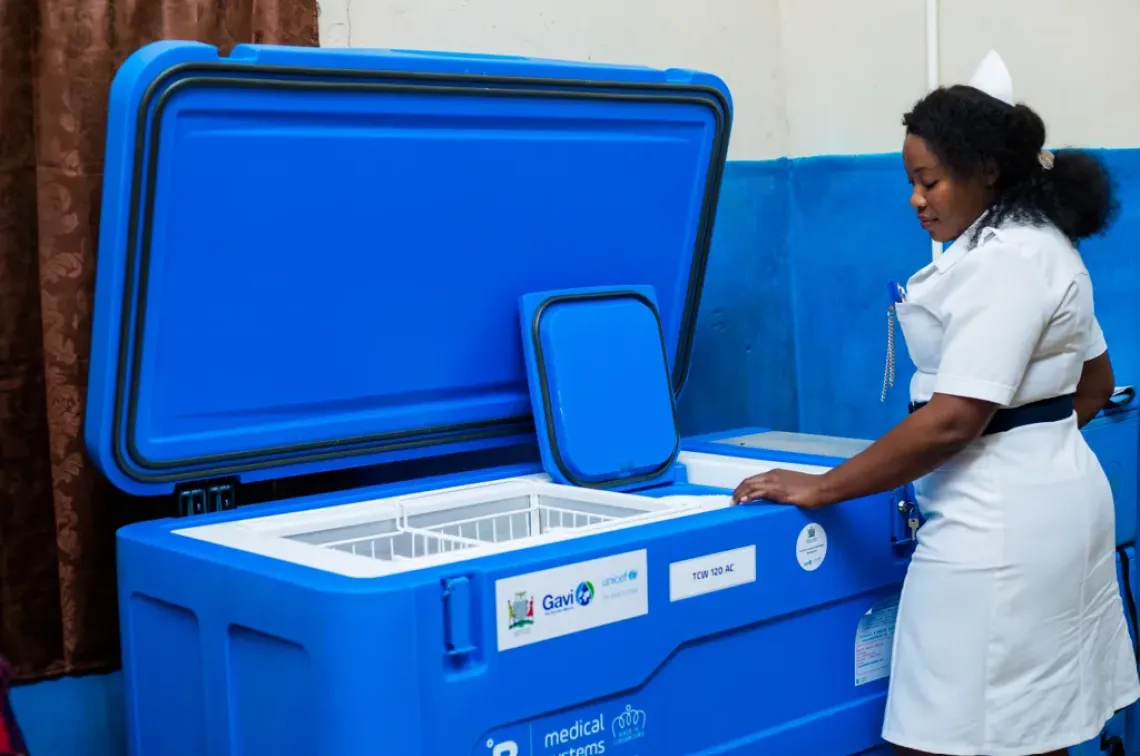
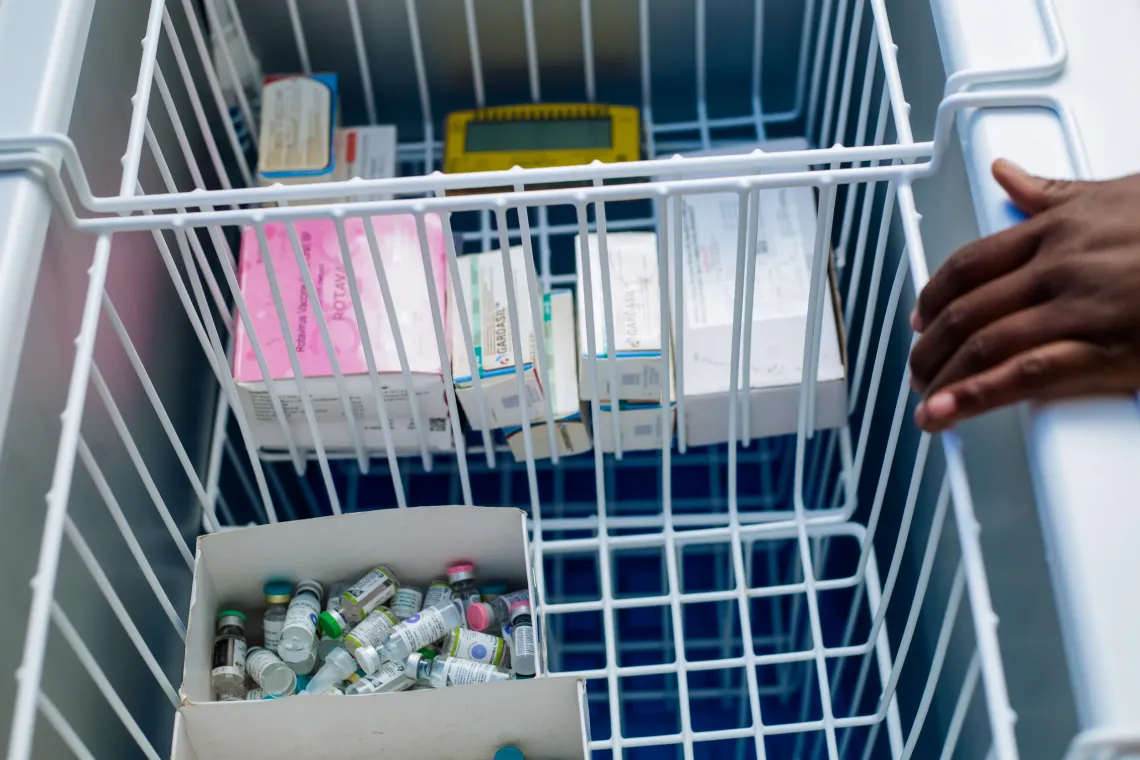
The support at Nyamutuma is part of a wider effort to bring reliable power and stronger health services to hard-to-reach, off-grid communities. Across Zambia, 296 health facilities have been supported with solar power systems that can now provide electricity across the facility, from outpatient and maternity wards to pharmacies and laboratories. The systems, ranging from 3 to 8 kW depending on each facility’s needs, also power 292 vaccine refrigerators, helping strengthen the cold chain and keep vaccines safely stored.
Sustaining these gains will require continued maintenance of the solar equipment so that communities can continue accessing services when they need them.
It is our desire to have power installed in all health facilities and ensure that the equipment is well looked after. We will make sure that the equipment is serviced regularly and where need be, batteries are replaced on time as well as ensure we have a budget for maintenance,
said Engineer Solomon Mbewe, Provincial Cold Chain Specialist. The Gavi-supported Health Facility Solar Electrification (HFSE) Learning Agenda, an initiative being piloted in four countries, including Zambia, has already contributed significantly to health service delivery in off-grid, hard-to-reach areas across the country. In Zambia, the supported facilities serve a population of approximately 1.3 million people, including more than 68,500 children under one year of age, who can now benefit from more reliable health services enabled by solar power.
As Zambia continues to strengthen healthcare delivery in underserved areas, partnerships between the Government, UNICEF, Gavi, the Vaccine Alliance are helping ensure that something as basic as access to electricity no longer stands between a child and essential healthcare.
At Nyamutuma Health Post, the impact means that a vaccine can be available at any time and kept safely at the right temperature, a health worker can attend to an emergency after dark, and a mother no longer has to travel kilometres further because her nearest facility has no power. Reliable power is providing reliable services for every child.