Reaching People on the Move with Mpox Information to Protect Communities
Through tailored risk communication, communities on the move are gaining the knowledge they need to prevent mpox and seek care when symptoms arise

CHIKANKATA District, Zambia, August 2026 --- Across Southern Province, long-distance truck drivers move goods between Zambia and neighbouring countries including South Africa, Botswana, Namibia, Zimbabwe and the Democratic Republic of Congo (DRC). As they travel long distances and interact with different people along transport routes, they can face increased exposure to public health risks. Thus, drivers need clear and practical information on public health risks including diseases like Mpox. They need information on how to protect themselves from diseases, recognize symptoms early, and seek care in time.
UNICEF, with support from the US Centers for Disease Control and Prevention, partnered with the Ministry of Health through the Southern Provincial Health Office to implement integrated Mpox activities between April and June 2026. The activities focused on communities along the international trucking route from Southern Africa towards the mining towns in the Copperbelt and Northwestern Zambia. The response package included risk communication, community engagement, community-based surveillance, and hygiene promotion and infection prevention and control in Chikankata, Monze, Livingstone and Kazungula, districts that sit along an international trucking route from Southern Africa.
Chikankata district lies on the trucking route and hosts the Zambia Revenue Authority’s truckers’ dry port. These factors made it one of the support site for the intervention.

We conducted this programme as Chikankata district. We are a transit district with a transit population whose composition is full of traders and people who are both from within the country and out of the country. The programme was beneficial in that every community was sensitised about the importance of looking out for the signs and symptoms of Mpox.
For drivers such as Joseph Muzikiti, the information received can be used immediately and passed on to others. Joseph, who has driven through South Africa, Botswana, Zimbabwe, Zambia and the DRC for nine years, said the knowledge was useful because drivers spend a lot of their time moving across borders.
“I have learnt a lot about Mpox,” Joseph said. “You know, we truck drivers travel a lot, and we are at risk of Mpox. With the knowledge that I have now about Mpox, I can even teach other drivers about it.”

The message also helped drivers move from general awareness to practical prevention. White Paiva first heard about Mpox while travelling in the DRC, where he understood it mainly as a contagious disease.
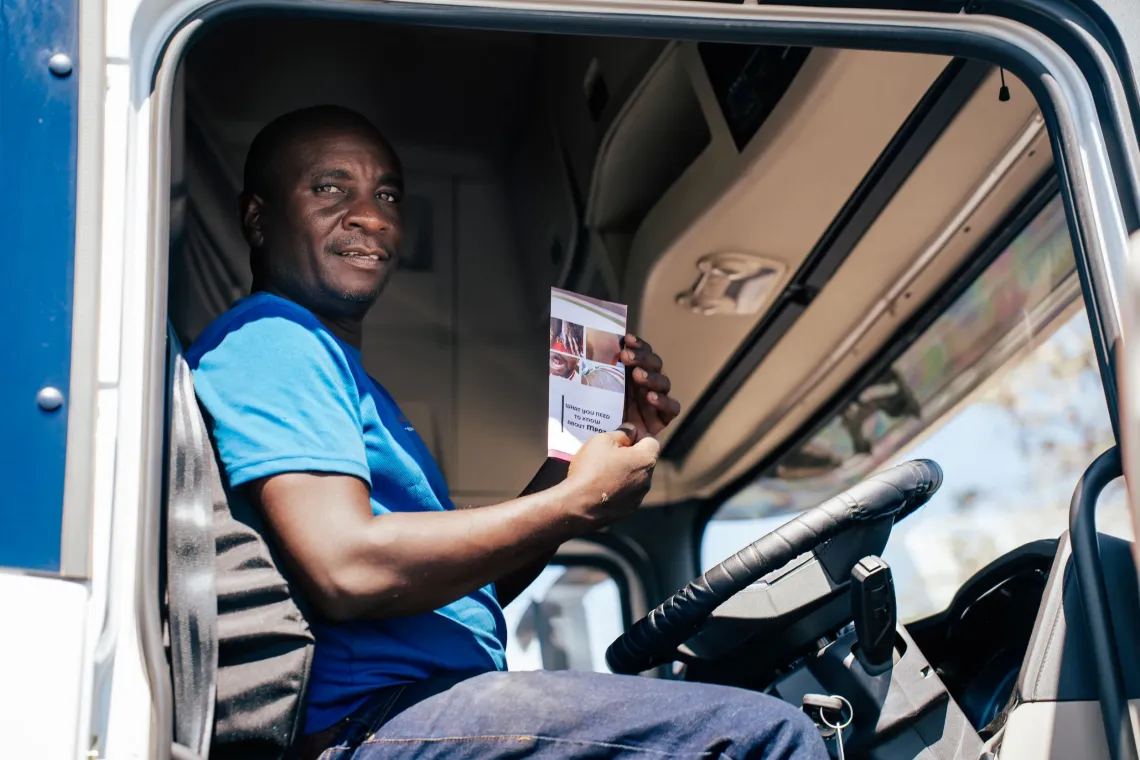
I first heard about Mpox in Congo DRC and knew it was contagious. But I did not know that simple hygiene and prevention practices could reduce the risk of infection. Now I know that, as truck drivers, we need to recognise symptoms early, avoid close contact with suspected cases, maintain hygiene, and seek care quickly if we suspect illness.
For Lovely Mukupa, who has worked as a truck driver for 19 years, the session filled an important information gap.
“This is the best programme because you are educating us on how not to contract the disease and how it can be treated,” Lovely said. “It is the first time someone is educating us on Mpox.”
Her experience reflects the value of bringing trusted health information directly to drivers who may not always be reached through routine communication channels.
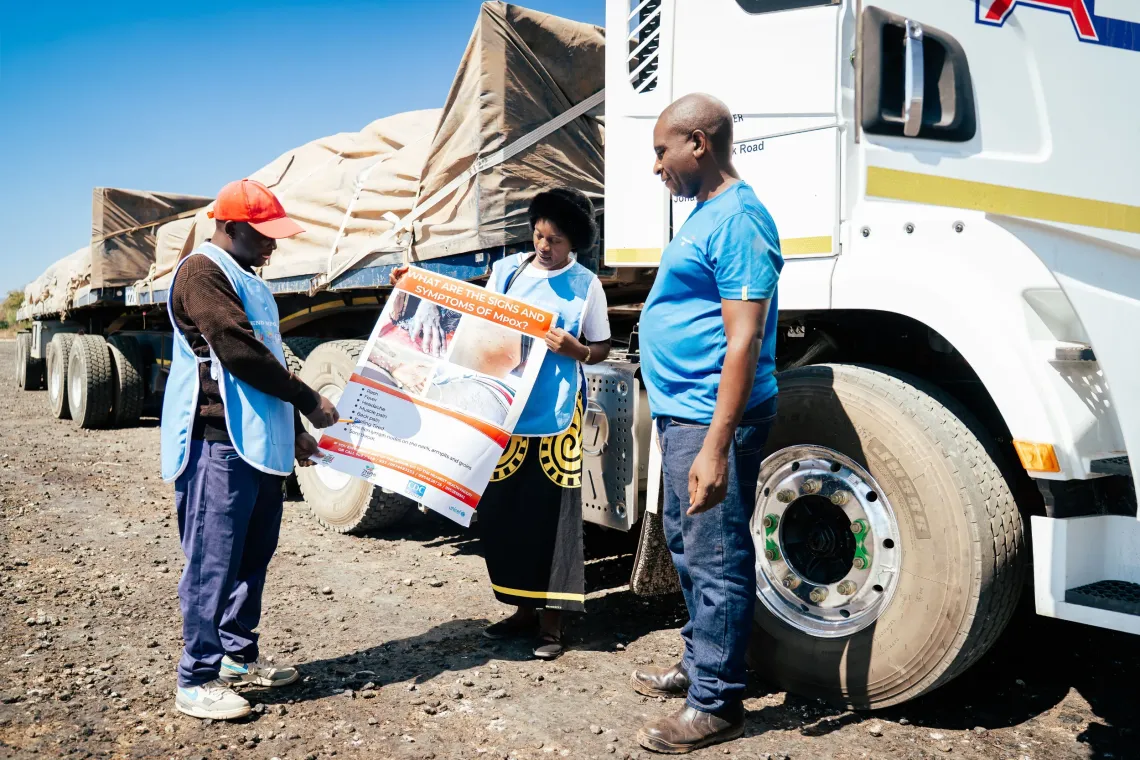
Together, these voices show why Mpox risk communication is critical for mobile and cross-border populations. For truck drivers, long journeys, cross-border movement, and regular interaction with different people can increase exposure to communicable disease risks. By prioritizing drivers with clear information on symptoms, prevention, hygiene and when to seek care, UNICEF and partners helped ensure that lifesaving messages travel with the people who keep goods moving across the region.