Integrated RMNCAH+N Outreach Package Launched to Bring Essential Health Services Closer to Underserved Communities
UNICEF and the Government of the Republic of Zambia are strengthening Primary Health Care and equipping health workers to reach women, newborns, children and adolescents in remote areas
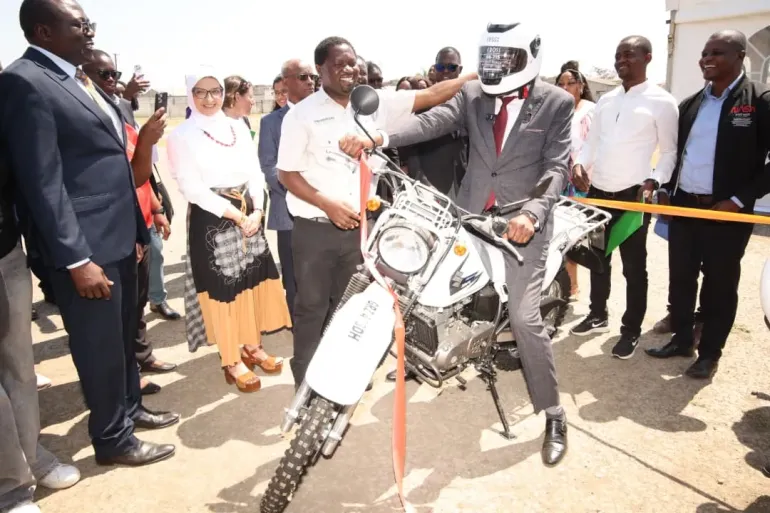
LUSAKA, 26 August 2026 – The Ministry of Health, with support from UNICEF and the European Union through the Equal Chances for Human Development (EC4HD) Programme today officially launched the Integrated Reproductive, Maternal, Newborn, Child and Adolescent Health and Nutrition (RMNCAH+N) Outreach Service Package and Implementation Guide, a national framework designed to bring essential, integrated health services closer to communities, particularly those in remote and hard-to-reach areas.
The launch, held in Kalingalinga, Lusaka, marks an important step in strengthening Zambia's Primary Health Care system and ensuring that women, newborns, children and adolescents can access quality health services regardless of where they live.
As part of the launch, UNICEF handed over motorbikes also procured through the Equal Chances for Human Development (EC4HD) Programme to strengthen the capacity of frontline health workers to deliver integrated outreach services in key target districts of Luapula and North-Western. The motorbikes will support outreach activities in 100 health facilities across Luapula and North-Western Provinces, helping health workers overcome geographical and transport barriers to reach about 689,434 people in underserved communities.
“For us, this launch is about bringing quality health services closer to the people who need them most. The integrated outreach package will help us deliver services more efficiently, while the motorbikes will enable frontline health workers to reach communities facing geographical and transport barriers. This is a significant step towards ensuring equitable access to quality health care for every woman, newborn, child and adolescent,” said Dr. Kennedy Lishimpi, Permanent Secretary - Technical Services, Ministry of Health.
The Integrated RMNCAH+N Outreach Service Package provides a practical framework for delivering multiple essential services through a coordinated outreach platform. It is intended to reduce missed opportunities for care, improve efficiency in the use of limited resources, and reduce the fragmentation of health services.
Speaking at the event, Marta Palmarola, Programme Manager Health and Social Protection at the European Union Delegation, highlighted that the objective of the European Union is to contribute to stronger, more resilient and more sustainable Primary Health Care systems. “The outreach package, the implementation guide and the motorbikes should therefore be viewed as components of a broader investment in Zambia’s health system — one that strengthens the ability of health workers and communities to deliver and access essential services,” she said while adding that for the first time, adolescent health is being more deliberately integrated into the outreach approach.
Through integrated outreach, health workers can provide services including antenatal and postnatal care, newborn and child health interventions, immunization, nutrition services, and adolescent health support closer to the communities they serve.
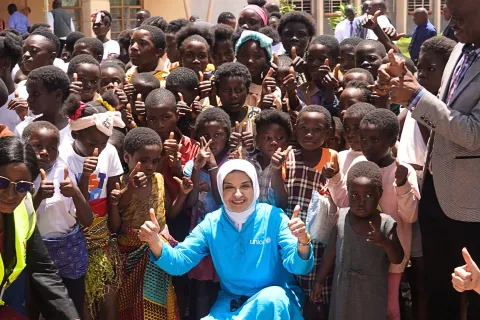
Speaking at the launch, the UNICEF Representative commended the Ministry of Health for its leadership in developing the national outreach package and emphasized that the effectiveness of a health system must ultimately be measured by its ability to reach those furthest from health facilities. “For families in remote and underserved communities, distance, transport costs and other barriers can make accessing essential services extremely difficult. For many, an outreach visit may be the only opportunity to receive antenatal care, immunization, nutrition services, treatment for childhood illnesses or adolescent health services,” Dr. Saja Farooq Abdullah said.
Zambia has made important progress in improving maternal and child health and expanding access to essential services through investments in Primary Health Care, skilled birth attendance, immunization, nutrition, community health systems and the health workforce. Over the past two decades, maternal mortality has declined from 591 deaths per 100,000 live births in 2007 to 187 deaths in 2024. Today, 93 percent of births are institutional births and 98 percent women attended at least one antenatal check-up.
The new outreach package builds on these efforts by providing health workers with a common approach for planning and delivering integrated services beyond health facility walls.
The support of the European Union, through the Equal Chances for Human Development Programme, is helping strengthen integrated outreach services under this initiative, contributing to efforts to bring quality health care closer to women, newborns, children and adolescents in remote and underserved communities.
Link with Images: https://bit.ly/46lSsz9
Credit: ZANIS/2026/Nsama
###
For media enquiries:
Twaambo Siavwapa | Head, Communication and Public Relations | MOH
+260-975-610220 | [email protected]
Media contacts
About UNICEF
UNICEF promotes the rights and wellbeing of every child, in everything we do. Together with our partners, we work in 190 countries and territories to translate that commitment into practical action, focusing special effort on reaching the most vulnerable and excluded children, to the benefit of all children, everywhere.
For more information about UNICEF and its work for children in Zambia, visit www.unicef.org/zambia.
Follow UNICEF Zambia on Twitter, Facebook and Instagram