Yemen's Malnutrition Crisis: A Growing Threat to Children's Lives
Joint efforts to launch an integrated multisectoral campaign

- English
- العربية
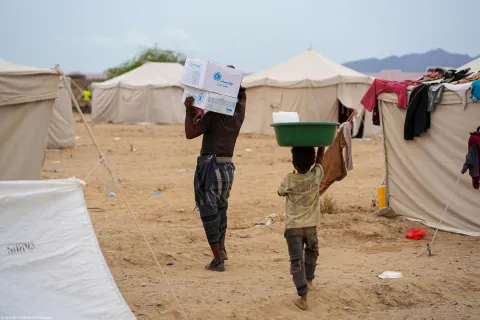
In many parts of Yemen, access to food, clean water, and healthcare remains critically inadequate as a result of the Yemen's ongoing conflict and economic crisis. This have fueled a devastating malnutrition crisis, with the highest rates globally. According to the latest IPC Acute Malnutrition Analysis, the number of children under the age of five suffering from acute malnutrition, or wasting, rose by 34 per cent compared to the previous year across the Government-controlled areas, affecting over 600,000 children, including 120,000 children who are severely malnourished[1]. This sharp increase can be attributed to outbreaks of cholera and measles, as well as persistently high rates of food insecurity.
Constant struggle
Aisha Yahya, a mother of five, faces the harsh reality. Aisha and her family live in Khawkhah, Hudaydah Governorate, Yemen’s fourth largest city that has the key port of Hudaydah on the Red Sea.
“We don’t have enough food for Kiara. Usually, she has no more than two meals a day,” she says, with sadness as she speaks about her malnourished six-month-old daughter.

Aisha’s husband, Mazen, a fisherman, struggles to provide for his family because of the country’s volatile situation, where the fishermen in Yemen are facing significant challenges due to the restrictions of fishing areas by the warring parties and climate change.
The consequences of this malnutrition became tragically clear when Kiara[LA1] developed severe diarrhea and a persistent fever. Aisha rushed her baby to the nearest health centre, where Kiara was diagnosed with severe acute malnutrition (SAM) with complications.

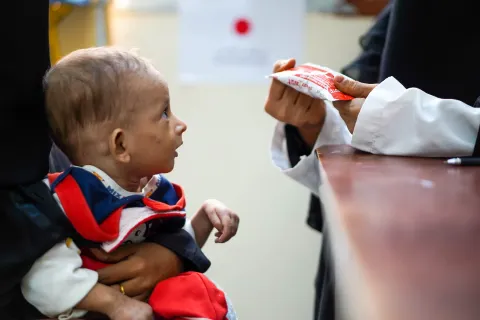
This weakened Kiara’s immune system, a common consequence of malnutrition, which can make children highly vulnerable to infections like measles. Fortunately, after receiving treatment at UNICEF supported Therapeutic feeding center (TFC), Kiara has been receiving ready-to-use therapeutic food (RUTF) from UNICEF Outpatient Therapeutic Programme (OTP) for about two months, along with the measles vaccination. "Her health is improving," Aisha reports. "Her hand was the size of my finger, and she could not even sit, but now she can sit and move around."
Another child, same struggle
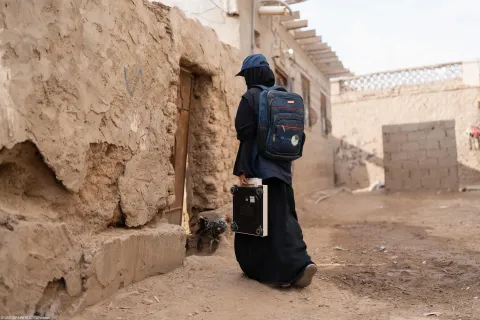
Taqwa Ahmed experience with her two-year-old niece, Mukhlisah, at a mobile clinic, reflects a similar struggle. With sadness in her voice, she says, “She often sleeps without having dinner, and she eats whatever food we can get.”

Dire living conditions
Mukhlisah and her seven siblings endure harsh living conditions. Their father, a daily wage labourer, faces difficulties providing for their basic needs due to his unstable income. Taqwa's voice breaks as she shares, “When Mukhlisah fell ill, the health workers told us it was because she was not getting enough to eat; she may eat a meal, but it might be her only one for the entire day.”

The lack of nutritious food took a severe toll on Mukhlisah’s health. According to Taqwa, Mukhlisah's diet was very limited, consisting solely of rice or bread. “Her face had become gaunt, which was a clear sign of malnutrition, according to the health workers,” she recalls.

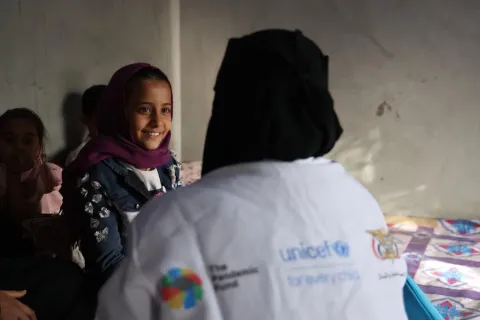
In light of the alarming malnutrition levels in the West Coast area of Yemen, UNICEF and the Ministry of Health with support of Canada’s International Development – Global Affairs Canada joined efforts to launch an integrated multisectoral Campaign that benefited Kiara and Mukhlisa among 45,000 children. The campaign provided life-saving ready-to-use therapeutic food (RUTF), measles vaccinations, and multiple micronutrient powder (MNP) supplements. The campaign aims to reduce the rising tide of malnutrition and measles/rubella among children aged 6 to 59 months. The campaign was integrated with the distribution of Aqua chlorine tabs to ensure safer water in households, providing Iron and folic Acid for the mothers and Behavior change activities for caregivers.